Love this? Save it for later!
Share the inspiration with your friends
The jar of white miso paste had been sitting in my fridge for three weeks, and every time I opened the door, it stared at me like a challenge. I bought it for a recipe I never made — you know how that goes. Meanwhile, the peanut butter was running low, and I had a pack of udon noodles that were dangerously close to their expiration date. That night, I just threw things together. I wasn’t trying to create anything special. I was tired, hungry, and honestly a little annoyed at myself for not planning dinner.
But then, something clicked. The miso gave the peanut butter this deep, savory backbone, and the chili crisp added a slow-building heat that made me stop mid-bite. I stood over the stove, eating straight from the pan, and realized I had accidentally stumbled onto something I would crave forever. These creamy peanut butter spicy miso noodles are now my go-to when I need dinner to feel like a hug but also like a thrill. They come together in under 20 minutes, use pantry staples, and somehow taste like takeout from a place that doesn’t exist.
The first time I made them for my partner, he asked if I had secretly ordered food. That’s the kind of reaction that keeps a recipe in permanent rotation. These noodles aren’t just good — they’re the kind of good that makes you text your friends about them.
Why You’ll Love This Recipe
I’ve tested this recipe at least seven times now, tweaking the miso-to-peanut-butter ratio, adjusting the spice level, and even trying it with different noodle shapes. Through all that trial and error, I landed on a version that hits every single note perfectly. Here’s why these creamy peanut butter spicy miso noodles deserve a spot in your weekly rotation:
- Quick & Easy: From start to finish, you’re looking at about 15 minutes. That’s faster than waiting for delivery, and way more satisfying.
- Simple Ingredients: You probably already have most of this stuff. Peanut butter, soy sauce, miso paste, garlic, and noodles — no specialty grocery runs required.
- Perfect for Busy Weeknights: Whether you’re cooking for one after a long day or feeding a hungry family, this dish delivers comfort without the fuss.
- Crowd-Pleaser: I’ve served these noodles to picky eaters, spice skeptics, and peanut butter purists. Everyone goes back for seconds.
- Unbelievably Delicious: The creamy, nutty, savory, spicy combination is next-level. It’s the kind of flavor that makes you close your eyes after the first bite.
What makes this recipe different from other peanut noodle recipes is the miso. It adds this fermented umami depth that regular peanut sauce just doesn’t have. Plus, the chili crisp brings a smoky, crunchy heat that keeps every bite interesting. This isn’t just another noodle recipe — it’s the one you’ll actually crave at 10 p.m. on a Tuesday.
Honestly, this recipe is comfort food reimagined. It’s faster than takeout, healthier than most creamy pasta dishes, and packed with the kind of soul-soothing satisfaction that makes you forget you’re eating something made in one pot.
What Ingredients You Will Need
This recipe uses simple, wholesome ingredients that work together to create a deeply flavorful sauce without any complicated techniques. Most of these are pantry staples, and the ones that aren’t are worth keeping around for future noodle emergencies.
- Peanut Butter (creamy, unsweetened): This is the backbone of the sauce. I prefer natural peanut butter with just peanuts and salt — it gives a cleaner, nuttier flavor. Avoid the sugary kind; it throws off the balance.
- White Miso Paste: This is the secret weapon. Miso adds that savory, salty, slightly funky depth that makes the sauce taste like it simmered for hours. Look for it in the refrigerated section near the tofu.
- Soy Sauce (low sodium): Adds saltiness and umami without overpowering the other flavors. You can use tamari for a gluten-free version.
- Chili Crisp (or chili oil): This brings the heat and a little crunch. I use Lao Gan Ma, but any good chili crisp works. If you’re sensitive to spice, start with less and add more later.
- Rice Vinegar: A splash of acidity cuts through the richness and brightens everything up. Unseasoned rice vinegar is best.
- Sesame Oil (toasted): Just a little goes a long way. It adds that unmistakable nutty, toasty aroma that ties the whole dish together.
- Garlic (fresh, minced): Don’t use the jarred stuff here. Fresh garlic makes a noticeable difference in the sauce’s punch.
- Fresh Ginger (grated): Adds warmth and a slight zing. Grate it on a microplane for the best texture.
- Honey or Maple Syrup: A touch of sweetness balances the salty and spicy elements. Maple syrup works beautifully if you’re keeping it vegan.
- Noodles (udon, ramen, or spaghetti): I love thick udon for their chewy texture, but ramen noodles or even regular spaghetti work great. Cook them al dente — they’ll soak up more sauce.
- Optional Toppings: Sliced green onions, sesame seeds, crushed peanuts, cilantro, and a drizzle of extra chili crisp for those who like it hot.
Substitution Guidance: If you don’t have miso, you can use an extra tablespoon of soy sauce plus a little more peanut butter, but honestly, the miso is what makes this special. For a nut-free version, try sunflower seed butter or tahini — the flavor will change but it’s still delicious. If you’re out of rice vinegar, a squeeze of lime juice works in a pinch.
Equipment Needed
You don’t need much for this recipe, which is part of the appeal. Here’s what I use every time:
- Large Pot: For boiling the noodles. Any standard 4-5 quart pot works.
- Small Bowl: For whisking together the sauce ingredients. A medium bowl is fine too.
- Whisk or Fork: Miso paste can be stubborn. A whisk helps it dissolve smoothly into the peanut butter.
- Microplane or Fine Grater: For grating the ginger. A knife works if you mince it very finely, but a microplane is faster and gives a better texture.
- Colander: For draining the noodles. Don’t rinse them unless you’re making a cold noodle salad — the starch helps the sauce cling.
- Tongs or Chopsticks: For tossing the noodles with the sauce. A spatula works too, but tongs make it easier to coat everything evenly.
If you don’t have a microplane, just peel the ginger and chop it as finely as you can. It’s not the end of the world, but you might get a little ginger chunk in your bite — which honestly, isn’t a bad thing.
Preparation Method
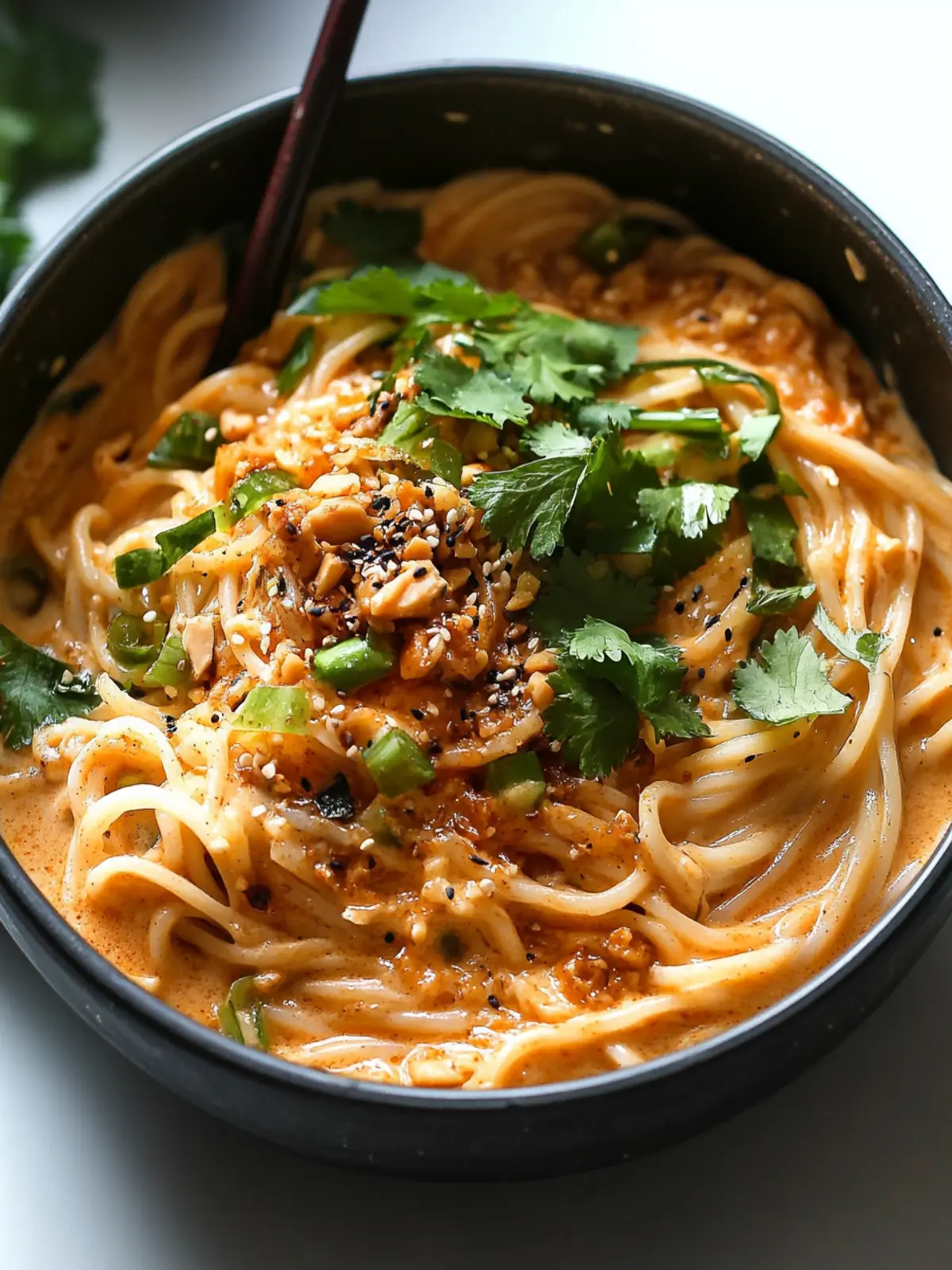
Let’s get cooking. This comes together fast, so have everything ready before you start. I usually prep the sauce while the water is coming to a boil.
- Bring a large pot of salted water to a boil. Use about 4-5 quarts of water and add a generous pinch of salt. While the water heats up, move on to the sauce.
- In a small bowl, whisk together the sauce ingredients. Combine 3 tablespoons creamy peanut butter, 1 tablespoon white miso paste, 2 tablespoons low-sodium soy sauce, 1-2 tablespoons chili crisp (adjust to your spice preference), 1 tablespoon rice vinegar, 1 teaspoon toasted sesame oil, 1 clove minced garlic, 1 teaspoon grated fresh ginger, and 1 teaspoon honey or maple syrup. Whisk until smooth. If the mixture is too thick, add 2-3 tablespoons of hot water from the noodle pot to thin it out. It should be pourable but still creamy.
- Cook the noodles according to package directions. For udon noodles, this is usually 7-8 minutes. For ramen, about 3-4 minutes. For spaghetti, 8-10 minutes. Cook them al dente — they’ll continue to absorb sauce after you toss them. Reserve about 1/2 cup of pasta water before draining.
- Drain the noodles well. Don’t rinse them unless you’re making a cold version. The starch on the surface helps the sauce stick and gives it a silky texture.
- Return the drained noodles to the pot (off the heat). Pour the sauce over the noodles and toss vigorously with tongs or chopsticks until every strand is coated. If the sauce seems too thick, add a splash of the reserved pasta water, 1 tablespoon at a time, until it reaches your desired consistency. The starch in the water helps emulsify the sauce.
- Taste and adjust. This is the most important step. Need more heat? Add another drizzle of chili crisp. Too salty? A squeeze of lime or a tiny bit more honey balances it. Too thick? More pasta water. Trust your palate here.
- Serve immediately. Divide the noodles into bowls and top with sliced green onions, sesame seeds, crushed peanuts, and a sprinkle of cilantro. Add an extra drizzle of chili crisp if you’re feeling bold.
Sensory Cue: At step 5, the noodles should look glossy and coated, not dry or clumpy. The sauce should cling to each strand like a velvet jacket. If it slides off, it’s too thin — add a little more peanut butter.
Personal Tip: I always make a little extra sauce. Sometimes I double the batch and keep half in the fridge for quick lunches. It lasts about a week and tastes amazing on rice, roasted vegetables, or even as a dip for spring rolls.
Cooking Tips & Techniques
Over the course of testing this recipe multiple times, I learned a few things the hard way. Let me save you the trouble.
Don’t overcook the noodles. Mushy noodles are the enemy of a good noodle dish. Set a timer and test one noodle a minute before the package says it’s done. You want it tender but with a slight chew — al dente, basically.
Whisk the miso completely. Miso paste is dense and can form little clumps if you’re not careful. Whisk it with the soy sauce first before adding the peanut butter, or use a fork to mash it against the side of the bowl. Nobody wants a surprise miso bomb in their bite.
Reserve that pasta water. I cannot stress this enough. The starchy water is liquid gold for thinning sauces while keeping them creamy. If you forget, plain hot water works, but it’s not as good. I learned this the hard way when I had to use tap water and the sauce felt thin and separated.
Timing is everything. This dish comes together in the time it takes to boil noodles, so don’t start cooking the sauce until the water is almost boiling. Otherwise, the sauce sits and thickens while you wait, and you’ll have to thin it out again. Trust me, I’ve done that dance.
Let the noodles rest for 30 seconds. After you toss them in the sauce, let them sit in the pot for about 30 seconds before serving. This gives the noodles time to absorb some of the sauce, making every bite more flavorful.
Variations & Adaptations
One of the best things about this recipe is how flexible it is. Here are some ways I’ve adapted it based on what I had on hand or who I was cooking for:
- Vegan Version: This recipe is already vegan if you use maple syrup instead of honey. It’s naturally dairy-free and egg-free, so it’s a great option for plant-based eaters.
- Gluten-Free Adaptation: Use rice noodles, soba noodles (make sure they’re 100% buckwheat), or gluten-free spaghetti. Tamari replaces soy sauce perfectly.
- Add Protein: I’ve added crispy tofu, shredded rotisserie chicken, and even leftover steak to these noodles. The sauce clings to everything beautifully. For a quick protein boost, try adding some crispy tofu katsu on top — it’s a game-changer.
- Veggie-Packed Version: Toss in some steamed broccoli, snap peas, or shredded carrots when you add the sauce. The heat from the noodles wilts the veggies just enough.
- Cold Noodle Salad: Rinse the cooked noodles under cold water, toss with the sauce, and serve chilled. Perfect for summer picnics or meal prep lunches.
- Spice Level Adjustment: For a milder version, use just 1 teaspoon of chili crisp and add a pinch of red pepper flakes. For extra heat, stir in some sambal oelek or fresh Thai chili slices.
- Peanut-Free Option: Sunflower seed butter or tahini both work well, though the flavor profile shifts. Tahini gives it a more Middle Eastern vibe, while sunflower seed butter keeps it nutty without the allergens.
One of my favorite variations was when I added a handful of Vietnamese braised tofu and mushrooms on top. The savory braised tofu soaked up the peanut miso sauce and made the whole bowl feel like a five-star meal. Highly recommend.
Serving & Storage Suggestions
These noodles are best served immediately, while they’re still warm and the sauce is glossy. But life happens, and leftovers are a real possibility. Here’s how to handle both situations.
Serving: Pile the noodles into deep bowls and top generously. I always add a sprinkle of sesame seeds and a handful of sliced green onions for color and crunch. A few cilantro leaves on top make it look restaurant-worthy. If you’re serving this to guests, a side of quick pickled onions adds a bright, tangy contrast that cuts through the richness beautifully.
Storage: Store leftovers in an airtight container in the refrigerator for up to 3 days. The noodles will absorb some of the sauce overnight, so they’ll be less saucy but still delicious. If you’re meal prepping, keep the sauce and noodles separate and toss them together just before eating.
Reheating: The best way to reheat is in a skillet over medium heat with a splash of water or broth. Toss frequently until the noodles are hot and the sauce loosens up again. You can also microwave them in 30-second bursts, stirring between each, but the texture won’t be as good. Add a little water before microwaving to prevent dryness.
Freezing: I don’t recommend freezing the assembled dish. The sauce can separate and the noodles get mushy. However, the sauce itself freezes beautifully for up to 3 months. Thaw it in the fridge overnight and whisk in a little hot water before using.
Flavor Development: Honestly, the leftovers are sometimes better the next day. The flavors meld together overnight, and the noodles soak up all that savory goodness. If you can resist eating the whole batch in one sitting, you’re in for a treat tomorrow.
Nutritional Information & Benefits
While these creamy peanut butter spicy miso noodles feel indulgent, they actually pack some surprising nutritional benefits. Here’s a rough estimate per serving (based on 4 servings, using udon noodles and the sauce as written):
- Calories: Approximately 380-420 per serving
- Protein: 12-15 grams (thanks to the peanut butter and noodles)
- Fat: 18-22 grams (mostly healthy fats from peanut butter and sesame oil)
- Carbohydrates: 45-50 grams
- Fiber: 4-6 grams
- Sugar: 6-8 grams (naturally occurring plus a touch of honey)
Health Benefits: Peanut butter is a great source of plant-based protein, healthy monounsaturated fats, and vitamin E. Miso paste is a fermented food that supports gut health with beneficial probiotics. Ginger has anti-inflammatory properties, and garlic is known for its immune-boosting effects. This isn’t health food, but it’s definitely not junk food either — it’s balanced comfort food that makes you feel good.
Dietary Considerations: This recipe is naturally dairy-free and egg-free. It can be made gluten-free with the right noodle choice and tamari. For a lower-carb option, serve the sauce over zucchini noodles or shirataki noodles.
Potential Allergens: Contains peanuts, soy, and sesame. If you have allergies, check the substitution notes above for safe alternatives.
Conclusion
These creamy peanut butter spicy miso noodles are the kind of recipe that makes you feel like a genius in the kitchen, even though it only takes 15 minutes. They’re rich without being heavy, spicy without being punishing, and deeply satisfying in a way that store-bought sauces just can’t match.
I love this recipe because it reminds me that the best food doesn’t have to be complicated. It just has to be made with intention — and maybe a little bit of chili crisp. Whether you’re cooking for yourself after a long day or feeding a crowd who thinks you ordered takeout, these noodles deliver every single time.
Try them once, and I promise you’ll be craving them. When you do make them, come back and let me know how it went. Did you add extra spice? Throw in some veggies? Make a double batch for the week? I’d love to hear your twist on it. Share your creation in the comments below, and don’t forget to tag someone who needs these noodles in their life!
Frequently Asked Questions
Can I make this dish ahead of time?
Yes, but with one caveat. The noodles will absorb the sauce over time, so if you’re making it ahead, I recommend keeping the sauce and noodles separate. Toss them together just before serving for the best texture. The sauce alone can be made up to a week in advance and stored in the fridge.
What if I don’t have miso paste?
You can substitute with an extra tablespoon of soy sauce and a little more peanut butter, but honestly, the miso is what gives this dish its unique depth. If you can find it, I highly recommend picking some up — it’s a game-changer for all kinds of savory dishes. You can also try using doenjang (Korean soybean paste) for a different but equally delicious flavor.
Can I use crunchy peanut butter instead of creamy?
Absolutely. Crunchy peanut butter will add little bits of texture throughout the sauce, which some people really love. Just keep in mind that the sauce won’t be as smooth, and the crunch might get a little softer as it sits. If you’re using crunchy, you might want to skip the crushed peanut topping.
How do I make this less spicy?
Easy — just reduce or omit the chili crisp. Start with 1 teaspoon or even half a teaspoon, and taste as you go. You can also use a mild chili oil without the crispy bits for a gentler heat. If you accidentally make it too spicy, a squeeze of lime juice or a little extra peanut butter can help tame the heat.
What other dishes go well with these noodles?
These noodles are pretty hearty on their own, but they pair beautifully with a light, crunchy side. I love serving them alongside crispy Korean zucchini fritters for a textural contrast, or with a simple cucumber salad dressed in rice vinegar and sesame oil. For a complete meal, add some steamed edamame or a soft-boiled egg on top.
Pin This Recipe!
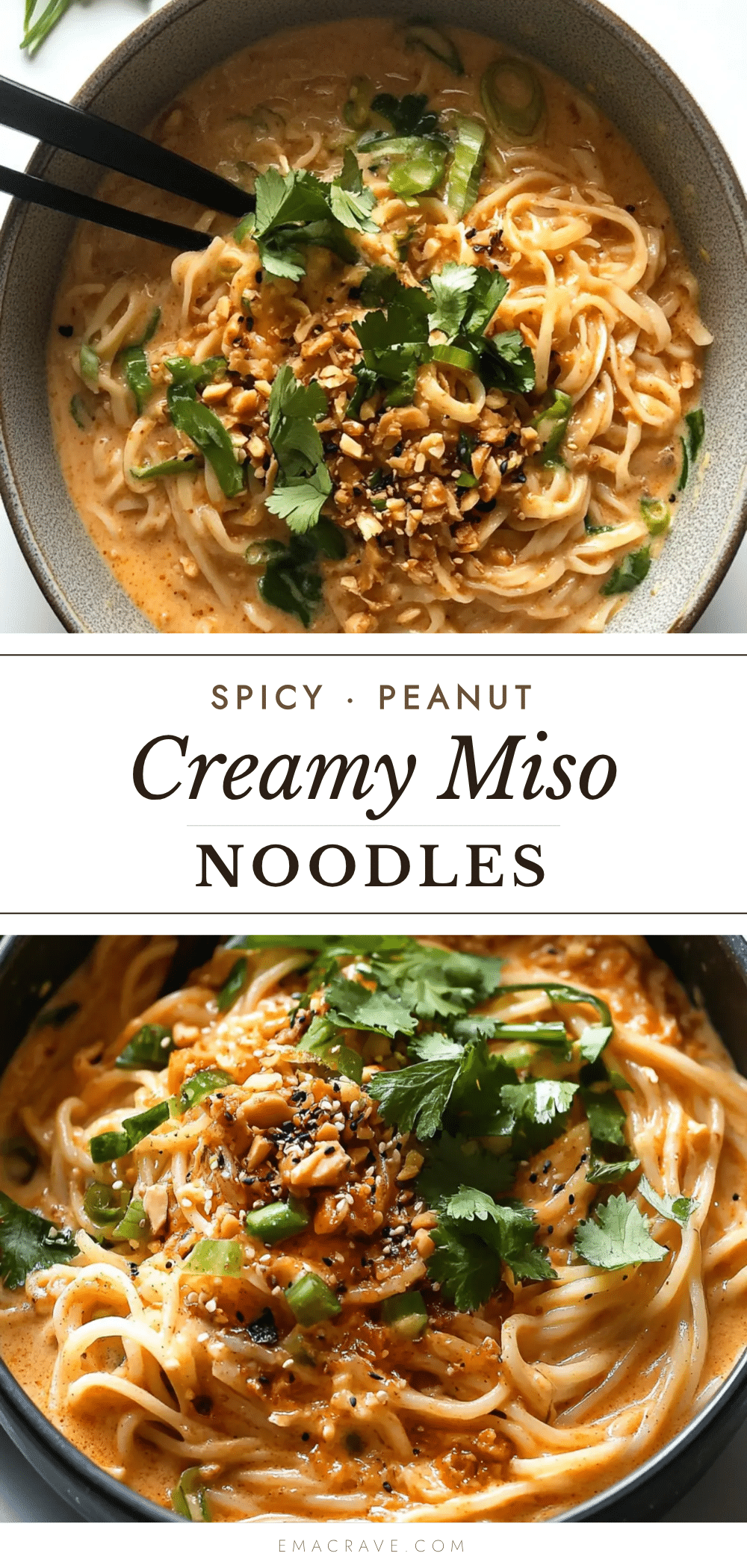
Creamy Peanut Butter Spicy Miso Noodles
These creamy peanut butter spicy miso noodles come together in under 20 minutes using pantry staples. The miso adds a deep, savory umami backbone while chili crisp brings a slow-building heat, creating a dish that tastes like takeout from a place that doesn’t exist.
- Prep Time: 5 minutes
- Cook Time: 10 minutes
- Total Time: 15 minutes
- Yield: 4 servings 1x
- Category: Main Course
- Cuisine: Asian Fusion
Ingredients
- 3 tablespoons creamy unsweetened peanut butter
- 1 tablespoon white miso paste
- 2 tablespoons low-sodium soy sauce
- 1–2 tablespoons chili crisp (adjust to taste)
- 1 tablespoon rice vinegar (unseasoned)
- 1 teaspoon toasted sesame oil
- 1 clove garlic, minced
- 1 teaspoon fresh ginger, grated
- 1 teaspoon honey or maple syrup
- 8 ounces udon noodles (or ramen, spaghetti)
- Optional toppings: sliced green onions, sesame seeds, crushed peanuts, cilantro, extra chili crisp
Instructions
- Bring a large pot of salted water to a boil.
- In a small bowl, whisk together peanut butter, miso paste, soy sauce, chili crisp, rice vinegar, sesame oil, garlic, ginger, and honey/maple syrup until smooth. If too thick, add 2-3 tablespoons hot water from the noodle pot.
- Cook noodles according to package directions until al dente. Reserve 1/2 cup pasta water before draining.
- Drain noodles well (do not rinse).
- Return drained noodles to the pot off heat. Pour sauce over noodles and toss vigorously with tongs or chopsticks until coated. Add reserved pasta water 1 tablespoon at a time if needed to reach desired consistency.
- Taste and adjust seasoning: add more chili crisp for heat, lime or honey for balance, or pasta water for thickness.
- Serve immediately in bowls topped with green onions, sesame seeds, crushed peanuts, cilantro, and extra chili crisp if desired.
Notes
Reserve pasta water to thin sauce if needed. For best texture, do not rinse noodles after draining. Sauce can be made ahead and stored in fridge for up to a week. Leftovers keep in fridge for up to 3 days; reheat in skillet with a splash of water.
Nutrition
- Serving Size: 1 serving (about 1/4
- Calories: 400
- Sugar: 7
- Sodium: 680
- Fat: 20
- Saturated Fat: 3
- Carbohydrates: 48
- Fiber: 5
- Protein: 14
Keywords: peanut butter noodles, miso noodles, spicy noodles, quick dinner, 15-minute meal, udon noodles, creamy noodles, easy weeknight dinner