Love this? Save it for later!
Share the inspiration with your friends
I cracked an egg into a bowl of white miso paste by accident. Honest to goodness. It was six in the morning, I had spilled coffee grounds on the counter, and my brain was still half-asleep. I grabbed the miso thinking it was salt, and before I could stop myself, a big spoonful plopped right into the raw eggs. I stared at it for a solid minute. That was a three-dollar jar of miso I just ruined for breakfast.
But I whisked it anyway. What else was I going to do? Toss it and start over? The color turned a weird beige, and I figured these would be the saddest scrambled eggs of my life. Then I hit the butter in the pan. The smell that came up was sharp, salty, and deeply savory in a way that regular eggs never are. I took a bite straight from the pan, standing over the stove in my pajamas. And I just stopped moving. That was the moment these fluffy miso scrambled eggs became my new breakfast obsession.
I have made them at least seven times since that morning. I tweaked the ratio, tested the heat level, and figured out exactly how to keep them pillowy instead of dense. Now I actually crave them on days when I need something warm that feels like a hug but wakes up my whole mouth. They are rich without being heavy. They are fast without feeling rushed. And honestly? They make plain scrambled eggs taste boring now.
Why You’ll Love This Recipe
I tested this about a dozen times before I felt confident sharing it. Not because it is complicated, but because I wanted the texture to be perfect. Miso can make eggs heavy if you do not handle it right. I figured out the trick, and now these eggs come out incredibly soft every single time.
- Ready in 10 minutes: From fridge to plate in less time than it takes to toast your bread. This is my go-to on mornings when I hit snooze too many times.
- Pantry-friendly ingredients: You need eggs, butter, miso paste, and a splash of water. That is it. No fancy shopping trips required.
- Savory breakfast upgrade: Regular scrambled eggs are fine. These are unforgettable. The miso adds a deep, brothy umami that makes everything taste richer.
- Naturally gluten-free: Most miso pastes are made from fermented soybeans and rice or barley. Just check your label to be sure.
- Crowd-pleaser: I served these to my skeptical brother who “does not like weird breakfast food.” He asked for the recipe before he finished eating.
What makes these different from every other scrambled egg recipe out there is the technique. I blend the miso with a tiny bit of water first to create a slurry. That step prevents the miso from clumping and ensures every single bite has that salty, fermented flavor evenly distributed. No weird pockets of miso paste hiding in your eggs. Just smooth, consistent deliciousness from the first forkful to the last.
This is the kind of breakfast that makes you slow down. It feels special without requiring any real effort. Perfect for lazy Sunday mornings, busy weekday rush jobs, or those days when you just need something warm and comforting to start right.
What Ingredients You Will Need
This recipe uses five simple ingredients to deliver massive flavor. Nothing complicated here. You probably already have most of these in your kitchen.
- 4 large eggs: Use the freshest eggs you can find. Room temperature eggs whisk up fluffier, but cold ones work fine if you are in a hurry. I usually pull mine out while I heat the pan.
- 1 tablespoon white miso paste: White miso (shiro miso) is milder and slightly sweet compared to red or brown miso. It blends into eggs without overpowering them. I recommend Hikari or Miso Master brands for consistent quality. Avoid dark miso here, it will make the eggs look muddy and taste too aggressive.
- 1 tablespoon unsalted butter: Butter gives the eggs richness and prevents sticking. Salted butter works too, just reduce any additional salt you might add. I use Kerrygold because the higher fat content makes everything taste better.
- 1 tablespoon water: This is the secret to fluffy eggs. The water creates steam as the eggs cook, which makes them light and airy. Do not skip it. Milk works too, but water actually gives a fluffier result.
- Optional garnishes: Sliced green onions, sesame seeds, a drizzle of sesame oil, or a pinch of chili flakes. These are not required but they make the dish look gorgeous and add extra layers of flavor.
The miso paste is the star here. It is packed with umami from the fermentation process, which adds a savory depth that salt alone cannot replicate. White miso ferments for a shorter time than darker varieties, so it has a milder, almost buttery flavor that pairs beautifully with eggs. You can find it in the refrigerated section of most grocery stores near the tofu or in the international aisle.
If you do not have white miso, you can substitute with yellow miso or even a small amount of red miso mixed with a pinch of sugar to balance the intensity. But honestly, white miso is worth tracking down for this recipe. It makes everything sing.
Equipment Needed
You do not need fancy kitchen gadgets for this recipe. That is part of why I love it. Here is what you will need:
- Nonstick skillet: An 8-inch or 10-inch nonstick pan works best. Eggs love nonstick surfaces. I have a well-seasoned carbon steel pan that I use for everything, but a basic nonstick pan from the grocery store works perfectly.
- Silicone spatula: A flexible spatula lets you scrape the bottom of the pan clean and fold the eggs gently without breaking them apart. Metal spatulas can scratch nonstick surfaces, so stick with silicone or wood.
- Small mixing bowl: Any bowl works. I use a ceramic one because it does not react with the miso.
- Whisk or fork: A whisk incorporates air better, but a fork works in a pinch. I have used both depending on what is clean in my sink.
- Small dish for miso slurry: A tiny bowl or ramekin to mix the miso and water before adding it to the eggs.
If you do not have a nonstick pan, you can use a well-seasoned cast iron skillet. Just add a little extra butter to prevent sticking. I have made these eggs in a stainless steel pan before, and they turned out fine, but cleanup was more work. Nonstick really is the easiest route here.
Preparation Method
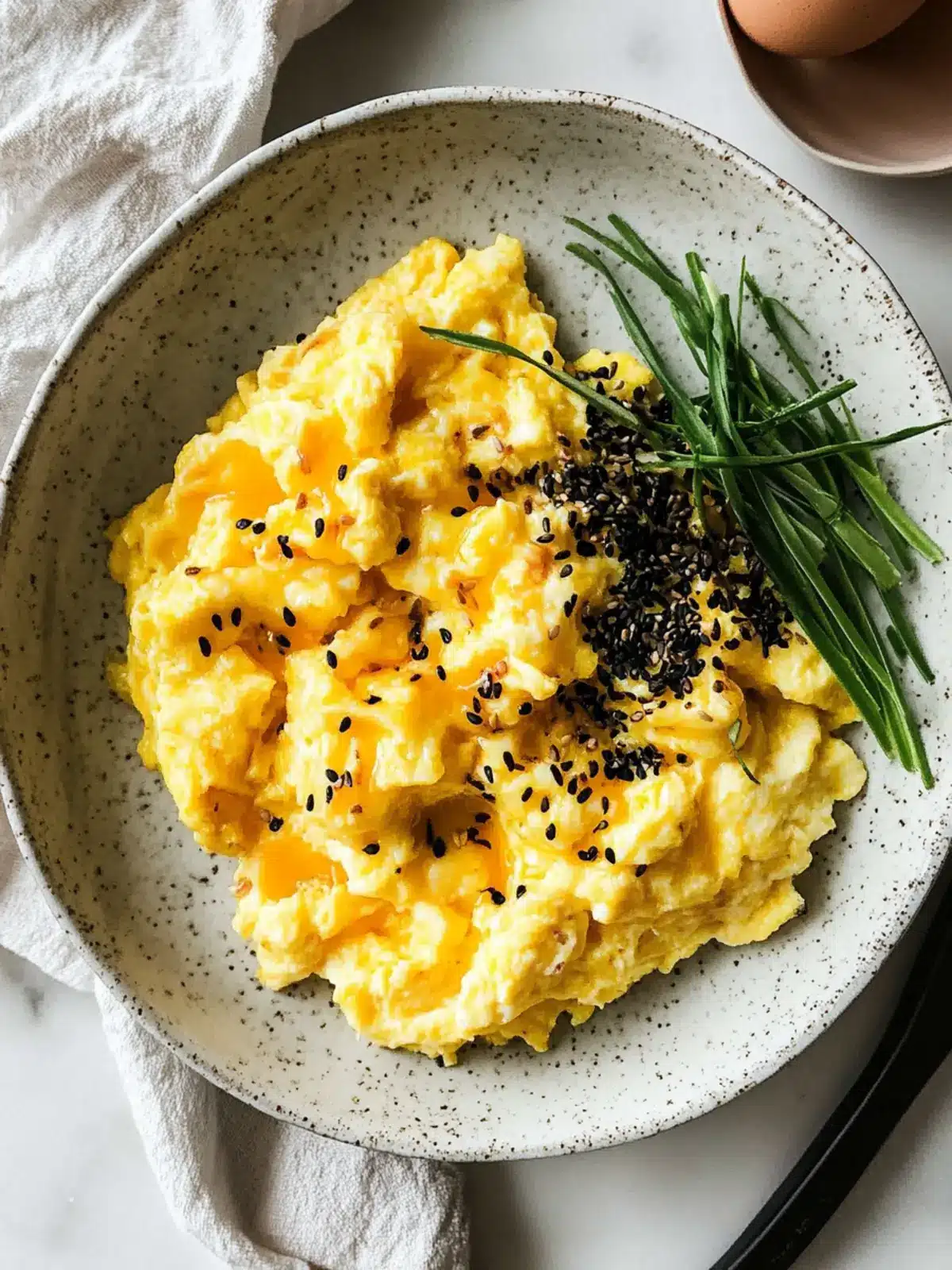
- Make the miso slurry: In a small dish, combine 1 tablespoon white miso paste with 1 tablespoon water. Stir with a fork until the miso dissolves completely. It should look like a smooth, tan liquid with no lumps. This step is crucial. If you add miso directly to the eggs, you will end up with clumps of salty paste hiding in your breakfast. Trust me, I learned this the hard way.
- Whisk the eggs: Crack 4 large eggs into a small mixing bowl. Add the miso slurry on top. Whisk vigorously for about 30 seconds until the mixture is uniform and slightly frothy on top. You want air incorporated here. The bubbles help create that fluffy texture later. The color will be a pale beige, which is normal. Do not panic.
- Heat the pan: Place your nonstick skillet over medium-low heat. Add 1 tablespoon unsalted butter and let it melt slowly. Swirl the pan to coat the bottom evenly. The butter should foam gently but not brown. If it starts browning, your heat is too high. Turn it down immediately.
- Pour in the eggs: Once the butter is melted and foamy, pour the egg mixture into the center of the pan. Let it sit undisturbed for about 20 seconds. You will see the edges start to set while the center remains liquid. This is the moment to grab your spatula.
- Start folding: Using your silicone spatula, gently push the cooked edges toward the center. Tilt the pan to let the uncooked egg flow into the empty spaces. Repeat this motion every 15 to 20 seconds. Do not stir or chop at the eggs. Fold them gently like you are handling something delicate, because you are.
- Remove from heat early: When the eggs are about 70 percent set but still look soft and slightly wet, take the pan off the heat. The residual heat will continue cooking the eggs. If you wait until they look fully cooked in the pan, they will be dry and rubbery on the plate. This takes about 2 to 3 minutes total from pouring to pulling off the heat.
- Finish and serve: Give the eggs one or two more gentle folds off the heat, then slide them onto a warm plate. They should be soft, pillowy, and slightly custardy. Sprinkle with sliced green onions and sesame seeds if you are using them. Serve immediately while they are still warm and fluffy.
The whole process takes about 5 minutes from start to finish. I usually toast some sourdough while the eggs cook, and by the time the bread pops up, breakfast is ready. It feels almost too easy for how good it tastes.
Cooking Tips & Techniques
I messed up this recipe more times than I want to admit before I got it right. Here is what I learned so you do not have to repeat my mistakes.
Low and slow is the rule: Scrambled eggs hate high heat. It makes them tough and dry almost instantly. Keep your burner on medium-low and be patient. The eggs will cook through eventually, and they will be so much softer for the wait. I ruined my first batch by cranking the heat because I was hungry. They turned into sad, rubbery curds.
Do not over-whisk the miso slurry: You want the miso fully dissolved, but you do not need to beat it into submission. A few seconds of stirring with a fork is enough. If you whisk it too aggressively, you incorporate too much air, which can make the eggs puff up and then deflate. Gentle and thorough is the sweet spot.
Pull the pan off early: This is the biggest game changer for fluffy eggs. Eggs continue cooking after you remove them from the heat. If they look perfect in the pan, they will be overcooked on the plate. Pull them when they still look slightly underdone and wet. The residual heat finishes the job. I still occasionally leave them on too long when I am distracted, and I always regret it.
Use a silicone spatula: Metal spatulas can scratch your nonstick pan and also tend to chop the eggs into tiny pieces. Silicone spatulas are gentler and let you fold the eggs into soft, billowy curds. I bought a cheap set from the grocery store years ago, and they are still going strong.
Let the eggs rest before serving: I know it is tempting to eat straight from the pan, but letting the eggs sit on the plate for about 30 seconds allows the curds to settle and the texture to stabilize. They will be fluffier and more cohesive. Use that time to sprinkle your garnishes.
Variations & Adaptations
This recipe is incredibly flexible. Here are some ways I have changed it up depending on my mood and what is in my fridge.
Add vegetables: Sauté a handful of spinach or thinly sliced mushrooms in the pan before adding the eggs. Remove them first, cook the eggs, then fold the vegetables back in at the end. The earthy mushrooms pair beautifully with the miso. I did this on a rainy Tuesday and it felt like a restaurant breakfast.
Make it spicy: Add a teaspoon of chili crisp or a pinch of red pepper flakes to the egg mixture before cooking. The heat cuts through the rich umami of the miso perfectly. I love the Lao Gan Ma brand chili crisp for this. It adds crunch and heat in one shot.
Go dairy-free: Swap the butter for coconut oil or a good vegan butter. The flavor changes slightly, but the texture stays fluffy and satisfying. I have used Miyoko’s vegan butter with great results. The miso does so much heavy lifting flavor-wise that you barely notice the swap.
Turn it into a bowl: Serve the eggs over steamed rice with a drizzle of soy sauce, some avocado slices, and a sprinkle of furikake. This turns breakfast into a hearty meal that keeps you full for hours. I have eaten this for lunch more times than I care to count.
Add cheese: Fold in a handful of shredded cheddar or crumbled feta right before you pull the eggs off the heat. The salty cheese amplifies the savory notes from the miso. I tried this with feta on a whim, and it was incredible. The tanginess of the feta and the earthiness of the miso are a perfect match.
If you love savory breakfasts with umami depth, you will probably also enjoy this savory chicken and spinach ramen for another cozy meal that hits similar notes. And for a sweet breakfast alternative, these fluffy blueberry ricotta scones make a lovely weekend treat.
Serving & Storage Suggestions
These eggs are best eaten immediately while they are warm and fluffy. That is when the texture is at its peak. But I know life happens, so here is how to handle leftovers.
Serving: Serve the eggs on warm plates to keep them from cooling down too fast. I like to pile them on top of buttered toast or alongside crispy roasted potatoes. A side of fresh avocado or a simple green salad balances the richness nicely. For a complete breakfast, pair them with a cup of green tea or a light matcha latte. The grassy notes of the tea complement the savory miso beautifully.
Storage: Let the eggs cool completely, then transfer them to an airtight container. They will keep in the refrigerator for up to 2 days. The texture will not be as fluffy when reheated, but the flavor remains delicious. I have packed these for quick breakfasts during busy work weeks.
Reheating: The best way to reheat is in a nonstick pan over low heat. Add a tiny splash of water or a small pat of butter, then gently warm the eggs while stirring occasionally. This takes about 2 minutes. Avoid the microwave if possible. It makes the eggs rubbery and sad. If you must use the microwave, do it in 15-second bursts at 50 percent power, stirring between each burst.
Flavor development: The miso flavor actually mellows and deepens after the eggs sit in the fridge overnight. Some people prefer the leftovers cold straight from the container as a quick snack. I will not judge you if you try it. I definitely have.
Nutritional Information & Benefits
This recipe makes one generous serving or two smaller portions. Here are the approximate nutritional values for the full batch:
- Calories: 380
- Protein: 24g
- Fat: 28g
- Carbohydrates: 4g
- Fiber: 0g
- Sugar: 1g
- Sodium: 680mg
Eggs are a fantastic source of high-quality protein and contain essential nutrients like vitamin B12, selenium, and choline, which supports brain health. Miso paste is fermented, which means it contains probiotics that are beneficial for gut health. The fermentation process also makes the nutrients in the soybeans more bioavailable, so your body can absorb them more easily.
This breakfast is naturally gluten-free (check your miso label to be sure it is made with rice instead of barley) and low in carbohydrates, making it suitable for low-carb and keto-friendly diets. The protein and healthy fats from the eggs and butter will keep you full and satisfied for hours, preventing mid-morning snack cravings.
I love that this recipe feels indulgent while actually being quite nutritious. It is proof that healthy breakfasts do not have to be boring or bland.
Conclusion
These fluffy miso scrambled eggs turned a kitchen accident into my favorite breakfast discovery of the year. They are proof that the best recipes often come from mistakes, spilled coffee, and half-asleep decisions. The combination of creamy eggs and deep, savory miso is something I crave regularly now. It is comfort food that wakes you up instead of putting you back to sleep.
I encourage you to make these your own. Play with the garnishes, try different miso varieties, or pile them on whatever bread you have in the house. The recipe is forgiving enough for beginners and rewarding enough for experienced cooks looking for something new. That is the beauty of simple food done right.
If you try this recipe, I would love to hear about it. Leave a comment below and tell me what twist you added or how it turned out. Share a photo if you are feeling fancy. Your feedback helps me keep creating recipes that actually work in real kitchens, not just in theory. And if you are looking for another quick savory breakfast idea, this quick garlic miso chicken uses the same umami-packed ingredient in a completely different way.
Now go make some eggs. You deserve a breakfast that makes you close your eyes and smile.
Frequently Asked Questions
Can I use red miso instead of white miso?
You can, but the flavor will be much stronger and saltier. Red miso is fermented longer, so it has a more intense, earthy taste. If you use red miso, start with half the amount and adjust from there. The color of the eggs will also be darker, almost brownish. It tastes good but looks different.
Why are my scrambled eggs turning out watery?
Watery eggs usually mean the heat was too low or you added too much water to the miso slurry. Stick to the 1:1 ratio of miso to water. Also, make sure your pan is hot enough that the eggs start setting within 20 seconds of hitting the pan. If the pan is too cool, the eggs release liquid instead of forming soft curds.
Can I make this recipe ahead of time for meal prep?
These eggs are best fresh, but you can prep the miso slurry up to 3 days in advance. Store it in a small airtight container in the refrigerator. When you are ready to cook, just whisk it into the eggs and proceed with the recipe. This saves you about 30 seconds in the morning, which honestly matters when you are half-asleep.
Is miso paste healthy?
Yes, miso paste is quite nutritious. It is a fermented food rich in probiotics that support digestive health. It also contains protein, fiber, vitamins, and minerals like zinc and manganese. The fermentation process breaks down antinutrients in soybeans, making the nutrients easier for your body to absorb. Just watch the sodium content if you are on a low-salt diet.
What should I serve with miso scrambled eggs?
These eggs pair beautifully with so many things. Buttered toast, steamed rice, roasted potatoes, or even a simple green salad all work well. For a complete breakfast, add some avocado slices and a sprinkle of furikake. If you want something sweet on the side, these strawberry upside down cake slices make a lovely brunch addition.
Pin This Recipe!
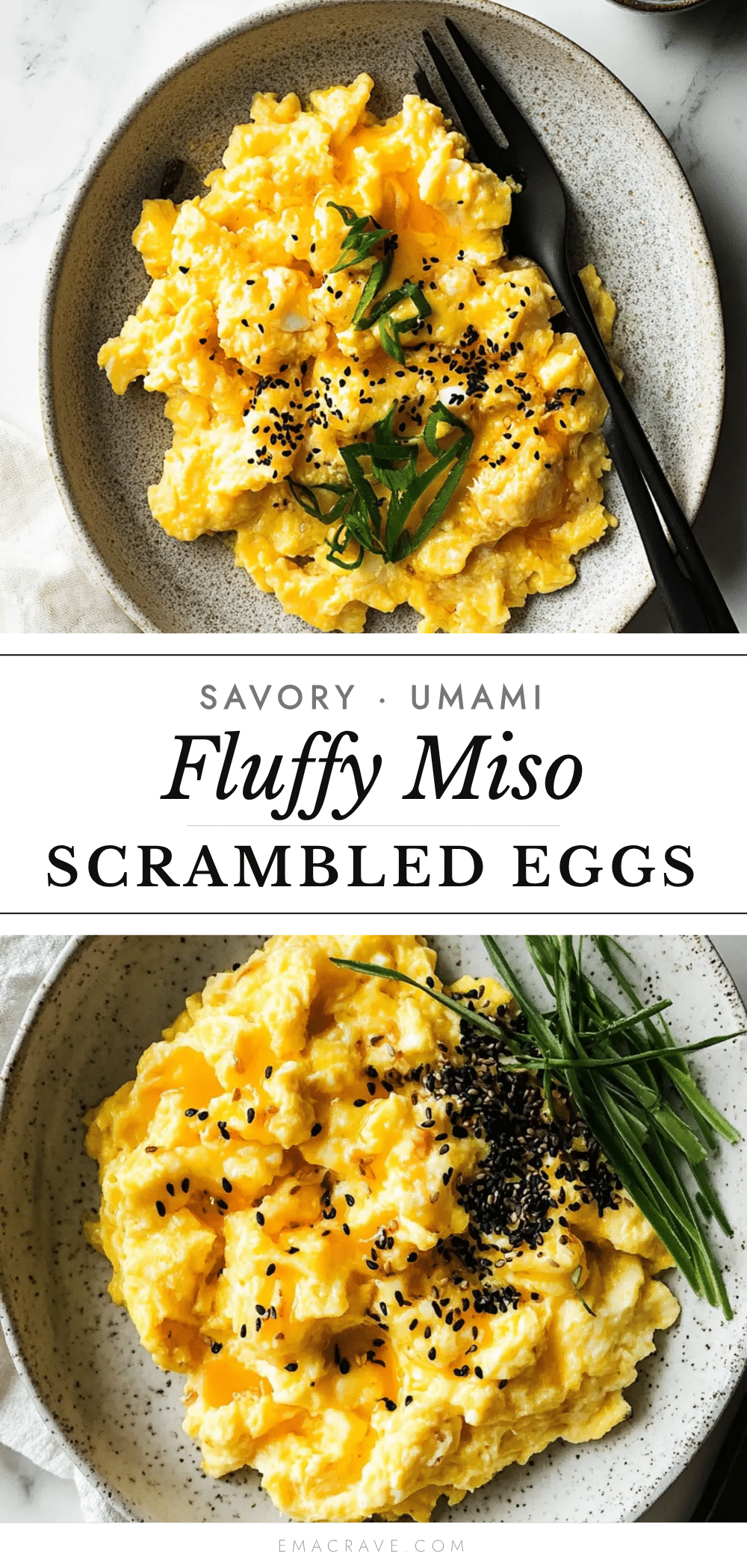
Fluffy Miso Scrambled Eggs: Easy Savory Breakfast

Fluffy, savory scrambled eggs with umami-rich white miso paste, ready in 10 minutes. A quick and easy breakfast upgrade that turns a kitchen accident into a new favorite.
- Prep Time: 5 minutes
- Cook Time: 5 minutes
- Total Time: 10 minutes
- Yield: 2 servings 1x
- Category: Breakfast
- Cuisine: Japanese-inspired
Ingredients
- 4 large eggs
- 1 tablespoon white miso paste
- 1 tablespoon unsalted butter
- 1 tablespoon water
- Optional garnishes: sliced green onions, sesame seeds, a drizzle of sesame oil, or a pinch of chili flakes
Instructions
- Make the miso slurry: In a small dish, combine 1 tablespoon white miso paste with 1 tablespoon water. Stir with a fork until the miso dissolves completely into a smooth, tan liquid.
- Whisk the eggs: Crack 4 large eggs into a small mixing bowl. Add the miso slurry. Whisk vigorously for about 30 seconds until the mixture is uniform and slightly frothy.
- Heat the pan: Place a nonstick skillet over medium-low heat. Add 1 tablespoon unsalted butter and let it melt slowly. Swirl to coat the bottom evenly. The butter should foam gently but not brown.
- Pour in the eggs: Once the butter is melted and foamy, pour the egg mixture into the center of the pan. Let it sit undisturbed for about 20 seconds until the edges start to set.
- Start folding: Using a silicone spatula, gently push the cooked edges toward the center. Tilt the pan to let uncooked egg flow into empty spaces. Repeat every 15 to 20 seconds. Do not stir or chop; fold gently.
- Remove from heat early: When the eggs are about 70% set but still soft and slightly wet, take the pan off the heat. Residual heat will finish cooking. Total cooking time is about 2 to 3 minutes.
- Finish and serve: Give the eggs one or two more gentle folds off the heat, then slide onto a warm plate. Sprinkle with optional garnishes and serve immediately.
Notes
Use white miso (shiro miso) for best results; it’s milder and sweeter. Avoid dark miso as it can make eggs muddy and too salty. The miso slurry step is crucial to prevent clumps. Cook on medium-low heat and remove from heat when eggs are still slightly underdone to ensure fluffiness. Leftovers can be refrigerated for up to 2 days; reheat gently in a nonstick pan with a splash of water or butter.
Nutrition
- Serving Size: 1 serving (half of r
- Calories: 380
- Sugar: 1
- Sodium: 680
- Fat: 28
- Saturated Fat: 12
- Carbohydrates: 4
- Protein: 24
Keywords: miso scrambled eggs, fluffy scrambled eggs, savory breakfast, umami eggs, easy breakfast recipe, gluten-free breakfast, low-carb breakfast