Love this? Save it for later!
Share the inspiration with your friends
“You’ve got to try the tofu bulgogi tonight,” my friend texted me one evening, after a long day of juggling work and home chaos. Honestly, I was skeptical at first — tofu and bulgogi? That traditional Korean sweet-savory meat dish replaced with tofu? But curiosity got the better of me. I pulled out some extra-firm tofu from the fridge, knowing well how tricky it can be to get the right texture. I followed her recipe with a few tweaks, aiming for those crispy edges that remind me of perfectly grilled meat.
As the tofu sizzled in the pan, releasing that intoxicating aroma of garlic, ginger, and gochujang, I realized this was no ordinary tofu dish. The bold Korean spices didn’t just mask the tofu; they transformed it. When I took the first bite, the crispy edges gave way to a tender, flavorful center that made me pause and savor the unexpected depth. It wasn’t just dinner — it was a little celebration of how plant-based meals can surprise you. That day, tofu bulgogi became my quick fix for weeknight dinners, a recipe I found myself making multiple times in a week, tweaking sauces and balancing spice levels.
What stuck with me was how this dish felt like a cozy, bold hug after the whirlwind of daily life. It’s the kind of meal that asks for no fuss but rewards you with layers of flavor and texture. If you’ve ever thought tofu was dull or boring, this recipe might just change your mind — it certainly changed mine.
Why You’ll Love This Flavorful Tofu Bulgogi Recipe
Cooking this tofu bulgogi recipe has been a revelation, and I’m confident you’ll appreciate it for many reasons. After testing multiple versions, here’s what stands out:
- Quick & Easy: From prep to plate in about 30 minutes — perfect for busy weeknights or when you need a flavorful meal in a pinch.
- Simple Ingredients: No hunting for obscure items; most are pantry staples or easy to find at your local grocery store.
- Perfect for Plant-Based Meals: Whether you’re vegetarian, vegan, or just tofu-curious, this recipe satisfies bold cravings without meat.
- Crispy Edges, Tender Inside: Achieving that signature bulgogi texture with tofu might sound tricky, but this method nails it every time.
- Bold Korean Spice: The magic lies in the marinade — a balanced blend of sweet, spicy, and umami that’s both authentic and approachable.
- Crowd-Pleaser: I’ve served this to guests who usually shy away from tofu, and it always disappears fast.
What makes this tofu bulgogi different? The secret is in the marinade and the cooking technique. Instead of just soaking tofu, the recipe calls for pressing it to remove moisture, slicing it thin for maximum caramelization, and pan-frying in a way that creates incredible crispy edges — the kind that make you forget you’re eating tofu. Plus, I like to toss in a little toasted sesame oil at the end for that perfect nutty hit.
This recipe isn’t just about eating; it’s about savoring. It’s the kind of dish that makes you close your eyes after the first bite and think, “Yeah, this is good.” For a meal that feels special but doesn’t demand hours in the kitchen, this tofu bulgogi is a keeper.
What Ingredients You Will Need
This tofu bulgogi recipe uses simple, wholesome ingredients to deliver bold flavor and satisfying texture without fuss. Most of these are pantry staples, with a few Korean essentials you’ll want to keep on hand for authentic flavor.
- Extra-firm tofu: Pressed and sliced thin — the star ingredient. I recommend Nasoya brand for best texture.
- Gochujang (Korean chili paste): Adds heat and depth. If you want milder spice, reduce the amount or swap with ssamjang.
- Soy sauce: Use low-sodium if preferred to control saltiness.
- Brown sugar or maple syrup: For that signature sweet balance.
- Garlic: Freshly minced, for pungent aroma.
- Ginger: Grated for warmth and a little zing.
- Sesame oil: Toasted, added at the end for nutty fragrance.
- Green onions: Thinly sliced, for freshness and crunch.
- Vegetable oil: For frying (neutral oil like canola or grapeseed works best).
- Black pepper: Freshly ground, to taste.
Optional but recommended:
- Toasted sesame seeds: For garnish and texture.
- Thinly sliced onions or carrots: To add crunch and color (try adding these for more veggie goodness).
If you want to swap the tofu, firm tempeh can be used, but keep in mind the flavor and texture will differ. For a gluten-free version, use tamari instead of soy sauce. This recipe adapts well to seasonal veggies, too — in summer, I like adding sliced bell peppers or zucchini for a fresh twist.
Equipment Needed
- Tofu press or heavy plates: Pressing tofu is key to getting crispy edges, so a tofu press really helps, but a stack of plates and a heavy can works just fine.
- Sharp knife: For slicing tofu thinly and evenly.
- Mixing bowl: To combine marinade ingredients.
- Non-stick or cast-iron skillet: Essential for frying tofu to get those crispy edges without sticking.
- Spatula or tongs: For flipping tofu carefully.
- Measuring spoons and cups: To keep seasoning balanced.
If you don’t have a cast iron skillet, a heavy-bottomed frying pan works well too — just be patient and avoid moving the tofu too soon; that helps develop a better crust. I once tried baking the tofu instead of frying for a quicker option, but the skillet method delivers that unbeatable crispy edge every time.
Preparation Method
- Press the tofu: Wrap the block of extra-firm tofu in a clean kitchen towel or paper towels. Place it between two plates, then weight it down with something heavy (like a cast iron pan or canned goods). Let it press for at least 20 minutes to remove excess moisture. This step is crucial to avoid soggy tofu and achieve those crispy edges.
- Slice the tofu: After pressing, slice the tofu into thin, bite-sized strips about 1/4-inch (0.6 cm) thick. Thin slices help the marinade soak in and crisp up better when cooked.
- Prepare the marinade: In a mixing bowl, whisk together 3 tablespoons (45 ml) gochujang, 2 tablespoons (30 ml) soy sauce, 1 tablespoon (15 ml) brown sugar or maple syrup, 2 cloves garlic (minced), 1 teaspoon (5 ml) grated ginger, 1 teaspoon (5 ml) toasted sesame oil, and freshly ground black pepper to taste. Stir until smooth.
- Marinate the tofu: Gently toss the tofu slices in the marinade, making sure each piece is well coated. Cover and refrigerate for at least 15 minutes, but up to 1 hour if you have time. This lets flavors deeply infuse the tofu.
- Heat the skillet: Place a non-stick or cast iron skillet over medium-high heat. Add 2 tablespoons (30 ml) vegetable oil and let it heat until shimmering but not smoking.
- Cook tofu in batches: Arrange tofu slices in a single layer, leaving space between pieces. Don’t overcrowd the pan. Let cook undisturbed for 3-4 minutes, or until the bottom is golden brown and crispy. Flip carefully with a spatula or tongs and cook the other side another 3 minutes. Repeat with remaining tofu, adding more oil if needed.
- Add green onions: In the last minute of cooking, toss in sliced green onions and any optional veggies like thin carrots or onions. Stir gently to warm through and mingle flavors.
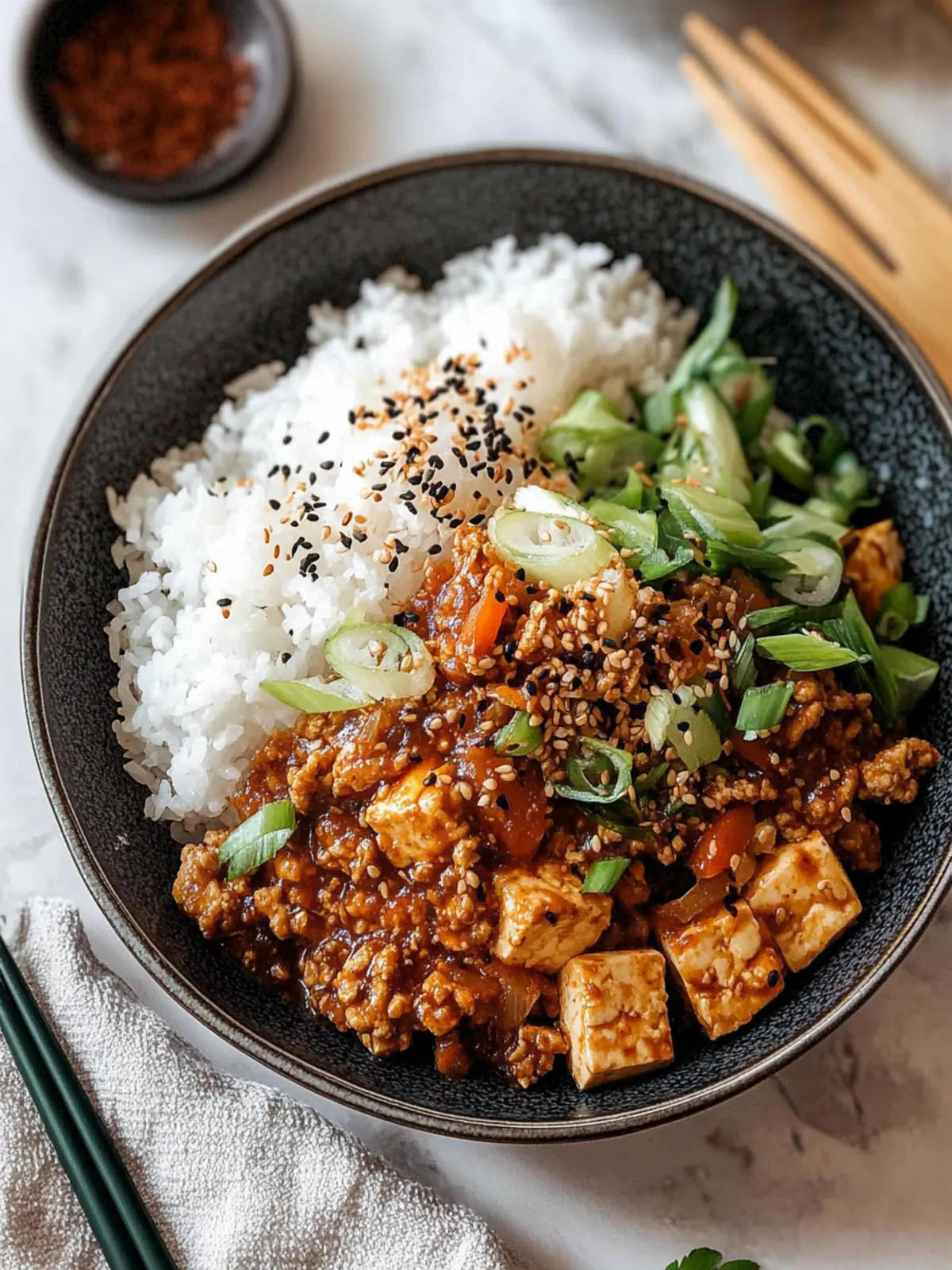
- Finish and serve: Transfer tofu bulgogi to a serving plate. Sprinkle with toasted sesame seeds and an extra drizzle of sesame oil if you like. Serve immediately, ideally with steamed rice or wrapped in lettuce leaves for a fresh bite.
Watch out for tofu sticking if your pan isn’t hot enough — patience is key. Don’t flip too soon, or you risk breaking the slices. The aroma should smell fragrant and slightly sweet with a hint of smoky char when ready.
Cooking Tips & Techniques
Getting tofu bulgogi just right can feel a bit intimidating, but here are some tips I’ve learned the hard way:
- Press tofu thoroughly: I once skipped pressing and ended up with soggy, flavorless tofu. Pressing really makes a world of difference in texture.
- Slice tofu thinly and evenly: Uneven slices cook unevenly, so take a moment to be precise. Thin slices crisp up better, mimicking the texture of traditional bulgogi meat.
- Marinate adequately: Don’t rush the marinade — even 15 minutes helps, but longer is better for deeper flavor.
- Use high heat for frying: A hot pan ensures a nice sear and crispy edges. If your tofu sticks, give it another 30 seconds before flipping; it will release naturally when ready.
- Don’t overcrowd the pan: Cooking in batches prevents steaming and keeps the tofu crispy.
- Finish with sesame oil: Adding toasted sesame oil at the end brightens the dish and adds that classic Korean aroma.
When multitasking, start your rice or side dishes first. Then marinate tofu while the rice cooks — this way, dinner comes together seamlessly. I’ve found that adjusting your heat slightly during cooking helps avoid burnt edges but still creates that perfect crisp.
Variations & Adaptations
This tofu bulgogi recipe is super versatile and welcomes your creativity. Here are some ways to switch it up:
- Spice it up or down: Adjust gochujang quantity to suit your heat tolerance, or swap it for a mild chili paste for less kick.
- Gluten-free option: Use tamari or coconut aminos instead of soy sauce to keep it gluten-free without sacrificing umami.
- Vegan & allergy-friendly: Stick to maple syrup or agave instead of honey for sweetness, and double-check your gochujang brand for vegan certification.
- Different proteins: Tempeh or seitan can replace tofu if you want a meatier bite, but cooking times may vary.
- Oven-baked version: For less oil, bake marinated tofu on a parchment-lined sheet at 400°F (200°C) for 20-25 minutes, flipping halfway. It won’t be as crispy as skillet-fried but still delicious.
One personal favorite variation is to add thinly sliced king oyster mushrooms to the skillet toward the end for an earthy, meaty texture that complements the tofu perfectly. It’s a little trick I borrowed from my hearty vegan sweet potato stew recipe, and it adds a satisfying twist here.
Serving & Storage Suggestions
This tofu bulgogi is best served hot, straight from the skillet, to enjoy the crispy edges at their peak. Serve it over steamed jasmine or short-grain rice for a classic combo. For a lighter option, wrap it in fresh lettuce leaves with a dab of kimchi or sliced cucumbers for crunch.
It pairs beautifully with simple side dishes like quick pickled radishes or a cucumber salad. If you’re looking for a cozy Korean-inspired meal, consider pairing it with a bowl of hearty vegan sweet potato stew for a warming combo.
To store leftovers, place tofu bulgogi in an airtight container in the fridge for up to 3 days. When reheating, use a skillet over medium heat rather than the microwave to bring back some crispiness. Add a splash of oil if needed. The flavors actually deepen after a day, so leftovers can be even better the next day.
Nutritional Information & Benefits
This tofu bulgogi packs a punch in flavor without weighing you down. Per serving (about 1 cup or 200g), you can expect roughly 200-250 calories, with around 15-18 grams of protein thanks to the tofu. It’s low in saturated fat and contains no cholesterol, making it heart-friendly.
Key ingredients like garlic and ginger offer natural anti-inflammatory benefits, while gochujang brings capsaicin, which some studies suggest aids metabolism. Using minimal oil and a moderate amount of sugar keeps it balanced for those mindful of macros.
For gluten-free eaters, swapping to tamari keeps it safe without losing the deep umami flavor. Plus, tofu is a fantastic source of plant-based protein and calcium, making this dish a solid choice for anyone looking to reduce meat intake but keep satisfying meals on the table.
Conclusion
This flavorful tofu bulgogi recipe has become a reliable favorite in my kitchen — a dish that’s quick, satisfying, and bursting with bold Korean spice. It’s easy to customize to your taste and dietary needs, whether you want to dial up the heat or keep it mild and comforting. I love how it transforms simple tofu into something special with those irresistible crispy edges.
If you’re curious about Korean flavors but want a plant-based twist that doesn’t compromise on texture or depth, this recipe is for you. I hope it becomes as much a staple in your weeknight repertoire as it is in mine. And hey, if you’re a fan of crispy, savory dishes, this might remind you a little of the crispy white barbecue chicken I shared before — just tofu-style.
Give it a try, tweak it your way, and don’t hesitate to share your own twists or questions below. Cooking is all about experimentation and joy, after all!
FAQs About Flavorful Tofu Bulgogi
Can I use soft or silken tofu instead of extra-firm?
Soft or silken tofu is too fragile for this recipe and won’t crisp up well. Extra-firm tofu is best for holding shape and creating crispy edges.
How do I make this recipe spicier or milder?
Adjust the amount of gochujang to control heat. For milder flavor, reduce it or mix with a bit of sweet chili sauce. For more heat, add additional chili flakes or fresh sliced chilies.
Is it necessary to press tofu before cooking?
Yes, pressing removes excess moisture, which helps the tofu absorb marinade and crisp up during cooking. Skipping this step often leads to soggy tofu.
Can I prepare the marinade and tofu ahead of time?
Absolutely! Marinate the tofu up to 24 hours in advance and keep refrigerated. This deepens flavor and makes weeknight cooking quicker.
What are good side dishes to serve with tofu bulgogi?
Steamed rice, kimchi, pickled vegetables, or fresh lettuce wraps all pair nicely. You might also enjoy it alongside a lentil lasagna for a hearty meal.
Pin This Recipe!
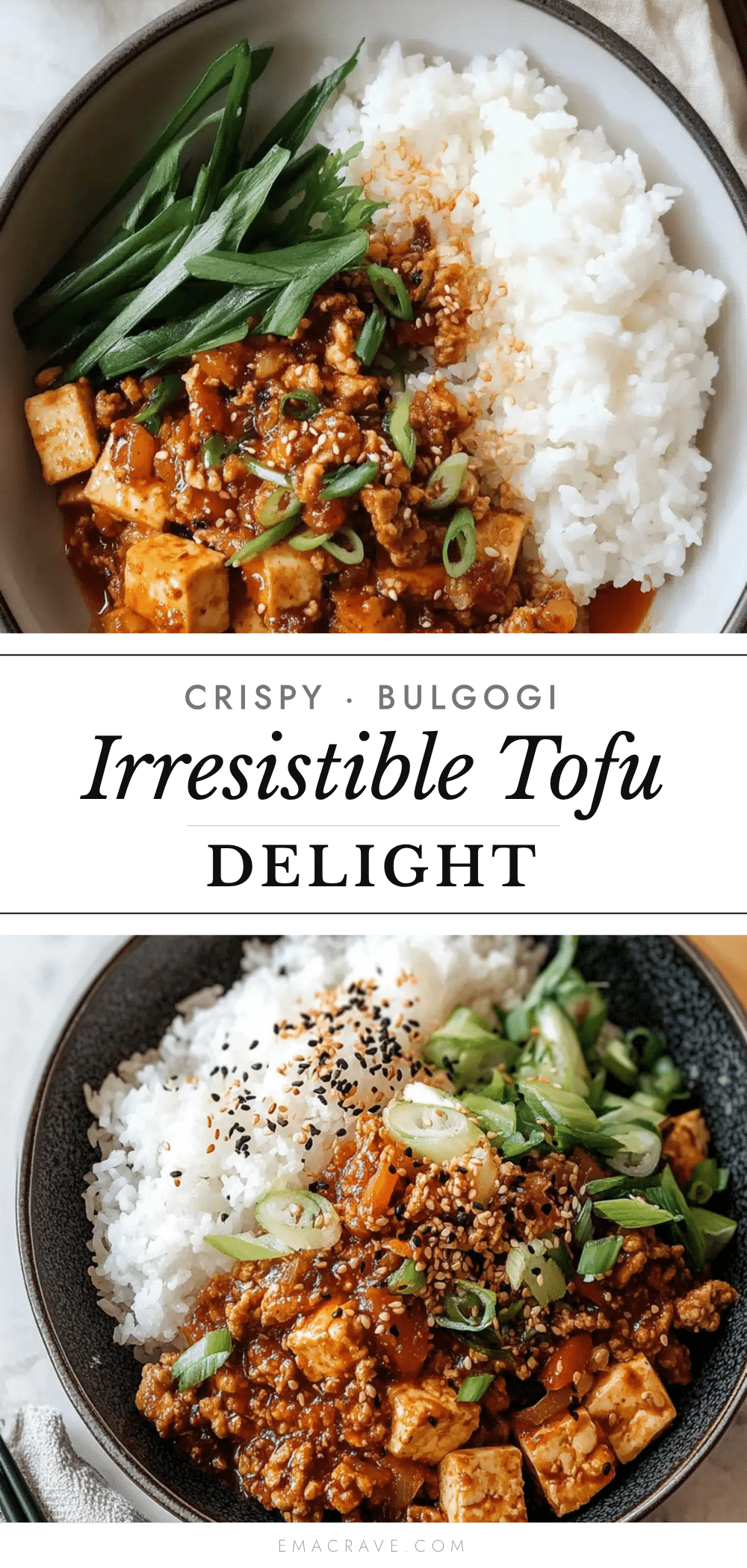
Flavorful Tofu Bulgogi Recipe Easy Crispy Edges Korean Spice
A quick and easy Korean-inspired tofu bulgogi recipe featuring crispy edges and bold, sweet-savory spices. Perfect for plant-based meals with authentic flavor and satisfying texture.
- Prep Time: 25 minutes
- Cook Time: 10 minutes
- Total Time: 35 minutes
- Yield: 4 servings 1x
- Category: Main Course
- Cuisine: Korean
Ingredients
- 14 oz extra-firm tofu, pressed and sliced thin
- 3 tablespoons gochujang (Korean chili paste)
- 2 tablespoons soy sauce (low-sodium preferred)
- 1 tablespoon brown sugar or maple syrup
- 2 cloves garlic, minced
- 1 teaspoon grated ginger
- 1 teaspoon toasted sesame oil
- 2 tablespoons vegetable oil (canola or grapeseed)
- 2 green onions, thinly sliced
- Freshly ground black pepper, to taste
- Optional: toasted sesame seeds for garnish
- Optional: thinly sliced onions or carrots for added crunch and color
Instructions
- Press the tofu: Wrap the block of extra-firm tofu in a clean kitchen towel or paper towels. Place it between two plates, then weight it down with something heavy. Let it press for at least 20 minutes to remove excess moisture.
- Slice the tofu into thin, bite-sized strips about 1/4-inch thick.
- Prepare the marinade by whisking together gochujang, soy sauce, brown sugar or maple syrup, minced garlic, grated ginger, toasted sesame oil, and freshly ground black pepper until smooth.
- Gently toss the tofu slices in the marinade, ensuring each piece is well coated. Cover and refrigerate for at least 15 minutes, up to 1 hour.
- Heat a non-stick or cast iron skillet over medium-high heat. Add vegetable oil and heat until shimmering but not smoking.
- Cook tofu in batches: arrange tofu slices in a single layer without overcrowding. Cook undisturbed for 3-4 minutes until golden brown and crispy. Flip and cook the other side for 3 minutes. Repeat with remaining tofu, adding more oil if needed.
- In the last minute of cooking, add sliced green onions and optional veggies like thin carrots or onions. Stir gently to warm through.
- Transfer tofu bulgogi to a serving plate. Sprinkle with toasted sesame seeds and drizzle with extra sesame oil if desired. Serve immediately.
Notes
Press tofu thoroughly to remove moisture for crispy edges. Slice tofu thinly and evenly for best texture. Marinate for at least 15 minutes for deeper flavor. Use high heat and avoid overcrowding the pan to achieve a good sear. Finish with toasted sesame oil for authentic aroma. For gluten-free, substitute soy sauce with tamari. Baking is an option but will yield less crispy tofu.
Nutrition
- Serving Size: About 1 cup (200g)
- Calories: 225
- Sugar: 6
- Sodium: 550
- Fat: 14
- Saturated Fat: 2
- Carbohydrates: 12
- Fiber: 2
- Protein: 17
Keywords: tofu bulgogi, Korean tofu recipe, plant-based bulgogi, vegan Korean recipe, crispy tofu, gochujang tofu, easy tofu recipe