Love this? Save it for later!
Share the inspiration with your friends
“You sure that’s not too spicy?” my friend asked with a raised eyebrow, glancing at the glossy, reddish eggplant sizzling in my pan. Honestly, I wasn’t quite sure myself when I first tossed gochujang into this dish. I remember that night clearly — a halfway attempt to whip something quick after a long day, with just a few ingredients in the fridge and a stubborn craving for something bold. I had a small eggplant, a jar of gochujang that had been sitting on the shelf like a forgotten relic, and a vague idea to stir-fry. The result? A surprisingly flavorful spicy gochujang eggplant recipe that stuck around in my dinner rotation more often than I expected.
That mix of smoky, sweet, and fiery flavors combined with tender, silky eggplant was something I didn’t anticipate but absolutely welcomed. Each bite felt like a little comforting punch — you know, the kind that makes you pause and think, “Okay, that’s good.” It’s funny how a casual attempt to use up ingredients turned into a recipe I now rely on for quick weeknight dinners or when I want to impress guests without fussing too much.
What’s stuck with me the most is how the gochujang transforms the eggplant, giving it this rich, spicy depth that’s both approachable and exciting. It’s not just heat for heat’s sake; there’s a balance that makes it addictive. This dish quietly became my go-to when I wanted something Korean-inspired but without a ton of steps or weird ingredients. And honestly, it’s a joy to cook — fast, flavorful, and just a little bit adventurous. If you’re the kind of cook who likes a little kick with your veggies, this recipe might just become your new favorite too.
Why You’ll Love This Recipe
Having tested this flavorful spicy gochujang eggplant recipe through many dinners (some calm, some chaotic), I can say it ticks a lot of boxes. Here’s why it might win you over as it did me:
- Quick & Easy: This dish comes together in under 30 minutes, making it a lifesaver for busy weeknights or those “what’s for dinner?” moments.
- Simple Ingredients: Most of what you need is probably already in your pantry—eggplant, garlic, soy sauce, and that magical jar of gochujang.
- Perfect for Korean-Inspired Meals: It fits beautifully on a dinner table alongside steamed rice and kimchi or as part of a larger spread.
- Crowd-Pleaser: From my experience, even friends who usually shy away from spicy or unfamiliar flavors end up asking for seconds.
- Unbelievably Delicious: The eggplant’s creamy texture perfectly absorbs the spicy, tangy sauce, making every bite satisfyingly rich.
- Unique Flavor Profile: This isn’t just another stir-fried veggie dish—it’s the clever use of gochujang combined with a quick caramelization that brings out a complex, smoky sweetness.
Unlike other recipes that might overload on ingredients or complicated steps, this one sticks to a straightforward method but delivers a big punch of flavor. It’s a recipe I often compare to my gochujang chicken skewers for its bold taste but with a vegetarian twist that’s just as satisfying. The balance between heat, umami, and a touch of sweetness is what makes it linger in your mind long after the meal.
What Ingredients You Will Need
This flavorful spicy gochujang eggplant recipe relies on simple, wholesome ingredients to bring big taste without complicated prep. Here’s what you’ll want to gather:
- Eggplant: One medium-sized Asian or globe eggplant, about 1 pound (450 g), sliced into bite-sized pieces. Asian eggplants tend to be less bitter and have a thinner skin, but globe works fine too.
- Gochujang: 2 tablespoons of Korean chili paste. I like Chung Jung One brand for its balanced heat and sweetness.
- Soy Sauce: 1 tablespoon, low-sodium preferred (adds savory depth).
- Rice Vinegar: 1 tablespoon (for a subtle tang that cuts through richness).
- Brown Sugar or Honey: 1 teaspoon (balances the heat and adds caramel notes).
- Garlic: 2 cloves, minced (brings aromatic warmth).
- Sesame Oil: 1 teaspoon, toasted if possible (adds nutty fragrance).
- Vegetable Oil: 2 tablespoons, for frying.
- Green Onions: 2 stalks, thinly sliced (for garnish and fresh bite).
- Sesame Seeds: 1 teaspoon, toasted (optional for crunch and visual appeal).
You can swap brown sugar with maple syrup or agave nectar if you prefer a different sweetness. For a gluten-free version, use tamari instead of soy sauce. If you’re out of rice vinegar, a mild apple cider vinegar works in a pinch.
Seasonal tip: In summer, try adding fresh julienned bell peppers or zucchini alongside the eggplant for extra color and crunch. I once added thinly sliced shiitake mushrooms to this dish, which gave it a lovely earthy background flavor.
Equipment Needed
- Large non-stick skillet or wok: Ideal for evenly cooking the eggplant and allowing it to caramelize without sticking.
- Sharp chef’s knife: For slicing the eggplant cleanly and safely.
- Cutting board: Preferably one with a non-slip base to keep things steady.
- Mixing bowl: To combine the sauce ingredients easily before adding to the pan.
- Measuring spoons: For accurate seasoning.
- Wooden spoon or spatula: To stir and toss the ingredients gently.
If you don’t have a wok, a large skillet with a wide surface works just fine. I’ve found that cast iron pans also lend a nice char to the eggplant if you’re careful with the heat, but they require a bit more oil and attention.
For a budget-friendly option, a sturdy non-stick skillet from any basic kitchenware brand will serve you well here. Just make sure it’s large enough to hold the eggplant pieces without overcrowding, so they cook evenly and crisp up.
Preparation Method
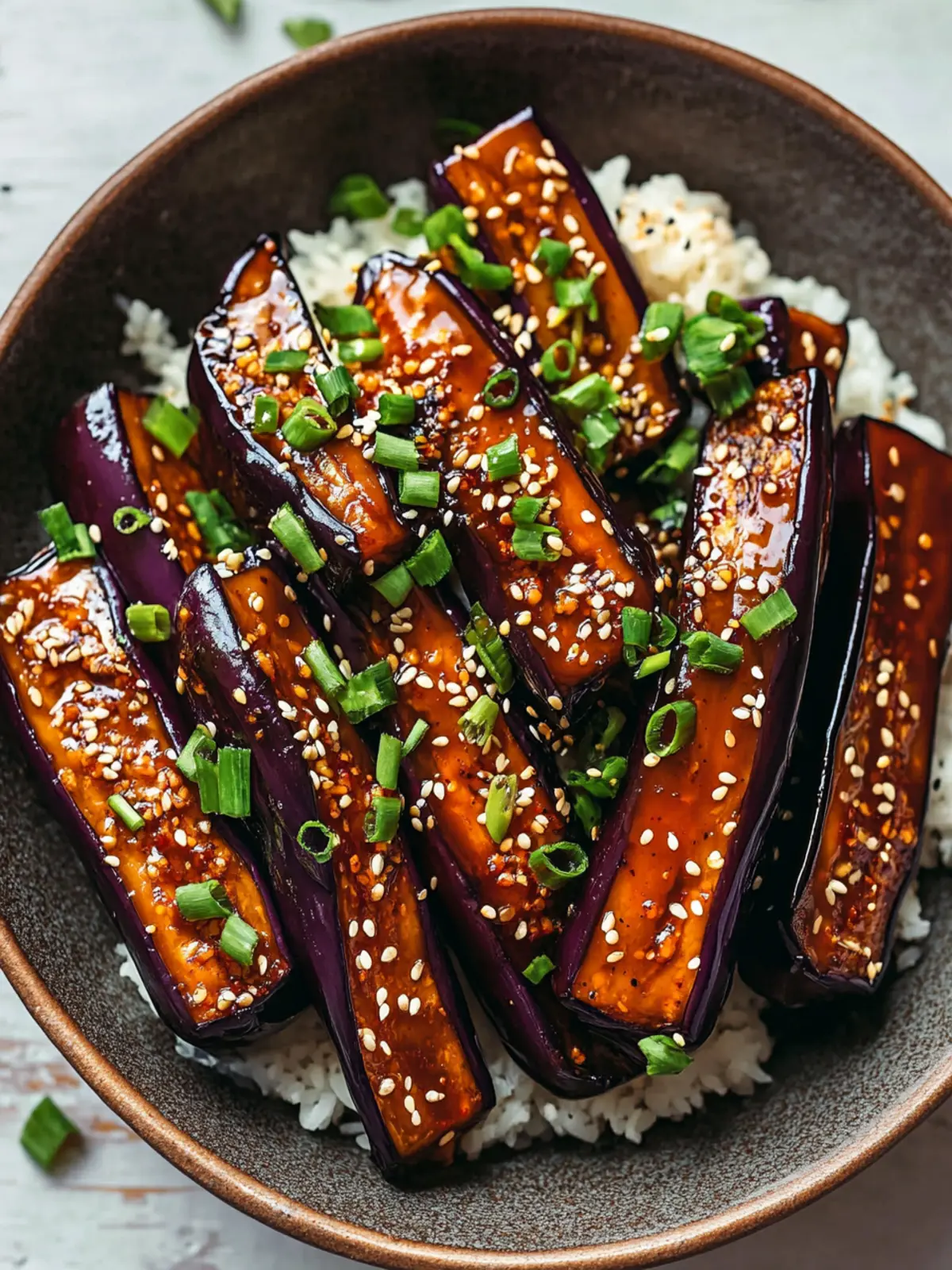
- Prepare the eggplant: Wash and dry the eggplant. Cut off the stem, then slice into roughly 1-inch (2.5 cm) pieces. If your eggplant is large or bitter, salting the pieces lightly and letting them sit for 15 minutes can reduce bitterness. Rinse and pat dry thoroughly before cooking.
- Make the sauce: In a small bowl, whisk together 2 tablespoons gochujang, 1 tablespoon soy sauce, 1 tablespoon rice vinegar, 1 teaspoon brown sugar, and minced garlic. Set aside so the flavors meld while you cook.
- Cook the eggplant: Heat 2 tablespoons vegetable oil in your skillet over medium-high heat. Once hot (oil shimmering), add eggplant pieces in a single layer. Cook without stirring for about 3 minutes to get a nice sear, then toss and cook for another 4–5 minutes until tender and slightly browned. The eggplant should feel soft when poked but still hold its shape.
- Add the sauce: Pour your gochujang mixture over the eggplant. Stir gently to coat all pieces evenly. Let it cook for 2–3 minutes, stirring occasionally, until the sauce thickens slightly and clings to the eggplant.
- Finish and garnish: Remove from heat, drizzle with 1 teaspoon toasted sesame oil, and toss gently. Sprinkle sliced green onions and toasted sesame seeds on top before serving.
Tip: Avoid overcrowding the pan when cooking eggplant; if needed, cook in batches for better caramelization. Also, resist the urge to stir too often early on — letting the eggplant sear undisturbed builds that beautiful flavor.
This method results in tender eggplant with a glossy, spicy-sweet coating that’s just the right balance of heat and savoriness. If you want a little extra texture, you can add chopped peanuts or cashews as a garnish, which I sometimes do when making this for friends.
Cooking Tips & Techniques
Cooking eggplant well can be tricky because it soaks up oil like a sponge. Here’s what I’ve learned to keep it from turning into an oily mess:
- Salt and dry: As mentioned, salting helps draw out excess moisture and bitterness. Be sure to rinse and pat dry completely, or your pan will steam the eggplant instead of searing it.
- Use high heat: Medium-high heat encourages browning and caramelization, which adds depth to the flavor. Too low, and you end up with mushy, bland eggplant.
- Don’t overcrowd: Give each piece room to brown by cooking in batches if necessary. Overcrowding traps moisture and leads to soggy results.
- Stir gently: Eggplant is fragile when cooked, so toss or stir carefully to keep pieces intact.
- Balance flavors: Gochujang has a natural sweetness and heat, but pairing it with rice vinegar and brown sugar creates a sauce that sings with complexity.
- Finish with sesame oil: Adding toasted sesame oil at the end brightens the dish with nutty aroma, but don’t cook it—heat can dull its flavor.
- Common mistake: Overcooking eggplant until it disintegrates. Aim for tender but still holding shape.
One time, I rushed and tossed the eggplant while it was still sticking to the pan, causing it to tear apart. Lesson learned: patience pays off. This recipe rewards a bit of attention but is forgiving enough for weeknight cooks juggling dinner with everything else.
Variations & Adaptations
Want to switch things up or adapt this flavorful spicy gochujang eggplant recipe for your needs? Here are some ideas I’ve tried or considered:
- Vegan Protein Boost: Add pan-fried tofu or tempeh cubes tossed in the same sauce for a heartier meal. The tofu soaks up the gochujang beautifully.
- Milder Version: Use half the gochujang and add a splash more honey or sugar to keep it kid-friendly or less fiery.
- Roasted Instead of Stir-Fried: Try roasting eggplant pieces tossed in oil until caramelized, then stir in the gochujang sauce off heat for a slightly smoky twist.
- Seasonal Veggie Mix: Toss in sliced shiitake mushrooms, zucchini, or bell peppers to add color and texture.
- Nut-Free: Skip sesame seeds and oil, or substitute with sunflower seed oil and pumpkin seeds if allergies are a concern.
Personally, I once swapped the eggplant for thinly sliced zucchini and it turned out surprisingly tasty, with the same sauce working its magic. It’s a versatile recipe that invites experimentation!
Serving & Storage Suggestions
This flavorful spicy gochujang eggplant is best served warm right out of the pan with steamed jasmine or short-grain rice to soak up the sauce. I like to add a simple cucumber salad or kimchi on the side to cut through the richness and add crunch.
It also pairs nicely with other Korean-inspired dishes like crispy mushroom tacos or a light soup for a full meal.
For storage, cool leftovers completely before placing in an airtight container and refrigerating. It keeps well for up to 3 days. Reheat gently in a skillet or microwave, adding a splash of water if the sauce thickened too much.
Flavors tend to deepen when stored overnight, so it’s a great make-ahead option for lunch or dinner. Just avoid reheating sesame oil to keep that fresh nuttiness intact.
Nutritional Information & Benefits
Per serving (based on 4 servings), this flavorful spicy gochujang eggplant recipe roughly provides:
| Calories | 150-180 kcal |
|---|---|
| Carbohydrates | 20 g |
| Fat | 7 g |
| Protein | 2 g |
| Fiber | 5 g |
Eggplant is rich in dietary fiber and antioxidants, making it a great choice for digestion and overall health. Gochujang contains fermented ingredients, which may support gut health, and adds flavor without relying on excessive salt or sugar.
This recipe is naturally gluten-free if you use tamari or gluten-free soy sauce, and it’s low in calories while still feeling indulgent. I appreciate how it fits into a balanced diet without skimping on taste or satisfaction.
Conclusion
This flavorful spicy gochujang eggplant recipe has quietly become one of those dishes I trust to bring bold flavor with minimal fuss. Its perfect balance of heat, sweetness, and umami makes it a standout on any dinner table, whether you’re cooking for one or sharing with friends. I love how adaptable it is — you can keep it simple or add your own twists depending on mood and pantry.
If you’re curious about Korean flavors but intimidated by complicated recipes, this one offers a straightforward, tasty introduction. I encourage you to try it and make it your own, maybe alongside some crispy mushroom tacos or a light salad for a full meal experience. And hey, I’d love to hear how you tweak it or what sides you pair it with!
Happy cooking, and may your kitchen be filled with the scent of sweet, spicy eggplant goodness.
Frequently Asked Questions
Can I make this recipe vegan?
Yes! This recipe is naturally vegan as it uses plant-based ingredients. Just double-check your soy sauce is vegan and avoid adding any animal products.
How spicy is gochujang?
Gochujang has moderate heat with a balanced sweetness and umami. If you prefer less spice, start with 1 tablespoon and adjust to taste.
Can I use other types of eggplant?
Definitely. Asian eggplants are preferred for their mildness, but globe or other varieties work fine—just be mindful of bitterness and texture.
What can I serve with spicy gochujang eggplant?
Steamed rice is classic, but it also pairs well with kimchi, simple cucumber salad, or Korean-style pancakes.
Is it okay to prepare the sauce in advance?
Absolutely. The sauce can be mixed ahead of time and stored in the fridge for up to a week, making dinner prep quicker.
Pin This Recipe!
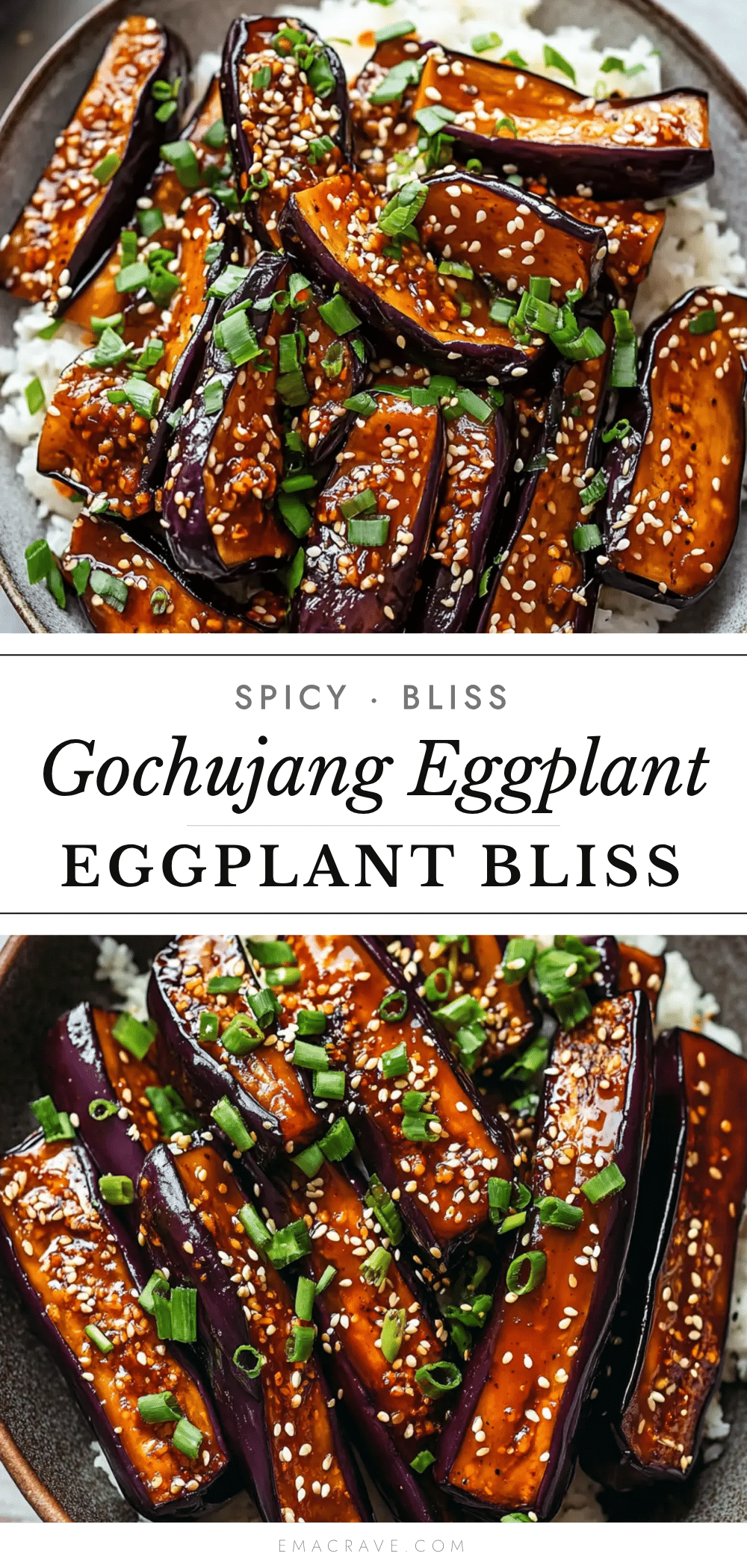
Flavorful Spicy Gochujang Eggplant Recipe Easy 5-Step Korean Dinner Idea
A quick and easy Korean-inspired stir-fried eggplant dish featuring a bold, balanced spicy-sweet gochujang sauce that delivers rich flavor with minimal fuss.
- Prep Time: 10 minutes
- Cook Time: 15 minutes
- Total Time: 25 minutes
- Yield: 4 servings 1x
- Category: Main Course
- Cuisine: Korean
Ingredients
- 1 medium-sized Asian or globe eggplant (about 1 pound / 450 g), sliced into bite-sized pieces
- 2 tablespoons gochujang (Korean chili paste)
- 1 tablespoon low-sodium soy sauce
- 1 tablespoon rice vinegar
- 1 teaspoon brown sugar or honey
- 2 cloves garlic, minced
- 1 teaspoon toasted sesame oil
- 2 tablespoons vegetable oil
- 2 stalks green onions, thinly sliced
- 1 teaspoon toasted sesame seeds (optional)
Instructions
- Wash and dry the eggplant. Cut off the stem, then slice into roughly 1-inch pieces. Optionally, salt the pieces lightly and let sit for 15 minutes to reduce bitterness. Rinse and pat dry thoroughly before cooking.
- In a small bowl, whisk together gochujang, soy sauce, rice vinegar, brown sugar, and minced garlic. Set aside.
- Heat vegetable oil in a large non-stick skillet or wok over medium-high heat. Once hot, add eggplant pieces in a single layer. Cook without stirring for about 3 minutes to sear, then toss and cook for another 4–5 minutes until tender and slightly browned.
- Pour the gochujang sauce over the eggplant. Stir gently to coat all pieces evenly. Cook for 2–3 minutes, stirring occasionally, until the sauce thickens slightly and clings to the eggplant.
- Remove from heat, drizzle with toasted sesame oil, and toss gently. Garnish with sliced green onions and toasted sesame seeds before serving.
Notes
Avoid overcrowding the pan to ensure proper caramelization. Salt and rinse eggplant to reduce bitterness. Use medium-high heat for best browning. Add toasted sesame oil at the end without cooking it further to preserve flavor. Sauce can be prepared ahead and stored in the fridge for up to a week. For gluten-free, substitute soy sauce with tamari. Optional garnishes include chopped peanuts or cashews for extra texture.
Nutrition
- Serving Size: 1/4 of recipe
- Calories: 165
- Sugar: 5
- Sodium: 400
- Fat: 7
- Saturated Fat: 1
- Carbohydrates: 20
- Fiber: 5
- Protein: 2
Keywords: gochujang eggplant, spicy eggplant recipe, Korean dinner, quick stir-fry, vegetarian Korean recipe, easy weeknight dinner