Love this? Save it for later!
Share the inspiration with your friends
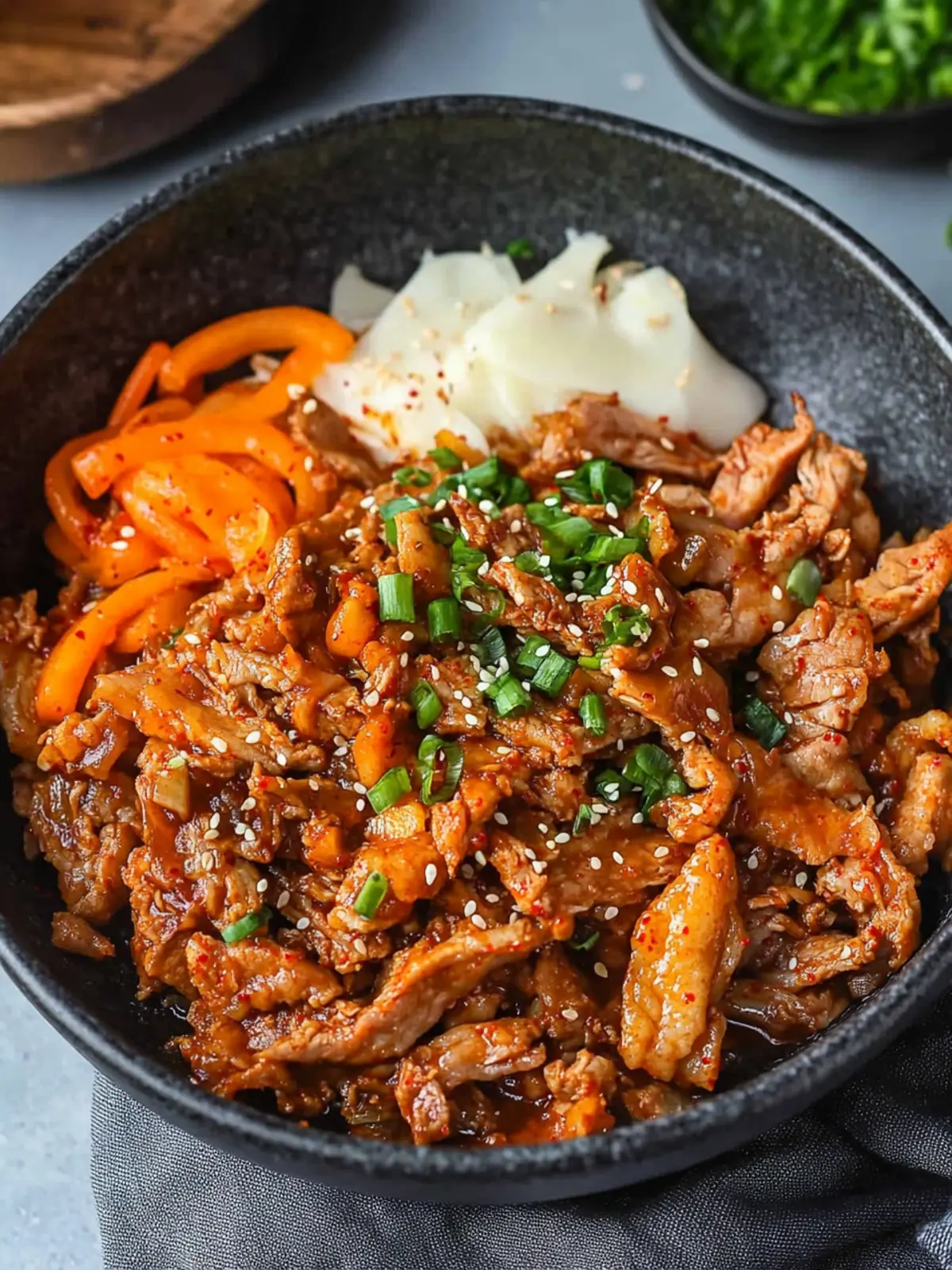
The first time I made this sizzling Korean spicy pork bowl, I was actually trying to salvage a weeknight that had gone completely sideways. It was one of those evenings where everything felt off, and I had a package of pork shoulder thawing with no real plan. I grabbed my jar of gochujang from the fridge, the one I bought on a whim weeks ago, and just started mixing things together in a bowl. Honestly, I was not expecting much. But the smell that hit the kitchen as that pork hit the hot skillet? That changed everything.
That sizzle is what gets me every single time. The way the marinade caramelizes on the edges of the meat, creating those dark, sticky bits that are pure flavor bombs. I served it over a bowl of steaming rice with whatever vegetables I had left in the crisper drawer, and my husband actually stopped mid-chew to ask where I got the recipe. I had to admit I just made it up. He told me not to lose it, and I haven’t. This is that recipe now—the one I make when I need something fast, fiery, and deeply satisfying without a trip to the grocery store.
It’s become my go-to for busy nights when takeout sounds tempting but I want something better. The magic is in the marinade, a simple mix of Korean chili paste, soy sauce, a little sweetness, and garlic that transforms ordinary pork into something you’d pay good money for at a restaurant. I’ve tweaked it over time, but the heart of it stays the same. This is real food, made in your own kitchen, and it tastes like a celebration.
Why You’ll Love This Recipe
This isn’t just another stir-fry recipe. This is the kind of meal that makes you look forward to leftovers the next day. I’ve made this for friends, for family, and even just for myself on a quiet Tuesday, and it never disappoints. Here is why this sizzling Korean spicy pork bowl deserves a permanent spot in your dinner rotation.
- Quick & Easy: From start to finish, this dish is on the table in under 30 minutes. The pork marinates in just 15 minutes while you prep your rice and veggies, making it perfect for those nights when you’re short on time but craving something bold.
- Simple Ingredients: You don’t need any hard-to-find specialty items. Most of the ingredients are pantry staples or easily found at any grocery store. The star is gochujang, a Korean chili paste that adds incredible depth without being overwhelmingly spicy.
- Perfect for Weeknights: This dish is forgiving and flexible. It works for a quick family dinner, a meal prep lunch, or even a fun weekend cook-up when you want something interactive and delicious.
- Crowd-Pleaser: I have served this to people who claim they don’t like spicy food, and they always go back for seconds. The heat is balanced by the sweetness and savory notes, creating a flavor profile that appeals to almost everyone.
- Unbelievably Delicious: That caramelized, slightly charred edge on the pork is next-level. The combination of gochujang, soy sauce, and a touch of brown sugar creates a glaze that is sticky, savory, and just the right amount of sweet.
What makes this recipe different from all the others? It’s the technique. Instead of fussing with a complicated marinade or a long list of steps, this recipe focuses on getting the pork perfectly seared in a hot pan. That high heat creates the signature sizzle and those coveted crispy bits. It’s comfort food, but it’s also exciting. It’s the kind of meal that makes you close your eyes after the first bite, just for a second.
What Ingredients You Will Need
This recipe uses simple, wholesome ingredients to deliver bold flavor and satisfying texture without the fuss. Most of these are things you probably already have in your kitchen, and the ones you don’t are worth picking up for future meals. Here is everything you will need to make your own sizzling Korean spicy pork bowl.
For the Pork & Marinade
- 1 pound pork shoulder or pork butt, thinly sliced (ask your butcher to slice it for you, or pop it in the freezer for 20 minutes to make slicing easier at home)
- 3 tablespoons gochujang (Korean chili paste) (I recommend the brand Mother in Law’s or Jongga for the best balance of heat and sweetness)
- 2 tablespoons soy sauce (use low-sodium if you prefer less salt)
- 1 tablespoon brown sugar (adds a touch of sweetness that balances the heat)
- 1 tablespoon sesame oil (for that nutty, toasty flavor)
- 4 cloves garlic, minced (fresh is non-negotiable here)
- 1 tablespoon fresh ginger, grated (adds warmth and brightness)
- 1 tablespoon rice vinegar (or apple cider vinegar in a pinch)
- 1 tablespoon vegetable oil, for cooking (avocado oil works great too)
For the Bowl Assembly
- 2 cups cooked white rice (short-grain or jasmine rice works beautifully; sticky rice is traditional and perfect for soaking up the sauce)
- 1 cup shredded carrots (adds a pop of color and natural sweetness)
- 1 cup cucumber, thinly sliced (English cucumber or Persian cucumber works best)
- 4 green onions, sliced (both white and green parts)
- 1 tablespoon toasted sesame seeds (for garnish and crunch)
- Kimchi, for serving (optional but highly recommended)
- Gochugaru (Korean red pepper flakes), for extra heat (optional)
Substitution Guidance
If you don’t have pork shoulder, you can use pork loin or even boneless chicken thighs. For a vegetarian version, swap the pork for firm tofu or sliced mushrooms, and use a vegan gochujang. If you are avoiding gluten, use tamari or coconut aminos instead of soy sauce. I have also made this with ground pork in a pinch, and while the texture is different, the flavor is still fantastic.
Equipment Needed
You don’t need any fancy equipment to make this dish, which is part of its charm. Here is what you will need to get that perfect sizzle.
- A large cast-iron skillet or heavy-bottomed pan (this is key for achieving that high heat and caramelization; a non-stick skillet works in a pinch but won’t give you the same crust)
- A sharp chef’s knife (for slicing the pork thinly and prepping vegetables)
- A cutting board
- Mixing bowls (one large for the marinade, one small for any extra sauce)
- Tongs (for flipping the pork without splattering yourself)
- A rice cooker or small pot (for cooking the rice)
- A vegetable peeler (if you are shredding your own carrots)
If you don’t have a cast-iron skillet, don’t worry. I have used a stainless steel pan with good results. Just make sure it’s hot enough before you add the pork. A wok also works beautifully if you have one. The key is high heat and a little patience.
Preparation Method
This recipe comes together fast, so it helps to have everything prepped and ready before you start cooking. Here is how to make the best sizzling Korean spicy pork bowl.
- Prepare the pork. If your pork shoulder isn’t already thinly sliced, place it in the freezer for about 20 minutes. This firms it up and makes it much easier to slice into thin, bite-sized pieces. Aim for slices about 1/4-inch thick. Thin slices cook quickly and absorb the marinade better.
- Make the marinade. In a large mixing bowl, combine the gochujang, soy sauce, brown sugar, sesame oil, minced garlic, grated ginger, and rice vinegar. Whisk everything together until the sugar dissolves and the sauce is smooth. It should smell pungent and sweet, with a kick of garlic.
- Marinate the pork. Add the sliced pork to the bowl with the marinade. Use your hands or a spoon to toss everything together, making sure every piece of pork is well coated. Cover the bowl and let it sit at room temperature for at least 15 minutes. If you have more time, you can refrigerate it for up to 2 hours for deeper flavor.
- Cook the rice. While the pork marinates, cook your rice according to package directions. I usually use a rice cooker because it’s hands-off, but a small pot on the stove works just as well. Fluff the rice with a fork once it’s done and keep it warm.
- Prep the vegetables. Shred the carrots using a vegetable peeler or a box grater. Thinly slice the cucumber and green onions. Set everything aside in small bowls for easy assembly.
- Heat the pan. Place your cast-iron skillet or heavy-bottomed pan over high heat. Add the vegetable oil and let it get shimmering hot. You want it almost smoking—this is what creates the sizzle.
- Cook the pork. Carefully add the marinated pork to the hot pan in a single layer. Do not overcrowd the pan; you may need to cook it in two batches. Let the pork sear undisturbed for 2-3 minutes, until the bottom is deeply caramelized and slightly charred. Flip the pieces with tongs and cook for another 2-3 minutes on the other side. The pork should be cooked through and have sticky, dark edges.
- Rest the pork. Transfer the cooked pork to a plate and let it rest for a minute. This allows the juices to redistribute. If you cooked in batches, repeat with the remaining pork.
- Assemble the bowls. Divide the warm rice between serving bowls. Top with the sizzling pork, shredded carrots, sliced cucumber, and a generous sprinkle of green onions and sesame seeds. Add a side of kimchi if you like.
- Serve immediately. This dish is best enjoyed hot, right after cooking. The contrast between the warm, spicy pork and the cool, fresh vegetables is what makes it so special.
One tip I learned the hard way: don’t move the pork around too much in the pan. Let it sit and develop that crust. If you stir it constantly, it will steam instead of sear, and you’ll miss out on that signature sizzle and texture.
Cooking Tips & Techniques
Over the many times I have made this dish, I have picked up a few tricks that make a real difference. Here are some tips to help you nail this sizzling Korean spicy pork bowl every single time.
Get the pan screaming hot. This is the most important step. A hot pan is what creates the Maillard reaction, which gives the pork that deep, savory crust. If your pan isn’t hot enough, the pork will release liquid and steam rather than sear. I learned this the first time I made it—my pork turned out gray and sad. Now I let the pan heat up for a good 3-4 minutes before adding the oil.
Slice against the grain. When you slice the pork, pay attention to the direction of the muscle fibers. Slicing against the grain shortens those fibers, making the meat more tender. It’s a small detail that makes a big difference in texture.
Don’t skip the resting time. After you cook the pork, let it rest for a minute or two on the plate. This allows the juices to settle back into the meat instead of running out onto your cutting board. Your bowls will be juicier and more flavorful.
Balance the heat. Gochujang has a moderate spice level, but if you are sensitive to heat, start with 2 tablespoons instead of 3. You can always add more later. If you like it fiery, add a teaspoon of gochugaru (Korean red pepper flakes) to the marinade, or serve the bowls with a drizzle of sriracha.
Use leftover pork for other meals. This recipe makes excellent leftovers. I often double the pork and use the extra for tacos, rice bowls, or even on top of a simple salad. The flavor only gets better after a day in the fridge.
Variations & Adaptations
One of the best things about this recipe is how adaptable it is. I have made so many versions of this sizzling Korean spicy pork bowl, and each one has been delicious in its own way. Here are some ideas to make it your own.
- Make it vegetarian. Swap the pork for extra-firm tofu or a mix of mushrooms like shiitake and oyster. Press the tofu well to remove excess moisture, then slice it into slabs and marinate. Cook it in the same hot pan until golden and crispy on the edges.
- Add more vegetables. I love adding sautéed zucchini, bell peppers, or even some quick-pickled radishes to the bowl. It adds more color and texture, and it’s a great way to use up whatever vegetables you have on hand.
- Try a different protein. Chicken thighs, beef sirloin, or even shrimp work beautifully with this marinade. Adjust the cooking time based on the protein you choose—shrimp will cook in just 1-2 minutes per side.
- Go low-carb. Skip the rice and serve the pork over a bed of fresh greens, cauliflower rice, or even zucchini noodles. The spicy pork is so flavorful that you won’t miss the carbs.
- Add a fried egg. This is my personal favorite variation. Fry an egg sunny-side up and place it right on top of the bowl. The runny yolk mixes with the rice and sauce, creating an incredibly rich and satisfying bite.
Serving & Storage Suggestions
This dish is best served immediately, while the pork is still sizzling and the rice is warm. I like to arrange the bowls with the rice on the bottom, then layer the pork, vegetables, and garnishes on top. It makes for a beautiful presentation that feels special even on a regular weeknight.
For a complete meal, serve the bowls with a side of kimchi and a simple cucumber salad dressed with rice vinegar and sesame oil. If you are feeling fancy, a cold beer or a glass of crisp white wine pairs perfectly with the spicy, savory flavors. For a non-alcoholic option, try a sparkling water with a squeeze of lime.
Storage: Store any leftover pork and rice separately in airtight containers in the refrigerator. The pork will keep for up to 3 days, and the rice for up to 4 days. The fresh vegetables are best eaten the same day, but you can prep them ahead of time and store them in a sealed container with a damp paper towel.
Reheating: The best way to reheat the pork is in a hot skillet over medium-high heat. Add a tiny splash of water or soy sauce to help rehydrate the meat and bring back that sizzle. You can also reheat it in the microwave, but the texture won’t be as good. The rice can be reheated in the microwave with a damp paper towel on top to keep it from drying out.
One thing I have noticed is that the flavors actually deepen overnight. The pork becomes even more flavorful and the sauce thickens slightly. It’s one of those rare dishes that tastes almost better the next day.
Nutritional Information & Benefits
While this dish is indulgent, it also has some surprising nutritional benefits. Here is an estimated breakdown per serving (based on 4 servings, without kimchi or optional toppings).
- Calories: Approximately 480-520 calories per bowl
- Protein: 28-32 grams (pork is an excellent source of high-quality protein)
- Fat: 18-22 grams (includes healthy fats from sesame oil and pork)
- Carbohydrates: 45-50 grams (mostly from rice, with fiber from vegetables)
- Fiber: 3-4 grams
- Sugar: 8-10 grams (naturally occurring and added)
Health benefits: Gochujang is made from fermented soybeans and chili peppers, which means it contains probiotics that support gut health. It also has capsaicin, the compound that gives chili peppers their heat, which can help boost metabolism. The ginger and garlic in the marinade are both anti-inflammatory and great for your immune system. The vegetables add vitamins A and C, plus fiber for digestion.
If you are watching your sodium intake, use low-sodium soy sauce and go easy on the added salt. This dish is naturally gluten-free if you use tamari instead of soy sauce.
Conclusion
This sizzling Korean spicy pork bowl is more than just a recipe—it’s a weeknight lifesaver. It’s fast, it’s forgiving, and it delivers restaurant-quality flavor with minimal effort. I have made it for myself on quiet nights and for a crowd during game day, and it always hits the spot. The combination of sticky, caramelized pork, fresh crunchy vegetables, and warm rice is pure comfort.
I love that this recipe is a blank canvas. You can dial up the heat, swap in whatever vegetables you have, or serve it over noodles instead of rice. It’s the kind of dish that encourages experimentation, and that’s what cooking should be about. I hope you make this and fall in love with it the way I did.
If you try this recipe, I would love to hear about it. Leave a comment below and let me know how it turned out. Did you add your own twist? Did your family ask for seconds? Share your experience—I read every single comment. And if you loved it, please share this recipe with a friend who needs a little sizzle in their life.
Frequently Asked Questions
Can I use a different cut of pork for this recipe?
Yes, absolutely. Pork shoulder is ideal because it has enough fat to stay juicy and tender during the quick cooking process. However, pork loin or pork tenderloin also work well. Just be careful not to overcook them, as they are leaner and can dry out faster. If using a lean cut, slice it a little thicker and watch the cooking time closely.
How spicy is this dish?
This dish has a moderate level of heat that is well-balanced by the sweetness of the brown sugar and the savory soy sauce. It is not overwhelmingly spicy, but it does have a noticeable kick. If you are sensitive to spice, start with 2 tablespoons of gochujang instead of 3. You can always add more heat later with a drizzle of sriracha or a sprinkle of gochugaru.
Can I make this dish ahead of time?
You can prep the components ahead of time, but I recommend cooking the pork fresh for the best texture. The marinade can be made up to 3 days in advance and stored in the refrigerator. You can also slice the pork and marinate it overnight for deeper flavor. The rice can be cooked a day ahead and reheated. Assemble the bowls just before serving.
What can I use instead of gochujang?
Gochujang is the star of this dish, but if you can’t find it, you can make a substitute by mixing 2 tablespoons of miso paste with 1 tablespoon of sriracha or another chili garlic sauce. It won’t be exactly the same, but it will give you a similar savory, spicy base. You can also use a store-bought Korean BBQ sauce in a pinch, but adjust the sugar accordingly as those sauces tend to be sweeter.
Can I freeze the cooked pork?
Yes, the cooked pork freezes very well. Let it cool completely, then transfer it to a freezer-safe container or zip-top bag. It will keep for up to 3 months. To reheat, thaw it in the refrigerator overnight and then reheat it in a hot skillet with a splash of water or soy sauce. The texture will be slightly softer than fresh, but the flavor will still be fantastic.
If you enjoyed this recipe, you might also love this cozy garlic chicken and potatoes for another quick weeknight dinner, or these flavorful sweet and spicy grilled peach chicken skewers for a fun summer twist. For a completely different but equally satisfying meal, this cozy Swedish meatball orzo is a 30-minute winner. And if you are in the mood for something crispy and Korean-inspired, these crispy gochujang potatoes and chickpeas are a must-try.
Pin This Recipe!
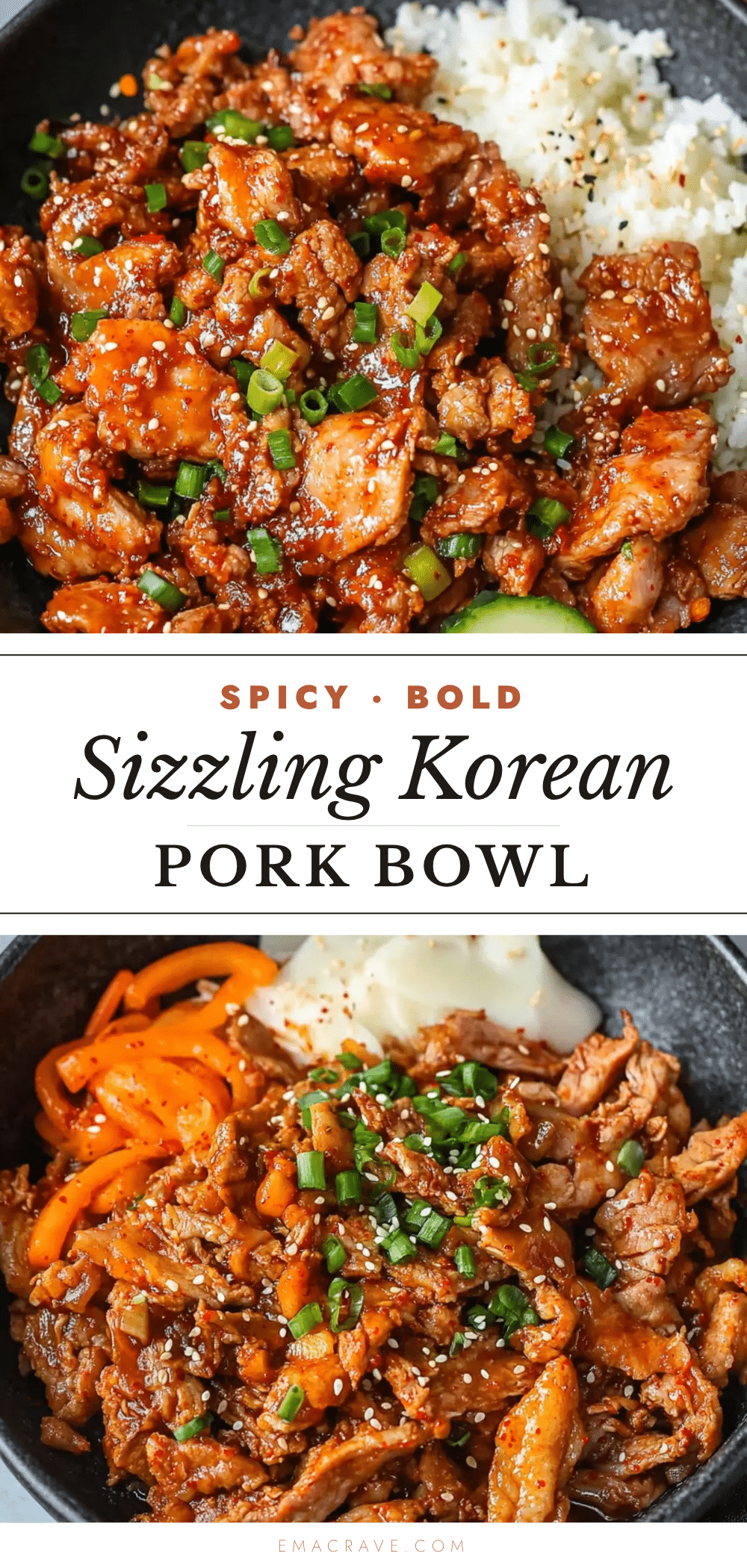
Best Easy Sizzling Korean Spicy Pork Bowl Recipe

This sizzling Korean spicy pork bowl is a quick and easy weeknight dinner featuring caramelized, sticky pork in a bold gochujang marinade, served over rice with fresh vegetables. It’s a forgiving, crowd-pleasing recipe that delivers restaurant-quality flavor in under 30 minutes.
- Prep Time: 15 minutes
- Cook Time: 10 minutes
- Total Time: 25 minutes
- Yield: 4 servings 1x
- Category: Main Course
- Cuisine: Korean
Ingredients
- 1 pound pork shoulder or pork butt, thinly sliced
- 3 tablespoons gochujang (Korean chili paste)
- 2 tablespoons soy sauce (low-sodium if preferred)
- 1 tablespoon brown sugar
- 1 tablespoon sesame oil
- 4 cloves garlic, minced
- 1 tablespoon fresh ginger, grated
- 1 tablespoon rice vinegar
- 1 tablespoon vegetable oil, for cooking
- 2 cups cooked white rice (short-grain or jasmine)
- 1 cup shredded carrots
- 1 cup cucumber, thinly sliced (English or Persian)
- 4 green onions, sliced
- 1 tablespoon toasted sesame seeds
- Kimchi, for serving (optional)
- Gochugaru (Korean red pepper flakes), for extra heat (optional)
Instructions
- Prepare the pork: If not already thinly sliced, place pork shoulder in the freezer for about 20 minutes to firm up, then slice into 1/4-inch thick pieces.
- Make the marinade: In a large mixing bowl, whisk together gochujang, soy sauce, brown sugar, sesame oil, minced garlic, grated ginger, and rice vinegar until smooth.
- Marinate the pork: Add sliced pork to the marinade and toss to coat evenly. Cover and let sit at room temperature for at least 15 minutes (or refrigerate up to 2 hours for deeper flavor).
- Cook the rice: While pork marinates, cook rice according to package directions. Fluff with a fork and keep warm.
- Prep the vegetables: Shred carrots, thinly slice cucumber and green onions. Set aside.
- Heat the pan: Place a large cast-iron skillet or heavy-bottomed pan over high heat. Add vegetable oil and heat until shimmering and almost smoking.
- Cook the pork: Add marinated pork to the hot pan in a single layer (cook in batches if needed). Sear undisturbed for 2-3 minutes until deeply caramelized, then flip and cook another 2-3 minutes until cooked through and sticky.
- Rest the pork: Transfer cooked pork to a plate and let rest for 1 minute.
- Assemble the bowls: Divide warm rice among serving bowls. Top with pork, shredded carrots, sliced cucumber, green onions, and sesame seeds. Add kimchi or gochugaru if desired.
- Serve immediately: Enjoy hot for the best contrast of warm spicy pork and cool fresh vegetables.
Notes
Get the pan screaming hot for the best caramelization. Slice pork against the grain for tenderness. Don’t overcrowd the pan; cook in batches if needed. Let pork rest after cooking. For less heat, use 2 tablespoons gochujang; for more, add gochugaru. Leftovers keep up to 3 days in the fridge; reheat in a hot skillet with a splash of water or soy sauce.
Nutrition
- Serving Size: 1 bowl
- Calories: 500
- Sugar: 9
- Sodium: 800
- Fat: 20
- Saturated Fat: 6
- Carbohydrates: 48
- Fiber: 4
- Protein: 30
Keywords: Korean spicy pork bowl, gochujang pork, easy weeknight dinner, sizzling pork bowl, Korean BBQ bowl