Love this? Save it for later!
Share the inspiration with your friends
The first time I made these crispy gochujang potatoes and chickpeas, I was actually trying to burn through a half-empty jar of gochujang that had been staring at me from the fridge door for weeks. You know how it is—you buy that Korean chili paste for one specific recipe, use a spoonful, and then it just sits there, taking up space and making you feel vaguely guilty every time you open the fridge. I had a bag of baby potatoes rolling around in the pantry and a can of chickpeas that needed a purpose, so I figured, why not throw them all in a hot oven and see what happens?
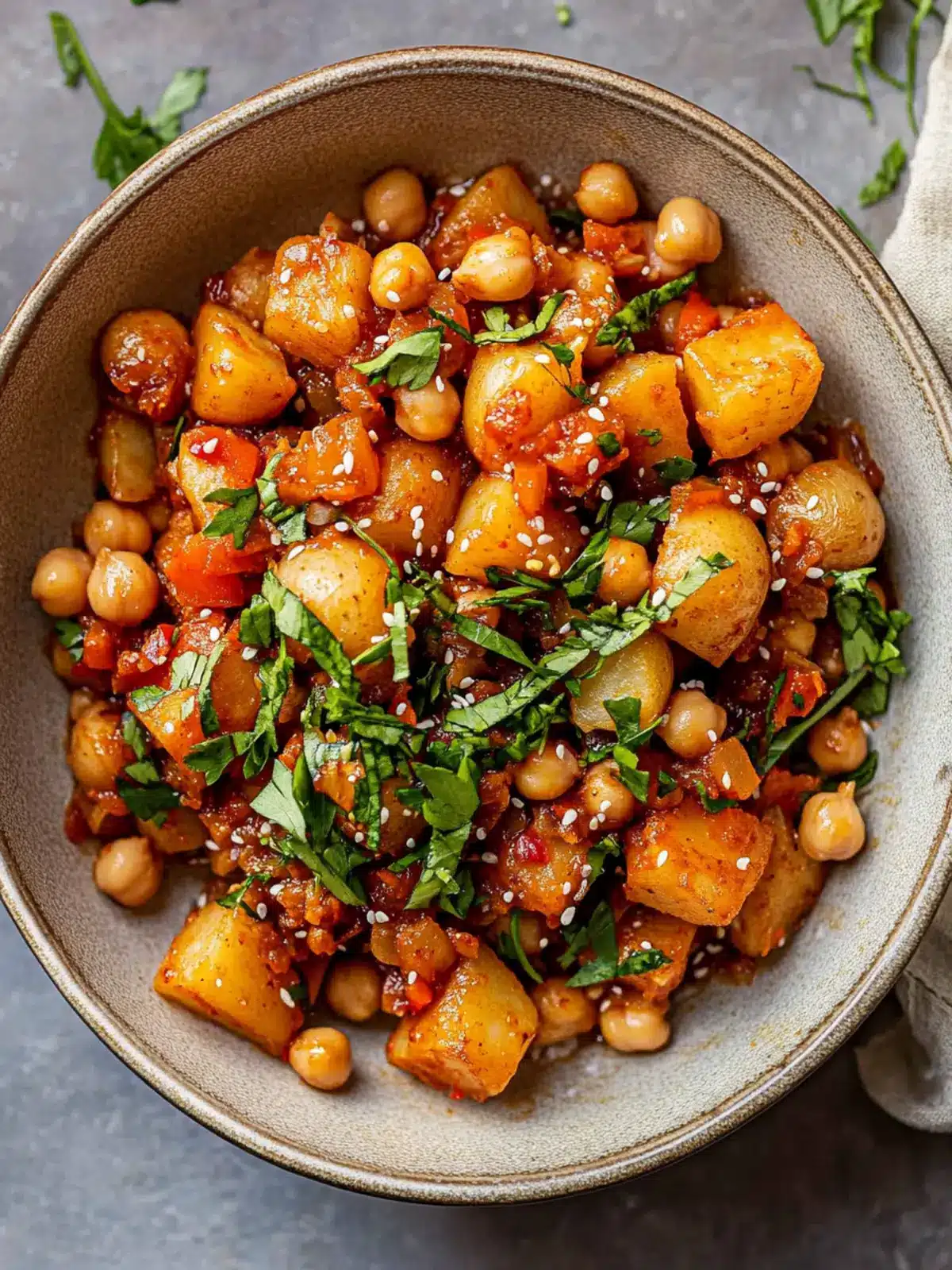
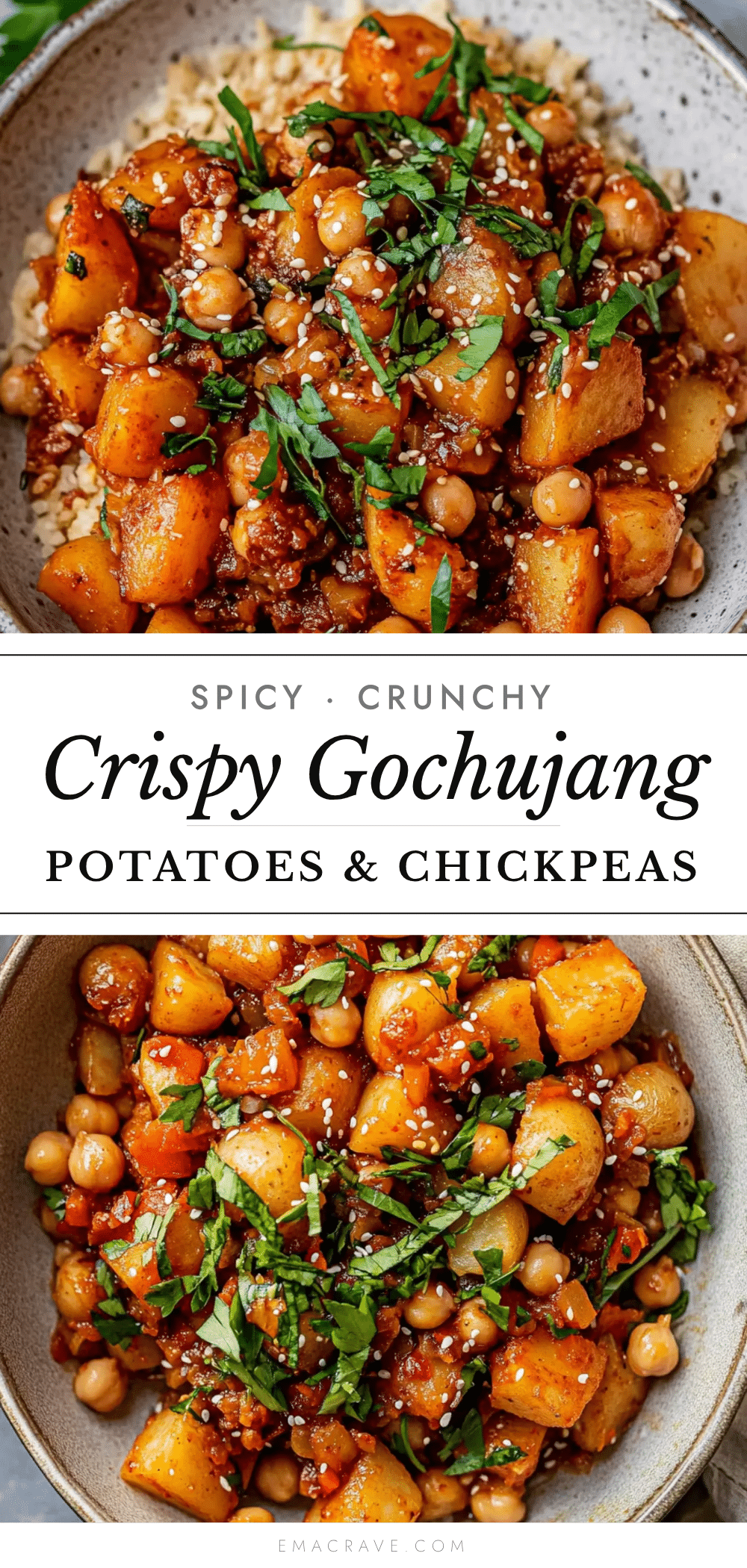
Honestly, I wasn’t expecting much. I thought it would be edible, maybe even decent, but nothing to write home about. But then the kitchen started smelling incredible—that deep, funky, slightly sweet aroma of gochujang caramelizing on the edges of potatoes. I pulled the sheet pan out, took one bite, and just stood there by the oven, eating straight off the pan. The potatoes were crunchy on the outside, soft and fluffy inside. The chickpeas were little flavor bombs, all crispy and chewy at the same time. I knew right then I had stumbled onto something special.
Now this dish has become my go-to when I want something that feels both indulgent and surprisingly wholesome. It’s bold and spicy, but also kind of cozy in a way that makes it perfect for a weeknight dinner or a lazy weekend lunch. I’ve made it for friends who’d never tried gochujang before, and they ended up asking for the recipe before they even finished eating. It’s one of those happy accidents that turned into a permanent rotation meal.
Why You’ll Love This Recipe
This isn’t just another roasted potato recipe. The combination of crispy, caramelized potatoes and crunchy chickpeas coated in that sticky, spicy-sweet gochujang glaze is something else entirely. Here’s why it’s become a staple in my kitchen:
- Quick & Easy: From start to finish, this comes together in about 30 minutes. Most of that time is hands-off while the oven does the work, so you can prep a quick salad or just relax.
- Simple Ingredients: You probably already have most of these ingredients in your pantry. No fancy trips to specialty stores—just good, basic staples that come together in a magical way.
- Perfect for Busy Weeknights: This is one of those meals that feels like a treat but takes almost no effort. It’s great when you want something satisfying without spending an hour in the kitchen.
- Crowd-Pleaser: I’ve served this to spice-lovers and spice-wimps alike, and everyone goes back for seconds. The heat from the gochujang is warm and flavorful, not punishing.
- Unbelievably Delicious: The texture contrast here is ridiculous—crispy, crunchy, tender, and chewy all at once. The gochujang glaze caramelizes into this sticky, savory coating that makes every bite addictive.
What makes this recipe different from other roasted potato dishes is the technique. Instead of just tossing everything with oil and gochujang, we parboil the potatoes first to get that fluffy interior, then roast them at high heat so they get properly crispy. The chickpeas get a head start in the oven too, so they end up crunchy rather than soft. It’s a small extra step that makes a huge difference in texture.
This is the kind of recipe that makes you close your eyes after the first bite. It’s comfort food with a Korean-inspired twist—spicy, savory, slightly sweet, and deeply satisfying. Whether you’re serving it as a main dish with rice or as a side for grilled meats, it always delivers.
What Ingredients You Will Need
This recipe uses simple, pantry-friendly ingredients to create something really special. The star of the show is gochujang, a Korean fermented chili paste that brings deep, complex heat and a touch of sweetness. Here’s what you’ll need:
- Baby potatoes (1 ½ pounds / 680g), halved or quartered – I prefer baby Yukon Gold or red potatoes for their creamy texture and thin skins. No need to peel them—the skins get wonderfully crispy in the oven.
- Canned chickpeas (1 can, 15 oz / 425g), drained and rinsed – Make sure to drain them well and pat them dry with a kitchen towel. Extra moisture is the enemy of crispy chickpeas.
- Gochujang (3 tablespoons) – This Korean chili paste is the heart of the recipe. It’s thick, sticky, and packed with umami. I like the brand Chung Jung One for its balanced flavor, but any brand works. You can find it in the international aisle of most grocery stores or online.
- Olive oil (3 tablespoons, divided) – We use olive oil for roasting because it handles high heat well and adds a nice fruity note. Avocado oil works too.
- Soy sauce (2 tablespoons) – Adds saltiness and depth. Use low-sodium if you prefer to control the salt level. Tamari or coconut aminos work for gluten-free options.
- Honey or maple syrup (1 tablespoon) – A touch of sweetness balances the heat from the gochujang and helps with caramelization. Maple syrup adds a slightly earthier sweetness that I really like here.
- Rice vinegar (1 tablespoon) – A splash of acidity brightens everything up and cuts through the richness. Unseasoned rice vinegar is best.
- Sesame oil (1 teaspoon) – For that nutty, toasty finish. Don’t skip it—it adds a lot of character.
- Garlic (3 cloves, minced) – Fresh garlic is non-negotiable here. It mellows out in the oven and blends beautifully with the gochujang.
- Salt and pepper – To taste. Go easy on the salt since the soy sauce and gochujang are already salty.
- Sesame seeds (1 tablespoon, for garnish) – Adds a nice visual touch and a little extra crunch.
- Green onions (2-3, sliced, for garnish) – Freshness and color to finish the dish.
Substitution guidance: If you can’t find baby potatoes, regular Yukon Gold or Russet potatoes cut into 1-inch cubes work perfectly. For a gluten-free version, use tamari instead of soy sauce. If you want to make it vegan, swap the honey for maple syrup or agave. And if gochujang is unavailable, you can try mixing 2 tablespoons of miso paste with 1 tablespoon of sriracha and a pinch of sugar—it won’t be exactly the same, but it’ll be delicious in its own way.
Equipment Needed
- Large pot – For parboiling the potatoes. Use a pot big enough so the potatoes have room to move around.
- Large baking sheet or sheet pan – A half-sheet pan (18×13 inches) is ideal. Make sure it’s rimmed so nothing drips off.
- Parchment paper or silicone baking mat – For easy cleanup and to prevent sticking. I’ve made these without parchment before, and the cleanup was not fun.
- Mixing bowls (2) – One for the potatoes and one for the chickpeas and sauce.
- Sharp knife and cutting board – For halving the potatoes and mincing garlic.
- Colander – For draining the chickpeas and potatoes.
- Kitchen towel or paper towels – For drying the chickpeas thoroughly.
- Measuring spoons – For accurate ingredient portions.
If you don’t have a large baking sheet, you can use two smaller ones—just make sure the potatoes and chickpeas are in a single layer with a little space between them. Crowding the pan will steam them instead of roasting, and nobody wants soggy potatoes.
Preparation Method
- Preheat your oven to 425°F (220°C). Line a large baking sheet with parchment paper or a silicone mat. Getting the oven nice and hot is key for that crispy exterior.
- Parboil the potatoes. Place the halved or quartered baby potatoes in a large pot and cover them with cold water by about an inch. Add a generous pinch of salt. Bring to a boil over high heat, then reduce to a simmer and cook for 8-10 minutes, until the potatoes are just tender when pierced with a fork but not falling apart. Drain them in a colander and let them sit for a minute to steam dry. This step is crucial—parboiling gives you that fluffy interior while the high oven heat creates the crispy shell.
- Dry the chickpeas. While the potatoes are boiling, dump the drained and rinsed chickpeas onto a clean kitchen towel or a layer of paper towels. Pat them very dry, rolling them around to remove as much moisture as possible. The drier they are, the crunchier they’ll get. Don’t skip this—I’ve made the mistake of rushing here, and the chickpeas came out chewy instead of crispy.
- Make the gochujang sauce. In a small bowl, whisk together the gochujang, 2 tablespoons of olive oil, soy sauce, honey (or maple syrup), rice vinegar, sesame oil, and minced garlic. It should be a thick, glossy paste. Taste it—it should be spicy, salty, and slightly sweet. Adjust the honey if you want it sweeter.
- Season the potatoes. In a medium bowl, toss the parboiled potatoes with the remaining 1 tablespoon of olive oil, a pinch of salt, and a few cracks of black pepper. Make sure they’re evenly coated.
- Arrange on the baking sheet. Spread the potatoes out on one half of the prepared baking sheet in a single layer, cut-side down if possible. This helps them get extra crispy on the flat side. On the other half, spread the dried chickpeas in a single layer. Don’t overcrowd—if things are too crowded, they’ll steam instead of roast.
- Roast for 15 minutes. Place the baking sheet in the preheated oven and roast for 15 minutes. The potatoes should be starting to brown on the edges, and the chickpeas should be looking a bit drier and slightly golden.
- Add the sauce and toss. Remove the baking sheet from the oven. Drizzle the gochujang sauce over both the potatoes and chickpeas. Use a spatula or tongs to toss everything together until evenly coated. Spread everything back into a single layer.
- Roast for another 10-12 minutes. Return the baking sheet to the oven and roast for another 10-12 minutes, until the sauce has caramelized and the potatoes and chickpeas are deeply golden and crispy in spots. Keep an eye on them toward the end—the sugar in the sauce can burn quickly. You want sticky, not charred.
- Garnish and serve. Remove from the oven and let cool for 2-3 minutes on the pan. Sprinkle with sesame seeds and sliced green onions. Serve immediately while everything is hot and crispy.
Sensory cues: When the potatoes are done, they should look glossy and caramelized, with some dark edges where the gochujang has concentrated. The chickpeas should be shrunken slightly, with a wrinkled, crunchy exterior. The whole kitchen will smell like a Korean BBQ joint—savory, sweet, and smoky.
Cooking Tips & Techniques
Getting that perfect crispy texture with gochujang can be a little tricky because the sugar in the paste wants to burn before the potatoes are done. Here are some things I’ve learned the hard way:
- Don’t skip the parboil. I know it’s an extra step, but it makes a real difference. Parboiling starts the cooking process and softens the starch, which helps the potatoes get fluffy inside while the outside gets crunchy. If you skip it, the potatoes will be dense and might burn on the outside before they’re cooked through.
- Dry those chickpeas like your life depends on it. I cannot stress this enough. Wet chickpeas steam instead of roast, and they’ll end up soft and sad. I like to spread them on a kitchen towel and roll them around until they’re completely dry. Some people even remove the skins for extra crunch, but I’m usually too lazy for that.
- Add the sauce halfway through. This is the most important tip. If you add the gochujang sauce at the beginning, the sugar will burn before the potatoes are done. By roasting the potatoes and chickpeas plain first, you give them a head start on getting crispy. Then the sauce has just enough time to caramelize without turning bitter.
- Keep an eye on the oven. Every oven runs a little differently. My old oven would burn these if I looked away for two minutes. Start checking at the 8-minute mark after adding the sauce. You want sticky, dark caramelization, not blackened edges.
- Use a rimmed baking sheet. The gochujang sauce gets sticky and bubbly as it roasts. A rimmed sheet keeps everything contained and makes cleanup much easier. I learned this after a very messy oven incident.
I once made the mistake of using a non-stick baking sheet that was too small, and everything was so crowded that the potatoes steamed instead of roasting. They were still tasty, but they lacked that satisfying crunch. Give your ingredients room to breathe—it makes all the difference.
Variations & Adaptations
This recipe is wonderfully adaptable. Here are some ways to change it up:
- Make it a full meal bowl. Serve these crispy gochujang potatoes and chickpeas over a bed of steamed rice or quinoa with some sautéed greens like spinach or bok choy. Add a fried egg on top for extra protein and richness. It’s my favorite way to turn this into a complete dinner.
- Add vegetables. Toss in some broccoli florets, bell pepper chunks, or zucchini slices along with the potatoes. Just make sure to cut them into similar-sized pieces so they cook evenly. I’ve added sweet potato chunks before, and they were amazing with the gochujang glaze.
- Try different proteins. This same gochujang glaze works beautifully on cubed tofu, tempeh, or even chicken thighs. If using chicken, increase the roasting time by about 10-15 minutes and make sure it reaches 165°F internally.
- Adjust the spice level. If you’re sensitive to heat, use only 2 tablespoons of gochujang and add an extra tablespoon of honey or maple syrup. For more heat, add a teaspoon of gochugaru (Korean red pepper flakes) or a drizzle of sriracha.
- Make it oil-free. For a lower-fat version, you can roast the potatoes and chickpeas without oil, but they won’t get as crispy. Toss them with a little vegetable broth instead, and expect a softer texture.
- Air fryer variation. If you have an air fryer, this recipe works great in it. Parboil the potatoes, then toss everything with the sauce and air fry at 400°F (200°C) for 12-15 minutes, shaking the basket halfway through. They come out extra crispy in less time.
My personal favorite variation is adding a handful of chopped kale in the last 5 minutes of roasting. It gets all crispy and charred at the edges, and the bitterness of the kale is a nice contrast to the sweet-spicy gochujang. I’ve made it this way at least a dozen times.
Serving & Storage Suggestions
These crispy gochujang potatoes and chickpeas are best served immediately, straight from the oven while everything is still hot and crunchy. That’s when the texture is at its peak—the potatoes are crackly on the outside, the chickpeas are pops of crunch, and the glaze is sticky and glossy.
I love serving this as a main dish with a side of steamed jasmine rice and a simple cucumber salad dressed with rice vinegar and sesame oil. The cool, crisp cucumber is a perfect counterpoint to the spicy, warm potatoes. You could also serve it alongside cozy garlic chicken and potatoes for a hearty dinner spread, or pile it into warm tortillas with some avocado for a fun fusion taco night.
For a lighter meal, serve it over a bed of mixed greens with a drizzle of sesame ginger dressing. The warm potatoes will slightly wilt the greens, and the chickpeas add enough protein to make it a satisfying lunch.
Storage: Leftovers can be stored in an airtight container in the refrigerator for up to 4 days. Unfortunately, they won’t stay crispy—the moisture from the chickpeas and the sauce will soften everything over time. But they’re still delicious! I actually love eating them cold straight from the fridge as a snack, or reheated in a skillet to bring back some of the crunch.
Reheating: The best way to reheat these is in a hot skillet or on a baking sheet in a 400°F (200°C) oven for about 5-7 minutes. The microwave will make them soft, so I’d avoid it if you want any texture. If you’re in a hurry, an air fryer at 375°F (190°C) for 3-4 minutes works wonders.
These flavors actually deepen and meld together overnight. The gochujang soaks into the potatoes and chickpeas, making every bite even more flavorful. So don’t be sad about leftovers—they’re a different but equally delicious experience.
Nutritional Information & Benefits
This recipe is surprisingly nutritious for something that tastes so indulgent. Here’s an approximate breakdown per serving (about 1/4 of the recipe):
- Calories: 320-350
- Protein: 10-12g
- Carbohydrates: 45-50g
- Fiber: 8-10g
- Fat: 12-14g (mostly from olive oil and sesame oil)
- Sugar: 8-10g (naturally occurring plus a little added)
- Sodium: 600-700mg (depends on soy sauce and gochujang brand)
The chickpeas are a fantastic source of plant-based protein and fiber, which helps keep you full and supports healthy digestion. Potatoes get a bad rap sometimes, but they’re actually rich in vitamin C, potassium, and B vitamins, especially when you eat the skin. Gochujang is made from fermented soybeans and chili peppers, so it contains probiotics that are great for gut health—though the high heat of roasting will kill most of them, so don’t rely on this as a major probiotic source.
This dish is naturally vegetarian and can easily be made vegan by using maple syrup instead of honey. It’s also gluten-free if you use tamari or coconut aminos instead of soy sauce. If you’re watching your sodium, use low-sodium soy sauce and go easy on the added salt.
I love that this recipe feels like a treat but is packed with good-for-you ingredients. It’s the kind of meal that makes you feel satisfied without feeling heavy or sluggish afterward.
Conclusion
These crispy gochujang potatoes and chickpeas have become one of those recipes I turn to again and again. They’re quick enough for a frantic Tuesday night, but impressive enough to serve to friends who think you spent way more effort than you actually did. The combination of textures—crunchy, creamy, sticky—is just so satisfying, and that gochujang glaze is honestly addictive.
I hope you give this recipe a try and make it your own. Maybe you’ll add extra vegetables, or serve it over rice, or eat it straight off the baking sheet like I do. However you make it, I think you’ll love it. If you try it, I’d love to hear how it goes—drop a comment below and let me know if you made any fun variations. And if you’re looking for another quick and satisfying meal, check out this ultimate chili mac that’s better than takeout.
Happy cooking, friends. May your potatoes always be crispy and your gochujang never burn.
Frequently Asked Questions
Can I make this recipe without gochujang?
You can, but it won’t taste the same. Gochujang has a unique fermented, sweet-spicy flavor that’s hard to replicate. A decent substitute is mixing 2 tablespoons of miso paste with 1 tablespoon of sriracha and a teaspoon of honey or sugar. It’ll be different but still delicious.
Why did my potatoes come out soggy instead of crispy?
The most common reason is overcrowding the baking sheet. If the potatoes and chickpeas are piled on top of each other, they’ll steam instead of roast. Make sure everything is in a single layer with a little space between each piece. Also, make sure your oven is fully preheated to 425°F (220°C) before you put the pan in.
Can I use sweet potatoes instead of regular potatoes?
Absolutely! Sweet potatoes work great here. Just cut them into similar-sized cubes and parboil them for a slightly shorter time—about 5-6 minutes—since they cook faster. The natural sweetness of the sweet potatoes pairs beautifully with the spicy gochujang glaze.
How do I store leftovers and keep them crispy?
Honestly, these are best eaten fresh. But if you have leftovers, store them in an airtight container in the fridge. To re-crisp them, spread them on a baking sheet and pop them in a 400°F (200°C) oven for 5-7 minutes, or use an air fryer at 375°F (190°C) for 3-4 minutes. Avoid the microwave—it’ll turn them soft.
Is this recipe spicy? Can I make it milder?
Gochujang has a warm, moderate heat that’s more flavorful than fiery. If you’re sensitive to spice, use only 2 tablespoons of gochujang and add an extra tablespoon of honey or maple syrup to balance it out. You can also serve it with a dollop of plain yogurt or sour cream to cool things down.
Pin This Recipe!
Crispy Gochujang Potatoes & Chickpeas: Easy 30-Minute Recipe
These crispy gochujang potatoes and chickpeas are a quick, 30-minute meal featuring caramelized baby potatoes and crunchy chickpeas coated in a spicy-sweet Korean chili glaze. Perfect for busy weeknights, this dish is both indulgent and surprisingly wholesome.
- Prep Time: 10 minutes
- Cook Time: 20 minutes
- Total Time: 30 minutes
- Yield: 4 servings 1x
- Category: Main Course
- Cuisine: Korean-Inspired
Ingredients
- 1 ½ pounds (680g) baby potatoes, halved or quartered
- 1 can (15 oz / 425g) chickpeas, drained and rinsed
- 3 tablespoons gochujang
- 3 tablespoons olive oil, divided
- 2 tablespoons soy sauce
- 1 tablespoon honey or maple syrup
- 1 tablespoon rice vinegar
- 1 teaspoon sesame oil
- 3 cloves garlic, minced
- Salt and pepper to taste
- 1 tablespoon sesame seeds, for garnish
- 2–3 green onions, sliced, for garnish
Instructions
- Preheat your oven to 425°F (220°C). Line a large baking sheet with parchment paper or a silicone mat.
- Parboil the potatoes: Place the halved or quartered baby potatoes in a large pot and cover with cold water by about an inch. Add a generous pinch of salt. Bring to a boil over high heat, then reduce to a simmer and cook for 8-10 minutes, until just tender when pierced with a fork but not falling apart. Drain and let steam dry for a minute.
- Dry the chickpeas: While the potatoes boil, spread the drained and rinsed chickpeas on a clean kitchen towel or paper towels. Pat very dry, removing as much moisture as possible.
- Make the gochujang sauce: In a small bowl, whisk together gochujang, 2 tablespoons olive oil, soy sauce, honey (or maple syrup), rice vinegar, sesame oil, and minced garlic until smooth.
- Season the potatoes: In a medium bowl, toss the parboiled potatoes with the remaining 1 tablespoon olive oil, a pinch of salt, and a few cracks of black pepper.
- Arrange on the baking sheet: Spread the potatoes on one half of the prepared baking sheet in a single layer, cut-side down if possible. Spread the dried chickpeas on the other half in a single layer.
- Roast for 15 minutes: Place the baking sheet in the preheated oven and roast for 15 minutes, until potatoes start browning on edges and chickpeas look drier and slightly golden.
- Add the sauce and toss: Remove the baking sheet from the oven. Drizzle the gochujang sauce over both potatoes and chickpeas. Toss to coat evenly, then spread back into a single layer.
- Roast for another 10-12 minutes: Return to the oven and roast until the sauce has caramelized and the potatoes and chickpeas are deeply golden and crispy in spots. Watch closely to prevent burning.
- Garnish and serve: Remove from oven and let cool for 2-3 minutes. Sprinkle with sesame seeds and sliced green onions. Serve immediately.
Notes
For best texture, don’t skip parboiling the potatoes and drying the chickpeas thoroughly. Add the gochujang sauce halfway through roasting to prevent burning. Serve immediately for maximum crispiness. Leftovers can be stored in an airtight container in the refrigerator for up to 4 days; reheat in a skillet or oven to restore some crunch.
Nutrition
- Serving Size: 1/4 of recipe
- Calories: 335
- Sugar: 9
- Sodium: 650
- Fat: 13
- Saturated Fat: 2
- Carbohydrates: 48
- Fiber: 9
- Protein: 11
Keywords: gochujang potatoes, crispy chickpeas, 30-minute recipe, Korean chili paste, sheet pan dinner, vegetarian, vegan option, gluten-free option