Love this? Save it for later!
Share the inspiration with your friends
“You sure you want to try it spicy?” my roommate asked while eyeing the bubbling pot. Honestly, I wasn’t convinced at first either. I’d stumbled onto this flavorful gochujang potatoes and chickpeas recipe during one of those chaotic weeknights when the fridge was nearly empty, and that stubborn craving for something fiery just wouldn’t quit. A quick glance at the pantry and a dash of gochujang later, I tossed together what turned out to be a surprisingly addictive dish.
There’s something about the way the spicy, fermented kick of gochujang melds with crispy roasted potatoes and tender chickpeas that makes this recipe a favorite for those who like their meals with a bit of attitude. I remember sitting down, fork in hand, skeptical at first—after all, potatoes and chickpeas don’t scream excitement on their own—but one bite wiped away all doubt. The heat is balanced with a subtle sweetness and a satisfying texture that makes you want to go back for more, even if your mouth is on fire.
This dish quickly became a staple in my rotation, especially on evenings when I wanted something easy but packed with flavor. Plus, it’s the kind of meal that sparks curiosity from friends who stop by unexpectedly—sometimes leading to spontaneous dinner parties. It’s funny how a simple pantry rescue turned into a go-to spicy meal that feels cozy and bold all at once.
What really sticks with me is how this recipe manages to be both comforting and exciting, proving you don’t need hours or fancy ingredients to whip up something memorable. So if you’ve ever wondered what to make with potatoes and chickpeas that doesn’t feel boring, this flavorful gochujang potatoes and chickpeas recipe might just be your new secret weapon in the kitchen.
Why You’ll Love This Flavorful Gochujang Potatoes and Chickpeas Recipe
This recipe has been tested and tweaked over several weeks, and let me tell you—it holds up every single time. Here’s why it’s worth making a spot for in your dinner plans:
- Quick & Easy: Ready in about 35 minutes, it’s perfect for busy weeknights or when you just want a speedy, satisfying dish.
- Simple Ingredients: No need for specialty stores; the basics like potatoes, chickpeas, and gochujang paste are pantry-friendly staples.
- Perfect for Spicy Meal Lovers: The heat level is adjustable, so whether you want a gentle warmth or a fiery kick, you’re covered.
- Crowd-Pleaser: It’s surprisingly popular with both kids and adults—sometimes a tough combo for spicy dishes!
- Unbelievably Delicious: The potatoes crisp up beautifully while the chickpeas soak in the sauce, creating a texture and flavor combo that’s downright addictive.
What really sets this recipe apart is the balance of flavors. The gochujang paste brings that unique fermented chili tang, but it’s softened by a hint of sweetness from honey and the earthiness of garlic and ginger. Tossing everything together with a quick roast creates a harmony of crispy, soft, spicy, and sweet elements you don’t find in your usual potato dishes.
Plus, unlike many spicy meals that lean heavily on meat, this is a hearty vegetarian option that feels substantial and nourishing. I often pair it with a simple side salad or some steamed greens to round out the meal. If you’re curious about other bold, spicy dishes, you might enjoy my flavorful spicy gochujang eggplant recipe, which shares that same punchy Korean flavor profile but with a different texture and vibe.
What Ingredients You Will Need
This flavorful gochujang potatoes and chickpeas recipe uses straightforward ingredients that come together to create a bold, spicy, and satisfying meal. Most of these are pantry staples or easy-to-find items, with a few simple add-ons to make the flavors pop.
- Potatoes: 1.5 pounds (about 700g) of Yukon Gold or red potatoes, cut into bite-sized chunks (these hold their shape well and crisp nicely)
- Chickpeas: One 15-ounce (425g) can of chickpeas, drained and rinsed (or about 1.5 cups cooked chickpeas)
- Gochujang paste: 3 tablespoons (adjust to taste; this Korean chili paste is key for the spicy, umami flavor. I prefer Chung Jung One brand for its balanced heat)
- Olive oil: 2 tablespoons for roasting (extra virgin for flavor or regular olive oil works fine)
- Garlic: 3 cloves, minced (fresh garlic adds that punch you want)
- Fresh ginger: 1 tablespoon, grated (adds warmth and depth)
- Honey or maple syrup: 1 tablespoon (balances the heat with a subtle sweetness)
- Soy sauce: 1 tablespoon (adds savory depth; use tamari for gluten-free)
- Sesame oil: 1 teaspoon (for that toasty, nutty finish)
- Rice vinegar or apple cider vinegar: 1 teaspoon (brightens the dish with a little acidity)
- Salt and pepper: to taste (season well to bring out the flavors)
- Sesame seeds: 1 tablespoon, toasted (optional, for garnish and extra crunch)
- Green onions: 2 stalks, thinly sliced (optional, for freshness and color)
Feel free to swap potatoes for sweet potatoes if you want a natural sweetness that complements the gochujang even more. For a gluten-free version, just double-check your gochujang and soy sauce labels, or substitute with coconut aminos.
For a protein boost, you might try adding some crispy tofu or even pairing this dish alongside my crispy tofu bulgogi recipe for a full Korean-inspired feast.
Equipment Needed
- Baking sheet: A rimmed baking sheet works best to roast the potatoes and chickpeas evenly without spilling the sauce.
- Mixing bowls: At least two bowls—one for tossing the potatoes and chickpeas with oil and seasoning, another for mixing the gochujang sauce.
- Measuring spoons and cups: For accuracy, especially with the gochujang and honey.
- Knife and cutting board: For prepping potatoes, garlic, ginger, and green onions.
- Grater or microplane: Handy for grating fresh ginger finely.
- Spatula or tongs: To turn the potatoes and chickpeas during roasting without breaking them.
If you don’t have a baking sheet, a cast-iron skillet can work, but keep in mind it may change roasting times slightly. I’ve also used parchment paper on the baking sheet for easier cleanup, which I highly recommend if you dislike scrubbing baked-on sauce.
Preparation Method
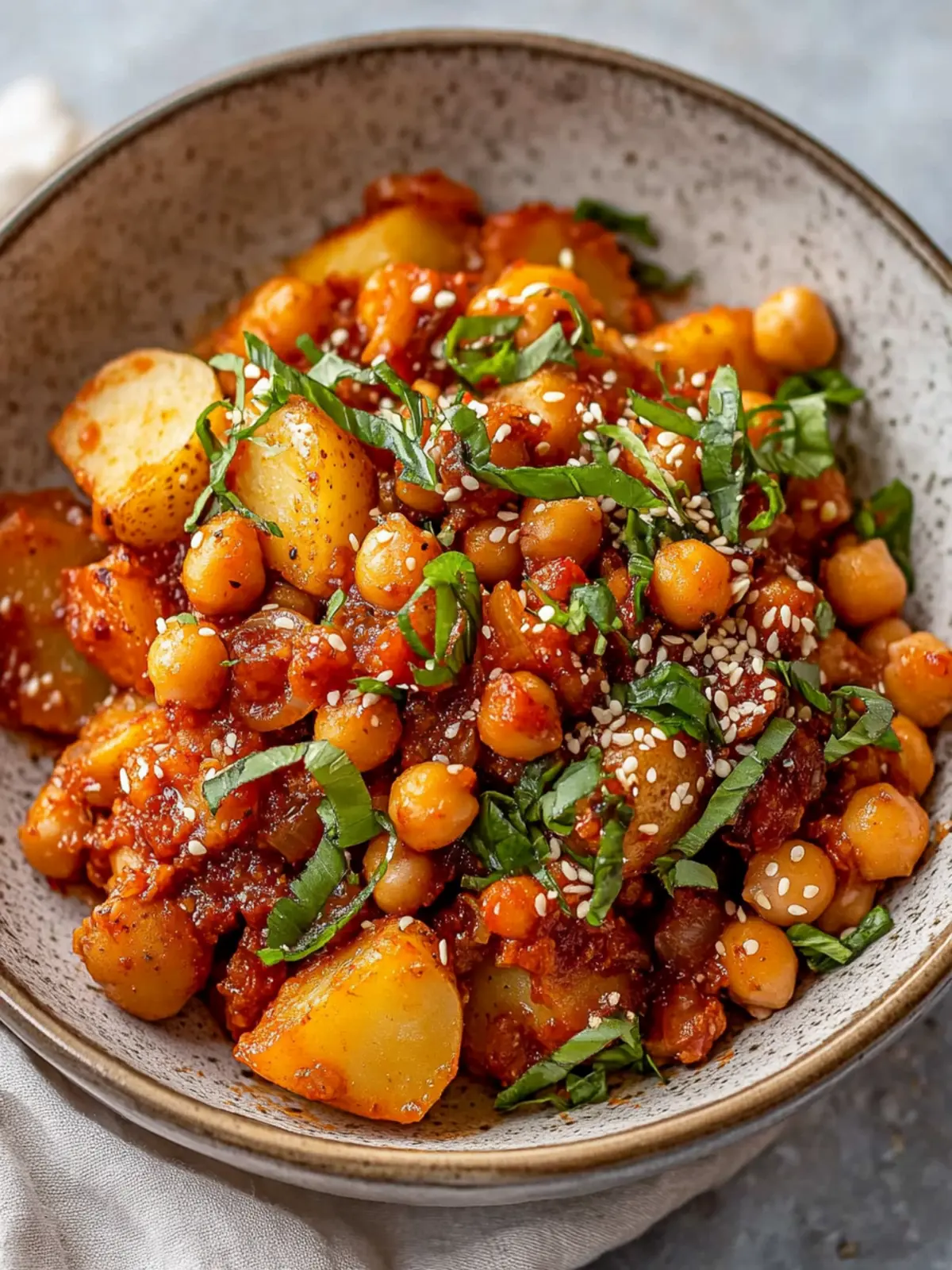
- Preheat your oven to 425°F (220°C). This high heat is key to getting those potatoes crispy without drying them out.
- Prep the potatoes. Wash and cut 1.5 pounds (700g) of Yukon Gold or red potatoes into roughly 1-inch (2.5 cm) chunks. Pat them dry with a kitchen towel to remove excess moisture—this helps them crisp up nicely.
- Toss potatoes and chickpeas. In a large bowl, combine the potatoes and one 15-ounce (425g) can of drained chickpeas. Drizzle with 2 tablespoons olive oil and sprinkle with salt and pepper. Toss well to coat everything evenly.
- Spread on baking sheet. Arrange the potatoes and chickpeas in a single layer on a rimmed baking sheet. Avoid overcrowding to promote even roasting.
- Roast for 20 minutes. Place the baking sheet in the oven and roast for 20 minutes, flipping the potatoes and chickpeas halfway through. You’re looking for golden edges and a firm but tender texture.
- Prepare the gochujang sauce. While the potatoes roast, whisk together 3 tablespoons gochujang paste, 3 minced garlic cloves, 1 tablespoon grated ginger, 1 tablespoon honey or maple syrup, 1 tablespoon soy sauce, 1 teaspoon sesame oil, and 1 teaspoon rice vinegar in a medium bowl. Adjust the honey or gochujang to taste depending on your heat preference.
- Remove the baking sheet. After 20 minutes, take out the potatoes and chickpeas. Pour the gochujang sauce evenly over them and toss gently to coat.
- Return to oven for 10-15 minutes. Roast again until the sauce thickens and caramelizes slightly, and the potatoes are crisp and tender.
- Final touches. Once out of the oven, sprinkle with toasted sesame seeds and sliced green onions for freshness and crunch.
- Serve warm. This dish is best enjoyed right away but also keeps well for next-day lunches or dinners.
Pro tip: If your potatoes aren’t crisping up as much as you’d like, pop them under the broiler for 1-2 minutes but watch closely to avoid burning. Also, stirring gently after adding the sauce prevents breaking the potatoes while ensuring every bite is flavorful.
Cooking Tips & Techniques for Perfect Gochujang Potatoes and Chickpeas
Getting this dish just right isn’t rocket science, but a few tricks make all the difference:
- Dry your potatoes well. Moisture is the enemy of crispy potatoes. After washing, pat them dry thoroughly before oiling and roasting.
- Don’t overcrowd the pan. Give the potatoes and chickpeas room to roast evenly. Crowding traps steam and leads to soggy results.
- Adjust the spice level carefully. Gochujang varies by brand in heat and sweetness. Start with less if you’re unsure, then add more after tasting the sauce.
- Use fresh garlic and ginger. They brighten the sauce and complement the fermented heat of gochujang. Pre-minced garlic won’t quite cut it here.
- Toss gently when adding the sauce. Potatoes are delicate after roasting—rough mixing can break them apart.
- Watch the oven closely during the final roast. The sauce can burn or dry out quickly if left too long, so keep an eye and remove when it’s thick and glossy.
- Rest briefly before serving. Letting it sit 5 minutes off heat allows the flavors to settle and the sauce to thicken a little more.
From personal experience, I’ve learned that roasting the potatoes first before adding the sauce is key. I once tried mixing everything raw and roasting together, only to end up with mushy chickpeas and unevenly cooked potatoes. Patience and staging the cooking steps pay off big time.
Variations & Adaptations
This gochujang potatoes and chickpeas recipe is a great base for experimenting. Here are a few ways to switch it up:
- Make it vegan-friendly: Simply swap honey with maple syrup or agave nectar to keep it plant-based without losing sweetness.
- Add greens: Toss in some kale or spinach during the last 5 minutes of roasting for extra color and nutrients.
- Use sweet potatoes: Swap regular potatoes for sweet potatoes for a naturally sweeter, softer contrast to the spicy sauce.
- Spice it up: Add a pinch of cayenne pepper or red chili flakes if you like your meals extra fiery.
- Protein boost: Stir in some cooked quinoa or brown rice to turn this into a filling bowl meal. I sometimes add crispy tofu cubes for texture variation.
When I wanted to try a smoky twist, I added a teaspoon of smoked paprika to the sauce—unexpected but tasty! It paired nicely with the spicy gochujang and made the dish feel a bit more complex.
Serving & Storage Suggestions
This dish shines best served warm straight from the oven, garnished with fresh green onions and sesame seeds. It pairs beautifully with a simple cucumber salad or steamed bok choy to balance the heat.
If you want a heartier meal, serve it alongside some steamed rice or noodles—my go-to is usually jasmine rice, which soaks up the sauce perfectly. For a snackier vibe, it reminds me of the crispy salt and vinegar fingerling potatoes I love, but with a spicy Korean kick.
Leftovers keep well in an airtight container in the fridge for up to 3 days. Reheat gently in a skillet or oven to maintain that crispiness—microwaving can soften the potatoes too much.
Interestingly, the flavors deepen after a day, making it a great make-ahead option for meal prep or packed lunches. Just add fresh garnishes after reheating for that final fresh punch.
Nutritional Information & Benefits
This flavorful gochujang potatoes and chickpeas meal is a balanced vegetarian dish packed with fiber, vitamins, and plant-based protein. Here’s a rough estimate per serving (makes about 4 servings):
| Nutrient | Amount |
|---|---|
| Calories | 320 |
| Protein | 10g |
| Carbohydrates | 50g |
| Fiber | 8g |
| Fat | 8g |
The potatoes provide a good source of vitamin C and potassium, while chickpeas bring in protein and fiber that keep you full longer. Gochujang, besides its spicy kick, contains fermented ingredients that can aid digestion.
For gluten-sensitive eaters, just be sure to use gluten-free gochujang and tamari, and you’re good to go. This dish fits nicely into vegetarian and vegan diets (with honey swaps), making it a versatile option for many.
Conclusion
All in all, this flavorful gochujang potatoes and chickpeas recipe is one of those meals that sneaks up on you. What starts as a simple pantry rescue becomes a spicy, comforting dish you’ll want to make again and again. It’s flexible, quick, and most importantly, satisfying in a way that hits all the right notes.
Whether you’re feeding a crowd or just yourself, making this recipe your own by adjusting the heat or swapping ingredients is part of the fun. For me, it’s become a kitchen staple that feels like a little celebration of bold flavors without the fuss.
If you’re curious about more creative ways to enjoy potatoes with bold flavors, you might appreciate my recipe for savory pizza fries, which share that crispy, saucy vibe but with an Italian twist.
I’d love to hear how you make this recipe your own or if you have any spicy meal favorites to share. Cooking should be fun, and a little heat never hurts!
FAQs about Flavorful Gochujang Potatoes and Chickpeas
Can I make this recipe gluten-free?
Yes! Just use gluten-free gochujang paste and substitute soy sauce with tamari or coconut aminos to keep it gluten-free.
How spicy is this dish, and can I adjust the heat?
The spice level depends on the gochujang brand and how much you use. Start with less and add more to taste. You can also add chili flakes for extra heat or reduce the gochujang for milder flavor.
Can I prepare this recipe ahead of time?
You can roast the potatoes and chickpeas ahead, then toss with the sauce just before serving or reheat after adding the sauce. Flavors improve if it sits a few hours in the fridge.
What can I serve alongside this dish?
It pairs well with steamed rice, simple green salads, or lightly sautéed greens like bok choy or kale to balance the spicy flavors.
Is this recipe suitable for vegans?
Yes, if you swap honey for maple syrup or another plant-based sweetener, it’s fully vegan and delicious.
Pin This Recipe!
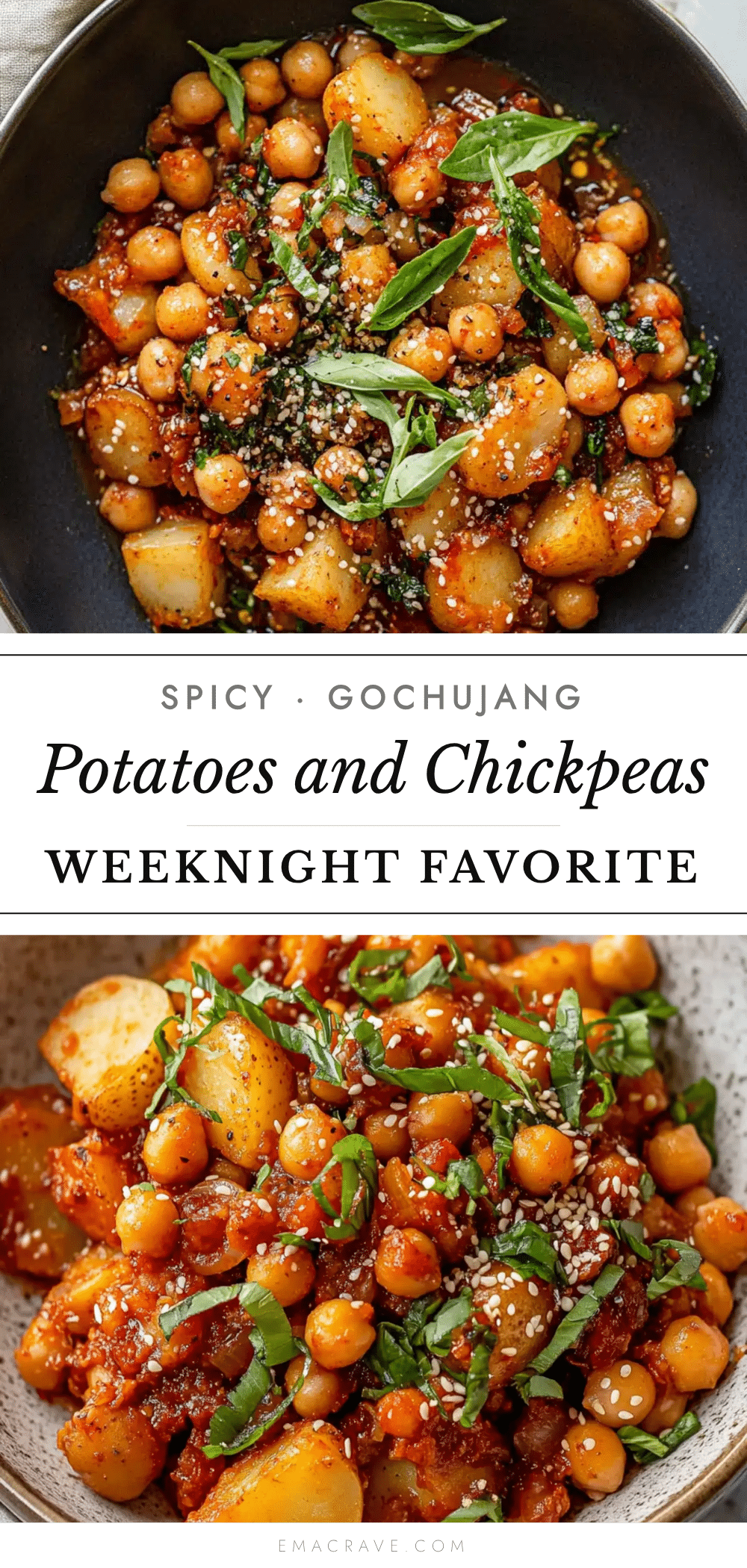
Flavorful Gochujang Potatoes and Chickpeas
A quick and easy spicy vegetarian dish featuring crispy roasted potatoes and tender chickpeas coated in a flavorful gochujang sauce with a balance of heat and sweetness.
- Prep Time: 10 minutes
- Cook Time: 25 minutes
- Total Time: 35 minutes
- Yield: 4 servings 1x
- Category: Main Course
- Cuisine: Korean
Ingredients
- 1.5 pounds Yukon Gold or red potatoes, cut into bite-sized chunks
- 1 (15-ounce) can chickpeas, drained and rinsed (or about 1.5 cups cooked chickpeas)
- 3 tablespoons gochujang paste (adjust to taste)
- 2 tablespoons olive oil
- 3 cloves garlic, minced
- 1 tablespoon fresh ginger, grated
- 1 tablespoon honey or maple syrup
- 1 tablespoon soy sauce (use tamari for gluten-free)
- 1 teaspoon sesame oil
- 1 teaspoon rice vinegar or apple cider vinegar
- Salt and pepper to taste
- 1 tablespoon toasted sesame seeds (optional)
- 2 stalks green onions, thinly sliced (optional)
Instructions
- Preheat your oven to 425°F (220°C).
- Wash and cut potatoes into roughly 1-inch chunks. Pat dry with a kitchen towel.
- In a large bowl, combine potatoes and chickpeas. Drizzle with olive oil, season with salt and pepper, and toss to coat evenly.
- Spread the potatoes and chickpeas in a single layer on a rimmed baking sheet, avoiding overcrowding.
- Roast for 20 minutes, flipping halfway through, until golden and tender.
- While roasting, whisk together gochujang paste, minced garlic, grated ginger, honey or maple syrup, soy sauce, sesame oil, and rice vinegar in a medium bowl. Adjust sweetness and heat to taste.
- Remove baking sheet from oven and pour the gochujang sauce evenly over the potatoes and chickpeas. Toss gently to coat without breaking the potatoes.
- Return to oven and roast for another 10-15 minutes until the sauce thickens and caramelizes slightly.
- Remove from oven and sprinkle with toasted sesame seeds and sliced green onions.
- Serve warm immediately or store leftovers in an airtight container in the fridge for up to 3 days.
Notes
Pat potatoes dry to ensure crispiness. Avoid overcrowding the baking sheet to prevent soggy potatoes. Adjust gochujang and honey to control spice and sweetness. Toss gently after adding sauce to avoid breaking potatoes. For extra crispiness, broil 1-2 minutes watching closely. Use parchment paper on baking sheet for easier cleanup.
Nutrition
- Serving Size: About 1 cup per serv
- Calories: 320
- Fat: 8
- Carbohydrates: 50
- Fiber: 8
- Protein: 10
Keywords: gochujang, potatoes, chickpeas, spicy, vegetarian, Korean, easy, weeknight meal, roasted potatoes