Love this? Save it for later!
Share the inspiration with your friends
The first time I made Korean pork bulgogi, I was chasing a memory. A tiny restaurant in K-Town, the kind with sticky tables and a grill built right into the tabletop. I had been craving that sweet-savory, caramelized pork for weeks. But here’s the thing—I didn’t have hours to spare. I had a hungry family and a weeknight clock ticking.
So I did what any reasonable person would do. I grabbed a pack of thinly sliced pork shoulder, raided my fridge for the usual suspects (soy sauce, garlic, a half-used bottle of gochujang), and decided to cheat the marinade time. I figured some things are just better after a long soak. Turns out, I was wrong.
That first batch came out so good my husband asked if I had secretly ordered takeout. The meat was tender, the edges were perfectly charred, and every bite had that deep, savory punch with just a hint of heat. I didn’t tell him the whole thing came together in under an hour. Some secrets are worth keeping.
This savory Korean pork bulgogi recipe is now my go-to weeknight hero. It’s fast enough for a Tuesday but impressive enough for company. And honestly? It tastes like it marinated all day, even when it didn’t.
Why You’ll Love This Recipe
- Fast & Weeknight-Friendly: From fridge to table in just about an hour. No all-day marinating required—the secret is in the thin slices and the right marinade technique.
- Simple Pantry Ingredients: Soy sauce, brown sugar, garlic, and gochujang. If you’ve made my savory Korean meatloaf with gochujang glaze, you already have most of what you need.
- Perfect for Busy Nights: This is the kind of meal that feels like a treat but doesn’t demand your whole evening. Great for when you want something special without the stress.
- Always a Crowd-Pleaser: Kids love the sweet-savory flavor, and adults appreciate the authentic Korean taste. I’ve served it to picky eaters and food snobs alike—everyone goes back for seconds.
- Unbelievably Tender: The pork comes out so juicy and soft, it practically melts in your mouth. No dry, chewy meat here.
What makes this version different? It’s not just another quick marinade. I spent weeks testing the balance of soy, sweetness, and spice. I wanted that deep, restaurant-quality flavor without the wait. The trick is using pear juice in the marinade—it naturally tenderizes the pork in record time. Plus, I found that cooking in batches over high heat gives you that gorgeous caramelized crust without steaming the meat.
This recipe isn’t just good. It’s the kind that makes you close your eyes after the first bite. Comfort food reimagined—faster, but with the same soul-soothing satisfaction.
What Ingredients You Will Need
This recipe uses simple, accessible ingredients to build layers of savory, sweet, and spicy flavor. Most are pantry staples, especially if you cook Asian food regularly.
For the Pork & Marinade
- 1.5 lbs (680g) pork shoulder or pork butt — thinly sliced. Ask your butcher to slice it for hot pot or stir-fry, or pop it in the freezer for 30 minutes and slice it yourself. Pork shoulder has the perfect fat-to-meat ratio for juicy bulgogi.
- 1/2 cup (120ml) soy sauce — I prefer low-sodium to control the salt. Kikkoman is my go-to.
- 1/4 cup (50g) brown sugar, packed — light or dark works. Dark gives a deeper molasses flavor.
- 2 tablespoons gochujang (Korean chili paste) — this adds heat and a fermented depth. You can find it in most grocery stores now.
- 2 tablespoons rice wine (mirin or sake) — helps tenderize and adds a mild sweetness.
- 1 tablespoon sesame oil — toasted sesame oil is essential for that nutty aroma.
- 1/4 cup (60ml) Asian pear juice — this is the secret tenderizer. You can grate a fresh pear and squeeze the juice, or buy bottled pear juice. It breaks down the meat proteins quickly.
- 4 cloves garlic, minced — fresh is non-negotiable here. No jarred stuff.
- 1 teaspoon fresh ginger, grated — adds a warm zing.
- 1/2 teaspoon black pepper — freshly ground.
- 2 green onions, thinly sliced — for garnish and a mild oniony bite.
For Cooking & Serving
- 2 tablespoons vegetable oil — for frying. Use something with a high smoke point like avocado or canola.
- 1 tablespoon sesame seeds, toasted — for garnish.
- Steamed white rice — short-grain or sushi rice is ideal.
- Lettuce leaves (optional) — for ssam (wraps).
- Kimchi (optional) — for serving on the side.
Ingredient Notes: If you can’t find Asian pear, use a regular Bosc pear or even a kiwi—both contain natural tenderizing enzymes. For a milder heat, use just 1 tablespoon of gochujang. And if you’re gluten-free, swap the soy sauce for tamari or coconut aminos.
Equipment Needed
You don’t need much for this recipe. Here’s what I use:
- Large mixing bowl — for the marinade. Glass or stainless steel works best.
- Sharp knife and cutting board — for slicing the pork and prepping aromatics. A good chef’s knife makes thin slicing way easier.
- Large skillet or wok — cast iron is my favorite for that high-heat sear. A non-stick skillet also works, but you won’t get the same caramelization.
- Measuring cups and spoons — for accuracy.
- Tongs — for flipping the pork without tearing it.
- Small bowl — for mixing the gochujang and soy sauce before adding to the meat.
Budget Tip: Don’t have a wok? A large non-stick skillet works fine. Just make sure it’s big enough to cook the pork in a single layer—crowding the pan steams the meat instead of searing it.
Preparation Method
- Slice the pork (if not pre-sliced). Pop the pork shoulder in the freezer for 20-30 minutes until it’s firm but not frozen solid. This makes thin slicing a breeze. Slice across the grain into thin pieces, about 1/8-inch thick. Aim for bite-sized strips.
- Make the marinade. In a large bowl, whisk together the soy sauce, brown sugar, gochujang, rice wine, sesame oil, pear juice, minced garlic, grated ginger, and black pepper. Stir until the sugar dissolves. Taste it—it should be salty, sweet, and a little spicy.
- Marinate the pork. Add the sliced pork to the bowl and toss well to coat every piece. Cover and let it sit at room temperature for 20-30 minutes. That’s all the time it needs—the pear juice works fast. If you have more time, you can refrigerate it for up to 2 hours, but don’t go longer or the meat can get mushy.
- Preheat your skillet. Place a large skillet or wok over high heat. Add 1 tablespoon of vegetable oil and swirl to coat. The pan should be smoking hot before you add the meat—this is key for that caramelized crust.
- Cook in batches. Add the pork in a single layer, working in batches if needed. Don’t overcrowd the pan. Cook for 2-3 minutes without moving it, then flip and cook for another 1-2 minutes. The pork should be browned and slightly charred on the edges. The smell at this point is incredible.
- Reserve the marinade. Don’t throw away the leftover marinade in the bowl! After cooking all the pork, pour the remaining marinade into the hot skillet. Let it bubble and reduce for about 1 minute until it thickens slightly. This becomes a glossy sauce to drizzle over the meat.
- Garnish and serve. Transfer the cooked pork to a serving platter. Sprinkle with toasted sesame seeds and sliced green onions. Serve immediately over steamed rice with lettuce leaves and kimchi on the side.
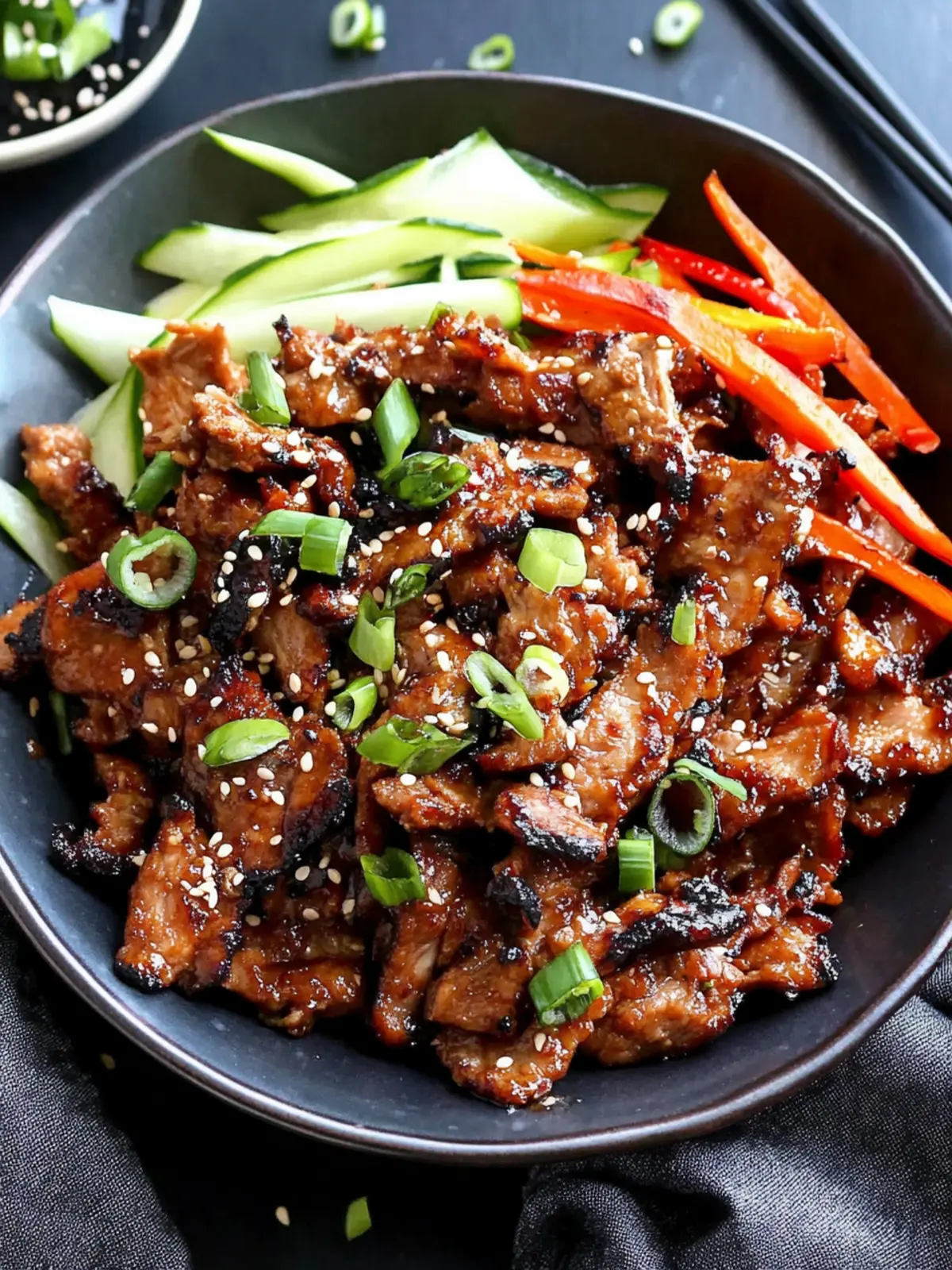
Sensory cues: The pork should look glossy and dark brown with slightly charred edges. It should smell savory-sweet with a hint of smoke. When you bite into it, it should be tender but still have a slight chew—not mushy.
Cooking Tips & Techniques
I’ve made this recipe more times than I can count, and I’ve learned a few things the hard way. Here’s what I wish I knew from the start:
- High heat is non-negotiable. If your pan isn’t hot enough, the pork will steam instead of sear. You want that sizzle the second the meat hits the pan. If you hear a weak hiss, crank the heat up and wait another minute.
- Don’t skip the pear juice. I tried making this once without it, and the pork was noticeably tougher. The enzymes in pear (or kiwi) break down the meat fibers quickly. It’s a game-changer for quick marinating.
- Pat the pork dry before cooking. After marinating, let excess liquid drip off before adding the meat to the pan. Too much liquid in the pan lowers the temperature and prevents browning. I use tongs to lift the meat out of the bowl, letting the marinade drip back.
- Batch cooking is your friend. I know it’s tempting to dump everything in at once, but crowded pans lead to soggy meat. Cook in 2-3 batches. The extra 5 minutes is worth it for that perfect char.
- One mistake I made early on: I used pre-ground black pepper instead of freshly ground. The flavor difference is subtle but real. Freshly ground pepper adds a floral warmth that pre-ground just doesn’t have.
Variations & Adaptations
This recipe is flexible. Here are some ways to change it up:
- Spicy Bulgogi: Add 1-2 teaspoons of gochugaru (Korean chili flakes) to the marinade for extra heat. Or serve with a side of sriracha for those who like it hot.
- Chicken Bulgogi: Swap the pork for boneless, skinless chicken thighs. Slice them thin and marinate for the same amount of time. Chicken breast works too, but thighs stay juicier.
- Low-Carb Option: Skip the rice and serve the pork in lettuce wraps with cucumber slices and a drizzle of the reduced sauce. It’s a lighter meal but just as satisfying.
- Beef Bulgogi: Use thinly sliced ribeye or sirloin instead of pork. The marinade works beautifully with beef—just reduce the marinating time to 15-20 minutes since beef is more delicate.
- Vegetarian Version: Use thick slices of king oyster mushrooms or firm tofu. Marinate for 15 minutes and cook the same way. It won’t be exactly the same, but it’s surprisingly good.
Personal variation: I love adding a handful of sliced shiitake mushrooms to the pan during the last minute of cooking. They soak up the sauce and add an earthy depth that pairs perfectly with the pork.
Serving & Storage Suggestions
Serve the pork bulgogi hot off the skillet over a bed of steamed short-grain rice. I like to garnish with extra green onions and a sprinkle of sesame seeds. For a complete Korean meal, serve it with kimchi, pickled radish, and a simple cucumber salad—like my easy homemade crispy cucumber vinegar salad for a refreshing crunch. Lettuce wraps are also a fun way to eat it—just spoon some rice and pork into a leaf, add a dab of ssamjang (Korean dipping sauce), and wrap it up.
Storage: Leftover bulgogi keeps well in an airtight container in the refrigerator for up to 4 days. The flavors actually deepen overnight, so it’s even better the next day.
Reheating: The best way to reheat is in a hot skillet over medium-high heat for 2-3 minutes. Add a splash of water or soy sauce if the meat seems dry. Microwave works in a pinch, but it won’t have that same caramelized edge.
Freezing: You can freeze the cooked bulgogi for up to 3 months. Let it cool completely, then transfer to a freezer-safe bag. Thaw in the fridge overnight and reheat in a skillet. The texture is still great—just slightly softer than fresh.
Nutritional Information & Benefits
Per serving (about 4 oz cooked pork, without rice):
- Calories: 285
- Protein: 22g
- Fat: 18g
- Carbohydrates: 10g
- Fiber: 1g
- Sugar: 8g
- Sodium: 680mg
Health Benefits: Pork shoulder is a good source of high-quality protein, B vitamins (especially B12 and B6), and zinc. The garlic and ginger in the marinade have anti-inflammatory properties. Gochujang contains capsaicin, which may boost metabolism slightly. While this dish is higher in sodium due to the soy sauce, using low-sodium soy sauce helps keep it in check. Pairing it with lettuce wraps and vegetables balances the meal nicely.
Dietary Notes: This recipe is dairy-free and nut-free. For a gluten-free version, use tamari instead of soy sauce.
Conclusion
This savory Korean pork bulgogi is proof that you don’t need hours of marinating to get incredible flavor. With just 30 minutes of marinating time and a hot skillet, you can have a restaurant-quality meal on the table in under an hour. It’s the kind of recipe that makes weeknight dinners feel special without the fuss.
I love how versatile it is—perfect over rice, in lettuce wraps, or even tucked into a warm tortilla for a Korean-Mexican fusion twist. Don’t be afraid to play with the spice level or swap in different proteins. That’s the beauty of a good marinade—it works with almost anything.
I’d love to hear how yours turns out! Did you try it with chicken or tofu? Add extra gochujang? Leave a comment below and let me know your favorite variation. And if you loved this recipe, share it with a friend who needs a quick dinner win. Happy cooking!
Frequently Asked Questions
Can I use pork loin instead of pork shoulder?
Yes, but pork loin is leaner and can dry out more easily. If using loin, don’t marinate longer than 20 minutes, and cook quickly over high heat. Pork shoulder has more fat, which keeps the meat juicy and tender.
What if I don’t have Asian pear?
Use a regular Bosc pear, an apple, or even a kiwi. All contain natural enzymes that tenderize meat. Grate the fruit and squeeze out the juice. If you’re in a pinch, you can skip it—the pork will still be good, just slightly less tender.
Can I make this ahead of time?
Absolutely. You can marinate the pork up to 2 hours ahead (no more, or the texture gets mushy). Or cook the bulgogi completely and reheat it in a skillet when you’re ready. The flavors actually get better overnight.
Is this recipe gluten-free?
It can be! Simply swap the soy sauce for tamari or coconut aminos. Make sure your gochujang is also gluten-free (some brands contain wheat). Most major brands are, but check the label to be safe.
How do I get that restaurant-style char?
High heat and dry meat are the secrets. Pat the marinated pork dry with paper towels before cooking. Use a cast iron skillet or wok over high heat, and cook in small batches. Don’t move the meat for the first 2 minutes—let it develop that dark, caramelized crust.
Pin This Recipe!
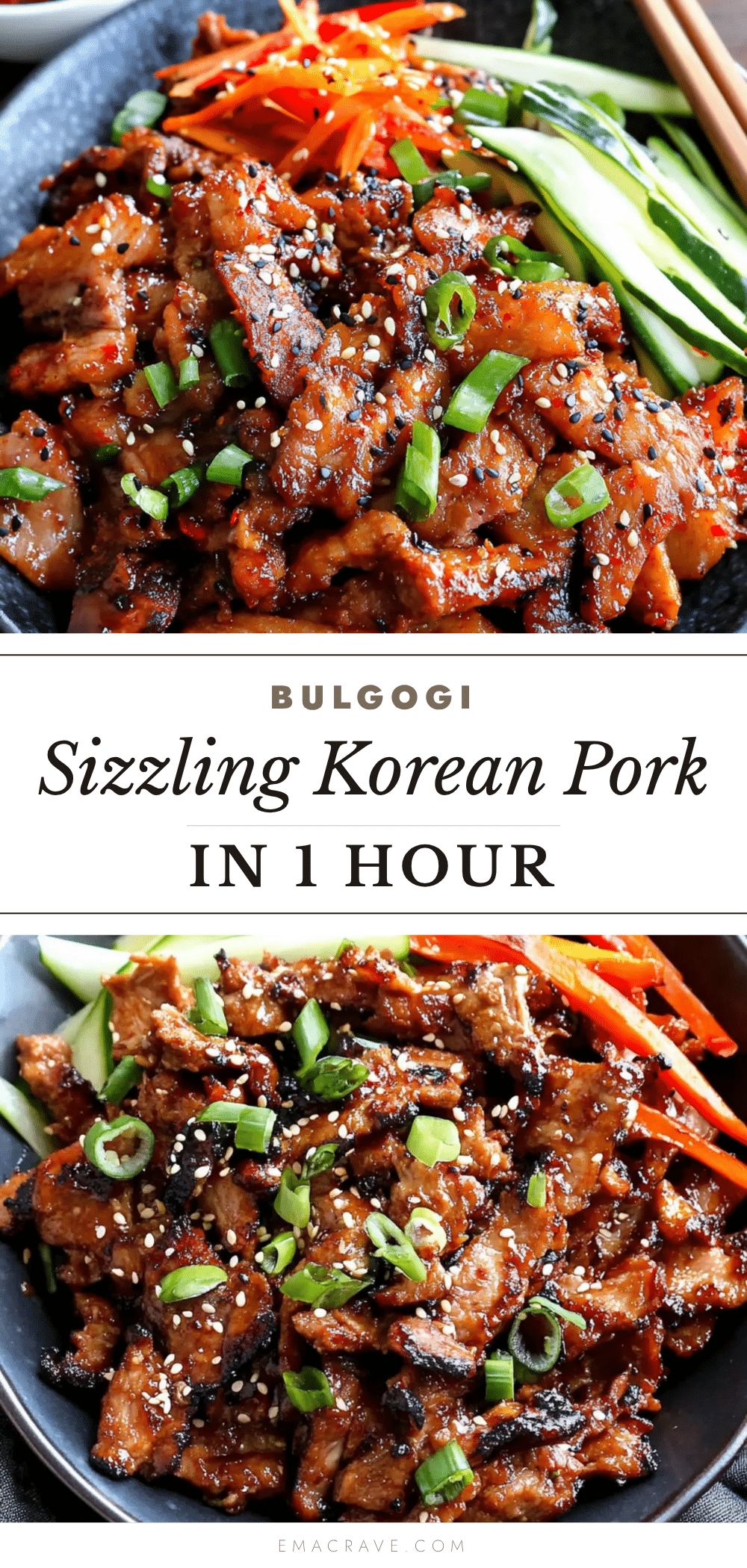
Savory Korean Pork Bulgogi Ready in Just 1 Hour
This savory Korean pork bulgogi is fast enough for a weeknight but impressive enough for company. With just 30 minutes of marinating time and a hot skillet, you can have a restaurant-quality meal on the table in under an hour.
- Prep Time: 30 minutes
- Cook Time: 15 minutes
- Total Time: 45 minutes
- Yield: 4 servings 1x
- Category: Main Course
- Cuisine: Korean
Ingredients
- 1.5 lbs (680g) pork shoulder or pork butt, thinly sliced
- 1/2 cup (120ml) low-sodium soy sauce
- 1/4 cup (50g) packed brown sugar (light or dark)
- 2 tablespoons gochujang (Korean chili paste)
- 2 tablespoons rice wine (mirin or sake)
- 1 tablespoon toasted sesame oil
- 1/4 cup (60ml) Asian pear juice (or grated pear juice)
- 4 cloves garlic, minced
- 1 teaspoon fresh ginger, grated
- 1/2 teaspoon freshly ground black pepper
- 2 green onions, thinly sliced (for garnish)
- 2 tablespoons vegetable oil (for frying)
- 1 tablespoon toasted sesame seeds (for garnish)
- Steamed white rice (for serving)
- Lettuce leaves (optional, for ssam)
- Kimchi (optional, for serving)
Instructions
- Slice the pork (if not pre-sliced): Place pork shoulder in the freezer for 20-30 minutes until firm but not frozen. Slice across the grain into thin pieces, about 1/8-inch thick, into bite-sized strips.
- Make the marinade: In a large bowl, whisk together soy sauce, brown sugar, gochujang, rice wine, sesame oil, pear juice, minced garlic, grated ginger, and black pepper until sugar dissolves.
- Marinate the pork: Add sliced pork to the bowl and toss to coat. Cover and let sit at room temperature for 20-30 minutes. (Can refrigerate up to 2 hours, but no longer.)
- Preheat your skillet: Place a large skillet or wok over high heat. Add 1 tablespoon vegetable oil and swirl to coat. The pan should be smoking hot before adding meat.
- Cook in batches: Add pork in a single layer, working in batches if needed. Cook for 2-3 minutes without moving, then flip and cook for another 1-2 minutes until browned and slightly charred on edges.
- Reserve the marinade: After cooking all pork, pour remaining marinade into the hot skillet. Let it bubble and reduce for about 1 minute until thickened slightly.
- Garnish and serve: Transfer pork to a serving platter. Sprinkle with toasted sesame seeds and sliced green onions. Serve immediately over steamed rice with lettuce leaves and kimchi on the side.
Notes
High heat is essential for caramelization. Pat the marinated pork dry before cooking to avoid steaming. Don’t overcrowd the pan; cook in batches. The pear juice is key for tenderizing quickly. For gluten-free, use tamari instead of soy sauce.
Nutrition
- Serving Size: 4 oz cooked pork (wi
- Calories: 285
- Sugar: 8
- Sodium: 680
- Fat: 18
- Carbohydrates: 10
- Fiber: 1
- Protein: 22
Keywords: Korean pork bulgogi, quick bulgogi, weeknight dinner, Korean BBQ, pork bulgogi recipe, easy Korean recipe