Love this? Save it for later!
Share the inspiration with your friends
I’m not kidding when I say this quick pesto crusted salmon ready in 20 minutes has saved my sanity more times than I can count. It’s one of those recipes that looks and tastes like you spent an hour in the kitchen—but honestly, you barely break a sweat.
- Blazing Fast: From fridge to plate in under 20 minutes flat. No marinating, no complicated steps, no waiting around.
- Pantry-Friendly: You likely have pesto in your fridge (or a jar in the pantry) and salmon in your freezer. Dinner crisis = solved.
- Impressive Enough for Guests: The crispy, golden crust makes this look restaurant-quality. I’ve served it to dinner guests who thought I’d been cooking all afternoon.
- Naturally Healthy: Salmon is packed with omega-3s, and pesto brings herbs and healthy fats. It’s indulgent without the guilt.
- One Pan, Minimal Mess: Everything happens on a single sheet pan or skillet. Less cleanup means more time for—well, anything else.
What makes this version different from every other pesto salmon recipe out there? It’s the crust. Most recipes just spread pesto on top and call it a day. But I’ve figured out that a quick broil at the end creates this gorgeous, caramelized, slightly crispy layer that contrasts perfectly with the tender, flaky fish underneath. It’s texture magic, honestly. The first time I made it, I actually stood at the counter eating it straight off the pan. No regrets.
This isn’t just dinner—it’s the kind of meal that makes you feel like you’ve got your life together, even on days when you absolutely don’t.
What Ingredients You Will Need
This recipe keeps things simple. You only need a handful of ingredients, and most of them are probably already hanging out in your kitchen. The beauty here is that each component pulls its weight—no fillers, no fuss.
- 4 salmon fillets (6 oz / 170g each): Skin-on or skinless, both work. I prefer skin-on because it keeps the fish extra moist and gives you that crispy edge if you sear it first. Look for fillets that are roughly the same thickness so they cook evenly.
- 1/3 cup (80ml) prepared pesto: Store-bought is totally fine here—I’m partial to Barilla or Buitoni for consistency. But if you’ve got homemade pesto stashed in the freezer, this is the perfect place to use it. Basil pesto is classic, but sun-dried tomato pesto or kale pesto work beautifully too.
- 1/4 cup (30g) panko breadcrumbs: These create that signature crispy crust. Regular breadcrumbs work, but panko gives you a lighter, crunchier texture. For a gluten-free version, use crushed pork rinds or almond flour.
- 2 tablespoons (30ml) olive oil: Helps the crust brown and keeps the salmon from drying out. Avocado oil works great too—it has a higher smoke point.
- 1/2 teaspoon salt: I use fine sea salt. If you’re using kosher salt, you might need a bit more.
- 1/4 teaspoon black pepper: Freshly ground is always better, but pre-ground works in a pinch.
- 1 lemon: You’ll use both the zest and the juice. It brightens everything up and cuts through the richness of the salmon and pesto.
- Optional: 2 tablespoons grated Parmesan cheese: Mix this into the panko for an extra savory, golden crust. It’s not essential, but it sure is delicious.
Equipment Needed
You don’t need a fancy kitchen to pull this off. Here’s what you’ll actually use:
- Baking sheet or oven-safe skillet: A rimmed baking sheet works perfectly. If you want that extra crispy skin, use a cast-iron skillet—it holds heat beautifully and gives you a nice sear.
- Parchment paper or aluminum foil: For easy cleanup. I’m a parchment paper loyalist; it never sticks.
- Small mixing bowl: For combining the pesto crust mixture.
- Chef’s knife and cutting board: For zesting the lemon and any last-minute prep.
- Microplane or zester: Not strictly necessary, but it makes lemon zesting effortless. A box grater works too.
- Instant-read thermometer: Optional, but highly recommended if you’re nervous about overcooking salmon. It takes the guesswork out completely.
I’ve made this with just a sheet pan and a fork before—it’s that forgiving. Don’t let equipment hold you back.
Preparation Method
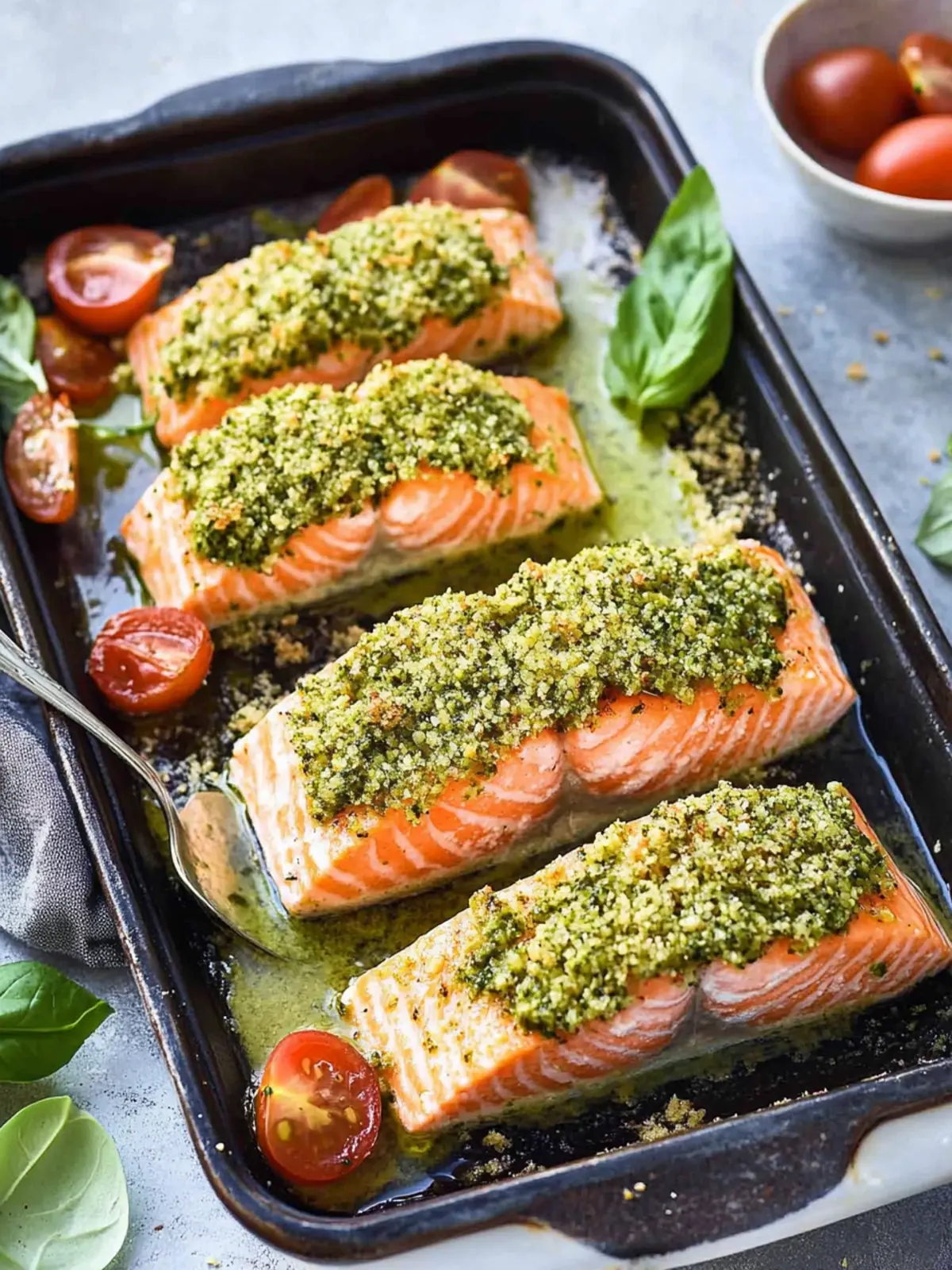
- Preheat your oven to 425°F (220°C). Position the rack in the upper third of the oven—about 6 inches from the broiler element. This ensures the crust gets nicely browned without burning.
- Prepare the pesto crust mixture. In a small bowl, combine the pesto, panko breadcrumbs, olive oil, lemon zest, salt, and pepper. If you’re using Parmesan, stir it in now. Mix until everything is evenly coated. The mixture should look like a thick, chunky paste—not too wet, not too dry. If it seems dry, add another teaspoon of olive oil.
- Pat the salmon fillets dry. Use paper towels to remove any excess moisture. This step matters—dry fish means the crust sticks better and the skin gets crispier. Place the fillets on your prepared baking sheet or skillet, skin-side down (if using skin-on).
- Divide the pesto mixture evenly among the fillets. Use your fingers or the back of a spoon to spread it in an even layer on top of each fillet. Don’t press too hard—you want a nice, thick crust, not a smeared mess. Leave a tiny border around the edges so the crust doesn’t drip off during cooking.
- Bake for 10 minutes. Place the pan in the oven and let it do its thing. At this point, the salmon should be mostly cooked through and the pesto crust will be set but not yet golden.
- Switch to broil for 2-3 minutes. Keep a close eye on it—broilers vary wildly in intensity. You’re looking for the crust to turn golden brown and slightly bubbly. It can go from perfect to burnt in about 30 seconds, so don’t walk away. If your broiler runs hot, check at the 2-minute mark.
- Check for doneness. The salmon is ready when it flakes easily with a fork and the internal temperature reaches 125°F (52°C) for medium or 135°F (57°C) for well-done. Remember, it will continue cooking slightly after you pull it out of the oven.
- Squeeze fresh lemon juice over the top. This brightens all the flavors and balances the richness. Let the salmon rest for 2 minutes before serving—this helps the juices redistribute.
Sensory cues to watch for: The crust should look deeply golden with darker spots from the broiler. You’ll smell the pesto becoming fragrant and toasty. When you gently press the top of a fillet, it should feel firm but still give slightly—like a well-cooked piece of fish, not a hockey puck.
Cooking Tips & Techniques
I’ve made this recipe at least a dozen times, and I’ve definitely had my share of learning moments. Here’s what I wish someone had told me from the start:
Room temperature salmon cooks more evenly. Take your fillets out of the fridge 15-20 minutes before cooking. Cold salmon straight from the fridge will cook unevenly—the outside will be done while the center stays raw. I learned this the hard way when I served a very confused dinner to my family.
Don’t skip drying the salmon. This is non-negotiable. Moisture is the enemy of a good crust. If the salmon is wet, the pesto mixture will slide right off, and you’ll end up with soggy, bland fish. Pat it dry like you mean it.
Watch the broiler like a hawk. I cannot stress this enough. The difference between a perfect golden crust and a burnt, bitter mess is about 45 seconds. Set a timer for 2 minutes, then check. If it needs more time, go in 30-second increments. Your nose will also tell you—if you smell something burning, it’s already too late.
Use thick fillets if you can. Thin fillets (less than 1 inch thick) cook too quickly and the crust may burn before the fish is done. Look for fillets that are at least 1 inch thick at the thickest part. If all you have are thin fillets, reduce the initial baking time to 7 minutes.
Let it rest. I know you’re hungry, but those 2 minutes of resting make a real difference. The carryover cooking finishes the salmon perfectly, and the juices settle so every bite is moist and flavorful.
Variations & Adaptations
This recipe is incredibly flexible. Here are a few ways I’ve tweaked it depending on what I have on hand or who I’m cooking for:
- Dairy-Free Version: Skip the Parmesan (or use a dairy-free alternative) and make sure your store-bought pesto is dairy-free. Many brands contain cheese, but there are excellent vegan options available. I’ve used Seggiano dairy-free pesto with great results.
- Gluten-Free Crust: Swap the panko breadcrumbs for crushed pork rinds, almond flour, or gluten-free panko. I’ve tried all three, and honestly, crushed pork rinds give the crispiest result—don’t knock it till you’ve tried it.
- Spicy Kick: Add 1/2 teaspoon red pepper flakes or a drizzle of sriracha to the pesto mixture. It adds a lovely warmth without overwhelming the salmon. I made this version for a friend who loves heat, and she now requests it every time she visits.
- Lemon-Herb Variation: Add 1 tablespoon chopped fresh dill or parsley to the crust mixture. It brightens the flavor even more and feels extra fresh. Perfect for spring or summer dinners.
- Air Fryer Method: Preheat your air fryer to 375°F (190°C). Cook the salmon for 8-10 minutes, then check for doneness. The crust gets incredibly crispy in the air fryer—almost like it’s been fried. No need to broil at the end.
Serving & Storage Suggestions
This salmon is incredibly versatile when it comes to serving. Here’s how I like to enjoy it:
Serve it hot, straight from the oven, with the lemon juice still glistening on top. I love pairing it with a simple arugula salad dressed with lemon vinaigrette and shaved Parmesan. The peppery arugula cuts through the richness of the salmon beautifully. For a heartier meal, serve it alongside roasted asparagus or a bed of fluffy couscous. If you’re in the mood for something cozy, try it with a bowl of cozy Mediterranean chickpea orzo soup for a complete, satisfying dinner.
Leftovers keep well in an airtight container in the refrigerator for up to 3 days. The crust will soften slightly, but the flavor remains fantastic. I’ve been known to flake leftover salmon over a lunch salad or stuff it into a warm tortilla with greens and a dollop of Greek yogurt. It’s also delicious crumbled into creamy salmon pasta with sun-dried tomato and spinach for a next-day transformation.
Reheating tips: The microwave will make the crust soggy, so avoid it if you can. Instead, reheat in a 300°F (150°C) oven for 5-7 minutes, or in the air fryer at 350°F (175°C) for 3-4 minutes. This brings back some of that initial crispiness. If you’re in a hurry, a hot skillet with a tiny splash of water and a lid will steam the salmon back to tenderness in about 2 minutes.
The flavor actually improves overnight. Something about the pesto melding with the salmon creates a deeper, more cohesive taste. I sometimes intentionally make extra just for next-day lunches.
Nutritional Information & Benefits
This recipe isn’t just delicious—it’s genuinely good for you. Here’s the breakdown per serving (based on 4 servings):
- Calories: Approximately 420-450
- Protein: 38-40g
- Fat: 28-30g (mostly healthy fats from salmon, olive oil, and pesto)
- Carbohydrates: 6-8g
- Fiber: 1-2g
- Omega-3 Fatty Acids: 2.5-3.5g per serving
Salmon is one of the best sources of omega-3 fatty acids, which support heart health, brain function, and reduce inflammation. Pesto brings antioxidants from basil and pine nuts, plus healthy monounsaturated fats from olive oil. This meal is naturally low in carbs and high in protein, making it suitable for low-carb, keto, and Mediterranean diets.
Potential allergens: Fish (salmon), dairy (Parmesan, pesto), tree nuts (pine nuts in pesto). For a nut-free version, use a nut-free pesto or make your own with sunflower seeds.
I personally love that this recipe lets me feel good about what I’m eating without sacrificing flavor. It’s the kind of meal that fuels your body and satisfies your soul.
Conclusion
This quick pesto crusted salmon ready in 20 minutes has become my go-to for busy weeknights, last-minute dinner guests, and days when I need a small win in the kitchen. It’s proof that you don’t need complicated techniques or endless ingredients to create something truly memorable.
The crispy, herby crust gives way to tender, flaky salmon that practically melts in your mouth. And the best part? You can customize it endlessly—swap the pesto, change the crust, adjust the spice level. It’s a recipe that adapts to you, not the other way around.
I’d love to hear how this turns out for you. Did you try a variation? Serve it with something unexpected? Drop a comment below and let me know—I genuinely read every single one. And if you snap a photo, tag me so I can see your beautiful creation. Happy cooking, friends!
Frequently Asked Questions
Can I use frozen salmon for this recipe?
Absolutely! Just make sure to thaw it completely in the refrigerator overnight, then pat it very dry before adding the crust. Frozen salmon tends to release more water as it cooks, so drying it thoroughly is extra important to keep that crust intact.
What if I don’t have panko breadcrumbs?
No problem at all. You can use regular breadcrumbs, crushed crackers, almond flour, or even crushed pork rinds for a low-carb option. Each will give a slightly different texture, but they all work beautifully.
Can I make this ahead of time?
You can prep the pesto crust mixture up to 2 days in advance and store it in the refrigerator. You can also assemble the salmon with the crust up to 4 hours before cooking—just keep it covered in the fridge. When ready to cook, add an extra minute or two to the baking time since you’re starting from cold.
How do I know when the salmon is perfectly cooked?
The easiest method is to use an instant-read thermometer. Insert it into the thickest part of the fillet—125°F (52°C) for medium (my personal favorite) or 135°F (57°C) for well-done. If you don’t have a thermometer, look for the fish to flake easily when gently pressed with a fork. The center should be opaque but still moist.
Can I use a different type of fish?
Yes! This pesto crust works wonderfully on other firm fish like cod, halibut, sea bass, or even trout. Adjust cooking times based on thickness—thinner fillets will cook faster. I’ve also made it with chicken breasts (pounded to even thickness) for a land-based version that’s equally delicious.
Pin This Recipe!
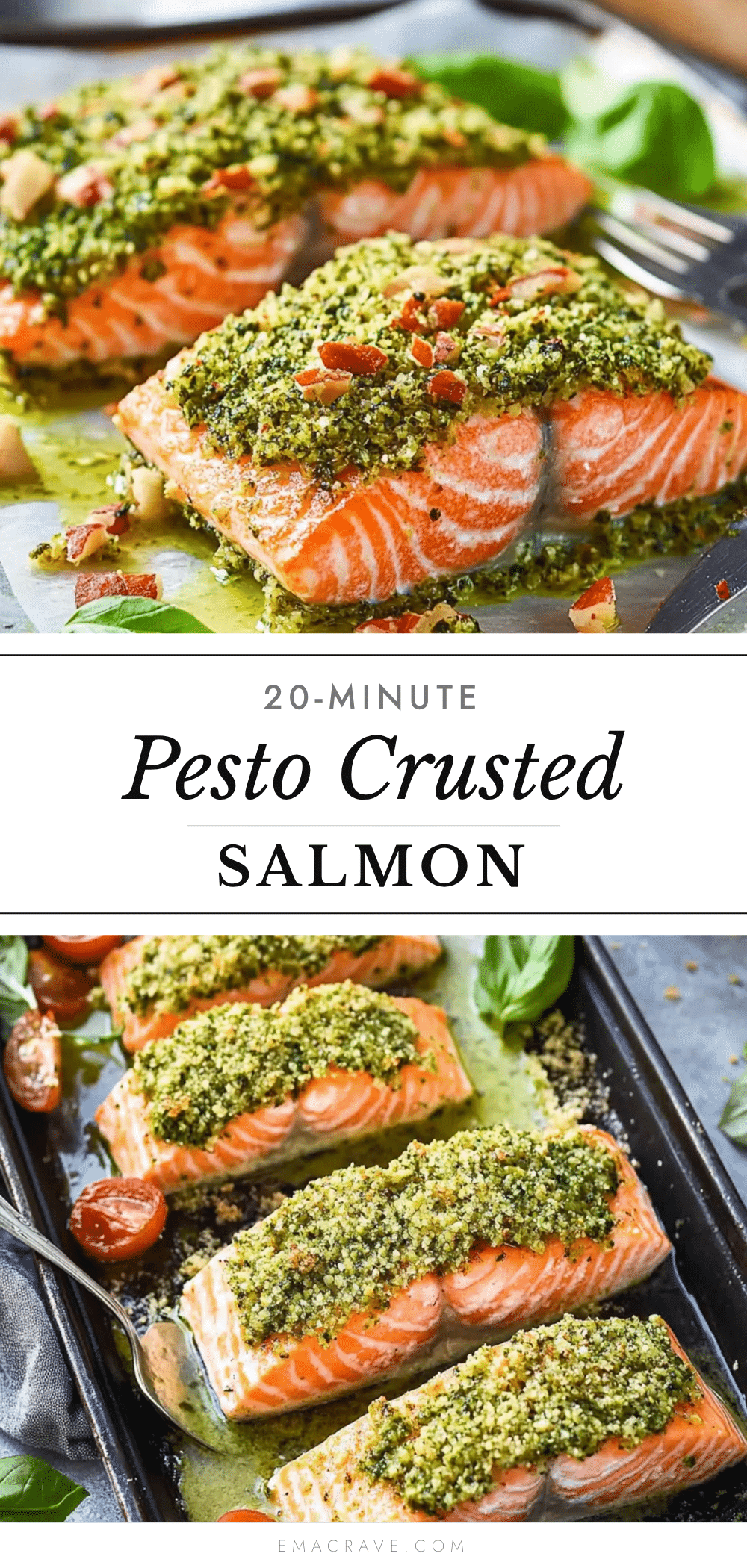
Quick Pesto Crusted Salmon Ready in 20 Minutes
A blazing fast, pantry-friendly salmon recipe with a crispy, golden pesto crust that looks and tastes restaurant-quality. Ready in under 20 minutes with minimal mess, it’s perfect for busy weeknights or impressing guests.
- Prep Time: 5 minutes
- Cook Time: 15 minutes
- Total Time: 20 minutes
- Yield: 4 servings 1x
- Category: Main Course
- Cuisine: Italian-American
Ingredients
- 4 salmon fillets (6 oz / 170g each), skin-on or skinless
- 1/3 cup (80ml) prepared pesto (e.g., Barilla or Buitoni)
- 1/4 cup (30g) panko breadcrumbs
- 2 tablespoons (30ml) olive oil
- 1/2 teaspoon fine sea salt
- 1/4 teaspoon black pepper, freshly ground
- 1 lemon, zested and juiced
- Optional: 2 tablespoons grated Parmesan cheese
Instructions
- Preheat your oven to 425°F (220°C). Position the rack in the upper third of the oven, about 6 inches from the broiler element.
- In a small bowl, combine the pesto, panko breadcrumbs, olive oil, lemon zest, salt, and pepper. If using Parmesan, stir it in. Mix until it forms a thick, chunky paste.
- Pat the salmon fillets dry with paper towels. Place them on a prepared baking sheet or oven-safe skillet, skin-side down if using skin-on.
- Divide the pesto mixture evenly among the fillets, spreading it in an even layer on top. Leave a small border around the edges.
- Bake for 10 minutes.
- Switch to broil and cook for 2-3 minutes, watching closely, until the crust is golden brown and slightly bubbly.
- Check for doneness: the salmon should flake easily with a fork and reach an internal temperature of 125°F (52°C) for medium or 135°F (57°C) for well-done.
- Squeeze fresh lemon juice over the top. Let the salmon rest for 2 minutes before serving.
Notes
For best results, let salmon sit at room temperature for 15-20 minutes before cooking. Pat salmon very dry to ensure crust sticks. Watch the broiler closely to prevent burning. Let salmon rest 2 minutes after cooking. Leftovers keep in the refrigerator for up to 3 days; reheat in a 300°F oven or air fryer to maintain crispiness.
Nutrition
- Serving Size: 1 salmon fillet
- Calories: 420450
- Sugar: 12
- Sodium: 500600
- Fat: 2830
- Saturated Fat: 45
- Carbohydrates: 68
- Fiber: 12
- Protein: 3840
Keywords: pesto crusted salmon, quick salmon recipe, 20 minute dinner, healthy salmon, easy weeknight meal, one pan salmon, crispy pesto salmon