Love this? Save it for later!
Share the inspiration with your friends
I was staring into my fridge at 6:15 PM last Tuesday, completely uninspired. A half-used bell pepper, some wilting scallions, and a package of chicken thighs that needed cooking. My family was already doing that hungry shuffle around the kitchen. You know the one. I needed dinner fast, but I was not about to order takeout again.
That is when I remembered the packet of chow mein noodles hiding in my pantry. I had bought them on a whim weeks ago, thinking I would attempt a proper stir-fry. Honestly, I was skeptical. Could a twenty-minute weeknight dinner actually taste like something from my favorite Chinese takeout spot? I grabbed a bottle of soy sauce and just started cooking. No recipe. No plan. Just a desperate hope that it would not be terrible.
What came out of that pan surprised me. The noodles were perfectly chewy, the chicken was tender, and that savory sauce clung to every strand. My husband asked if I had secretly ordered delivery. That is the highest compliment in our house. I have made this quick savory chicken chow mein at least four times since then, tweaking it each time until it was just right. It is now my go-to for those nights when I need something fast, filling, and genuinely delicious. No fuss, no crazy ingredients, just real food in twenty minutes flat.
Why You Will Love This Recipe
This is not just another stir-fry recipe you will forget about by next week. This quick savory chicken chow mein has earned a permanent spot in my weekly rotation, and here is why it will probably end up in yours too.
- Blazing Fast: From fridge to table in exactly twenty minutes. No marinating, no complicated steps, no waiting around. Perfect for those evenings when you are hangry and impatient.
- Pantry-Friendly Ingredients: You likely have most of these items already. Soy sauce, garlic, ginger, and noodles are staples in my kitchen. The only thing I sometimes have to grab is fresh chicken and veggies.
- Better Than Takeout: Honest truth? This tastes fresher and lighter than delivery chow mein. You control the salt, the oil, and the quality of ingredients. Plus, it is way cheaper.
- Crowd-Pleasing Flavors: My kids devour this without complaint. The savory sauce with that subtle hint of sesame hits all the right notes for adults and little ones alike.
- One-Pan Wonder: Minimal cleanup means more time relaxing after dinner. I am all about that.
What makes this recipe different from the dozens of other chow mein recipes out there? It is the balance. The sauce is not too heavy or gloopy. The noodles stay separate and springy instead of turning into a mushy clump. I spent a few failed batches figuring out the right noodle-to-sauce ratio, and this version nails it every single time. It is comfort food that comes together faster than you can decide what to watch on Netflix.
What Ingredients You Will Need
This recipe relies on simple, everyday ingredients to build layers of savory flavor without any fuss. Most of these are probably in your kitchen right now, which is exactly how I like my weeknight dinners.
For the Chicken and Marinade
- 1 pound boneless, skinless chicken thighs, thinly sliced (chicken breast works too, but thighs stay juicier in a quick cook)
- 2 tablespoons soy sauce (use low-sodium if you prefer less salt)
- 1 teaspoon cornstarch (this helps the chicken stay tender and gives it a slight velvety texture)
- 1 teaspoon sesame oil (adds that signature nutty aroma)
For the Chow Mein Noodles
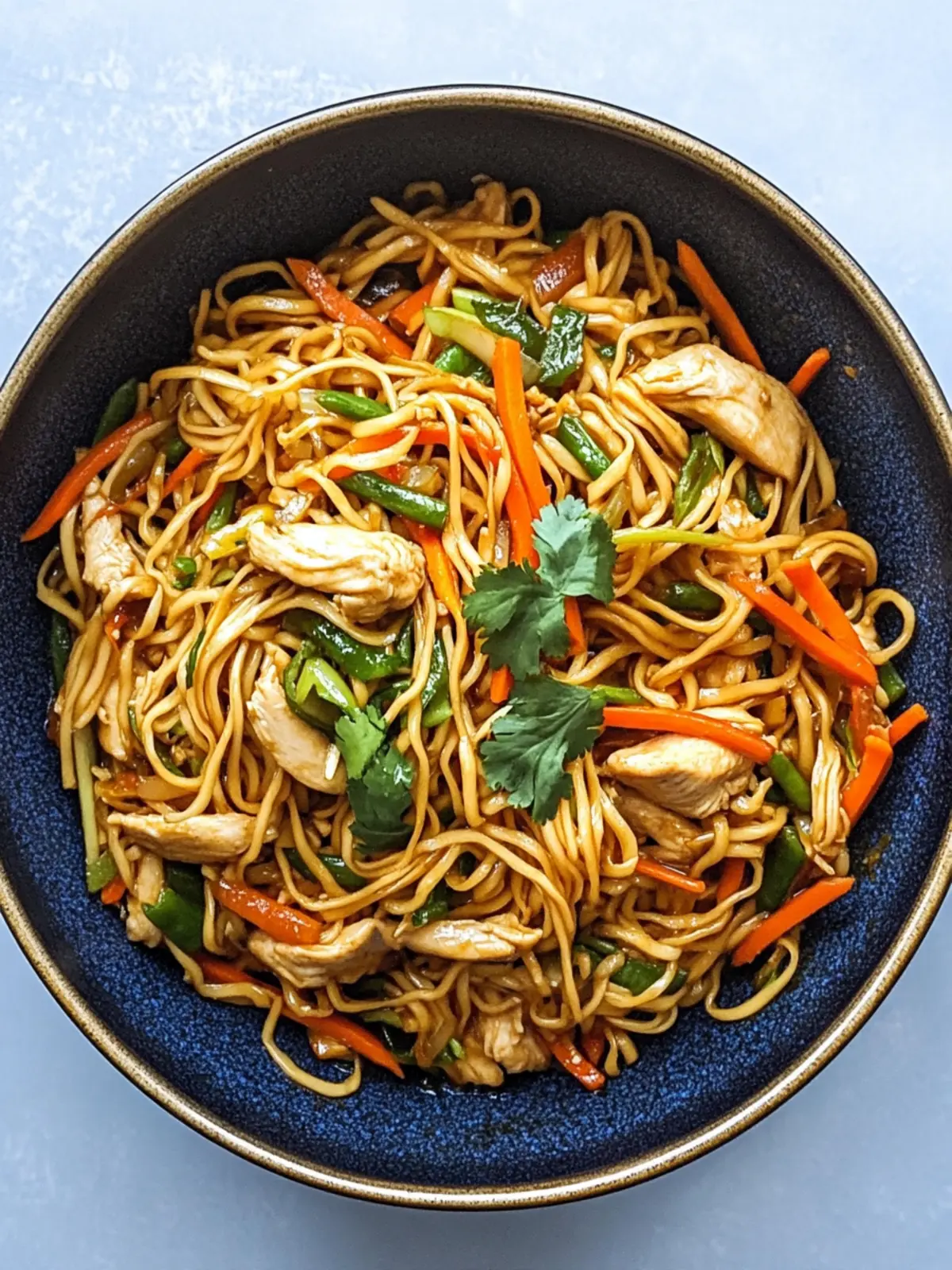
- 8 ounces dried chow mein noodles (or fresh if you can find them; I use the refrigerated ones from the Asian grocery aisle)
- 2 tablespoons vegetable oil (or any neutral oil with a high smoke point)
- 3 cloves garlic, minced (fresh is non-negotiable here, please do not use the jarred stuff)
- 1 tablespoon fresh ginger, grated (I keep a knob in my freezer and grate it straight from frozen)
- 1 medium bell pepper, thinly sliced (any color works, but red adds nice sweetness)
- 1 cup shredded cabbage (pre-shredded coleslaw mix saves time here)
- 3 scallions, cut into 2-inch pieces (white and green parts separated)
For the Savory Sauce
- 3 tablespoons soy sauce
- 1 tablespoon oyster sauce (this is the secret to that deep, restaurant-style flavor; substitute with hoisin or mushroom sauce if needed)
- 1 teaspoon sugar (just a pinch to balance the saltiness)
- 1/2 teaspoon white pepper (black pepper works, but white pepper has that authentic Chinese takeout taste)
- 1/4 cup chicken broth (or water in a pinch)
- 1 teaspoon cornstarch mixed with 2 tablespoons water (this is your slurry for thickening)
I recommend using Kikkoman soy sauce for its consistent flavor, and Lee Kum Kee oyster sauce if you can find it. For the noodles, look for the ones labeled “chow mein stir-fry noodles” in the refrigerated section. They have the perfect chewiness that dried spaghetti just cannot replicate.
Equipment Needed
You do not need a professional kitchen setup for this one. Here is what I use every time I make this dish:
- Large wok or 12-inch skillet: A wok is ideal for high-heat stir-frying, but a heavy-bottomed skillet works great too. I have used both and honestly prefer my cast iron skillet for even heating.
- Sharp chef knife: Thinly slicing chicken and vegetables is much easier with a sharp blade. Dull knives make this step frustrating.
- Cutting board
- Small mixing bowls: For prepping your marinade and sauce separately before cooking starts.
- Tongs or wooden spatula: Tongs make tossing noodles effortless without breaking them.
- Colander: For draining your cooked noodles.
If you do not own a wok, do not rush out to buy one. My $15 non-stick skillet from the grocery store has made this recipe countless times with great results. The key is getting your pan screaming hot, regardless of what it is made of.
Preparation Method
Let me walk you through this step by step. The key to a successful stir-fry is having everything prepped and ready before you turn on the heat. Trust me on this one.
- Marinate the chicken (5 minutes): In a medium bowl, combine the sliced chicken thighs with 2 tablespoons soy sauce, 1 teaspoon cornstarch, and 1 teaspoon sesame oil. Toss everything together with your hands until each piece is coated. Set this aside while you prep the rest. The cornstarch creates a protective barrier that keeps the chicken moist during the high-heat cook.
- Cook the noodles (8 minutes): Bring a large pot of water to a boil. Add your dried chow mein noodles and cook according to package directions, usually about 4 to 5 minutes. You want them al dente, not mushy. Drain them in a colander and rinse briefly with cold water to stop the cooking. Toss with a drizzle of vegetable oil to prevent sticking, then set aside.
- Make the sauce (2 minutes): In a small bowl, whisk together 3 tablespoons soy sauce, 1 tablespoon oyster sauce, 1 teaspoon sugar, 1/2 teaspoon white pepper, and 1/4 cup chicken broth. In a separate tiny bowl, mix 1 teaspoon cornstarch with 2 tablespoons water to make your slurry. Keep both bowls near the stove.
- Sear the chicken (3 minutes): Heat your wok or skillet over high heat until it is smoking slightly. Add 1 tablespoon vegetable oil and swirl to coat. Add the marinated chicken in a single layer. Do not overcrowd the pan, work in batches if needed. Let the chicken cook undisturbed for about 90 seconds until it gets a nice golden sear. Toss and cook another 60 seconds until just cooked through. Transfer to a plate and set aside.
- Stir-fry the aromatics and vegetables (2 minutes): Reduce heat to medium-high and add the remaining 1 tablespoon oil. Toss in the minced garlic, grated ginger, and white parts of the scallions. Stir constantly for about 20 seconds until fragrant. Add the bell pepper and shredded cabbage. Stir-fry for about 90 seconds. The vegetables should still have some crunch. You want them vibrant and slightly tender, not limp and sad.
- Combine everything (3 minutes): Add the cooked noodles to the wok with the vegetables. Pour the sauce mixture over the top. Use your tongs to toss everything together, lifting and separating the noodles as you go. Let it cook for about 1 minute so the sauce starts to coat everything. Add the cooked chicken back to the pan. Give the cornstarch slurry a quick stir and pour it in. Toss everything for another 30 to 60 seconds until the sauce thickens and glazes the noodles beautifully.
- Finish and serve (1 minute): Sprinkle the green parts of the scallions over the top. Give one final toss. Taste and adjust seasoning if needed, maybe a splash more soy sauce or a pinch of sugar. Serve immediately while it is hot and steamy.
A quick note: if your noodles start sticking to the pan, add a splash of chicken broth or water to loosen things up. That steam will help redistribute the sauce too. I learned this after a particularly sticky disaster that turned into a crunchy noodle mess.
Cooking Tips and Techniques
After making this quick savory chicken chow mein more times than I care to count, I have collected a few hard-earned lessons that will save you from my early mistakes.
High heat is your best friend. Do not be afraid to crank that burner. Stir-frying is all about quick cooking over intense heat. If your pan is not hot enough, the ingredients will steam instead of sear, and you will end up with sad, soggy noodles. I used to cook on medium-high because I was scared of burning things. My chow mein was always just okay. Once I committed to high heat, everything changed.
Prep everything before you start. This cannot be overstated. Once that oil is shimmering in the pan, you will not have time to chop garlic or measure soy sauce. I arrange all my ingredients in small bowls in the order they go into the wok. It feels a bit like being on a cooking show, but it makes the process so smooth.
Do not overcook the noodles. This was my biggest mistake early on. I would boil the noodles until they were fully tender, then they would turn mushy during stir-frying. Cook them about one minute less than the package suggests. They will finish cooking in the wok and stay delightfully chewy.
Let the chicken rest. After you sear the chicken and set it aside, let it rest for a minute before adding it back to the pan. This keeps the juices locked in. I used to rush this step and ended up with dry chicken every time.
Taste as you go. Soy sauce brands vary wildly in saltiness. What works with one brand might be too salty with another. I always taste the sauce before adding it to the noodles, and I taste the finished dish before serving. A pinch of sugar can fix a sauce that is too salty or harsh.
Variations and Adaptations
One of the best things about this recipe is how flexible it is. Here are some ways I have adapted it depending on what is in my fridge or who I am cooking for.
Vegetarian Version: Skip the chicken entirely and load up on mushrooms, broccoli florets, and snap peas. Use mushroom oyster sauce or hoisin sauce instead of regular oyster sauce. I have made this for my vegetarian friend and she said it was better than the takeout version she usually orders.
Spicy Kick: Add 1 tablespoon of sambal oelek or chili garlic sauce to the sauce mixture. Or toss in some dried red chili flakes when you stir-fry the aromatics. My husband loves this version, and I usually make a separate batch for myself without the heat.
Gluten-Free Adaptation: Use tamari or coconut aminos instead of soy sauce, and make sure your oyster sauce is gluten-free. Swap the chow mein noodles for rice noodles or gluten-free spaghetti. I have tested this with rice noodles and it works beautifully, just adjust the cooking time.
Add More Veggies: This recipe is a great way to use up whatever vegetables are lingering in your crisper drawer. Bean sprouts, shredded carrots, bok choy, or snow peas all work wonderfully. Just keep the total vegetable volume similar so your sauce ratio stays balanced.
Protein Swap: Thinly sliced beef, pork, shrimp, or even firm tofu all work in place of chicken. Adjust cooking times accordingly. Shrimp only needs about 2 minutes total, while beef should be cooked similarly to chicken.
I once made this with leftover rotisserie chicken when I was in a serious hurry. I skipped the marinating step entirely and just added the shredded chicken at the end with the noodles. It was not quite as flavorful, but it still came together in under fifteen minutes and tasted pretty darn good.
Serving and Storage Suggestions
This dish is best enjoyed fresh out of the wok, but I have some tips for making the most of it.
Serving: Serve this chow mein piping hot in shallow bowls. Garnish with extra sliced scallions, a sprinkle of sesame seeds, and a drizzle of chili oil if you like heat. It pairs beautifully with a simple cucumber salad or some steamed edamame on the side. If you are feeling extra hungry, serve it alongside some quick honey garlic shrimp for a surf-and-turf-style dinner that comes together in no time.
Storing Leftovers: Transfer any leftovers to an airtight container and refrigerate for up to 3 days. The noodles will absorb some of the sauce overnight, so do not be surprised if they seem a bit drier the next day. That is normal.
Reheating: The best way to reheat this is in a hot wok or skillet with a splash of water or chicken broth. Toss over high heat for about 2 minutes until everything is steaming again. The microwave works in a pinch, but it tends to make the noodles soft and the chicken rubbery. I have also reheated it in the oven at 350°F for about 10 minutes, covered with foil, and that works decently well.
Flavor Development: Honestly, this dish tastes even better the next day. The flavors meld together overnight, and the sauce permeates every noodle. I often make a double batch intentionally so I can have leftovers for lunch. It is one of those rare weeknight dinners that improves with a little time.
Nutritional Information and Benefits
Here is an approximate nutritional breakdown per serving (based on 4 servings):
| Nutrient | Amount per Serving |
|---|---|
| Calories | 395 |
| Protein | 32g |
| Carbohydrates | 38g |
| Fat | 14g |
| Fiber | 4g |
| Sodium | 980mg |
This dish provides a solid amount of protein from the chicken, which helps keep you full and satisfied. The cabbage and bell pepper add fiber, vitamins A and C, and antioxidants. Using chicken thighs instead of breasts gives you a bit more iron and zinc. If you are watching your sodium, use low-sodium soy sauce and reduce the oyster sauce slightly. This recipe is naturally dairy-free and can easily be made gluten-free with simple substitutions. It is a well-balanced meal that fits nicely into a busy weeknight eating plan without derailing your health goals.
Conclusion
This quick savory chicken chow mein has genuinely changed how I approach busy weeknights. It is proof that you do not need hours in the kitchen or a long list of specialty ingredients to make something that tastes like it came from a restaurant. The noodles are chewy, the chicken is tender, and that savory sauce with its subtle sesame finish is absolutely addictive.
I love that this recipe gives me back my evenings. Twenty minutes from start to finish means I can spend more time actually sitting down with my family instead of slaving over the stove. And honestly, it is so forgiving. You can swap vegetables, change the protein, adjust the spice level, and it still turns out great. That is the kind of recipe worth keeping in your back pocket.
If you give this a try, I would love to hear how it goes. Leave a comment below and let me know what variations you tried. Did you add extra veggies? Did you make it spicy? Did your family think you secretly ordered takeout? Share your experience, and do not forget to tag me in your photos. Happy cooking, friend.
Frequently Asked Questions
Can I use spaghetti instead of chow mein noodles?
Yes, you can substitute spaghetti or linguine in a pinch. Cook them al dente and rinse with cold water to stop the cooking. The texture will be slightly different, but the flavor will still be delicious. I have done this when I ran out of chow mein noodles and nobody complained.
How do I keep the noodles from sticking together?
Toss the cooked and drained noodles with a drizzle of sesame oil or vegetable oil immediately after rinsing. This creates a light coating that prevents clumping. Also, make sure your wok or skillet is hot enough before adding the noodles, and keep tossing them as they cook.
Can I make this recipe ahead of time for meal prep?
Absolutely. Cook the entire dish, let it cool completely, and store it in an airtight container in the refrigerator for up to 3 days. Reheat in a hot skillet with a splash of broth to revive the sauce. The flavors actually deepen overnight, making it perfect for next-day lunches.
What is the best way to slice chicken for stir-fry?
Partially freeze the chicken for about 15 minutes before slicing. This firms it up and makes it much easier to cut thin, even slices. Always slice against the grain for maximum tenderness. I learned this trick from a Chinese cooking class and it makes a huge difference.
Is oyster sauce necessary, or can I skip it?
Oyster sauce adds a unique savory depth that is hard to replicate, but you can substitute hoisin sauce, mushroom sauce, or even a bit more soy sauce with a pinch of sugar. The flavor will be slightly different, but still tasty. If you are vegetarian, definitely go for the mushroom-based oyster sauce alternative.
Pin This Recipe!
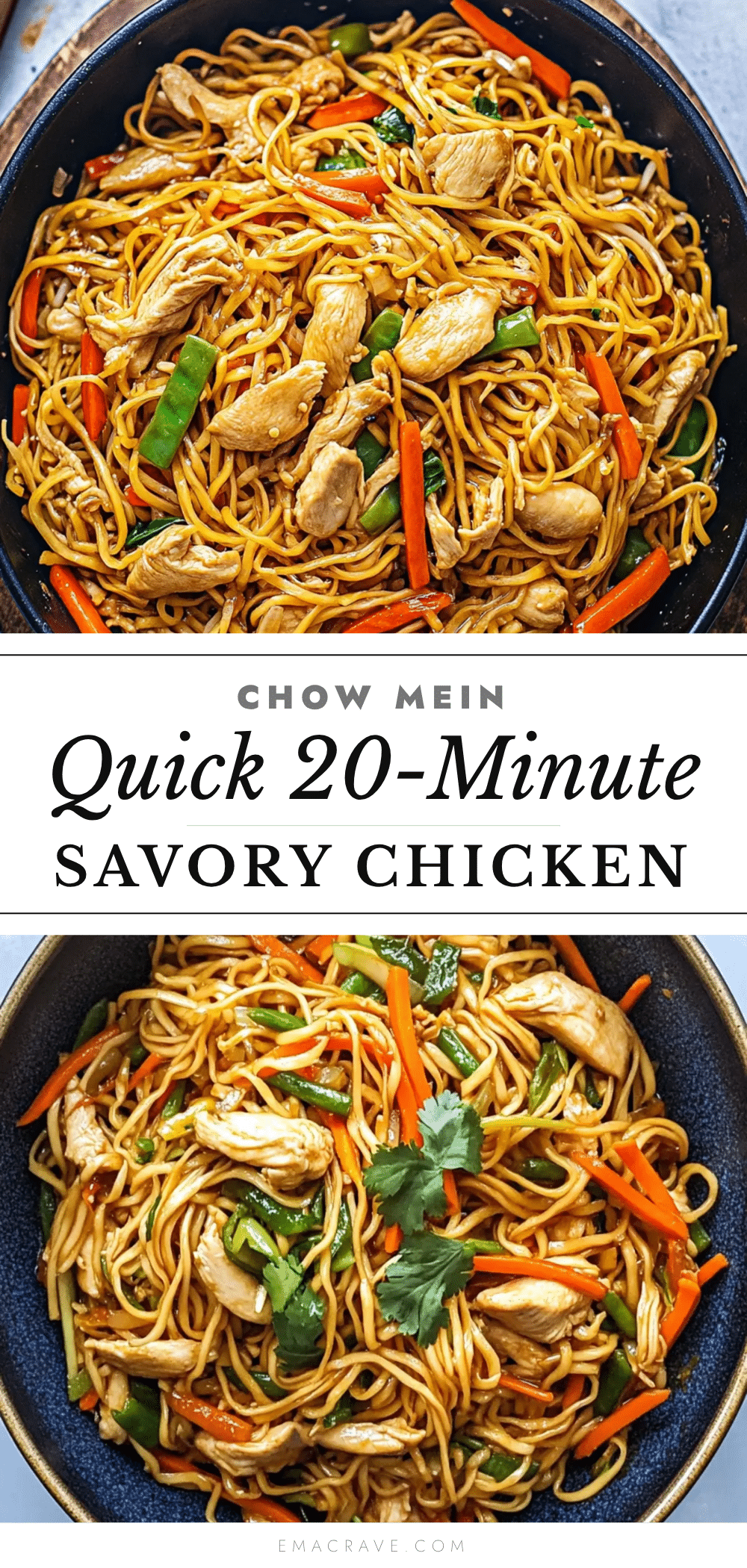
Quick 20-Minute Savory Chicken Chow Mein
A quick and easy chicken chow mein recipe that comes together in just 20 minutes, featuring tender chicken, chewy noodles, and a savory sauce. Perfect for busy weeknights when you need a delicious dinner fast.
- Prep Time: 10 minutes
- Cook Time: 10 minutes
- Total Time: 20 minutes
- Yield: 4 servings 1x
- Category: Main Course
- Cuisine: Chinese
Ingredients
- 1 pound boneless, skinless chicken thighs, thinly sliced
- 2 tablespoons soy sauce (low-sodium if preferred)
- 1 teaspoon cornstarch
- 1 teaspoon sesame oil
- 8 ounces dried chow mein noodles
- 2 tablespoons vegetable oil
- 3 cloves garlic, minced
- 1 tablespoon fresh ginger, grated
- 1 medium bell pepper, thinly sliced
- 1 cup shredded cabbage
- 3 scallions, cut into 2-inch pieces (white and green parts separated)
- 3 tablespoons soy sauce
- 1 tablespoon oyster sauce
- 1 teaspoon sugar
- 1/2 teaspoon white pepper
- 1/4 cup chicken broth
- 1 teaspoon cornstarch mixed with 2 tablespoons water (slurry)
Instructions
- Marinate the chicken: In a medium bowl, combine sliced chicken thighs with 2 tablespoons soy sauce, 1 teaspoon cornstarch, and 1 teaspoon sesame oil. Toss to coat and set aside.
- Cook the noodles: Bring a large pot of water to a boil. Cook chow mein noodles according to package directions (about 4-5 minutes) until al dente. Drain and rinse with cold water. Toss with a drizzle of vegetable oil to prevent sticking.
- Make the sauce: In a small bowl, whisk together 3 tablespoons soy sauce, 1 tablespoon oyster sauce, 1 teaspoon sugar, 1/2 teaspoon white pepper, and 1/4 cup chicken broth. In a separate bowl, mix 1 teaspoon cornstarch with 2 tablespoons water for the slurry.
- Sear the chicken: Heat a wok or large skillet over high heat until smoking. Add 1 tablespoon vegetable oil. Add marinated chicken in a single layer and cook undisturbed for 90 seconds until golden. Toss and cook another 60 seconds until just cooked through. Transfer to a plate.
- Stir-fry aromatics and vegetables: Reduce heat to medium-high and add remaining 1 tablespoon oil. Add garlic, ginger, and white parts of scallions. Stir for 20 seconds until fragrant. Add bell pepper and cabbage. Stir-fry for 90 seconds until vegetables are tender-crisp.
- Combine everything: Add cooked noodles to the wok. Pour sauce mixture over the top. Toss with tongs to combine. Cook for 1 minute. Add cooked chicken back to the pan. Stir the cornstarch slurry and pour it in. Toss for 30-60 seconds until sauce thickens and coats the noodles.
- Finish and serve: Sprinkle green parts of scallions over the top. Toss once more. Taste and adjust seasoning if needed. Serve immediately.
Notes
High heat is essential for stir-frying. Prep all ingredients before starting to cook. Do not overcook noodles; cook 1 minute less than package directions. Let chicken rest after searing to keep juices locked in. Taste and adjust seasoning as soy sauce brands vary in saltiness. If noodles stick, add a splash of chicken broth or water.
Nutrition
- Serving Size: 1 serving
- Calories: 395
- Sugar: 6
- Sodium: 980
- Fat: 14
- Saturated Fat: 3
- Carbohydrates: 38
- Fiber: 4
- Protein: 32
Keywords: chicken chow mein, quick dinner, easy stir-fry, weeknight dinner, 20-minute meal, Chinese takeout, savory noodles