Love this? Save it for later!
Share the inspiration with your friends
The third loaf was the one that finally made me stop and stare at the counter. I had pulled it from the oven maybe ten minutes earlier, still warm enough that the butter I was about to slather on would melt into golden puddles. The top had cracked in that perfect, rustic way banana bread always does, and the edges were a deep, promising brown. I cut a slice, and it didn’t crumble. It didn’t squish. It just held together, soft and tender, with a texture that felt almost like a secret. I had been chasing this version of almond flour banana bread for weeks—through gummy slices, dry bricks, and one particularly sad loaf that tasted more like cardboard than comfort. But this one? This one was it. My husband walked into the kitchen, grabbed a slice without asking, and just said, “Oh.” That single syllable, loaded with surprise and satisfaction, told me everything I needed to know. This wasn’t just another gluten-free experiment. This was the keeper.
Honestly, I wasn’t even trying to make a perfect recipe that day. I had three overripe bananas on the counter—you know the ones, with the skins so brown they look almost angry—and I needed to use them before they attracted fruit flies. My usual go-to for overripe bananas is a classic loaf, but I had a bag of almond flour staring at me from the pantry, and I thought, why not? The first few attempts had been lessons in what not to do. Too much almond flour and the bread was dense and oily. Not enough eggs and it fell apart like a sad sandcastle. But this time, I slowed down. I paid attention to the texture of the batter, the way it felt when I folded in the mashed bananas. And when I pulled that third loaf out, I knew I had stumbled onto something worth sharing.
This almond flour banana bread is the kind of recipe that makes you forget you’re eating something that happens to be gluten-free. It’s soft, it’s moist, and it has that undeniable banana flavor that fills your whole kitchen with warmth. I’ve made it for friends who swear they don’t like gluten-free baked goods, and they always ask for the recipe. So here it is—the one that finally worked, the one I keep coming back to, the one that turned a pile of spotty bananas into something truly irresistible.
Why You’ll Love This Recipe
Let me tell you why this almond flour banana bread has earned a permanent spot in my baking rotation. It’s not just good for a gluten-free loaf—it’s genuinely, unapologetically delicious. And I say that as someone who has been burned by too many dry, crumbly almond flour recipes in the past. This one is different.
- Incredibly Soft Texture: Unlike some almond flour baked goods that turn out dense and greasy, this bread is light, tender, and almost cake-like. The secret is in the ratio of wet to dry ingredients and the way the eggs create structure without making it rubbery. It’s the kind of soft that makes you want to eat it plain, straight from the loaf pan.
- Simple, Whole-Food Ingredients: You don’t need any weird additives or hard-to-find items. Just almond flour, bananas, eggs, a little sweetener, and a few pantry staples. No xanthan gum, no strange starches, no preservatives. It’s the kind of recipe that feels good to make because you know exactly what’s going into it.
- Naturally Gluten-Free and Grain-Free: This recipe works beautifully for anyone avoiding gluten or grains. The almond flour provides a rich, nutty flavor that complements the bananas perfectly, and it’s naturally low in carbs compared to traditional wheat flour. It’s also a great option if you’re following a paleo or low-carb lifestyle.
- Perfect for Overripe Bananas: We all have those bananas sitting on the counter, getting spotty and sad. This is the absolute best way to use them up. The riper the bananas, the sweeter and more flavorful your bread will be. It’s like a delicious solution to a kitchen problem we all face.
- Easy to Make, Hard to Mess Up: After my initial trial-and-error phase, I simplified the process so anyone can nail it on the first try. The batter comes together in one bowl, and the baking time is forgiving. Even if you overbake it slightly (I’ve done it), it stays moist thanks to the almond flour.
This isn’t just another banana bread recipe you’ll try once and forget. It’s the one that will make you look at those spotty bananas on your counter and smile, knowing you have something special waiting to happen. It’s comfort food that works with your dietary needs, not against them. And honestly, it’s the kind of bread that makes you close your eyes after the first bite, just to savor it.
What Ingredients You Will Need
This recipe uses simple, wholesome ingredients to deliver that irresistible soft texture and rich banana flavor. Most of these are pantry staples if you keep a gluten-free kitchen, but I’ve also included some substitution notes to make it work for you.
- Almond Flour (2 ½ cups / 280g): This is the star of the show. I recommend using a finely ground, blanched almond flour for the best texture. Avoid almond meal, which is coarser and has the skins on—it will make your bread denser and grittier. My go-to brand is Bob’s Red Mill Super-Fine Almond Flour, but any reputable brand works. The flour should be light and fluffy, not clumpy.
- Ripe Bananas (3 medium, about 1 ½ cups mashed): The riper, the better. You want bananas that are heavily speckled with brown spots, or even fully brown. They’re sweeter and easier to mash, which means you can use less added sweetener. If your bananas aren’t quite ripe enough, you can speed things up by roasting them in a 300°F oven for 15-20 minutes until the skins darken.
- Eggs (4 large, at room temperature): Eggs provide the structure and lift that almond flour can’t offer on its own. Room temperature eggs incorporate more easily and create a smoother batter. If you forget to take them out of the fridge, place them in a bowl of warm water for 5 minutes.
- Maple Syrup or Honey (⅓ cup / 80ml): This adds sweetness and moisture. I prefer maple syrup for its mild flavor, but honey works beautifully too. If you’re watching your sugar intake, you can reduce it to ¼ cup, especially if your bananas are very ripe.
- Coconut Oil or Butter (¼ cup / 60ml, melted and slightly cooled): This adds richness and helps keep the bread tender. I use melted coconut oil for a dairy-free version, but unsalted butter gives a slightly richer flavor. If using coconut oil, make sure it’s not too hot when you add it to the eggs, or you’ll end up with scrambled eggs.
- Vanilla Extract (1 teaspoon): Pure vanilla extract enhances the sweetness and rounds out the flavors. Avoid imitation vanilla if you can—it makes a noticeable difference in the final taste.
- Baking Soda (1 teaspoon): This is the leavening agent that helps the bread rise. Make sure it’s fresh—if it’s been sitting in your pantry for over a year, it might not work as well.
- Cinnamon (1 teaspoon): Ground cinnamon adds warmth and complements the banana flavor beautifully. You can also add a pinch of nutmeg or allspice for a more complex spice profile.
- Salt (½ teaspoon): A little salt balances the sweetness and enhances all the other flavors. I use fine sea salt.
- Optional Mix-Ins: Chopped walnuts, pecans, dark chocolate chips, or dried fruit all work wonderfully. About ½ cup is a good amount. My personal favorite is a handful of dark chocolate chips—they melt into little pockets of richness throughout the bread.
That’s it. No weird ingredients, no expensive specialty items. Just real food that comes together to create something genuinely special.
Equipment Needed
You don’t need a fancy kitchen to make this almond flour banana bread. Here’s what you’ll need:
- 9×5-inch Loaf Pan: This is the standard size for banana bread. If you use a smaller pan, your bread will take longer to bake and might not cook through in the center. If you use a larger pan, the bread will be shorter and bake faster.
- Mixing Bowls: You’ll need one large bowl for the wet ingredients and another for the dry ingredients. I prefer glass or stainless steel bowls because they don’t hold onto odors.
- Whisk and Spatula: A whisk for combining the dry ingredients and a rubber spatula for folding everything together. A wooden spoon works too, but a spatula makes it easier to scrape the sides of the bowl.
- Fork or Potato Masher: For mashing the bananas. You want them mostly smooth with a few small lumps for texture. A fork works fine, but a potato masher is faster and gives you more control.
- Parchment Paper: Lining your loaf pan with parchment paper makes it incredibly easy to lift the bread out after baking. Just leave a little overhang on the long sides.
- Cooling Rack: A wire rack allows air to circulate around the bread as it cools, preventing the bottom from getting soggy. If you don’t have one, you can use the inverted loaf pan, but a rack is better.
- Measuring Cups and Spoons: Accurate measurements matter in baking, especially with almond flour. I recommend using dry measuring cups for the flour and liquid measuring cups for the maple syrup and oil.
If you don’t have a loaf pan, you can also bake this batter as muffins. Just line a muffin tin with paper liners and bake at 350°F for 18-22 minutes. The muffins are perfect for grab-and-go breakfasts or snacks.
Preparation Method
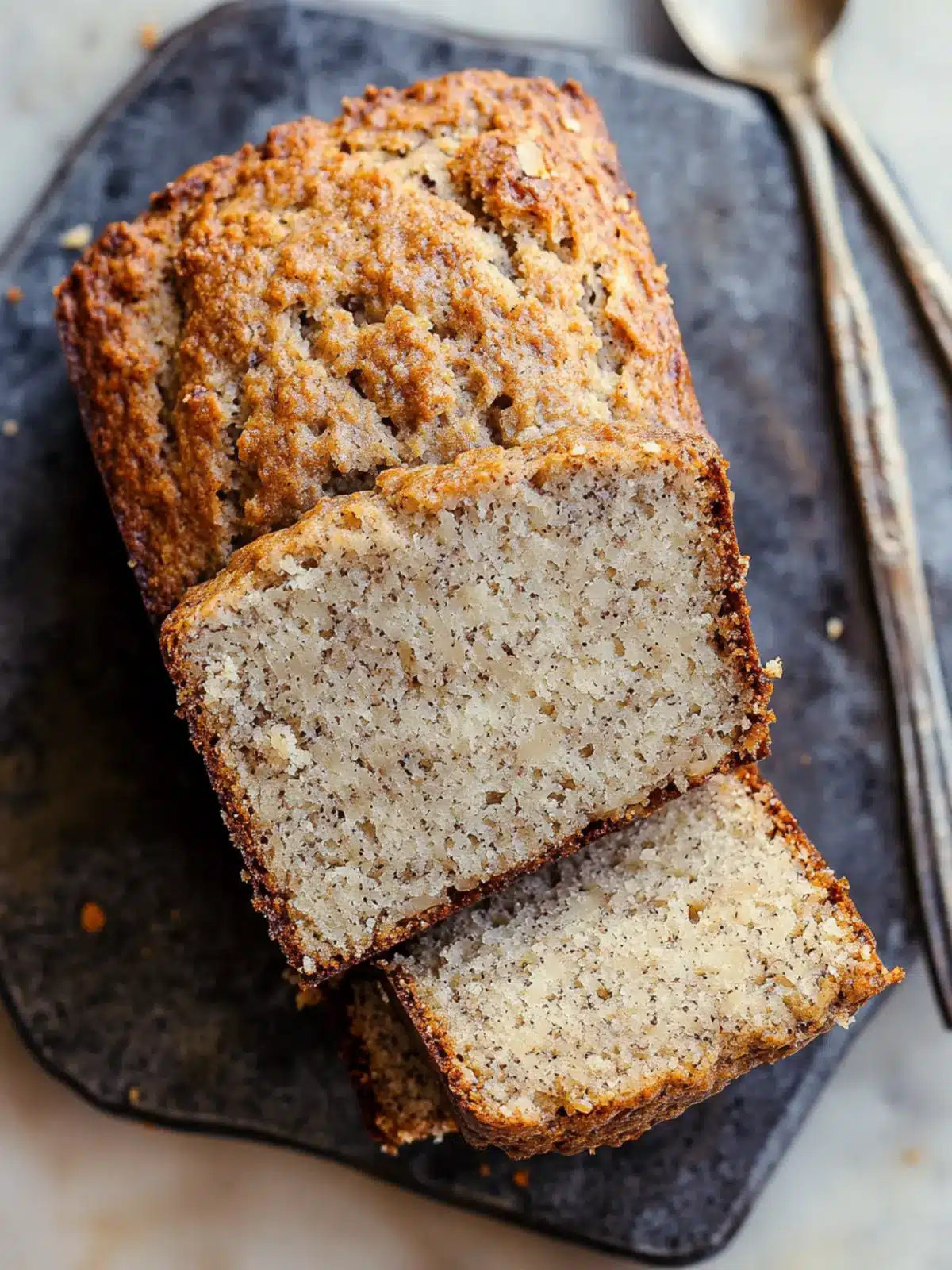
Let’s walk through this step by step. I’ve included all the little details that helped me go from gummy loaves to perfect ones.
- Preheat your oven to 350°F (175°C). Line a 9×5-inch loaf pan with parchment paper, leaving some overhang on the two long sides. This will make it easy to lift the bread out later. Lightly grease the parchment with a little coconut oil or butter to be safe.
- Mash the bananas. In a large bowl, add your three ripe bananas and mash them with a fork or potato masher until mostly smooth. You want a few small lumps for texture—don’t over-mash them into a liquid. The bananas should look like a thick, chunky puree. Set the bowl aside.
- Whisk the wet ingredients. To the mashed bananas, add the 4 room-temperature eggs, ⅓ cup maple syrup or honey, ¼ cup melted coconut oil or butter (cooled slightly), and 1 teaspoon vanilla extract. Whisk everything together until well combined and smooth. The mixture should look uniform and slightly frothy on top.
- Combine the dry ingredients. In a separate medium bowl, whisk together 2 ½ cups almond flour, 1 teaspoon baking soda, 1 teaspoon cinnamon, and ½ teaspoon salt. Make sure there are no lumps in the almond flour—if there are, press them through with the back of a spoon. Whisking the dry ingredients ensures the baking soda is evenly distributed.
- Fold the dry into the wet. Add the dry ingredients to the wet ingredients and fold gently with a rubber spatula. Mix just until no streaks of flour remain. Do not overmix—this is crucial. Overmixing can make the bread tough and dense. The batter will be thick and slightly sticky, which is exactly right.
- Fold in any mix-ins (optional). If you’re adding chocolate chips, nuts, or dried fruit, gently fold them in now. About ½ cup is plenty. I like to reserve a few chocolate chips to sprinkle on top of the batter before baking—it makes the top look pretty and gives you little pockets of melted chocolate in every slice.
- Pour the batter into the prepared loaf pan. Use your spatula to spread it evenly, making sure it reaches all the corners. Smooth the top gently. If you want, sprinkle a few extra mix-ins on top for visual appeal.
- Bake for 45-55 minutes. Place the pan in the center of the oven and bake until the top is golden brown and a toothpick inserted into the center comes out clean or with just a few moist crumbs. Almond flour breads can be tricky because they brown quickly on the outside while still being undercooked inside. If the top is browning too fast (around the 30-minute mark), tent the pan loosely with aluminum foil and continue baking.
- Cool in the pan for 10 minutes. After removing the bread from the oven, let it sit in the pan on a wire rack for 10 minutes. This allows the structure to set before you remove it.
- Lift the bread out using the parchment paper overhang. Transfer it to the wire rack to cool completely. This is important—if you slice it while it’s still warm, it will be too tender and might fall apart. Patience is key here, even though the smell is absolutely intoxicating.
Let the bread cool for at least 30-40 minutes before slicing. I know it’s hard to wait, but trust me. The texture improves dramatically as it cools, and the flavors meld together beautifully. If you absolutely cannot wait, cut yourself a thin slice from the end—it’s the most forgiving part.
Cooking Tips & Techniques
I learned these lessons the hard way, so you don’t have to. Here are my best tips for perfect almond flour banana bread every time.
Don’t skip the room temperature eggs. This is one of those little details that actually matters. Cold eggs can seize up the coconut oil or butter, creating lumps in your batter. Room temperature eggs emulsify better, giving you a smoother, more uniform batter that bakes evenly. If you forgot to set them out, place them in a bowl of warm water for 5 minutes before cracking them.
Measure your almond flour correctly. Almond flour is lighter than wheat flour, so scooping it directly with a measuring cup can pack it down and give you too much. The best method is to fluff the flour with a fork, then spoon it into your measuring cup and level it off with a knife. If you’re using a kitchen scale, 280 grams is your target. Too much almond flour will make the bread dry and dense.
Watch the baking time closely. Almond flour bakes differently than wheat flour. It browns faster on the outside, so don’t rely solely on color to determine doneness. The toothpick test is your friend. If the toothpick comes out with wet batter, it needs more time. If it comes out with a few moist crumbs, it’s perfect. If it comes out completely clean, it might be slightly overbaked, but it will still be delicious.
Let it cool completely. I cannot stress this enough. Almond flour baked goods are incredibly tender when warm, and slicing too early will result in a crumbly mess. The bread continues to set as it cools, and the texture firms up beautifully. I’ve ruined more than one loaf by being impatient. Learn from my mistakes.
If your bread sinks in the middle, don’t panic. This can happen if the batter was too wet or if the oven temperature was too low. Make sure your bananas are measured accurately (1 ½ cups mashed, not just three random bananas) and that your oven is properly preheated. An oven thermometer is a cheap investment that can save your baked goods.
For extra moisture, add a tablespoon of yogurt or sour cream. This is a trick I picked up from a friend who bakes professionally. A little bit of dairy (or dairy-free yogurt) adds tenderness and moisture without changing the flavor. It’s optional, but it works wonders if you’re worried about dryness.
Variations & Adaptations
One of the best things about this recipe is how versatile it is. Here are some of my favorite variations.
Chocolate Chip Banana Bread: This is my most-made variation. Fold in ½ cup of dark chocolate chips (I use Enjoy Life dairy-free chips) and sprinkle a few on top before baking. The chocolate melts into little pools of richness that pair beautifully with the banana. It’s like having dessert for breakfast, and I am absolutely here for it.
Nutty Banana Bread: Add ½ cup of chopped walnuts or pecans for a satisfying crunch. Toast the nuts lightly in a dry pan before adding them to the batter—it brings out their flavor and keeps them from sinking to the bottom. I’ve also used sliced almonds on top for a pretty, crunchy crust.
Paleo-Friendly Version: This recipe is already grain-free, but if you’re strictly paleo, swap the maple syrup for honey and use coconut oil instead of butter. Make sure your chocolate chips are dairy-free if you’re adding them. That’s it—no other changes needed.
Low-Carb/Keto Option: Reduce the maple syrup to 2 tablespoons and add ¼ cup of powdered erythritol or monk fruit sweetener. Keep in mind that the bread will be less sweet and slightly less moist, but it still works. You can also add an extra tablespoon of coconut oil to compensate for the reduced liquid.
Spiced Banana Bread: Add ½ teaspoon of ground nutmeg, ¼ teaspoon of ground ginger, and a pinch of ground cloves along with the cinnamon. This gives the bread a warm, holiday-inspired flavor that’s perfect for fall and winter. I made this version for Thanksgiving one year, and it disappeared before the turkey was even carved.
Blueberry Banana Bread: Fold in 1 cup of fresh or frozen blueberries (if using frozen, don’t thaw them first). The berries burst as the bread bakes, creating little pockets of tartness that balance the sweetness. This is a fantastic summer variation when blueberries are in season.
Vegan Adaptation: This one is a bit trickier because eggs are crucial for structure. You can try using 4 flax eggs (4 tablespoons ground flaxseed mixed with 12 tablespoons water) and adding an extra ¼ teaspoon of baking soda for lift. The texture will be denser and slightly more tender, but it’s still delicious. I’ve tested this version, and it works, though it’s not quite as fluffy as the original.
Serving & Storage Suggestions
This almond flour banana bread is wonderful on its own, but here are some ways to make it even better.
Serving Temperature: I love this bread at room temperature, but it’s also fantastic slightly warmed. Pop a slice in the toaster or microwave for 10-15 seconds, then spread on a little butter, coconut oil, or almond butter. The warmth makes it extra soft and brings out the banana flavor.
Pairing Ideas: A slice of this bread pairs beautifully with a hot cup of coffee or tea. For a more indulgent treat, serve it with a dollop of whipped cream or a scoop of vanilla ice cream. If you’re feeling fancy, drizzle a little honey or maple syrup over the top and add a sprinkle of flaky sea salt.
Breakfast or Snack: This bread is substantial enough to be a breakfast on its own, especially if you add nuts or chocolate chips. It also makes a great afternoon snack with a piece of fruit or a handful of berries. My kids love it in their lunchboxes—it travels well and stays soft.
Storage: Store the bread in an airtight container at room temperature for up to 3 days. If your kitchen is warm or humid, I recommend refrigerating it after day one. The bread will stay moist and delicious either way. To keep it from drying out, wrap it tightly in plastic wrap or place it in a resealable bag with the air pressed out.
Freezing: This bread freezes beautifully. Let it cool completely, then wrap it tightly in plastic wrap, followed by a layer of aluminum foil or a freezer-safe bag. It will keep for up to 3 months. To thaw, leave it at room temperature for a few hours or overnight in the refrigerator. You can also toast slices directly from frozen—just add a minute or two to the toasting time.
How Flavors Develop: Honestly, this bread tastes even better on the second day. The flavors meld together, and the texture becomes even more tender. If you can resist eating it all on day one, you’ll be rewarded with an even more delicious loaf on day two. I’ve made it a habit to bake it the day before I plan to serve it, just for that reason.
Nutritional Information & Benefits
This almond flour banana bread is not just delicious—it also offers some nutritional perks compared to traditional wheat-based banana bread.
Estimated Nutritional Values (per slice, based on 10 slices):
- Calories: 280-320
- Fat: 20-24g (mostly healthy fats from almonds and coconut oil)
- Carbohydrates: 18-22g
- Fiber: 4-5g
- Protein: 8-10g
- Sugar: 10-14g (naturally occurring from bananas and maple syrup)
Health Benefits: Almond flour is rich in vitamin E, magnesium, and healthy monounsaturated fats that support heart health. It’s also lower in carbs than wheat flour, making this bread a better option for blood sugar management. Bananas provide potassium, vitamin B6, and fiber, which aid digestion and support energy levels. The eggs add high-quality protein, and the cinnamon has anti-inflammatory properties.
Dietary Considerations: This recipe is naturally gluten-free, grain-free, and can be made dairy-free and paleo-friendly with simple swaps. It’s also suitable for those following a low-carb or keto diet with the sweetener adjustment mentioned in the variations section.
Potential Allergens: This recipe contains tree nuts (almonds) and eggs. If you have a nut allergy, you can try substituting sunflower seed flour or pumpkin seed flour, though the texture will be different. Coconut oil is tree-nut free, but check the label if you have allergies.
I love that this bread feels indulgent but is actually made with whole, nutrient-dense ingredients. It’s the kind of treat you can feel good about eating for breakfast or dessert.
Conclusion
This almond flour banana bread has become a staple in my kitchen, and I have a feeling it will become one in yours too. It’s the recipe I turn to when I have spotty bananas on the counter, when I want something comforting but healthy, and when I need to bring a treat to a friend’s house that everyone can enjoy—gluten-free or not.
What I love most about this bread is how forgiving it is. You can tweak the sweetener, swap in different mix-ins, or even turn it into muffins, and it still works. It’s a recipe that invites creativity, not perfection. And honestly, that’s the kind of cooking I love most—the kind that leaves room for your own touch, your own preferences, your own happy accidents.
I’d love to hear how yours turns out! Did you add chocolate chips or walnuts? Did you try the blueberry version? Drop a comment below and let me know what variations you came up with. And if you share a photo on social media, tag me—I love seeing your creations. Happy baking, friends. You’ve got this.
FAQs
Can I use coconut flour instead of almond flour?
I don’t recommend it. Coconut flour is much more absorbent and behaves very differently in baking. If you want to try a coconut flour banana bread, you’ll need a different recipe with adjusted ratios and more eggs.
Why did my banana bread turn out gummy?
Gummy texture usually means the bread was underbaked or had too much moisture. Make sure your bananas are measured correctly (1 ½ cups mashed) and that you’re baking until a toothpick comes out clean. Letting the bread cool completely also helps it set properly.
Can I make this without eggs?
Eggs are important for structure, but you can try flax eggs as a substitute. Use 4 tablespoons of ground flaxseed mixed with 12 tablespoons of water, let it sit for 5 minutes to gel, then use it in place of the eggs. The texture will be denser, but it works.
How do I know when the bread is done baking?
Insert a toothpick into the center of the bread. If it comes out clean or with just a few moist crumbs, it’s done. If it comes out with wet batter, bake for another 5-10 minutes and test again. The top should be golden brown and feel firm to the touch.
Can I double this recipe?
Absolutely! You can double all the ingredients and bake the batter in two loaf pans. The baking time will be about the same, but check each loaf separately since oven hot spots can vary. You can also bake the extra batter as muffins for a quicker option.
Pin This Recipe!
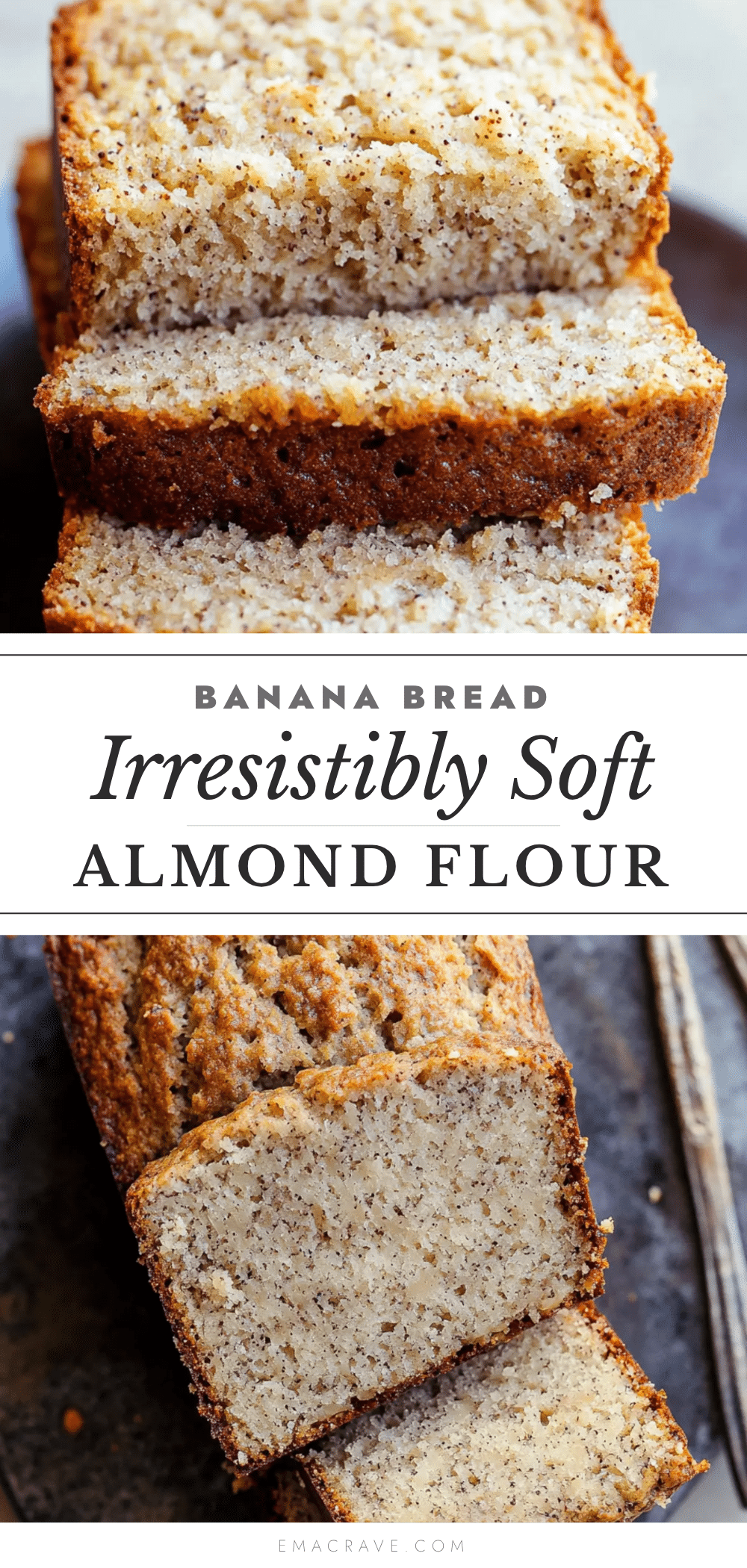
Irresistibly Soft Almond Flour Banana Bread – Best Easy Recipe
This almond flour banana bread is incredibly soft, moist, and gluten-free. Made with simple, whole-food ingredients, it’s the perfect way to use overripe bananas and creates a tender, cake-like loaf that everyone will love.
- Prep Time: 15 minutes
- Cook Time: 50 minutes
- Total Time: 1 hour 5 minutes
- Yield: 10 servings 1x
- Category: Bread
- Cuisine: American
Ingredients
- 2 ½ cups (280g) finely ground blanched almond flour
- 3 medium ripe bananas (about 1 ½ cups mashed)
- 4 large eggs, at room temperature
- ⅓ cup (80ml) maple syrup or honey
- ¼ cup (60ml) coconut oil or unsalted butter, melted and slightly cooled
- 1 teaspoon vanilla extract
- 1 teaspoon baking soda
- 1 teaspoon ground cinnamon
- ½ teaspoon fine sea salt
- Optional: ½ cup chopped walnuts, pecans, dark chocolate chips, or dried fruit
Instructions
- Preheat your oven to 350°F (175°C). Line a 9×5-inch loaf pan with parchment paper, leaving overhang on the long sides. Lightly grease the parchment with coconut oil or butter.
- In a large bowl, mash the ripe bananas with a fork or potato masher until mostly smooth with a few small lumps.
- Add the eggs, maple syrup or honey, melted coconut oil or butter, and vanilla extract to the mashed bananas. Whisk until well combined and smooth.
- In a separate medium bowl, whisk together the almond flour, baking soda, cinnamon, and salt until no lumps remain.
- Add the dry ingredients to the wet ingredients and fold gently with a rubber spatula until just combined. Do not overmix.
- If using mix-ins, gently fold them in now. Reserve a few to sprinkle on top if desired.
- Pour the batter into the prepared loaf pan and spread evenly. Smooth the top and sprinkle reserved mix-ins on top.
- Bake for 45-55 minutes, until the top is golden brown and a toothpick inserted into the center comes out clean or with a few moist crumbs. If the top browns too quickly, tent loosely with foil after 30 minutes.
- Cool in the pan on a wire rack for 10 minutes.
- Lift the bread out using the parchment overhang and transfer to the wire rack to cool completely, at least 30-40 minutes, before slicing.
Notes
For best results, use room temperature eggs and measure almond flour correctly by fluffing, spooning, and leveling. Let the bread cool completely before slicing to avoid crumbling. The bread tastes even better on the second day. For extra moisture, add 1 tablespoon of yogurt or sour cream to the wet ingredients.
Nutrition
- Serving Size: 1 slice
- Calories: 300
- Sugar: 12
- Sodium: 220
- Fat: 22
- Saturated Fat: 6
- Carbohydrates: 20
- Fiber: 4.5
- Protein: 9
Keywords: almond flour banana bread, gluten-free banana bread, grain-free banana bread, paleo banana bread, easy banana bread, soft banana bread