Love this? Save it for later!
Share the inspiration with your friends
The first time I made this Chinese curry chicken, it was a total accident. I’d come home late, starving, and staring at a fridge that looked pretty sad. A pack of chicken thighs, some leftover veggies, and a jar of curry powder that was probably past its prime. I just wanted food fast — something warm and saucy to dump over rice. I wasn’t trying to create a recipe or anything. But honestly, that chaotic 23-minute scramble turned out so good I texted my sister about it the next morning. She didn’t believe me until she made it herself.
That’s the thing about this dish. It doesn’t look like much when you’re throwing it together, but the smell hits you about halfway through and you just know. That deep, savory curry aroma mixed with garlic and ginger — it fills up your whole kitchen and suddenly you’re hungrier than you thought. I’ve made this quick savory Chinese curry chicken more times than I can count now, and it never gets old. It’s become my go-to for those nights when I need something comforting but don’t have the energy for a long cook.
What I love most is how forgiving it is. You can swap in whatever vegetables are wilting in your crisper drawer. You can use chicken breast or thighs. You can even make it a little spicy or keep it mild. The curry sauce does all the heavy lifting, coating everything in that rich, golden goodness. It’s the kind of meal that feels like a hug in a bowl, but it comes together faster than takeout delivery. And honestly? It tastes way better than most takeout I’ve had.
Why You’ll Love This Recipe
This isn’t just another curry recipe. I’ve tested this one at least a dozen times, tweaking the spice blend and the cooking order until it hit that perfect balance. Here’s why I think you’ll fall for it too:
- Quick & Easy: From start to finish, this is on your table in 23 minutes flat. No marinating, no complicated steps — just straightforward cooking that works.
- Simple Ingredients: You probably have most of this stuff already. Curry powder, soy sauce, garlic, ginger, chicken — nothing fancy required.
- Perfect for Busy Weeknights: When you’re tired and hungry, this recipe delivers. It’s fast comfort food that doesn’t sacrifice flavor for speed.
- Crowd-Pleaser: I’ve served this to picky eaters, spice lovers, and curry skeptics. Everyone goes back for seconds. It’s just that good.
- Better Than Takeout: The sauce is richer, the chicken is fresher, and you control exactly what goes in. Plus, no delivery wait time.
What makes this version different from other quick curries is the technique. Instead of just dumping everything in a pot, I sear the chicken first for that browned, savory flavor. Then I bloom the curry powder in the pan with the aromatics — that little step wakes up the spices and makes the sauce taste like it simmered for an hour. It’s a small trick that makes a huge difference.
This recipe is the kind that makes you close your eyes after the first bite. It’s comfort food reimagined — faster, simpler, but with the same soul-soothing satisfaction. Perfect for those nights when you need a win.
What Ingredients You Will Need
This recipe uses simple, everyday ingredients to build big flavor without any fuss. Most of these are pantry staples, which is exactly what you want on a busy weeknight.
- Chicken thighs (boneless, skinless) — 1 lb (450g), cut into bite-sized pieces. Thighs stay juicier than breast meat in a quick cook. If you only have chicken breast, that works too — just watch the cooking time so it doesn’t dry out.
- Curry powder — 2 tablespoons. This is the star. I prefer a good-quality Madras curry powder for its warmth and depth. (I’ve had great results with the McCormick Gourmet brand, but any decent curry powder works.) Blooming it in oil is key here — don’t skip that step.
- Garlic — 4 cloves, minced. Fresh garlic is non-negotiable for that punchy aroma. Jarred minced garlic works in a pinch but use a heaping teaspoon.
- Fresh ginger — 1-inch piece, peeled and grated. Ginger and curry are best friends. Grate it on a microplane for the most flavor, or just chop it super fine.
- Yellow onion — 1 medium, diced. Adds sweetness and body to the sauce. You can substitute shallots if that’s what you have.
- Carrots — 2 medium, sliced into rounds. They add color, sweetness, and a little crunch. Bell peppers or snap peas work great too.
- Chicken broth — 1 cup (240ml). Use low-sodium so you can control the salt. Homemade broth is amazing here, but boxed is totally fine.
- Coconut milk — 1/2 cup (120ml), full-fat. This gives the sauce that silky, luxurious texture. Lite coconut milk works but won’t be as creamy. (I’ve used Thai Kitchen brand for years — consistent and reliable.)
- Soy sauce — 2 tablespoons. Adds umami and saltiness. Tamari or coconut aminos work for gluten-free diets.
- Brown sugar — 1 tablespoon. Just a touch to balance the savory and spice. Honey or maple syrup can sub in.
- Cornstarch — 1 tablespoon, mixed with 2 tablespoons cold water. This slurry thickens the sauce at the end for that perfect coating consistency.
- Vegetable oil — 2 tablespoons, for cooking. Any neutral oil with a high smoke point works — avocado, canola, or grapeseed.
- Salt and white pepper — to taste. White pepper is more traditional in Chinese cooking, but black pepper is fine.
- Green onions — 2-3, sliced, for garnish. Optional but highly recommended for a fresh finish.
- Cooked jasmine rice — for serving. The fluffy rice soaks up that curry sauce beautifully.
Equipment Needed
You don’t need much for this one, which is part of the beauty. Here’s what you’ll want on hand:
- Large skillet or wok — A 12-inch skillet with high sides works perfectly. A wok is even better if you have one — the high heat and curved sides make stir-frying a breeze. I use my trusty Lodge cast iron skillet for this, and it does a great job holding heat.
- Cutting board and sharp knife — A good chef’s knife makes quick work of the chicken and veggies. Keep it sharp, please — dull knives are dangerous.
- Wooden spoon or spatula — For stirring and scraping up any browned bits from the pan. Those bits are flavor gold.
- Measuring spoons and cups — Standard set for accuracy. Curries are forgiving, but measurements help the first time.
- Small bowl — For mixing the cornstarch slurry.
- Microplane or grater — For that fresh ginger. A fine grater works too.
- Rice cooker or pot — For making the rice. Start it before you begin the curry, and everything finishes at the same time.
If you don’t have a wok, don’t worry. A deep skillet or even a Dutch oven will work just fine. The key is using a pan that can hold all the ingredients without crowding, so everything cooks evenly.
Preparation Method
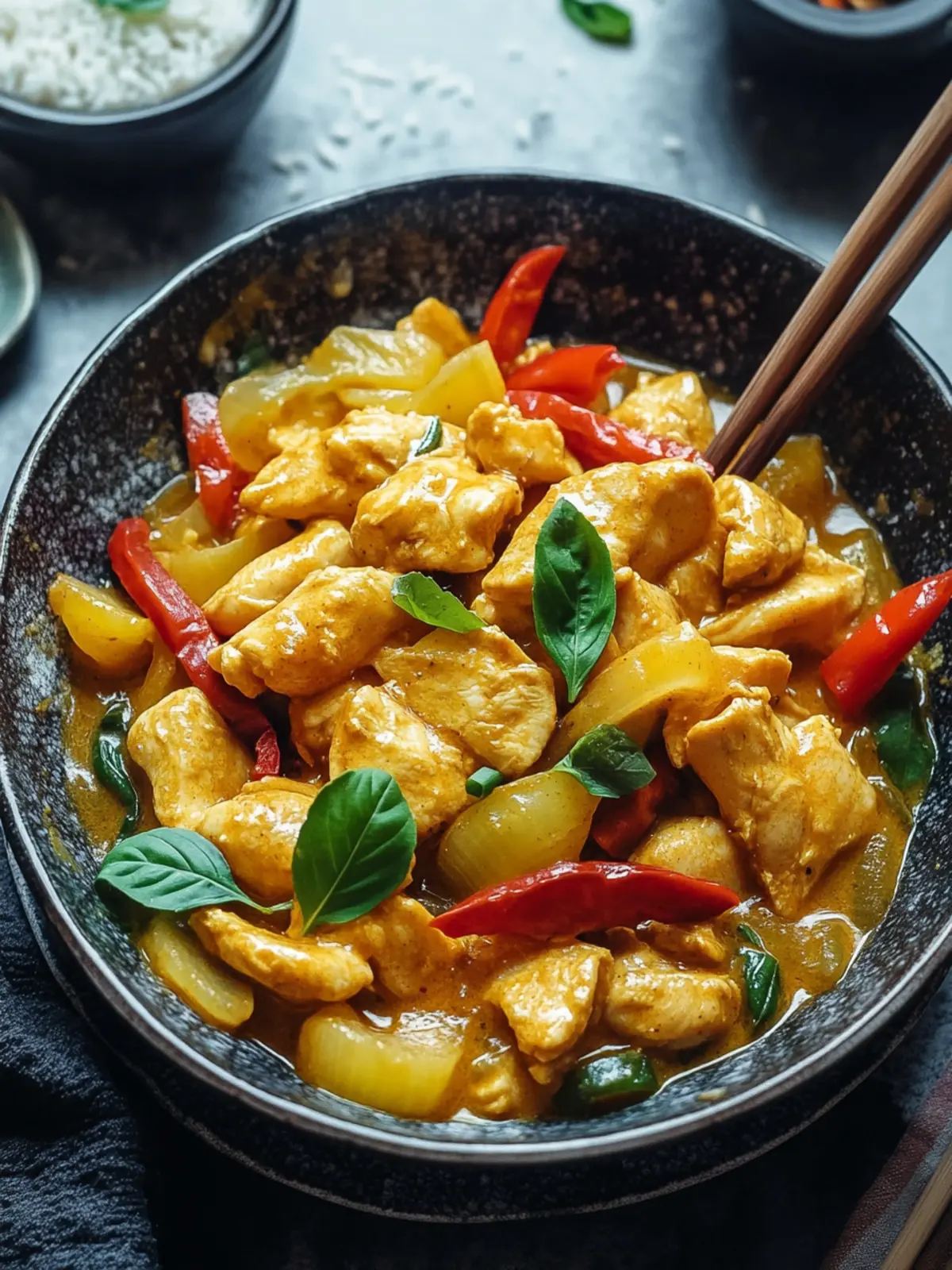
Let’s get cooking. This whole process takes 23 minutes, and I’ll walk you through every step. Start your rice first if you’re making it — it’ll be done right when the curry is ready.
- Prep your ingredients (5 minutes): Cut the chicken thighs into bite-sized pieces, about 1-inch chunks. Dice the onion, slice the carrots into rounds, mince the garlic, and grate the ginger. Mix the cornstarch and cold water in a small bowl and set aside. Having everything ready before you start cooking makes this process smooth and stress-free.
- Heat the oil (30 seconds): Place your skillet or wok over medium-high heat. Add the vegetable oil and let it get hot — you’ll see it shimmer and maybe a wisp of smoke. This is important for getting a good sear on the chicken.
- Sear the chicken (4 minutes): Add the chicken pieces in a single layer. Don’t overcrowd the pan — work in batches if needed. Let them cook undisturbed for 2 minutes until golden brown on the bottom. Then stir and cook for another 2 minutes. The chicken doesn’t need to be fully cooked through yet; it’ll finish in the sauce. Use a slotted spoon to remove the chicken and set it aside on a plate.
- Cook the aromatics (2 minutes): Reduce the heat to medium. Add the diced onion to the pan and cook for about 1 minute, stirring often, until it softens. Add the minced garlic and grated ginger, and cook for another 30 seconds until fragrant. Your kitchen should smell incredible at this point — that’s the garlic and ginger waking up.
- Bloom the curry powder (1 minute): Sprinkle the curry powder over the onions, garlic, and ginger. Stir constantly for about 1 minute. This step is crucial — toasting the curry powder in the oil releases its essential oils and deepens the flavor dramatically. You’ll notice the color deepen and the aroma intensify.
- Add the liquid (3 minutes): Pour in the chicken broth, coconut milk, soy sauce, and brown sugar. Stir everything together, scraping up any browned bits from the bottom of the pan. Add the sliced carrots. Bring the sauce to a gentle simmer — you’ll see small bubbles around the edges. Let it cook for about 2 minutes so the carrots start to soften and the flavors meld.
- Return the chicken (4 minutes): Add the seared chicken back into the pan, along with any juices that accumulated on the plate. Stir to coat everything in that beautiful golden sauce. Let it simmer for 3-4 minutes, stirring occasionally, until the chicken is cooked through and the carrots are tender but still have a little bite. The sauce should be bubbling gently, not furiously.
- Thicken the sauce (1 minute): Give the cornstarch slurry a quick stir (it settles fast) and pour it into the pan while stirring continuously. You’ll see the sauce thicken almost immediately, turning glossy and velvety. Let it cook for about 30 seconds to remove any raw starch taste. If the sauce gets too thick, add a splash of broth or water to loosen it.
- Season and finish (30 seconds): Taste the sauce and adjust seasoning. Add salt and white pepper to your preference. I usually start with 1/2 teaspoon of salt and a pinch of white pepper, then adjust from there. Sprinkle in the sliced green onions, reserving a few for garnish.
- Serve immediately: Spoon the curry chicken over a bed of fluffy jasmine rice. Garnish with the remaining green onions. The sauce should coat the chicken and rice beautifully — thick enough to cling but loose enough to soak in.
Visual cue check: The sauce should be a rich golden-yellow color with a glossy sheen. The chicken should be tender and juicy, not dry or rubbery. The carrots should be tender but not mushy — you want a little resistance when you bite into them.
Cooking Tips & Techniques
After making this Chinese curry chicken more times than I can count, I’ve learned a few things the hard way. Here are my best tips to make sure yours turns out perfect every time.
Don’t skip blooming the curry powder. This was a game-changer for me. I used to just dump curry powder into the liquid, and the sauce always tasted flat. Toasting it in oil with the aromatics for a minute unlocks all those warm, complex notes. It’s a 60-second step that makes your curry taste like it simmered for hours.
Get the pan hot before adding chicken. A good sear isn’t just about color — it’s about flavor. When the chicken hits that hot oil, it creates a browned crust that adds depth to the whole dish. If your pan isn’t hot enough, the chicken will steam instead of sear, and you’ll miss out on that savory goodness. Don’t be shy with the heat.
Watch the salt carefully. Soy sauce and chicken broth both contain salt, so go easy when seasoning. I always taste before adding extra salt. It’s easier to add more at the end than to fix an over-salted sauce.
Use full-fat coconut milk for the best texture. I’ve tried this with lite coconut milk, and honestly, it’s just not the same. The full-fat version gives the sauce that silky, luxurious consistency that makes this dish feel special. If you’re watching calories, you can use half full-fat and half lite — that compromise works pretty well.
Prep everything before you start cooking. This recipe moves fast once you begin. Having your chicken cut, veggies chopped, and slurry mixed means you can focus on the cooking itself. I learned this lesson after burning garlic while frantically trying to chop an onion. Not my finest moment.
Let the sauce simmer, not boil. A gentle simmer allows the flavors to meld without breaking the coconut milk. If you boil it hard, the sauce can separate and look grainy. Keep the heat at medium-low once the liquid is in, and you’ll get that smooth, creamy result every time.
Variations & Adaptations
One of the best things about this recipe is how easily it adapts. Here are some ways to make it your own.
- Vegetable-Packed Version: Add more vegetables to boost nutrition and color. Bell peppers, snap peas, broccoli florets, or zucchini all work great. Add heartier veggies like broccoli with the carrots, and quick-cooking ones like bell peppers or snap peas in the last 2 minutes of cooking. I’ve made this with whatever I had on hand and it’s always been delicious.
- Spicy Curry: If you like heat, add 1-2 teaspoons of chili paste (like sambal oelek) or a chopped fresh bird’s eye chili along with the garlic and ginger. You can also use a hot curry powder blend. My husband loves it spicy, so I often add a teaspoon of sriracha to his portion at the end.
- Protein Swaps: This recipe works beautifully with other proteins. Try cubed firm tofu (pressed and pan-seared first), shrimp (add in the last 3 minutes), or chickpeas (add with the broth). Each brings its own texture and flavor. I’ve made a tofu version for my vegetarian friends and they raved about it.
- Creamy Coconut-Free Option: If you’re not into coconut milk or need a lower-fat version, replace it with an extra 1/2 cup of chicken broth and a splash of heavy cream or half-and-half. The sauce won’t be as rich, but it’ll still be delicious. For a dairy-free option, use full-fat oat milk — it adds creaminess without coconut flavor.
- Gluten-Free Adaptation: This recipe is naturally gluten-free if you use tamari or coconut aminos instead of regular soy sauce. Double-check your curry powder blend too — some contain wheat flour. Most are gluten-free, but it’s worth a look.
- Make It a One-Pot Meal: Add 1 cup of uncooked jasmine rice directly to the sauce along with an extra 1 1/2 cups of broth after step 6. Cover and simmer for 15-18 minutes until the rice is tender and has absorbed the liquid. Stir in the cooked chicken at the end. It’s a lazy-day hack that works surprisingly well.
Serving & Storage Suggestions
This Chinese curry chicken is best served immediately, but it also stores beautifully for leftovers. Here’s how to make the most of it.
Serving: Spoon the curry over a generous portion of steamed jasmine rice. The fluffy rice is perfect for soaking up all that golden sauce. For a low-carb option, serve over cauliflower rice or with steamed vegetables on the side. I love garnishing with extra sliced green onions, a sprinkle of sesame seeds, and maybe a wedge of lime for brightness. A side of easy bang bang fried rice would be incredible alongside this curry for a full takeout-style feast.
Storage: Let the curry cool completely before storing. Transfer to an airtight container and refrigerate for up to 4 days. The flavors actually meld and deepen overnight, so leftovers taste even better the next day. I’ve been known to make a double batch just for the lunch leftovers.
Freezing: This curry freezes really well. Portion it into freezer-safe containers or zip-top bags, removing as much air as possible. It keeps for up to 3 months. Thaw overnight in the refrigerator before reheating.
Reheating: Reheat gently on the stovetop over medium-low heat, adding a splash of broth or water to loosen the sauce if needed. You can also microwave individual portions in 30-second bursts, stirring between each. The sauce might separate slightly upon reheating, but a quick stir brings it back together. Don’t boil it aggressively or the coconut milk can break.
Flavor development: Like many curries, this one tastes even better the next day. The spices have time to meld and mellow, creating a more rounded flavor. If you can resist eating it all immediately, you’re in for a treat at lunchtime.
Nutritional Information & Benefits
Here’s an approximate nutritional breakdown for one serving (about 1 1/2 cups of curry with 1 cup of jasmine rice). Values will vary based on specific ingredients and portion sizes.
| Nutrient | Amount Per Serving |
|---|---|
| Calories | 520 |
| Total Fat | 22g |
| Saturated Fat | 10g |
| Cholesterol | 120mg |
| Sodium | 780mg |
| Total Carbohydrates | 48g |
| Dietary Fiber | 4g |
| Sugars | 8g |
| Protein | 35g |
Health Benefits: This dish packs a solid protein punch from the chicken, which supports muscle health and keeps you full. Curry powder contains turmeric, a spice known for its anti-inflammatory properties thanks to curcumin. Ginger and garlic both have immune-boosting benefits. The carrots provide vitamin A for eye health, and the coconut milk offers healthy medium-chain triglycerides (MCTs) that can support energy metabolism.
Dietary Considerations: This recipe is dairy-free and can be made gluten-free with a simple swap. It’s relatively low in carbs if you skip the rice and load up on extra vegetables instead. If you’re watching sodium, use low-sodium broth and tamari, and go light on added salt.
Potential Allergens: Contains coconut (if using coconut milk) and soy (from soy sauce). Both are common allergens, so check labels if cooking for others.
Conclusion
This quick savory Chinese curry chicken is proof that you don’t need hours in the kitchen to make something truly delicious. It’s fast enough for a harried weeknight, but flavorful enough to feel like a special meal. The sauce is rich and velvety, the chicken is tender, and the whole thing comes together in less time than it takes to watch a sitcom.
I love this recipe because it’s become my reliable fallback — the one I turn to when I’m tired, hungry, and need something that just works. It’s saved dinner more times than I can count. And honestly, it’s one of those rare dishes that tastes even better than it sounds on paper.
I’d love to hear how yours turns out. Did you add any fun variations? Serve it with something unexpected? Drop a comment below and let me know — I read every single one. And if you loved this recipe, share it with a friend who needs a quick dinner win. Happy cooking!
Frequently Asked Questions
Can I use chicken breast instead of thighs?
Absolutely. Chicken breast works fine, but it cooks faster and can dry out more easily. Cut it into slightly larger pieces and watch the cooking time carefully. Remove the chicken from the pan as soon as it’s just cooked through — about 3 minutes for the initial sear, and 2-3 minutes when added back to the sauce.
What if I don’t have curry powder?
You can make a quick substitute by mixing 1 tablespoon turmeric, 1 teaspoon cumin, 1 teaspoon coriander, 1/2 teaspoon ginger powder, and a pinch of cayenne. It won’t taste exactly the same, but it’ll be close enough for a last-minute dinner. Or just use garam masala — it’s different but still delicious.
Can I make this recipe vegan?
Yes! Swap the chicken for extra-firm tofu (pressed and cubed) or chickpeas. Use vegetable broth instead of chicken broth. The rest of the recipe stays the same. Tofu benefits from a good sear, so don’t skip that step. I’ve made this with chickpeas and it’s hearty and satisfying.
Why is my curry sauce thin?
Your sauce might be thin for a few reasons. The cornstarch slurry needs to be stirred well before adding — it settles quickly. Make sure your sauce is simmering when you add it, not just warm. If it’s still thin after adding the slurry, mix another teaspoon of cornstarch with a tablespoon of cold water and stir it in.
How can I make this less spicy for kids?
Use a mild curry powder blend and skip any extra chili or pepper. The coconut milk naturally mellows the heat. You can also add a teaspoon of honey or an extra splash of coconut milk to balance things out. My kids love this version — it’s savory and creamy without any heat.
Pin This Recipe!
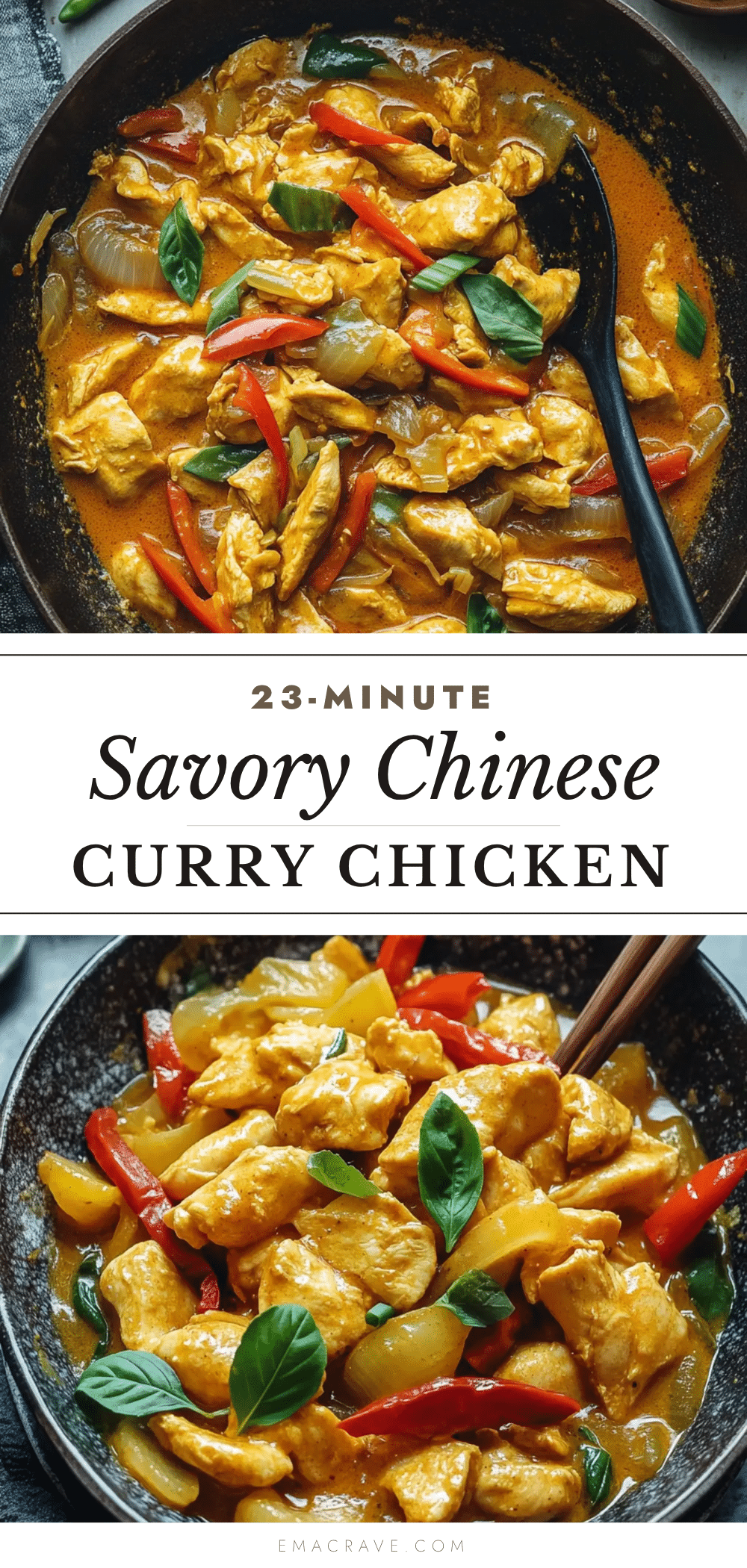
Easy 23-Minute Chinese Curry Chicken: Best Savory Recipe

This quick Chinese curry chicken is a lifesaver for busy weeknights. Tender chicken thighs are seared, then simmered in a rich, golden curry sauce with coconut milk and vegetables, all ready in just 23 minutes.
- Prep Time: 5 minutes
- Cook Time: 18 minutes
- Total Time: 23 minutes
- Yield: 4 servings 1x
- Category: Main Course
- Cuisine: Chinese
Ingredients
- 1 lb (450g) boneless, skinless chicken thighs, cut into bite-sized pieces
- 2 tablespoons curry powder (preferably Madras)
- 4 cloves garlic, minced
- 1-inch piece fresh ginger, peeled and grated
- 1 medium yellow onion, diced
- 2 medium carrots, sliced into rounds
- 1 cup (240ml) low-sodium chicken broth
- 1/2 cup (120ml) full-fat coconut milk
- 2 tablespoons soy sauce (or tamari for gluten-free)
- 1 tablespoon brown sugar
- 1 tablespoon cornstarch mixed with 2 tablespoons cold water (slurry)
- 2 tablespoons vegetable oil (avocado, canola, or grapeseed)
- Salt and white pepper to taste
- 2–3 green onions, sliced (for garnish)
- Cooked jasmine rice (for serving)
Instructions
- Prep your ingredients (5 minutes): Cut chicken into 1-inch pieces. Dice onion, slice carrots, mince garlic, grate ginger. Mix cornstarch and cold water in a small bowl; set aside.
- Heat the oil (30 seconds): Place a large skillet or wok over medium-high heat. Add vegetable oil and heat until shimmering.
- Sear the chicken (4 minutes): Add chicken in a single layer (work in batches if needed). Cook undisturbed for 2 minutes until golden brown, then stir and cook 2 more minutes. Remove chicken with a slotted spoon and set aside.
- Cook the aromatics (2 minutes): Reduce heat to medium. Add onion and cook 1 minute until softened. Add garlic and ginger; cook 30 seconds until fragrant.
- Bloom the curry powder (1 minute): Sprinkle curry powder over aromatics. Stir constantly for 1 minute until fragrant and deepened in color.
- Add the liquid (3 minutes): Pour in chicken broth, coconut milk, soy sauce, and brown sugar. Stir, scraping up browned bits. Add carrots. Bring to a gentle simmer and cook 2 minutes.
- Return the chicken (4 minutes): Add seared chicken back to the pan with any juices. Stir to coat. Simmer 3-4 minutes until chicken is cooked through and carrots are tender.
- Thicken the sauce (1 minute): Stir cornstarch slurry, then pour into pan while stirring continuously. Cook 30 seconds until sauce thickens and turns glossy.
- Season and finish (30 seconds): Taste and adjust with salt and white pepper. Stir in most of the green onions, reserving some for garnish.
- Serve immediately: Spoon curry over jasmine rice. Garnish with remaining green onions.
Notes
Don’t skip blooming the curry powder in oil—it deepens the flavor. Use full-fat coconut milk for the best texture. Prep all ingredients before cooking as the recipe moves fast. For a spicier version, add chili paste or fresh chili with the aromatics. Leftovers taste even better the next day.
Nutrition
- Serving Size: 1 1/2 cups curry wit
- Calories: 520
- Sugar: 8
- Sodium: 780
- Fat: 22
- Saturated Fat: 10
- Carbohydrates: 48
- Fiber: 4
- Protein: 35
Keywords: Chinese curry chicken, quick curry, weeknight dinner, easy curry, 23-minute meal, chicken thigh recipe, curry powder, coconut milk