Love this? Save it for later!
Share the inspiration with your friends
I was staring into my fridge, hungry and a little annoyed. It was one of those evenings where takeout sounded perfect, but my wallet and my fridge—which was full of random odds and ends—were staging a protest. I had a block of udon noodles, a sad-looking piece of bacon, a tub of miso paste, and the last of some heavy cream. Not exactly a promising lineup. My brain was screaming “carbonara,” but I was out of pasta and definitely didn’t have any Pecorino Romano. Then, almost as a joke, I thought, what if I just… swapped the pasta for udon? It felt wrong, but also kind of thrilling.
I grabbed the miso, thinking it could mimic that funky, savory depth you normally get from aged cheese. I whisked it with an egg yolk, fried up the bacon, and tossed in the thick, chewy udon noodles. The first bite was a genuine surprise. It wasn’t just “good for a fusion experiment.” It was genuinely, deeply satisfying. The miso brought this incredible, savory umami that paired perfectly with the smoky bacon, and the thick, silky udon noodles soaked up that creamy sauce like a dream. Honestly, I was mad at myself for not trying this sooner.
This Creamy Miso Carbonara Udon is now my go-to. It’s the kind of quick, satisfying meal that feels like a secret you stumbled onto. It’s fast, it’s comforting, and it proves that the best recipes often come from a moment of pure kitchen desperation.
Why You’ll Love This Recipe
This isn’t your average dinner. It’s a shortcut to something that tastes like you spent way more time on it than you actually did. Here’s why it’s earned a permanent spot in my weeknight rotation:
- Ready in 15 Minutes: From fridge to table in the time it takes to pick a show. Perfect for those nights when you’re short on time but big on hunger.
- Simple Pantry Ingredients: No weird trips to a specialty store. You probably have miso, eggs, and cream in your kitchen right now. If you don’t have udon, you can use any thick noodle.
- A Flavor Bomb: The miso isn’t just a gimmick. It adds a deep, savory richness that makes the sauce incredibly complex without any extra work. It’s the perfect fusion of Italian comfort and Japanese umami.
- Perfect for a Solo Dinner or a Crowd: This scales up beautifully. It’s a quick, indulgent meal for one, or you can double it for a dinner party that will have everyone asking for the recipe.
- Next-Level Texture: The thick, chewy udon noodles are the perfect canvas for a creamy, silky sauce. They hold onto every drop, making each bite incredibly satisfying.
What makes this recipe different is the technique. Instead of a complicated carbonara, we’re using a simple miso-cream base that’s virtually foolproof. No scrambling eggs, no guesswork. It’s comfort food reimagined—faster, smarter, and packed with flavor. This is the kind of meal that makes you close your eyes after the first bite, not because it’s fancy, but because it’s just that good.
What Ingredients You Will Need
This recipe uses simple, wholesome ingredients to deliver bold flavor and satisfying texture without the fuss. The magic is in the combination of a few key pantry staples.
- Udon Noodles (2 servings, about 200g / 7 oz): The star of the show. I prefer the thick, chewy, vacuum-packed udon noodles you find in the refrigerated section. They have the perfect texture to stand up to the creamy sauce. You can also use frozen udon, just cook it a minute or two longer. Dried udon works in a pinch, but the texture won’t be quite as bouncy.
- Bacon (4 slices, chopped): Adds that essential smoky, salty crunch. I use regular bacon, but thick-cut is fantastic if you want more chew. For a vegetarian version, you can use shiitake mushrooms or a smoky tempeh bacon.
- White Miso Paste (2 tablespoons): The secret weapon. White miso (shiro miso) is milder and sweeter than red or brown miso, making it perfect for a creamy sauce. It adds a deep, savory umami that mimics the funkiness of aged cheese. I recommend the Miso & Easy brand for a consistent, high-quality flavor. Don’t use red miso here; it can be too salty and overpowering.
- Heavy Cream (1/2 cup / 120 ml): The base for our luscious sauce. For a lighter version, you can use half-and-half, but the sauce won’t be quite as thick. Full-fat coconut cream is a fantastic dairy-free alternative.
- Egg Yolks (2 large): This is what gives the sauce its silky, rich texture. The yolks are tempered by the warm cream, so there’s no risk of scrambling them. Make sure they are at room temperature for the best emulsion.
- Parmesan Cheese (1/4 cup, grated, plus more for serving): A little goes a long way. It adds a salty, nutty finish that ties the carbonara flavors together. Use freshly grated for the best melt and flavor.
- Garlic (2 cloves, minced): Aromatic and essential. It adds a gentle warmth that complements the miso beautifully.
- Black Pepper (freshly cracked, to taste): A must for any carbonara. It adds a subtle heat and complexity. Don’t skimp on it.
- Green Onions (for garnish): A pop of freshness and color to balance the richness. You can also use chives or a sprinkle of furikake.
Equipment Needed
You don’t need a professional kitchen to pull this off. Just a few basic tools will do the trick.
- Large Pot: For boiling the udon noodles. A 4-5 quart pot is perfect.
- Large Skillet or Wok: A 12-inch skillet or a wok is ideal for tossing everything together. A non-stick pan makes cleanup a breeze.
- Small Bowl: For whisking together the miso-cream-egg mixture.
- Whisk: A small whisk is best for making sure the miso is fully dissolved into the cream. A fork works in a pinch, but a whisk is more efficient.
- Sharp Knife and Cutting Board: For chopping the bacon and garlic.
- Measuring Cups and Spoons: For accuracy, especially with the miso paste.
Preparation Method
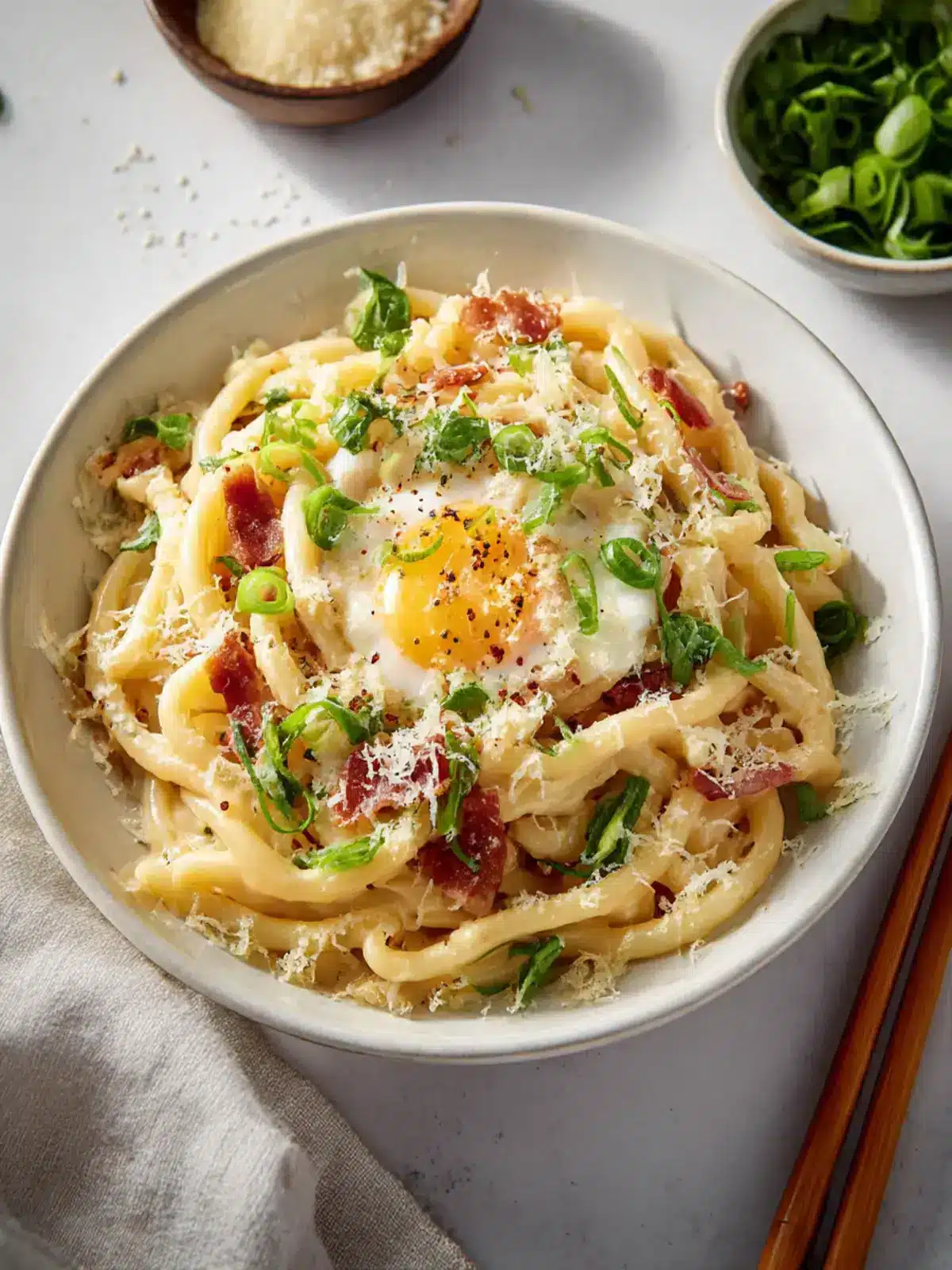
Let’s get cooking. This whole process takes about 15 minutes, so get your ingredients prepped and ready to go.
- Cook the Udon (5 minutes): Bring a large pot of salted water to a boil. Add the udon noodles and cook according to package directions (usually 2-3 minutes for fresh udon, 4-5 for frozen). You want them tender but still chewy. Pro-tip: Reserve about 1/2 cup of the starchy pasta water before draining. It’s gold for adjusting the sauce consistency.
- Make the Miso-Cream Sauce (2 minutes): While the noodles cook, in a small bowl, whisk together the heavy cream, egg yolks, and white miso paste. Whisk until the miso is completely dissolved and the mixture is smooth and pale. It should look like a thick, creamy custard. Set it aside.
- Cook the Bacon (4 minutes): Place your large skillet over medium heat. Add the chopped bacon and cook, stirring occasionally, until it’s crispy and the fat has rendered. This usually takes about 4-5 minutes. Use a slotted spoon to transfer the crispy bacon bits to a paper towel-lined plate, leaving about 1 tablespoon of the rendered bacon fat in the pan.
- Sauté the Garlic (30 seconds): Reduce the heat to low. Add the minced garlic to the bacon fat and sauté for about 30 seconds, just until fragrant. Be careful not to burn it—burnt garlic is bitter. You’ll know it’s ready when the kitchen smells amazing.
- Combine Everything (2 minutes): Drain the cooked udon noodles and add them directly to the skillet with the garlic. Toss to coat the noodles in the bacon fat. Now, pour the miso-cream mixture over the noodles. Toss constantly with tongs for about 1 minute. The residual heat from the pan and noodles will gently cook the egg yolks, creating a silky, emulsified sauce. If the sauce seems too thick, add a splash of the reserved pasta water (a tablespoon at a time) until it reaches your desired consistency.
- Finishing Touches (1 minute): Remove the pan from the heat. Add the grated Parmesan cheese and half of the crispy bacon. Toss one more time to combine. The cheese will melt into the sauce, making it even richer and creamier.
- Serve Immediately: Divide the creamy miso carbonara udon between two bowls. Top with the remaining crispy bacon, a generous crack of black pepper, and a sprinkle of sliced green onions. Serve hot.
Cooking Tips & Techniques
I’ve made this recipe about a dozen times now, and I’ve learned a few things the hard way. Here are my best tips to ensure success every time.
- The Miso Must Be Dissolved: This is the most important step. If you don’t whisk the miso paste fully into the cream, you’ll end up with salty pockets of miso in your sauce. Take your time with the whisk. A smooth, lump-free mixture is the key to a perfect sauce.
- Don’t Overcook the Udon: Udon noodles are best when they are springy and chewy. Overcooking them makes them mushy and sad. Set a timer and taste one a minute before the package says it’s done. You want a slight resistance (al dente) in the center.
- Low and Slow for the Sauce: When you add the miso-cream mixture to the pan, keep the heat on low. The goal is to gently warm the egg yolks, not scramble them. Constant tossing with tongs is your friend here. It distributes the heat evenly and creates a beautiful emulsion.
- Bacon Fat is Flavor: Don’t drain all the bacon fat! That rendered fat is liquid gold. It carries the smoky, savory flavor and helps the sauce cling to the noodles. Leaving a tablespoon in the pan is the secret to a restaurant-quality dish.
- Pasta Water is Your Secret Weapon: I cannot stress this enough. The starchy, salted water helps thin out the sauce without making it watery. It also helps the sauce stick to the noodles. Always, always reserve some before you drain.
Variations & Adaptations
This recipe is a fantastic base for experimentation. Here are a few ways I’ve tweaked it to keep things interesting.
- Vegetarian “Bacon” Version: Replace the bacon with 4 ounces of sliced shiitake mushrooms. Sauté them in a little oil until they are golden and crispy. They provide a wonderful meaty texture and umami flavor that pairs perfectly with the miso. For an even smokier flavor, add a dash of smoked paprika.
- Spicy Miso Carbonara: For a kick of heat, add 1 teaspoon of gochujang (Korean chili paste) or a drizzle of chili oil to the miso-cream mixture. It adds a fantastic warmth that cuts through the richness of the cream.
- Cheese Swap: While Parmesan is classic, you can easily swap it for Pecorino Romano for a saltier, more pungent flavor. A 50/50 mix of Parmesan and Asiago is also incredible. For a dairy-free option, use a high-quality nutritional yeast (about 2 tablespoons) for a cheesy, nutty flavor.
- Add Some Greens: To make it a more balanced meal, toss in a handful of fresh spinach or arugula right at the end. Let it wilt in the residual heat of the sauce. You can also add steamed broccoli or snap peas for extra crunch.
- Noodle Swap: No udon? No problem. This sauce is amazing on other thick noodles like soba, ramen noodles, or even pappardelle. Each one will give you a different, but equally delicious, texture.
Serving & Storage Suggestions
This dish is best enjoyed immediately, but here’s how to handle leftovers if you have any.
Serving: Serve the Creamy Miso Carbonara Udon hot, straight from the pan. I like to serve it in deep bowls to catch all that luscious sauce. A side of simple steamed edamame or a light fresh and savory tomato cracker salad makes for a perfect, balanced meal. For a cozy night in, pair it with a warm cup of cozy royal milk tea for a truly comforting experience.
Storage: Store any leftovers in an airtight container in the refrigerator for up to 2 days. The noodles will absorb some of the sauce, so it will be a bit less saucy the next day.
Reheating: The best way to reheat is in a skillet over medium-low heat. Add a splash of water or milk to loosen the sauce back up. Toss gently until heated through. I don’t recommend microwaving it, as it can make the noodles rubbery and the sauce grainy. If you want a quick, different meal, you can also pan-fry the leftover noodles in a little oil to create crispy, golden-brown edges.
Nutritional Information & Benefits
This is a comfort food recipe, so it’s meant to be an indulgent treat. However, it does have some surprising benefits.
- Estimated Nutritional Values (per serving): Calories: ~550, Fat: 32g, Carbohydrates: 45g, Protein: 18g.
- Miso Power: Miso is a fermented food, which means it’s fantastic for gut health. It’s packed with probiotics, vitamins, and antioxidants. A little goes a long way in supporting a healthy digestive system.
- Protein Packed: Between the eggs, bacon, and Parmesan, this dish offers a solid amount of protein to keep you full and satisfied.
- Dietary Considerations: This recipe is naturally nut-free. To make it gluten-free, use gluten-free udon noodles (made from rice or a blend) and a gluten-free tamari or soy sauce (though this recipe doesn’t use soy sauce, check your miso paste to be sure). To make it dairy-free, use full-fat coconut cream and a dairy-free Parmesan alternative or nutritional yeast.
- Allergen Note: This recipe contains eggs, dairy (cream, Parmesan), and soy (miso). Please adjust accordingly for your dietary needs.
Conclusion
This Creamy Miso Carbonara Udon is more than just a quick dinner—it’s a testament to the magic that happens when you let go of the rules and trust your instincts. It’s the perfect example of how a simple, 15-minute meal can feel like a culinary adventure. The combination of rich, savory miso, smoky bacon, and silky udon noodles is a flavor combination I find myself craving on repeat.
I honestly believe this is the kind of recipe that will become a staple in your kitchen. It’s forgiving, endlessly adaptable, and deeply satisfying. Don’t be afraid to play with the ingredients and make it your own. If you try it, I’d love to hear how it turned out. Leave a comment below and let me know if you added any fun twists!
Happy cooking, and remember—the best meals often start with a little bit of curiosity and a hungry fridge.
Frequently Asked Questions
Can I use a different type of miso paste?
Yes, but white miso (shiro miso) is best for this recipe because it’s milder and sweeter. Red miso is much saltier and more intense, and it can easily overpower the delicate cream sauce. If you only have red miso, use half the amount and taste as you go.
Can I make this recipe ahead of time?
This dish is best enjoyed fresh. The sauce is at its silkiest right after it’s made. If you have leftovers, store them in the fridge for up to 2 days, but be aware that the noodles will absorb the sauce, and the texture will change.
What can I use instead of heavy cream?
You can use half-and-half for a lighter sauce, though it won’t be as thick. For a dairy-free option, full-fat coconut cream is an excellent substitute. It adds a subtle sweetness that works beautifully with the miso.
How do I prevent the eggs from scrambling?
The key is to temper the egg yolks with the cream first and then add the mixture to the pan over low heat. Keep tossing the noodles constantly. The residual heat from the pan and the warm noodles will gently cook the yolks into a smooth, silky sauce, not scrambled eggs.
Can I add vegetables to this recipe?
Absolutely! This is a great way to use up leftover veggies. I love adding a handful of fresh spinach or arugula at the end and letting it wilt. You can also toss in some steamed broccoli, snap peas, or sautéed mushrooms for extra texture and nutrients.
Pin This Recipe!
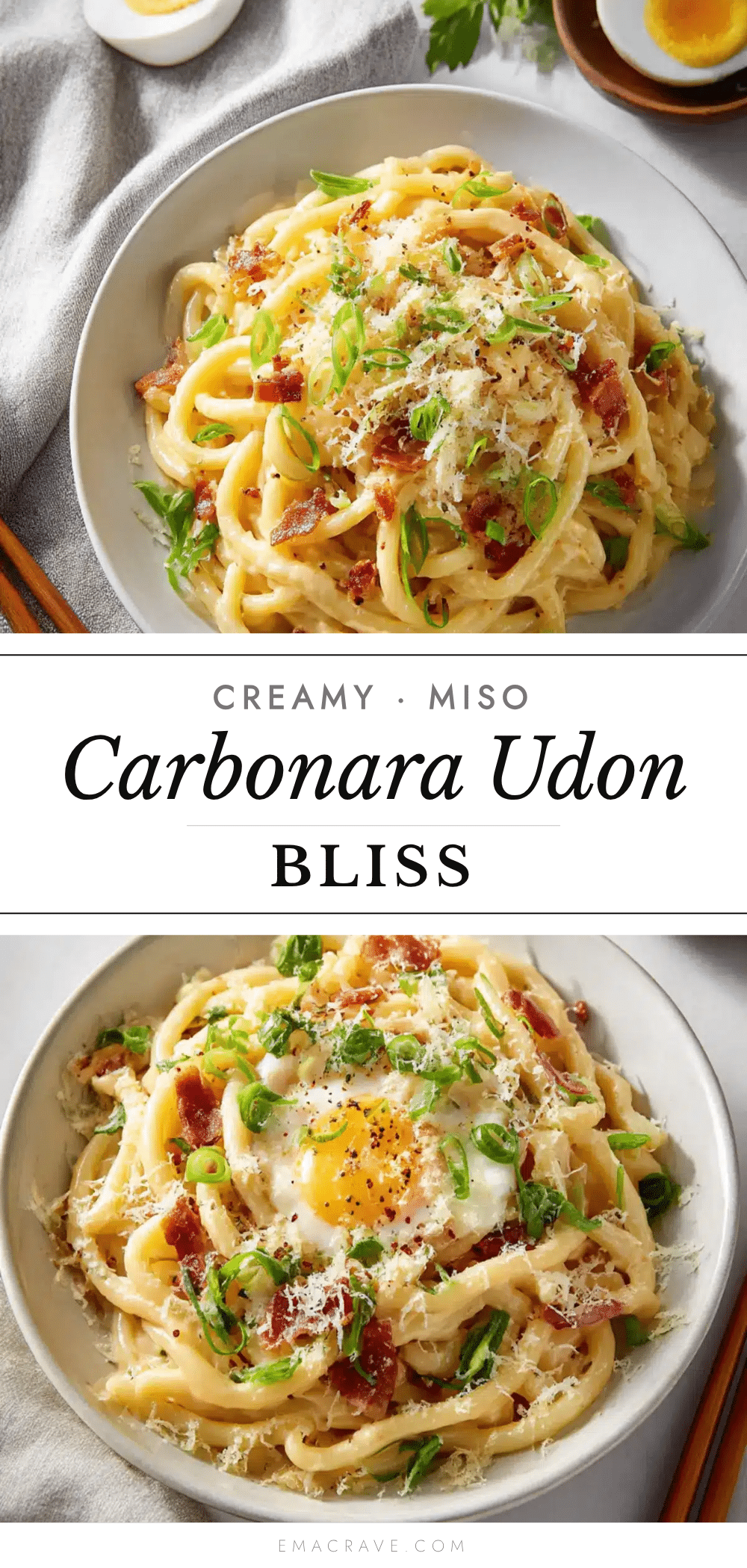
Creamy Miso Carbonara Udon – Easy 15-Minute Dinner
A quick and satisfying fusion of Italian carbonara and Japanese udon noodles, featuring a creamy miso sauce, smoky bacon, and chewy udon. Ready in just 15 minutes, this easy weeknight dinner is packed with umami flavor.
- Prep Time: 5 minutes
- Cook Time: 10 minutes
- Total Time: 15 minutes
- Yield: 2 servings 1x
- Category: Main Course
- Cuisine: Fusion (Italian-Japanese)
Ingredients
- 2 servings (about 200g / 7 oz) udon noodles
- 4 slices bacon, chopped
- 2 tablespoons white miso paste
- 1/2 cup (120 ml) heavy cream
- 2 large egg yolks, at room temperature
- 1/4 cup grated Parmesan cheese, plus more for serving
- 2 cloves garlic, minced
- Freshly cracked black pepper, to taste
- Green onions, sliced, for garnish
Instructions
- Cook the Udon: Bring a large pot of salted water to a boil. Add the udon noodles and cook according to package directions (2-3 minutes for fresh, 4-5 for frozen). Reserve about 1/2 cup of the starchy pasta water before draining. Drain and set aside.
- Make the Miso-Cream Sauce: In a small bowl, whisk together the heavy cream, egg yolks, and white miso paste until completely smooth and pale. Set aside.
- Cook the Bacon: Place a large skillet over medium heat. Add the chopped bacon and cook, stirring occasionally, until crispy (about 4-5 minutes). Use a slotted spoon to transfer the bacon to a paper towel-lined plate, leaving about 1 tablespoon of rendered bacon fat in the pan.
- Sauté the Garlic: Reduce the heat to low. Add the minced garlic to the bacon fat and sauté for about 30 seconds, until fragrant. Do not burn.
- Combine Everything: Add the drained udon noodles to the skillet with the garlic and toss to coat in the bacon fat. Pour the miso-cream mixture over the noodles and toss constantly with tongs for about 1 minute over low heat. The sauce should thicken and become silky. If too thick, add a splash of reserved pasta water (a tablespoon at a time) until desired consistency.
- Finishing Touches: Remove the pan from the heat. Add the grated Parmesan cheese and half of the crispy bacon. Toss to combine.
- Serve Immediately: Divide between two bowls. Top with remaining bacon, a generous crack of black pepper, and sliced green onions. Serve hot.
Notes
For best results, use white miso (shiro miso) as it is milder and sweeter. Red miso can be too salty. Always reserve pasta water to adjust sauce consistency. Keep heat low when adding the miso-cream mixture to prevent scrambling the eggs. Bacon fat adds flavor; do not drain all of it.
Nutrition
- Serving Size: 1 serving
- Calories: 550
- Sugar: 3
- Sodium: 800
- Fat: 32
- Saturated Fat: 16
- Carbohydrates: 45
- Fiber: 2
- Protein: 18
Keywords: miso carbonara, udon carbonara, creamy miso udon, 15-minute dinner, easy weeknight dinner, fusion pasta, Japanese carbonara