Love this? Save it for later!
Share the inspiration with your friends
I was staring into my fridge at 7 AM, and honestly, I was not in a good mood. The milk had expired the day before, and I was out of my usual breakfast go-tos. But there, sitting on the bottom shelf like a little golden promise, was a mango I had bought three days earlier. It was perfectly ripe—soft to the touch, that sweet floral smell already escaping through the stem. Next to it sat half a pineapple I had chopped up for a party that never happened (classic).
So I did what any reasonable person would do when faced with two very ripe tropical fruits and zero motivation to actually cook: I threw them in the blender. I added some frozen banana I had stashed in the freezer, a splash of coconut milk, and hit pulse. What came out was so ridiculously good that I stood there in my pajamas, spoon in hand, eating straight from the blender. That was the accidental birth of my creamy mango pineapple smoothie bowl.
I have made this smoothie bowl at least twice a week ever since. It is the kind of breakfast that makes you feel like you are on vacation even when you are just sitting in your kitchen with yesterday’s coffee. The best part? It takes five minutes, uses ingredients you probably already have, and tastes like sunshine in a bowl. This creamy mango pineapple smoothie bowl has become my go-to for busy mornings, lazy weekends, and everything in between.
Why You Will Love This Recipe
Let me tell you why this particular smoothie bowl has earned a permanent spot in my breakfast rotation. I have tested dozens of smoothie bowl recipes over the years, and most of them fall into one of two camps: either they are too watery and taste like sad fruit soup, or they are so thick they barely blend without burning out your motor. This creamy mango pineapple smoothie bowl hits that perfect middle ground.
- Five minutes to breakfast: From fridge to table in under five minutes. No cooking, no waiting, no fuss.
- No fancy ingredients: You will not need to hunt down obscure superfood powders or expensive specialty items. Everything is available at any grocery store.
- Naturally sweet: The fruit does all the work here. No added sugar needed, which means you can feel good about eating this for breakfast.
- Perfect for meal prep: I often freeze pre-portioned bags of mango, pineapple, and banana so I can make this smoothie bowl on autopilot.
- Crowd-pleaser: I have served this to kids, picky eaters, and even my dad who claims he does not like smoothies. Everyone loves it.
What makes this different from every other tropical smoothie bowl out there? It is the ratio. Most recipes use too much liquid, leaving you with a drinkable smoothie instead of a spoonable bowl. I figured out that using frozen banana as the base gives you that ultra-creamy, almost ice-cream-like texture without needing any dairy. Plus, blending the mango and pineapple together creates this bright, balanced flavor that is not too tart and not too sweet.
This is the kind of breakfast that makes you close your eyes after the first bite. It is comfort food disguised as something healthy, and honestly, that is my favorite kind of meal.
What Ingredients You Will Need
This creamy mango pineapple smoothie bowl uses simple, wholesome ingredients to deliver bold tropical flavor and satisfying texture without the fuss. Most of these are pantry staples in my house, especially during summer.
For the Smoothie Base
- 1 cup frozen mango chunks (about 150g) – I prefer frozen mango over fresh because it gives the smoothie bowl a thicker, creamier texture. If you use fresh mango, add a handful of ice cubes to compensate.
- 1 cup frozen pineapple chunks (about 150g) – Frozen pineapple is key here. Fresh pineapple has too much water content and will make your bowl runny.
- 1 large frozen banana (about 120g) – This is the secret to that silky, soft-serve texture. I always keep peeled, sliced bananas in my freezer for exactly this purpose.
- ½ cup canned coconut milk (120ml) – Use the full-fat kind from a can, not the refrigerated carton. The fat content makes everything luxuriously creamy. Shake the can well before opening.
- 1 tablespoon honey or agave (optional) – I only add this if my fruit is not sweet enough. Most of the time, the fruit carries the sweetness on its own.
- ½ teaspoon vanilla extract – This rounds out the tropical flavors and makes everything taste more dessert-like.
For the Toppings
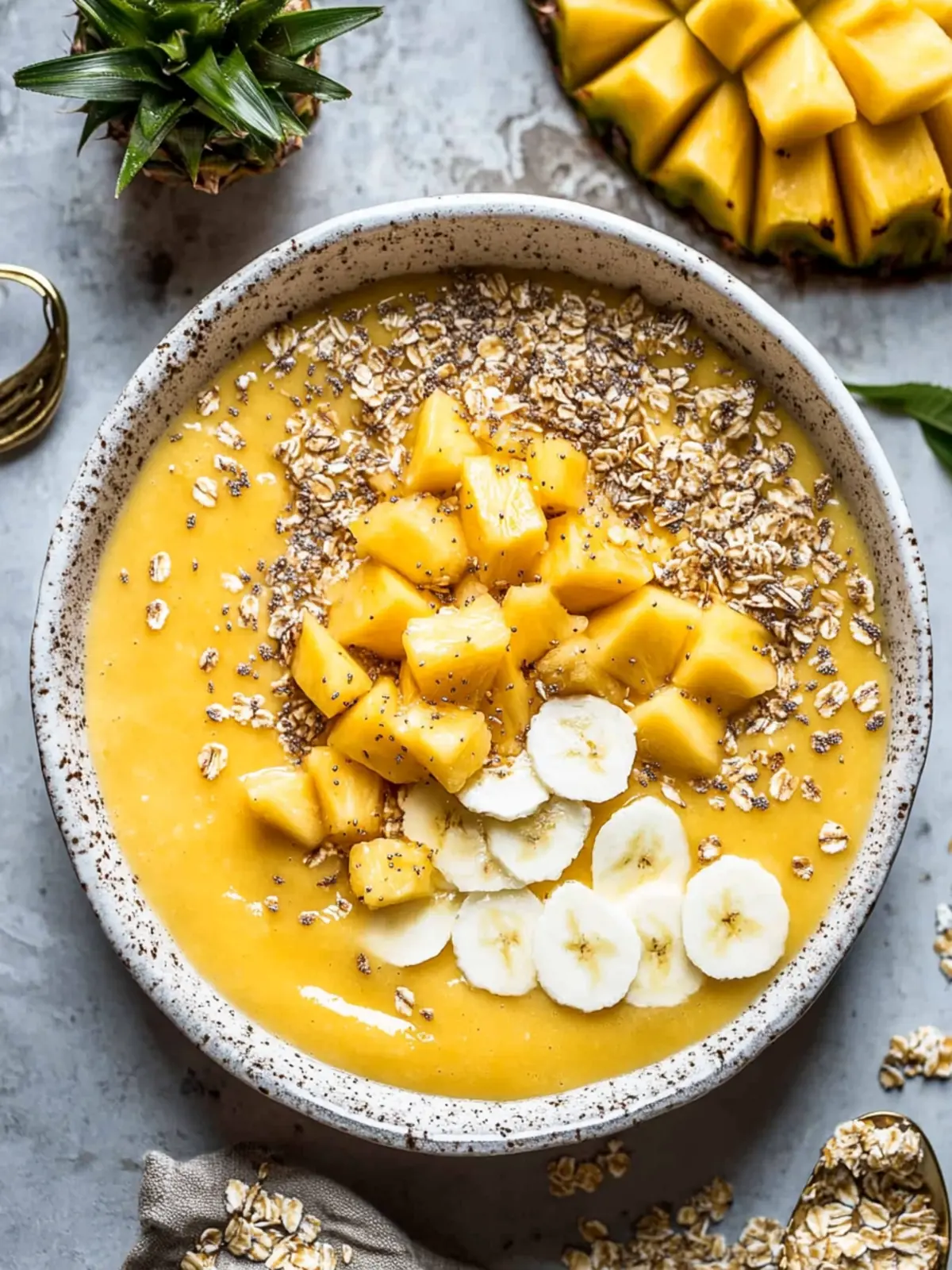
- ¼ cup granola – I like using a coconut almond granola for extra crunch and tropical vibes.
- 2 tablespoons shredded coconut – Unsweetened or toasted, both work great.
- 1 tablespoon chia seeds – Adds fiber and omega-3s, plus a nice little pop of texture.
- ¼ cup fresh fruit – Sliced banana, fresh mango cubes, or berries are all excellent choices.
- 1 tablespoon hemp hearts – These are optional but add a nice nutty flavor and extra protein.
- Drizzle of honey or coconut butter – For that final touch of sweetness and richness.
I recommend using Dole frozen mango and pineapple for consistent quality, but any brand works fine. If you can find frozen organic fruit, even better. Just make sure your banana is fully ripe before freezing—green bananas will make your smoothie bowl taste starchy instead of sweet.
For substitutions, you can use almond milk or oat milk instead of coconut milk, but the texture will be less creamy. Greek yogurt also works in a pinch, though it changes the flavor profile to something tangier. If you are avoiding bananas, try using frozen avocado instead—it gives the same creamy texture without the banana taste.
Equipment Needed
You do not need a fancy kitchen setup to make this creamy mango pineapple smoothie bowl. Here is what I use:
- High-speed blender: I use a Vitamix, but any blender with at least 600 watts will work. A NutriBullet or Ninja are great budget-friendly options. If your blender is on the weaker side, let the frozen fruit sit at room temperature for five minutes before blending.
- Spatula: A silicone spatula is essential for scraping down the sides of the blender jar. Trust me, you will need it.
- Serving bowl: A wide, shallow bowl works best for smoothie bowls. The surface area lets you arrange your toppings beautifully.
- Sharp knife and cutting board: For prepping any fresh fruit toppings.
- Measuring cups and spoons: For accuracy, especially when you are first learning the recipe.
I have made this smoothie bowl with an immersion blender before, and honestly, it was a disaster. The frozen fruit kept getting stuck, and I ended up with chunks of mango everywhere. Stick with a proper blender for the best results. Also, clean your blender immediately after use—dried smoothie is a nightmare to scrub off.
Preparation Method
Making this creamy mango pineapple smoothie bowl is almost embarrassingly easy. Here is exactly how I do it.
- Prep your fruit: If you are using fresh fruit, peel and chop everything into roughly 1-inch pieces. Spread them on a baking sheet lined with parchment paper and freeze for at least 4 hours, or overnight. For frozen fruit straight from the bag, you are ready to go.
- Add liquids first: Pour the coconut milk and vanilla extract into your blender first. This helps the blades move more freely and prevents the frozen fruit from getting stuck at the bottom.
- Add frozen fruit: Add the frozen mango chunks, frozen pineapple chunks, and frozen banana slices on top of the liquid. Do not stir—just let them sit there.
- Blend on low: Start your blender on the lowest setting and gradually increase to medium-high. Use the tamper (if your blender has one) to push the fruit down toward the blades. If you do not have a tamper, stop the blender every 15 seconds and scrape down the sides with a spatula.
- Check consistency: After about 45 seconds to 1 minute, stop and check the texture. It should be thick enough that it does not move when you tilt the blender jar. If it is too thick, add coconut milk one tablespoon at a time and pulse. If it is too thin, add a few more frozen banana slices and blend again.
- Taste and adjust: Give it a quick taste. If you want it sweeter, add honey or agave. If you want it tangier, a squeeze of lime juice works wonders.
- Transfer to bowl: Use your spatula to scoop the smoothie into a bowl. Do not scrape every last bit out—leave a little in the blender for yourself. You earned it.
- Add toppings: Arrange your toppings in rows or sections for a beautiful presentation. Start with the granola, then add shredded coconut, chia seeds, and fresh fruit. Finish with a drizzle of honey and a sprinkle of hemp hearts.
- Serve immediately: Smoothie bowls do not sit well. Eat it right away while it is still thick and cold. The toppings should stay crunchy, not get soggy.
Here is a tip I learned the hard way: do not over-blend. If you blend for too long, the friction from the blades will warm up the fruit and turn your thick bowl into a thin smoothie. Pulse and scrape, pulse and scrape. It takes a little patience, but the texture is worth it.
Another thing—your smoothie bowl should look like soft-serve ice cream when it is done. If it looks like pancake batter, it needs more frozen fruit. If it looks like a snowball, it needs more liquid. You will get a feel for the right consistency after one or two tries.
Cooking Tips & Techniques
I have made this creamy mango pineapple smoothie bowl probably fifty times by now, and I have learned a few things along the way. Here are my best tips for getting it perfect every time.
The banana is non-negotiable. I know some people are not banana fans, but frozen banana is what gives this smoothie bowl its thick, creamy texture. If you skip it, you will end up with a runny mess. If you really hate banana, use frozen avocado instead—it gives the same creamy consistency without the banana flavor.
Freeze your fruit properly. Do not just toss whole bananas into the freezer. Peel them first, slice them into coins, and lay them flat on a baking sheet. Once frozen solid, transfer them to a zip-top bag. This prevents them from clumping together and makes blending much easier. Same goes for mango and pineapple—cut them into uniform pieces so they blend evenly.
Liquid control is everything. Start with less liquid than you think you need. You can always add more, but you cannot take it out. I use exactly half a cup of coconut milk, and I measure it carefully. Too much liquid, and you will be drinking your smoothie bowl through a straw.
Do not skip the tamper. If your blender came with a tamper, use it. It pushes the fruit down into the blades without you having to stop and scrape. If you do not have a tamper, stop every 15-20 seconds to scrape down the sides. Yes, it is annoying, but it makes a huge difference in texture.
Let the fruit soften slightly. If your blender is struggling, let the frozen fruit sit at room temperature for 5 minutes before blending. This softens it just enough to make blending easier without compromising the thickness. I do this every time during summer when my kitchen is warm.
One mistake I made early on was using fresh fruit straight from the fridge. The result was a watery, sad smoothie bowl that tasted fine but looked like a puddle. Frozen fruit is non-negotiable for the right texture. If you only have fresh fruit, add a handful of ice cubes to the blender and reduce the liquid slightly.
Another thing I learned: if you are making this for meal prep, do not blend everything in advance. Instead, portion the frozen fruit into individual bags and store the coconut milk separately. When you are ready to eat, just dump the bag into the blender with the milk. It takes two extra seconds and tastes much fresher.
For the best presentation, chill your serving bowl in the freezer for 10 minutes before adding the smoothie. This keeps it cold longer and prevents the toppings from sinking into the base. It is a small step that makes a big difference if you are taking photos or serving guests.
Variations & Adaptations
One of the best things about this creamy mango pineapple smoothie bowl is how customizable it is. Here are some of my favorite variations.
Tropical Green Bowl: Add a handful of fresh spinach or kale to the blender. Do not worry—the fruit flavor completely masks the taste of greens. You will get a vibrant green color and an extra serving of vegetables without even noticing. I make this version when I want to feel extra virtuous.
Protein Power Bowl: Add one scoop of vanilla or unflavored protein powder to the blender. You might need an extra tablespoon of coconut milk to help it blend smoothly. This turns the smoothie bowl into a post-workout meal that actually tastes good. I use collagen peptides for a neutral flavor.
Mango Lassi Inspired: Swap the coconut milk for plain Greek yogurt and add a pinch of cardamom. This gives the smoothie bowl a tangy, lassi-like flavor that pairs beautifully with the tropical fruit. Top with pistachios and a drizzle of honey for a truly special breakfast.
Low-Carb Version: Skip the banana and use frozen avocado instead. Replace the mango with additional frozen pineapple or berries. The texture will still be creamy, but the sugar content drops significantly. This version is great if you are watching your carb intake.
Spiced Tropical Bowl: Add ¼ teaspoon of ground ginger and a pinch of cayenne pepper to the blender. The warmth of the spices complements the sweet fruit beautifully. I discovered this combination by accident when I dropped a jar of ginger into my blender—best mistake I ever made.
If you are feeling adventurous, try swapping the coconut milk for oat milk and adding a tablespoon of almond butter. It creates a richer, nuttier flavor that is surprisingly good. I made this version for a friend who is allergic to coconut, and she has been making it ever since.
For a fun seasonal twist, use frozen strawberries instead of pineapple in the winter. The strawberry-mango-banana combination is just as creamy and delicious, and it gives the smoothie bowl a beautiful pink color. Top with dark chocolate shavings for a dessert-like breakfast.
Serving & Storage Suggestions
This creamy mango pineapple smoothie bowl is best enjoyed immediately, but I have a few tips for making the most of it.
Serving temperature: Serve the smoothie bowl straight from the blender while it is still thick and cold. If it sits too long, it will start to melt and become runny. I recommend chilling your bowl in the freezer for 5-10 minutes before serving to keep it cold longer.
Presentation tips: Arrange your toppings in neat rows or concentric circles for a beautiful Instagram-worthy bowl. Start with a base layer of granola, then add shredded coconut, fresh fruit, and seeds. Finish with a drizzle of honey or coconut butter. The contrast of colors and textures makes the bowl look as good as it tastes.
What to serve with it: This smoothie bowl is substantial enough to be a meal on its own, but it pairs beautifully with a side of toast or a hard-boiled egg for extra protein. If I am serving it for brunch, I like to make a batch of red velvet French toast alongside it for a sweet and satisfying spread. For a lighter option, a simple green juice or iced matcha latte complements the tropical flavors perfectly.
Storage: Honestly, smoothie bowls do not store well. The texture changes dramatically once frozen and thawed. If you absolutely must save leftovers, pour the smoothie into a freezer-safe container and freeze it for up to 2 weeks. Thaw it in the refrigerator for about 30 minutes and stir vigorously before eating. The texture will be icier than fresh, but the flavor will still be good.
Make-ahead tips: For busy mornings, prep individual smoothie packs. Combine frozen mango, pineapple, and banana slices in a zip-top bag and store in the freezer. When you are ready to eat, dump the contents into the blender with coconut milk and blend. No measuring, no chopping, no thinking. I keep about five of these bags in my freezer at all times.
The flavors actually develop slightly if you let the smoothie bowl sit for a minute or two. The fruit flavors meld together and become more cohesive. But do not wait longer than five minutes—after that, the texture starts to degrade.
Nutritional Information & Benefits
Here is the approximate nutritional breakdown for one serving of this creamy mango pineapple smoothie bowl (without toppings):
- Calories: 320
- Protein: 4g
- Carbohydrates: 62g
- Fiber: 7g
- Sugar: 42g (all natural from fruit)
- Fat: 10g
- Vitamin C: 110% of daily value
- Vitamin A: 35% of daily value
- Potassium: 680mg
This smoothie bowl is packed with nutrients. Mango is rich in vitamin C and beta-carotene, which support immune health and skin health. Pineapple contains bromelain, an enzyme that aids digestion and reduces inflammation. Bananas provide potassium, which is essential for muscle function and heart health. Coconut milk adds healthy medium-chain triglycerides (MCTs) that provide quick energy.
This recipe is naturally gluten-free, dairy-free, and vegan. It is also free from refined sugar—all the sweetness comes from the fruit. If you have nut allergies, just skip the almond-based toppings and use seeds instead. The chia seeds and hemp hearts add extra protein and omega-3 fatty acids, making this a well-rounded breakfast.
I personally love that this smoothie bowl gives me a solid energy boost without the crash that comes from sugary cereals or pastries. The fiber from the fruit and seeds keeps me full until lunch, and the natural sugars provide steady energy rather than a spike. It is the kind of breakfast that makes you feel good from the inside out.
Conclusion
This creamy mango pineapple smoothie bowl has become a staple in my kitchen for good reason. It is quick, easy, and tastes like a tropical vacation in a bowl. Whether you are rushing out the door on a weekday morning or taking your time on a lazy Sunday, this recipe delivers every single time.
I love how customizable it is. You can make it green, add protein, spice it up, or keep it simple. The base recipe is forgiving enough for beginners but satisfying enough for experienced cooks. And honestly, it is hard to mess up—even my worst attempt was still delicious.
I would love to hear how this recipe turns out for you. Did you add any fun toppings? Try a variation I did not mention? Drop a comment below and let me know. And if you share your smoothie bowl on social media, tag me so I can see your beautiful creations. This recipe is meant to be shared, so send it to a friend who needs a little sunshine in their morning.
Go blend yourself some happiness. You deserve it.
Frequently Asked Questions
Can I use fresh fruit instead of frozen?
You can, but the texture will be significantly different. Fresh fruit contains more water, which will make your smoothie bowl thinner and less creamy. If you only have fresh fruit, add a handful of ice cubes to the blender and reduce the liquid by half. The result will be more like a smoothie than a bowl, but it will still taste good.
How do I make this smoothie bowl vegan?
This recipe is already vegan as written! The coconut milk is plant-based, and all the fruit is naturally vegan. Just make sure your granola and any additional toppings are vegan-friendly. Some granolas contain honey, so check the label if that is a concern for you.
Can I make this without a high-speed blender?
Yes, but you will need to be patient. Let the frozen fruit sit at room temperature for 5-10 minutes before blending. Add the liquid first, then the fruit, and blend in short pulses. Use a spatula to scrape down the sides frequently. It might take a little longer, but you will still get a creamy result.
How do I keep my smoothie bowl from melting too fast?
Chill your serving bowl in the freezer for 10 minutes before adding the smoothie. Also, make sure your fruit is fully frozen and your coconut milk is cold. Serve immediately and do not let it sit on the counter. If you are eating slowly, keep the bowl in the fridge between bites.
Can I add protein powder to this smoothie bowl?
Absolutely. Add one scoop of vanilla or unflavored protein powder to the blender along with the fruit. You might need an extra tablespoon of coconut milk to help it blend smoothly. I recommend collagen peptides or a plant-based protein powder for the best texture. Whey protein can sometimes make the smoothie bowl too thick, so add extra liquid as needed.
Pin This Recipe!
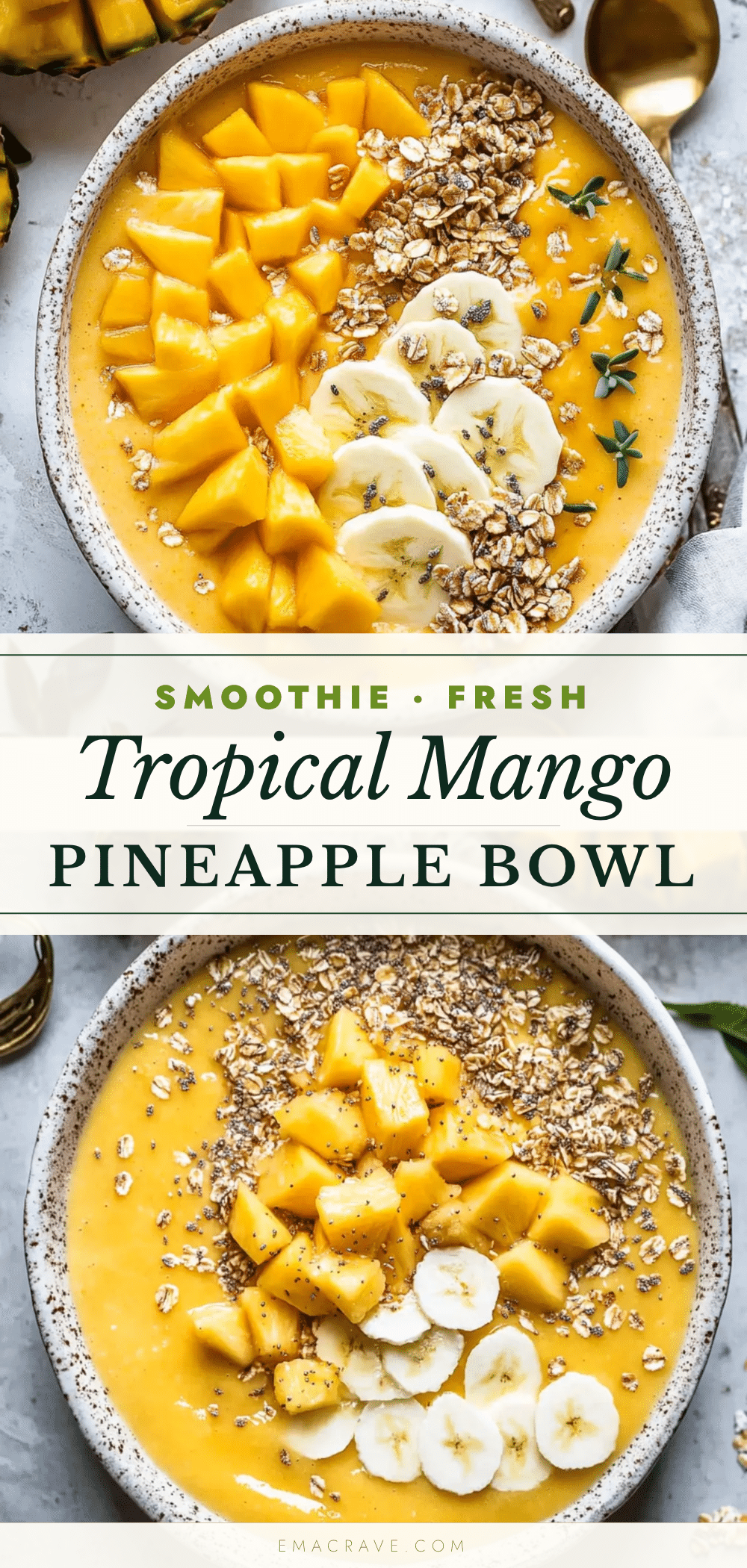
Creamy Mango Pineapple Smoothie Bowl: Best Tropical Recipe
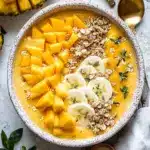
This creamy mango pineapple smoothie bowl is a quick, five-minute breakfast that tastes like a tropical vacation. Made with frozen mango, pineapple, and banana, it’s naturally sweet, vegan, and gluten-free.
- Prep Time: 5 minutes
- Cook Time: 0 minutes
- Total Time: 5 minutes
- Yield: 1 serving 1x
- Category: Breakfast
- Cuisine: Tropical
Ingredients
- 1 cup frozen mango chunks (about 150g)
- 1 cup frozen pineapple chunks (about 150g)
- 1 large frozen banana (about 120g)
- ½ cup canned coconut milk (120ml)
- 1 tablespoon honey or agave (optional)
- ½ teaspoon vanilla extract
- ¼ cup granola
- 2 tablespoons shredded coconut
- 1 tablespoon chia seeds
- ¼ cup fresh fruit (sliced banana, fresh mango cubes, or berries)
- 1 tablespoon hemp hearts (optional)
- Drizzle of honey or coconut butter
Instructions
- Prep your fruit: If using fresh fruit, peel and chop into roughly 1-inch pieces. Spread on a baking sheet lined with parchment paper and freeze for at least 4 hours, or overnight. For frozen fruit straight from the bag, you are ready to go.
- Add liquids first: Pour the coconut milk and vanilla extract into your blender first.
- Add frozen fruit: Add the frozen mango chunks, frozen pineapple chunks, and frozen banana slices on top of the liquid. Do not stir.
- Blend on low: Start your blender on the lowest setting and gradually increase to medium-high. Use the tamper (if your blender has one) to push the fruit down toward the blades. If you do not have a tamper, stop the blender every 15 seconds and scrape down the sides with a spatula.
- Check consistency: After about 45 seconds to 1 minute, stop and check the texture. It should be thick enough that it does not move when you tilt the blender jar. If it is too thick, add coconut milk one tablespoon at a time and pulse. If it is too thin, add a few more frozen banana slices and blend again.
- Taste and adjust: Give it a quick taste. If you want it sweeter, add honey or agave. If you want it tangier, a squeeze of lime juice works wonders.
- Transfer to bowl: Use your spatula to scoop the smoothie into a bowl.
- Add toppings: Arrange your toppings in rows or sections. Start with the granola, then add shredded coconut, chia seeds, and fresh fruit. Finish with a drizzle of honey and a sprinkle of hemp hearts.
- Serve immediately: Smoothie bowls do not sit well. Eat it right away while it is still thick and cold.
Notes
Do not over-blend; the friction will warm the fruit and thin the bowl. For best texture, use frozen fruit and full-fat canned coconut milk. If your blender struggles, let frozen fruit sit at room temperature for 5 minutes before blending. Chill your serving bowl in the freezer for 10 minutes before serving to keep the bowl cold longer.
Nutrition
- Serving Size: 1 bowl
- Calories: 320
- Sugar: 42
- Sodium: 20
- Fat: 10
- Saturated Fat: 8
- Carbohydrates: 62
- Fiber: 7
- Protein: 4
Keywords: smoothie bowl, mango, pineapple, tropical, breakfast, vegan, gluten-free, dairy-free