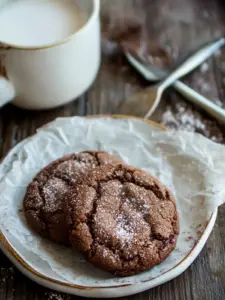
Love this? Save it for later!
Share the inspiration with your friends
Best Espresso Chocolate Shortbread Cookies Recipe
I was standing in my kitchen at 11 p.m. on a Tuesday, staring at a half-empty bag of dark chocolate chips and a jar of espresso powder I’d bought on a whim three months ago. The house was quiet—everyone else had gone to bed—and I had that restless energy that only hits when you’re too tired to sleep but too wired to sit still. So I did what any reasonable person does: I decided to bake cookies at an unreasonable hour. Not just any cookies, though. I wanted something that felt grown-up, something that paired with the strong cup of black tea I was nursing. That’s when the idea hit me—what if I took the buttery, crumbly perfection of shortbread and gave it a serious caffeine-and-chocolate upgrade?
The first batch came out of the oven at midnight, and honestly? I ate three before they even fully cooled. The butter melted into the espresso in this way that made the whole kitchen smell like an Italian coffee bar. My husband wandered downstairs, bleary-eyed, grabbed one off the cooling rack, and mumbled, “Don’t you dare change this recipe.” I haven’t. These espresso chocolate shortbread cookies have become my secret weapon for everything from holiday cookie swaps to quiet afternoons when I need a little pick-me-up that isn’t just another cup of coffee. They’re not too sweet, not too bitter—they’re just right, with those little flecks of dark chocolate that catch you by surprise in the best way.
What I love most about this recipe is how unassuming it looks. They’re simple round cookies, dusted with a little powdered sugar, but one bite and people’s eyes go wide. “Wait, what’s in these?” they ask, reaching for another. It’s that perfect balance of rich butter, deep coffee flavor, and just enough chocolate to make it feel indulgent without going overboard. If you’ve been searching for a cookie that feels fancy but comes together with zero fuss, this is it. Let me show you how to make them.
Why You’ll Love This Recipe
I’ve tested this recipe at least seven times—I’m not exaggerating—to get the texture exactly right. Shortbread can be tricky; too much butter and it spreads into a greasy puddle, too little and it’s dry as sawdust. But this version? It’s the Goldilocks of cookies. Here’s why it works so well:
- Rich, Buttery Flavor — The espresso doesn’t overpower the butter; it enhances it. You get that deep, toasty coffee note that lingers without being bitter.
- Perfect Crumbly Texture — These cookies hold their shape beautifully, with that signature shortbread tenderness that just melts on your tongue.
- Simple Pantry Ingredients — No weird specialty items here. If you have butter, sugar, flour, cocoa powder, and instant espresso, you’re already halfway there.
- Make-Ahead Friendly — The dough freezes like a dream, so you can prep it weeks ahead and bake fresh cookies whenever the craving hits.
- Naturally Elegant — These look gorgeous on a platter without any fussy decorating. A dusting of powdered sugar is all they need.
I’ve brought these to potlucks and watched them disappear faster than the frosted sugar cookies. There’s something about that coffee-chocolate combo that feels sophisticated but approachable—like the cookie equivalent of a well-worn leather jacket. And honestly, they’re the kind of cookie that makes you close your eyes on the first bite. That’s the sign of a keeper.
What Ingredients You Will Need
This recipe keeps things simple, using quality ingredients to build layers of flavor. Here’s what you’ll need, plus a few notes from my own trial-and-error kitchen experiments.
For the Cookie Dough
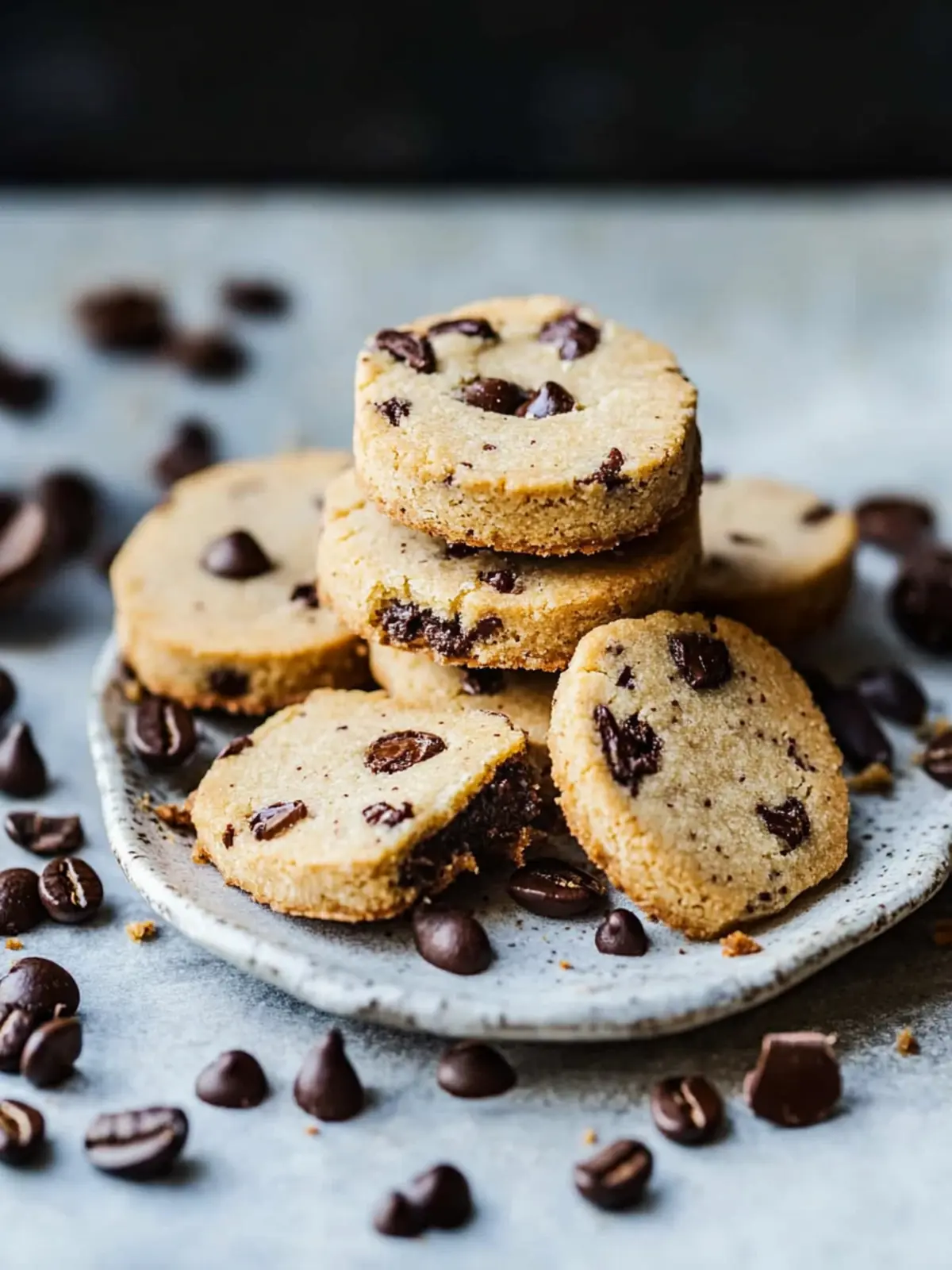
- 1 cup (226g) unsalted butter, softened — I prefer using European-style butter like Kerrygold for its higher fat content, which gives a richer flavor and better texture. Make sure it’s truly softened to room temperature, not melted.
- ½ cup (100g) granulated sugar — Regular white sugar works perfectly. Don’t substitute brown sugar here; it changes the moisture balance and the cookies won’t hold their shape as well.
- 2 teaspoons instant espresso powder — This is the star of the show. I use Medaglia d’Oro or Starbucks brand—both dissolve beautifully into the butter. Avoid regular coffee granules; they won’t dissolve properly and leave gritty bits.
- 1 teaspoon vanilla extract — Pure vanilla, not imitation. It rounds out the coffee flavor beautifully.
- 1 ¾ cups (220g) all-purpose flour — Spoon and level your flour; don’t scoop directly from the bag. Too much flour makes shortbread dry and crumbly in a bad way.
- ¼ cup (20g) unsweetened cocoa powder — Dutch-process cocoa gives a darker, more refined chocolate flavor, but natural cocoa works fine too. I’ve used both and honestly, the difference is subtle.
- ¼ teaspoon salt — Fine sea salt is best. It balances the bitterness of the espresso and enhances the chocolate.
- ½ cup (90g) dark chocolate chips or finely chopped dark chocolate — Use good quality chocolate here (60-70% cacao). The little chocolate pockets are what make these cookies special. I like Guittard or Ghirardelli chips.
For Finishing
- Powdered sugar, for dusting — Optional but highly recommended. It adds a touch of sweetness and makes them look bakery-worthy.
One thing I learned the hard way: don’t skip the salt. The first time I made these, I forgot it, and the cookies tasted flat and one-dimensional. That tiny pinch of salt makes the espresso pop and the chocolate sing. Trust me on this one.
Equipment Needed
You don’t need a professional bakery setup for these cookies, which is part of their charm. Here’s what I use:
- Electric mixer — A stand mixer with the paddle attachment is ideal, but a hand mixer works perfectly fine. You just need to cream the butter and sugar until light and fluffy.
- Large mixing bowl — Any bowl you’d normally use for cookie dough.
- Whisk — For combining the dry ingredients evenly.
- Rubber spatula — For scraping down the bowl and folding in the chocolate chips.
- Baking sheets — Two standard half-sheet pans work well. Line them with parchment paper for easy cleanup.
- Cooling rack — Essential for letting the cookies cool evenly so they develop that perfect shortbread texture.
- Small fine-mesh sieve — For dusting powdered sugar without clumps. I use a tea strainer in a pinch and it works fine.
If you don’t have a mixer, you can cream the butter and sugar by hand with a wooden spoon, but it takes some elbow grease. I’ve done it, and honestly, the cookies turn out just as good—it’s just more of a workout.
Preparation Method
Let’s get baking. I’ve broken this down into clear steps with all the little details that make the difference between good cookies and unforgettable ones.
- Cream the butter and sugar. In a large mixing bowl, beat the softened butter and granulated sugar together on medium speed for 3-4 minutes until pale, light, and fluffy. Scrape down the sides of the bowl halfway through. This step is crucial—proper creaming incorporates air, which gives shortbread its tender texture.
- Add the espresso and vanilla. Sprinkle the instant espresso powder directly into the butter mixture and add the vanilla extract. Beat on low speed for about 30 seconds until fully combined. You’ll smell the coffee immediately—it’s intoxicating.
- Whisk the dry ingredients. In a separate bowl, whisk together the flour, cocoa powder, and salt. Make sure there are no lumps in the cocoa powder; I usually press them through the whisk.
- Combine wet and dry. Gradually add the flour mixture to the butter mixture, mixing on low speed. Stop as soon as the dough comes together—you don’t want to overwork it. The dough will look a bit crumbly at first, but it should hold together when pressed.
- Fold in the chocolate. Using a rubber spatula, gently fold in the dark chocolate chips or chopped chocolate. Distribute them evenly throughout the dough.
- Shape the dough. Turn the dough out onto a lightly floured surface. Divide it in half. Roll each half into a log about 2 inches in diameter. Wrap each log tightly in plastic wrap. Refrigerate for at least 2 hours, or up to 3 days. This chilling step is non-negotiable—it prevents the cookies from spreading too much and gives you that perfect shortbread thickness.
- Preheat and slice. When you’re ready to bake, preheat your oven to 350°F (175°C). Line two baking sheets with parchment paper. Unwrap the chilled dough logs and slice them into ¼-inch thick rounds. Place them about 1 inch apart on the prepared baking sheets.
- Bake. Bake for 12-14 minutes, rotating the pans halfway through. The cookies should look set around the edges but still slightly soft in the center. They’ll continue to firm up as they cool. Don’t overbake—shortbread is meant to be tender, not crunchy.
- Cool completely. Let the cookies rest on the baking sheet for 5 minutes, then transfer them to a cooling rack. Wait until they’re completely cool before dusting with powdered sugar.
A quick tip: if your dough cracks when you’re slicing it, let it sit at room temperature for 5-10 minutes. It’s probably too cold. I’ve had this happen more times than I’d like to admit, and a brief warm-up fixes it every time.
Cooking Tips & Techniques
After making these cookies more times than I can count, I’ve collected a few tricks that make the process smoother and the results more consistent. Here’s what I’ve learned:
Room temperature butter matters. I know everyone says this, but it’s especially true for shortbread. If your butter is too cold, it won’t cream properly, and your cookies will be dense. If it’s too warm, the dough will be greasy and the cookies will spread. Leave your butter on the counter for about an hour before starting. You should be able to press your finger into it and leave an indent without it squishing.
Don’t skip the espresso powder. I tried making these once with brewed espresso instead of powder, thinking I’d get a stronger flavor. Disaster. The extra liquid threw off the dough completely, and the cookies came out flat and soggy. Instant espresso powder is concentrated and dissolves into the fat, so it infuses flavor without adding moisture. Stick with it.
Chill the dough thoroughly. This is the step people skip, and it’s the step that makes or breaks shortbread. The cold butter in the chilled dough melts slowly in the oven, creating those signature tender layers. If you bake the dough warm, the butter melts too fast, and you get flat, greasy cookies. I’ve made that mistake exactly once.
Slice evenly. Use a sharp knife and a steady hand. Uneven slices mean uneven baking. If you want perfectly uniform cookies, you can roll the dough into a square log and slice with a bench scraper, but honestly, I like the rustic look of hand-cut rounds.
Watch the oven like a hawk. Every oven runs differently. My old oven baked these in exactly 12 minutes; my current one takes 14. Start checking at the 10-minute mark. The cookies are done when the edges look set and the tops are no longer shiny. They shouldn’t be browning on the edges—shortbread stays pale.
One more thing: if you’re baking multiple batches, let the baking sheets cool completely between batches. Putting dough on a hot pan will cause premature spreading. I usually run my pans under cold water and dry them off before reusing.
Variations & Adaptations
One of the best things about this recipe is how adaptable it is. I’ve played around with it quite a bit, and here are some of my favorite variations:
Dietary Swaps
Gluten-free version: Substitute the all-purpose flour with a good quality 1:1 gluten-free baking flour. I’ve used Bob’s Red Mill with excellent results. The texture is slightly more delicate, but the flavor is spot on. Add an extra tablespoon of flour if the dough seems too soft.
Dairy-free option: Use a high-quality vegan butter stick (not spreadable margarine). Miyoko’s and Country Crock Plant Butter work well. The cookies will be a tad less rich, but still delicious.
Flavor Twists
Mocha madness: Add 1 tablespoon of finely ground coffee beans along with the espresso powder for an extra crunch and intense coffee flavor. It’s not for everyone, but I love the texture.
Orange espresso: Add 1 teaspoon of orange zest to the butter mixture. The citrus brightens the chocolate and coffee beautifully. It’s like a grown-up version of those chocolate oranges you see during the holidays.
White chocolate swap: Replace dark chocolate chips with white chocolate chips or chopped white chocolate. The sweetness of white chocolate balances the bitter espresso in a completely different, but equally addictive, way.
Method Variations
Slice and bake logs: This is my go-to for holiday baking. Make the dough logs, wrap them well, and freeze for up to 3 months. When you’re ready, just slice and bake straight from the freezer, adding 1-2 extra minutes to the baking time.
Thumbprint cookies: Instead of slicing, roll the dough into 1-inch balls, press a thumbprint into the center, and fill with a dollop of raspberry jam or chocolate ganache. Bake as directed, but keep an eye on the filling so it doesn’t bubble over.
I once made a batch with crushed hazelnuts folded in, and they were incredible. If you’re feeling adventurous, try it—just add ¼ cup of finely chopped toasted hazelnuts along with the chocolate chips.
Serving & Storage Suggestions
These cookies are incredibly versatile when it comes to serving. Here’s how I like to enjoy them:
Serving temperature: I prefer these cookies at room temperature, but they’re also wonderful slightly warm. If you’ve just baked them, let them cool completely on a rack. The texture is at its peak about an hour after baking—the butter has fully set, and the espresso flavor has mellowed into perfection.
Perfect pairings: These cookies were practically made for a hot beverage. Serve them alongside a strong cup of black coffee, an espresso, or a frothy cappuccino. For tea lovers, chai or Earl Grey are excellent companions. I’ve also been known to crumble one over a scoop of vanilla ice cream for an impromptu affogato situation.
Presentation ideas: Arrange them on a simple white platter with a light dusting of powdered sugar. For gifting, stack them in a decorative tin lined with parchment paper. They also look gorgeous on a holiday cookie platter alongside other favorites like cozy molasses cream pie cookies for a festive spread.
Storage: Store the cookies in an airtight container at room temperature for up to 1 week. Place a piece of bread in the container to keep them soft—the cookies will absorb the moisture from the bread. Replace the bread slice every couple of days if needed.
Freezing: Baked cookies freeze beautifully for up to 3 months. Layer them between sheets of parchment paper in a freezer-safe container. Thaw at room temperature for about 30 minutes before serving. The unbaked dough logs can also be frozen for up to 3 months—just wrap tightly in plastic wrap and then foil.
Flavor development: Here’s a little secret: these cookies actually taste better the day after baking. The espresso and chocolate flavors meld together overnight, becoming more rounded and harmonious. So don’t be afraid to bake them a day ahead of when you need them.
Nutritional Information & Benefits
Let’s be real—these are cookies, not health food. But they do have a few redeeming qualities worth mentioning. Here’s the estimated nutritional breakdown per cookie (based on 24 cookies):
| Nutrient | Amount Per Cookie |
|---|---|
| Calories | 145 kcal |
| Total Fat | 9g |
| Saturated Fat | 5.5g |
| Carbohydrates | 16g |
| Sugar | 7g |
| Protein | 2g |
| Caffeine | ~15mg |
Health highlights: Dark chocolate is rich in antioxidants called flavonoids, which can support heart health. The cocoa powder also contains magnesium and iron. The espresso powder provides a small caffeine boost that can enhance focus and mood—just enough to wake you up without the jitters.
Dietary considerations: This recipe is vegetarian. For a gluten-free option, use a 1:1 gluten-free flour blend. For a dairy-free version, substitute with vegan butter. Note that these cookies contain gluten and dairy in their standard form.
Potential allergens: Contains wheat (gluten), dairy (butter), and may contain traces of soy depending on the chocolate used.
I personally love that these cookies feel indulgent without being overwhelmingly sweet. They’re the kind of treat you can enjoy with your afternoon coffee and feel satisfied with just one or two—not that I always stop there.
Conclusion
These espresso chocolate shortbread cookies have become a staple in my kitchen for good reason. They’re simple enough for a Tuesday night baking session but elegant enough for a holiday cookie exchange. The combination of rich butter, deep coffee flavor, and pockets of dark chocolate hits every note just right—not too sweet, not too bitter, with a texture that practically dissolves on your tongue.
What I love most is how adaptable they are. Whether you’re making them gluten-free for a friend, adding orange zest for a seasonal twist, or doubling the batch to freeze for later, this recipe is forgiving and reliable. It’s one of those recipes that makes you look like you spent hours in the kitchen when really, it came together in under 30 minutes of active work.
I’d love to hear how these turn out for you. Did you try a variation? Did you serve them with something unexpected? Drop a comment below and let me know—I read every single one. And if you’re looking for another cookie to add to your rotation, don’t miss these irresistible chewy coffee cookies with dark chocolate chunks for a completely different texture experience. Happy baking, friends—I hope these cookies bring you as much joy as they’ve brought me.
Frequently Asked Questions
Can I use regular coffee instead of espresso powder?
I don’t recommend it. Regular coffee granules are coarser and won’t dissolve properly in the butter, leaving you with gritty, unpleasant bits in your cookies. Instant espresso powder is specifically designed to dissolve in liquids and fats, giving you that smooth, intense coffee flavor without the texture issues. It’s worth picking up a jar—it lasts forever and works great in brownies, cake batters, and even savory rubs.
Why did my cookies spread too much?
This usually happens for one of two reasons: the dough wasn’t chilled long enough, or the butter was too soft when you mixed it. Make sure your dough logs chill for at least 2 full hours. If your kitchen is warm, pop the sliced cookies in the fridge for 15 minutes before baking. Also, check that your oven is at the right temperature—an oven that runs cool can cause spreading.
Can I make these cookies without a mixer?
Absolutely. You can cream the butter and sugar by hand with a wooden spoon—it just takes a bit of elbow grease and about 5-6 minutes of vigorous stirring. Make sure your butter is very soft to make the job easier. For the dry ingredients, use a fork or whisk to combine them, then stir them into the butter mixture. The dough will come together just fine.
How do I get clean, even slices from the dough log?
Use a sharp, non-serrated knife and rotate the log a quarter turn after each slice to keep it from flattening on one side. If the dough cracks, let it sit at room temperature for 5-10 minutes to warm up slightly. For perfectly even slices, you can score the log with a bench scraper before cutting, but honestly, a little imperfection adds to the homemade charm.
Can I double this recipe?
Yes, and I do it all the time. The recipe doubles perfectly. Just make sure your mixer bowl is large enough to handle the increased volume. When creaming the butter and sugar, you may need to beat it for an extra minute to get it light and fluffy. The dough logs will be longer, so you may need more plastic wrap and a bit more fridge space. The baking time stays the same.
Pin This Recipe!
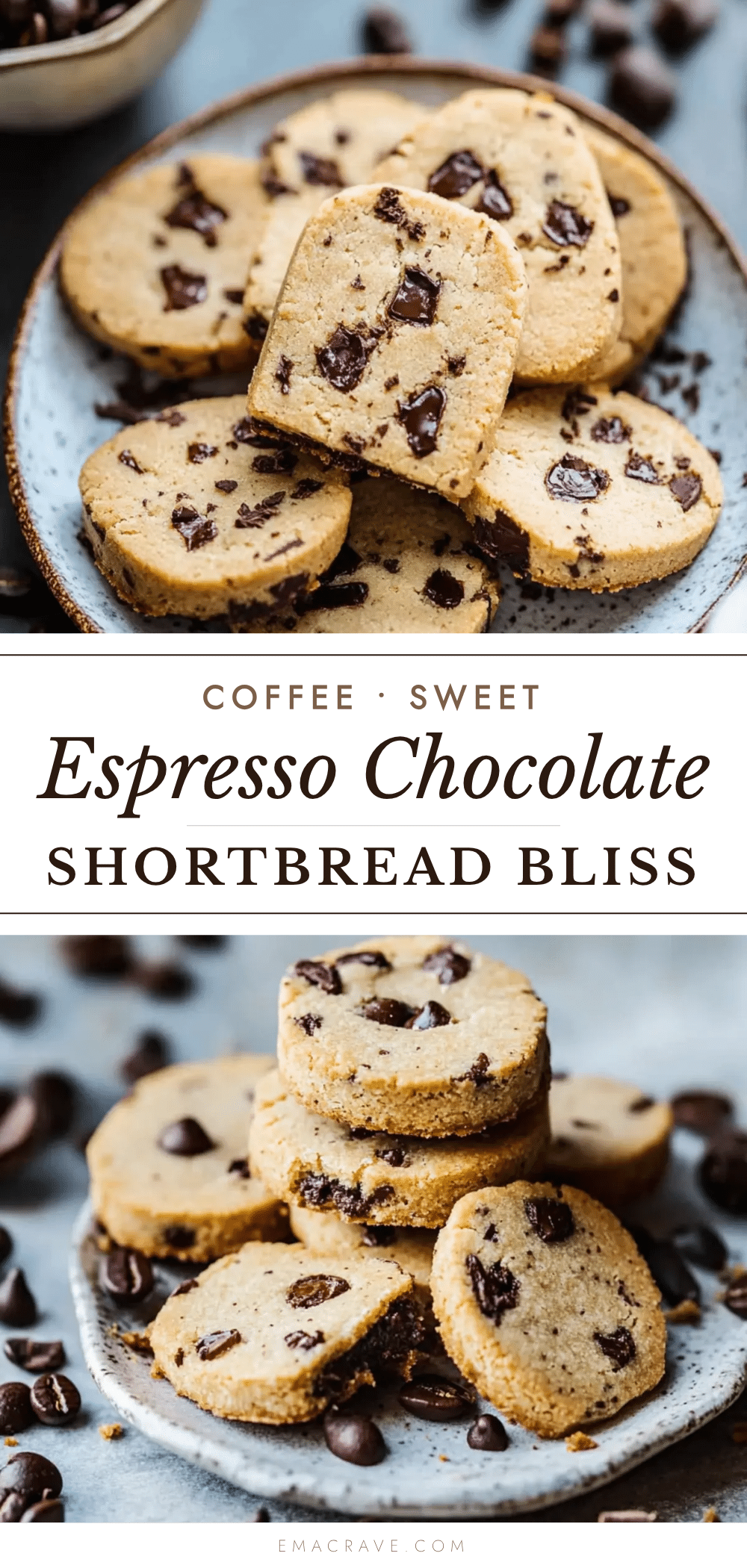
Best Espresso Chocolate Shortbread Cookies Recipe
These buttery, crumbly shortbread cookies are elevated with rich espresso and dark chocolate, creating a sophisticated treat that’s perfect for any occasion. They’re not too sweet, not too bitter, with a texture that melts in your mouth.
- Prep Time: 20 minutes
- Cook Time: 12-14 minutes
- Total Time: 2 hours 35 minutes (includes chilling)
- Yield: 24 cookies 1x
- Category: Dessert
- Cuisine: American
Ingredients
- 1 cup (226g) unsalted butter, softened
- ½ cup (100g) granulated sugar
- 2 teaspoons instant espresso powder
- 1 teaspoon vanilla extract
- 1 ¾ cups (220g) all-purpose flour
- ¼ cup (20g) unsweetened cocoa powder
- ¼ teaspoon fine sea salt
- ½ cup (90g) dark chocolate chips or finely chopped dark chocolate (60-70% cacao)
- Powdered sugar, for dusting (optional)
Instructions
- Cream the butter and sugar: In a large mixing bowl, beat the softened butter and granulated sugar together on medium speed for 3-4 minutes until pale, light, and fluffy. Scrape down the sides of the bowl halfway through.
- Add the espresso and vanilla: Sprinkle the instant espresso powder directly into the butter mixture and add the vanilla extract. Beat on low speed for about 30 seconds until fully combined.
- Whisk the dry ingredients: In a separate bowl, whisk together the flour, cocoa powder, and salt until no lumps remain.
- Combine wet and dry: Gradually add the flour mixture to the butter mixture, mixing on low speed. Stop as soon as the dough comes together; it will look crumbly but should hold together when pressed.
- Fold in the chocolate: Using a rubber spatula, gently fold in the dark chocolate chips or chopped chocolate until evenly distributed.
- Shape the dough: Turn the dough out onto a lightly floured surface. Divide it in half. Roll each half into a log about 2 inches in diameter. Wrap each log tightly in plastic wrap. Refrigerate for at least 2 hours, or up to 3 days.
- Preheat and slice: When ready to bake, preheat oven to 350°F (175°C). Line two baking sheets with parchment paper. Unwrap the chilled dough logs and slice them into ¼-inch thick rounds. Place them about 1 inch apart on the prepared baking sheets.
- Bake: Bake for 12-14 minutes, rotating the pans halfway through. The cookies should look set around the edges but still slightly soft in the center. Do not overbake.
- Cool completely: Let the cookies rest on the baking sheet for 5 minutes, then transfer them to a cooling rack. Wait until they are completely cool before dusting with powdered sugar.
Notes
Chill the dough thoroughly for at least 2 hours to prevent spreading. Use instant espresso powder, not regular coffee granules. For best flavor, bake a day ahead as flavors meld overnight. If dough cracks when slicing, let it sit at room temperature for 5-10 minutes.
Nutrition
- Serving Size: 1 cookie
- Calories: 145
- Sugar: 7
- Sodium: 50
- Fat: 9
- Saturated Fat: 5.5
- Carbohydrates: 16
- Fiber: 1
- Protein: 2
Keywords: espresso chocolate shortbread cookies, coffee shortbread, chocolate shortbread, easy cookie recipe, holiday cookies, slice and bake cookies