Love this? Save it for later!
Share the inspiration with your friends
I was standing in my tiny apartment kitchen, staring at a sad-looking pack of beef chuck and a half-empty bottle of soy sauce. It was one of those nights where takeout felt too expensive and cooking felt too exhausting. My Filipino neighbor, Lola Maria, had told me weeks ago that if I ever wanted to learn a real dish, I should start with adobo. She said it was the kind of meal that practically cooked itself. I had laughed it off then, figuring anything that simple couldn’t possibly be that good. But standing there, hungry and indecisive, I remembered her exact words: “Just put everything in one pot, let it simmer, and the house will smell like home.” So I grabbed the vinegar, the garlic, and a few peppercorns, and I just went for it. Honestly, I was ready to order pizza as a backup.
An hour later, I was pulling fork-tender beef out of a dark, glossy sauce that smelled like pure magic. It was salty, tangy, savory, and rich all at once. I ate it over a pile of steaming white rice, and I think I actually groaned out loud. That was the moment I understood why adobo is considered the unofficial national dish of the Philippines. It wasn’t complicated or fancy. It was just honest, deeply satisfying food that made you feel like everything was going to be okay. Since then, this classic Filipino beef adobo has become my go-to for busy weeks, rainy evenings, and anytime I need a little comfort. And now, I want to share that same feeling with you.
Why You’ll Love This Recipe
Let’s be real for a second. There are a thousand adobo recipes out there, and everyone’s grandma claims hers is the best. But I promise you, this version is special. I tested it about six times to get the balance just right—not too salty, not too sour, with that deep, savory richness that makes you keep reaching for one more bite. I even brought a batch to my friend’s potluck, and someone asked if I had secretly trained under a Filipino chef. (I hadn’t, but I took the compliment anyway.)
- Incredibly Easy : This comes together in about 15 minutes of active prep. The oven or stovetop does the rest of the work. Perfect for a busy weeknight or a lazy Sunday.
- Simple Ingredients : You probably already have soy sauce, vinegar, garlic, and peppercorns in your pantry. No fancy grocery trips needed.
- Deep, Complex Flavor : The magic happens as the meat simmers. The vinegar mellows out, the soy sauce deepens, and the garlic infuses everything with pure comfort.
- Perfect for Meal Prep : Adobo actually tastes even better the next day. The flavors meld together beautifully overnight.
- Crowd-Pleaser : I have served this to friends who had never tried Filipino food before, and they all went back for seconds. It is that good.
What makes this recipe different from the rest? It is all about the technique. I brown the beef first to build a deep, caramelized crust, then let it braise low and slow until it is fall-apart tender. The sauce reduces into a silky, almost sticky glaze that coats every piece of meat. It is comfort food reimagined—simpler, faster, but with the same soul-soothing satisfaction that makes you close your eyes after the first bite.
What Ingredients You Will Need
This recipe uses simple, wholesome ingredients that work together to create something truly special. Most of these are pantry staples, so you don’t need to plan a special trip to the store.
For the Beef Adobo:
- 2 lbs beef chuck, cut into 2-inch cubes (chuck is ideal for braising; it gets tender and flavorful as it cooks)
- 1/2 cup soy sauce (I recommend Silver Swan or Kikkoman for the best savory depth)
- 1/2 cup cane vinegar or white vinegar (cane vinegar is traditional, but white vinegar works perfectly too)
- 1 cup water
- 8 cloves garlic, minced (don’t skimp here—garlic is the backbone of the sauce)
- 1 tablespoon whole black peppercorns (adds a gentle warmth, not too spicy)
- 3 bay leaves
- 1 tablespoon brown sugar (optional, but it balances the acidity beautifully)
- 2 tablespoons cooking oil (vegetable or canola oil works great)
Note on substitutions: If you don’t have beef chuck, you can use beef brisket or even pork shoulder. For a lighter version, swap the beef for chicken thighs. Just adjust the cooking time accordingly.
Equipment Needed
You don’t need a lot of fancy tools for this recipe. I have made adobo in everything from a cast-iron Dutch oven to a simple nonstick pot. Here is what you will need:
- Large heavy-bottomed pot or Dutch oven (a 5-6 quart size is perfect)
- Wooden spoon or spatula
- Sharp knife and cutting board
- Measuring cups and spoons
- Small bowl for mixing the sauce
If you don’t have a Dutch oven, any deep, heavy pot with a tight-fitting lid will work. I have even used a slow cooker for this recipe—just sear the beef first, then transfer everything to the slow cooker and cook on low for 6-8 hours. It is incredibly forgiving.
Preparation Method
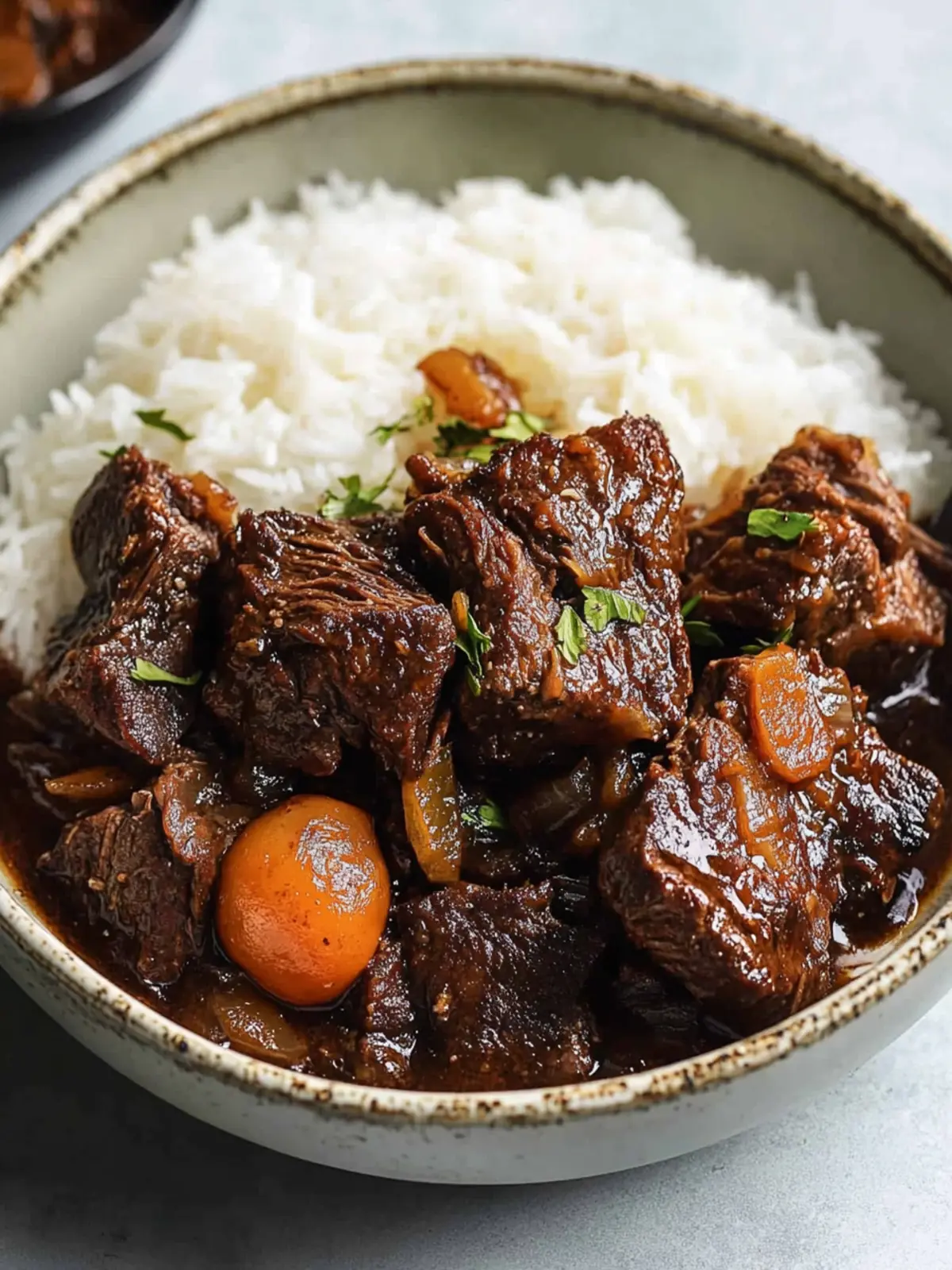
Alright, let’s get cooking. This is the part where the magic happens. Follow these steps, and you will have the most tender, flavorful adobo of your life.
- Prep the beef: Pat the beef cubes dry with paper towels. This is crucial for getting a good sear. Season them lightly with a pinch of salt and pepper.
- Sear the beef: Heat 2 tablespoons of oil in your large pot over medium-high heat. Working in batches (don’t overcrowd the pot), sear the beef cubes for 2-3 minutes per side, until they are deeply browned. This step builds so much flavor. Set the seared beef aside on a plate.
- Bloom the aromatics: Reduce the heat to medium. Add the minced garlic to the pot and sauté for about 30 seconds, until it smells amazing. Be careful not to burn it.
- Build the sauce: Pour in the soy sauce, vinegar, and water. Stir in the brown sugar, whole peppercorns, and bay leaves. Bring it to a gentle simmer.
- Braise the beef: Return the seared beef to the pot, along with any juices that have collected on the plate. The liquid should almost cover the beef. If it doesn’t, add a little more water.
- Simmer low and slow: Cover the pot with a lid slightly ajar, reduce the heat to low, and let it simmer for 1.5 to 2 hours. The beef should be fork-tender. Check it occasionally and stir to prevent sticking.
- Reduce the sauce: Once the beef is tender, remove the lid and increase the heat to medium-high. Let the sauce bubble and reduce for about 10-15 minutes, until it thickens into a glossy, flavorful glaze. Taste and adjust the salt or vinegar if needed.
- Rest and serve: Remove the pot from the heat. Let it rest for 5 minutes before serving. This allows the flavors to settle.
Pro tip: The sauce should be slightly thicker than water but not as thick as gravy. It will coat the back of a spoon beautifully.
Cooking Tips & Techniques
I have made this recipe at least a dozen times, and I have learned a few things the hard way. Here is what I wish I knew from the start.
Don’t skip the sear. I know it is tempting to just dump everything in the pot and let it simmer. But that deep, caramelized crust on the beef is what gives the adobo its rich, savory flavor. It is totally worth the extra 10 minutes.
Use whole peppercorns, not ground. Ground pepper can make the sauce bitter and gritty. Whole peppercorns add a gentle, aromatic warmth without the harshness. Trust me on this one.
Let it rest overnight. If you can, make this adobo a day ahead. The flavors meld together beautifully, and the sauce becomes even more complex. I often make it on a Sunday and eat it for lunch all week.
Watch the vinegar. When you first add the vinegar, the smell can be quite sharp. Don’t worry—it mellows out completely as it simmers. Do not skip it. The acidity is what balances the richness of the beef and soy sauce.
Adjust the seasoning at the end. Soy sauce and vinegar vary in strength. Always taste the sauce before serving and adjust with a pinch of salt or a splash of vinegar if needed.
Variations & Adaptations
One of the best things about adobo is how versatile it is. Here are a few ways to make it your own.
- Spicy Adobo: Add 2-3 dried bird’s eye chilies (siling labuyo) or a teaspoon of red pepper flakes along with the garlic. It adds a lovely warmth without overwhelming the dish.
- Creamy Adobo: Stir in 1/2 cup of coconut milk during the last 15 minutes of simmering. This is a popular variation in the Bicol region of the Philippines. It makes the sauce incredibly rich and luscious.
- Chicken Adobo: Swap the beef for 2 pounds of bone-in, skin-on chicken thighs. Reduce the simmering time to about 45 minutes. It is just as delicious and cooks much faster.
- Vegetarian Adobo: Use cubed firm tofu, mushrooms, and potatoes instead of beef. Sear the tofu until golden, then follow the same braising method. It is surprisingly hearty and flavorful.
- Sweet and Tangy Adobo: Increase the brown sugar to 2 tablespoons and add a splash of pineapple juice. It gives the sauce a sweet-tangy twist that my kids absolutely love.
Serving & Storage Suggestions
Adobo is traditionally served over a generous mound of steamed white rice. The rice soaks up all that incredible sauce, and it is pure perfection. For a complete meal, serve it with a side of steamed vegetables or a simple cucumber salad.
Storage: Store leftover adobo in an airtight container in the refrigerator for up to 5 days. The flavors actually deepen over time, so it tastes even better the next day.
Freezing: Adobo freezes beautifully. Let it cool completely, then transfer it to a freezer-safe container. It will keep for up to 3 months. Thaw it overnight in the refrigerator before reheating.
Reheating: Reheat adobo gently on the stovetop over medium-low heat, adding a splash of water if the sauce has thickened too much. You can also reheat it in the microwave in 30-second bursts, stirring in between.
How flavors develop: The first day, the adobo is delicious but the flavors are still a bit sharp. By the second day, the vinegar and soy sauce have mellowed into a perfect harmony. It is one of those rare dishes that gets better with time.
Nutritional Information & Benefits
While adobo is definitely a comfort food, it also offers some surprising nutritional benefits. Beef is an excellent source of protein, iron, and B vitamins, which support energy levels and muscle health. Garlic is known for its immune-boosting properties, and the vinegar in the dish can aid digestion.
Estimated Nutritional Values (per serving, based on 6 servings):
- Calories: 380
- Protein: 35g
- Fat: 22g
- Carbohydrates: 6g
- Fiber: 0g
- Sugar: 3g
- Sodium: 980mg
Dietary Considerations: This recipe is naturally gluten-free if you use tamari instead of soy sauce. It is also dairy-free and low-carb. If you are watching your sodium, use a low-sodium soy sauce and reduce the added salt.
Conclusion
This classic Filipino beef adobo is more than just a recipe—it is a warm hug in a bowl. It is the kind of meal that makes you slow down, take a deep breath, and truly enjoy the moment. Whether you are cooking for your family, impressing friends, or just treating yourself to something special, this dish delivers every time. I love how it fills my kitchen with that incredible, savory aroma that makes everyone wander in asking, “What’s for dinner?”
Now I want to hear from you. Have you ever tried making adobo before? What is your favorite way to customize it? Drop a comment below and let me know. And if you make this recipe, please share a photo and tag me—I love seeing your creations. Happy cooking, friends!
Frequently Asked Questions
Can I use a different cut of beef for adobo?
Absolutely. Beef chuck is ideal because it becomes tender during braising, but you can also use brisket, short ribs, or even sirloin tips. Just adjust the cooking time. Tougher cuts need longer to break down, while tender cuts will cook faster.
Why is my adobo sauce too salty?
This usually happens if you use a very salty soy sauce or if you reduce the sauce too much. To fix it, add a splash of water or a little more vinegar to balance the saltiness. Next time, start with less soy sauce and adjust at the end.
Can I make adobo in a slow cooker or Instant Pot?
Yes! For a slow cooker, sear the beef first, then transfer everything to the slow cooker and cook on low for 6-8 hours. For an Instant Pot, use the sauté function to sear the beef, then pressure cook on high for 35 minutes with a natural release. Both methods work beautifully.
Do I have to use cane vinegar?
Not at all. Cane vinegar is traditional and has a mild, slightly sweet flavor, but white vinegar, apple cider vinegar, or even rice vinegar work perfectly. Just avoid balsamic or red wine vinegar, as their flavors are too strong for this dish.
How do I know when the beef is done?
The beef is done when it is fork-tender. You should be able to easily pierce a cube with a fork, and it should almost fall apart when you lift it. This usually takes about 1.5 to 2 hours of simmering on the stovetop.
Pin This Recipe!
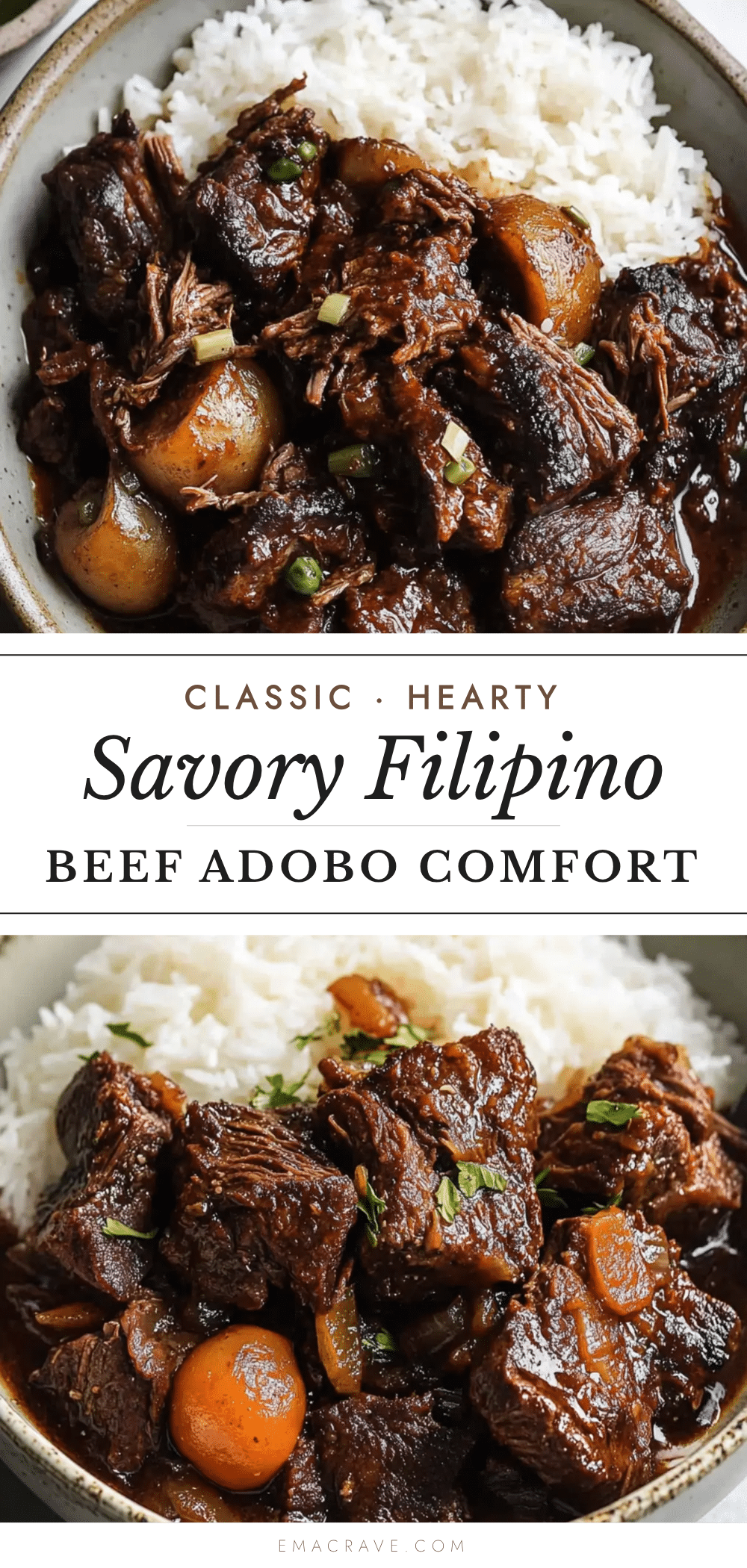
Classic Filipino Beef Adobo: Easy Homemade Comfort Food
This classic Filipino beef adobo is a comforting, one-pot meal featuring fork-tender beef braised in a savory, tangy, and garlicky sauce. It’s incredibly easy to make with simple pantry ingredients and is perfect for busy weeknights or meal prep.
- Prep Time: 15 minutes
- Cook Time: 1 hour 45 minutes
- Total Time: 2 hours
- Yield: 6 servings 1x
- Category: Main Course
- Cuisine: Filipino
Ingredients
- 2 lbs beef chuck, cut into 2-inch cubes
- 1/2 cup soy sauce
- 1/2 cup cane vinegar or white vinegar
- 1 cup water
- 8 cloves garlic, minced
- 1 tablespoon whole black peppercorns
- 3 bay leaves
- 1 tablespoon brown sugar (optional)
- 2 tablespoons cooking oil (vegetable or canola)
- Salt and pepper to taste
Instructions
- Pat the beef cubes dry with paper towels. Season lightly with salt and pepper.
- Heat 2 tablespoons of oil in a large heavy-bottomed pot or Dutch oven over medium-high heat. Working in batches, sear the beef cubes for 2-3 minutes per side until deeply browned. Set aside.
- Reduce heat to medium. Add minced garlic and sauté for about 30 seconds until fragrant.
- Pour in soy sauce, vinegar, and water. Stir in brown sugar, whole peppercorns, and bay leaves. Bring to a gentle simmer.
- Return the seared beef to the pot along with any accumulated juices. Add more water if needed so the liquid almost covers the beef.
- Cover the pot with the lid slightly ajar, reduce heat to low, and simmer for 1.5 to 2 hours until the beef is fork-tender. Stir occasionally.
- Remove the lid, increase heat to medium-high, and let the sauce reduce for 10-15 minutes until it thickens into a glossy glaze. Taste and adjust seasoning if needed.
- Remove from heat and let rest for 5 minutes before serving.
Notes
For best results, let the adobo rest overnight in the refrigerator; the flavors will meld and deepen. Do not skip searing the beef—it adds essential flavor. Use whole peppercorns instead of ground to avoid bitterness. Adjust seasoning at the end as soy sauce and vinegar strengths vary.
Nutrition
- Serving Size: 1 serving (about 1 c
- Calories: 380
- Sugar: 3
- Sodium: 980
- Fat: 22
- Saturated Fat: 8
- Carbohydrates: 6
- Protein: 35
Keywords: Filipino adobo, beef adobo, adobo recipe, Filipino comfort food, easy adobo, one-pot meal, braised beef