Love this? Save it for later!
Share the inspiration with your friends
I was standing in my kitchen at 9 PM on a Tuesday, staring at the takeout menu on my phone for the third time that week. The glossy picture of black pepper beef stared back at me, promising that familiar savory-sweet kick I was craving. But my wallet was tired, and honestly? So was I. I had a flank steak in the fridge that I’d bought on sale, a bunch of scallions that were starting to look sad, and a jar of whole black peppercorns I’d been ignoring for months. So I thought, why not just try it? No recipe book. No YouTube video. Just a hunch and a hungry stomach.
That first attempt was a little messy—too much soy sauce, not enough pepper, and the beef came out tougher than shoe leather. But I was stubborn. I tried again the next night, and again the night after that. By the third round, something clicked. The beef was tender, the sauce was glossy and clinging to every slice, and that sharp, fragrant black pepper hit exactly where it should. I actually texted my sister a photo with the caption, “Better than takeout, I swear.” She didn’t believe me until she came over to try it herself.
This recipe is the result of those late-night experiments. It’s not fancy or fussy. It’s the kind of dish that makes you forget you’re cooking at home—until you take that first bite and realize there’s no delivery fee attached. That’s the magic I want to share with you today. This savory black pepper beef recipe is my go-to for those nights when only something bold and beefy will do, but you don’t want to wait forty minutes for a bag to show up at your door.
Why You’ll Love This Recipe
Let me be straight with you—this isn’t just another stir-fry that ends up watery and bland. This savory black pepper beef recipe was tested in my own cramped kitchen, over multiple nights, with varying levels of patience. I’ve burned it, overseasoned it, and even dropped half the sauce on the floor (don’t ask). But every failure taught me something, and what you’re getting here is the version that finally made me delete the takeout app from my phone.
- Quick & Easy : From fridge to plate in under 25 minutes. Seriously, this is faster than waiting for delivery.
- Simple Ingredients : You probably have most of this in your pantry right now. No weird Asian market finds required—just good soy sauce, fresh garlic, and whole black pepper.
- Perfect for Weeknights : It’s hearty enough for a Tuesday dinner but impressive enough for when friends drop by unannounced.
- Crowd-Pleaser : My picky-eater nephew asked for seconds. That alone should tell you something.
- Unbelievably Delicious : The sauce is the star here—rich, slightly sweet, with that bold peppery kick that makes your nose tingle in the best way.
What makes this recipe different from all the other black pepper beef recipes out there? It’s the technique. I use a quick velveting method that keeps the beef ridiculously tender without any complicated steps. Plus, I’ve balanced the sauce so it’s not too salty or too sweet—it’s that perfect middle ground where every flavor gets a turn. Honestly, this is the kind of dish that makes you close your eyes after the first bite. It’s comfort food reimagined—faster, bolder, and way more satisfying than anything you’d get from a paper bag.
What Ingredients You Will Need
This recipe uses simple, wholesome ingredients to deliver bold flavor and satisfying texture without the fuss. Most of these are pantry staples, which means you can whip this up on a whim without a special grocery run.
For the Beef:
- 1 lb flank steak or sirloin , thinly sliced against the grain (this is key for tenderness)
- 1 tablespoon soy sauce (I prefer low-sodium to control saltiness)
- 1 tablespoon cornstarch (helps create that velvety coating)
- 1 teaspoon baking soda (optional but magical for tenderizing—trust me on this)
- 1 tablespoon neutral oil , like canola or vegetable (for the marinade)
For the Sauce:
- 3 tablespoons soy sauce (regular or low-sodium)
- 2 tablespoons oyster sauce (adds that savory depth you can’t replicate)
- 1 tablespoon dark soy sauce (for color, but regular works in a pinch)
- 1 tablespoon brown sugar (balances the pepper’s heat)
- 1 teaspoon freshly ground black pepper (use whole peppercorns and grind them yourself—it makes a huge difference)
- 1/2 cup beef broth (or water if that’s all you have)
- 1 teaspoon sesame oil (for that nutty finish)
For the Stir-Fry:
- 3 tablespoons neutral oil , divided (for cooking)
- 4 cloves garlic , minced
- 1 tablespoon fresh ginger , grated (optional but recommended)
- 1 medium onion , sliced into thin wedges
- 1 red bell pepper , sliced (adds color and sweetness)
- 4-5 scallions , cut into 2-inch pieces (use both white and green parts)
- 1 teaspoon whole black peppercorns , lightly crushed (for texture and extra kick)
Ingredient Notes & Substitutions:
- If you can’t find flank steak, use sirloin or even ribeye. Just slice it thin against the grain.
- Oyster sauce is a game-changer here, but you can substitute with hoisin sauce if you’re in a pinch. It’ll be slightly sweeter.
- For a gluten-free version, use tamari instead of soy sauce and a gluten-free oyster sauce.
- I recommend grinding your black pepper fresh from whole peppercorns—the pre-ground stuff just doesn’t have the same punch. I’ve tried both, and fresh is non-negotiable for that signature flavor.
Equipment Needed
Nothing fancy here—just the basics you probably already own. Here’s what you’ll need:
- Large wok or heavy-bottomed skillet (a cast-iron pan works beautifully if you don’t have a wok)
- Sharp chef’s knife (for slicing the beef thin—a dull knife will make your life harder)
- Cutting board (preferably one with a groove to catch juices)
- Small mixing bowls (for the marinade and sauce)
- Wooden spatula or tongs (for tossing the beef without scratching your pan)
- Measuring spoons (accuracy matters here, especially with the soy sauce)
If you don’t have a wok, don’t sweat it. I’ve made this in a regular non-stick skillet more times than I can count. The key is to get your pan screaming hot so the beef sears instead of steaming. Also, a mortar and pestle is great for crushing those whole peppercorns, but you can also just use the bottom of a heavy pan—I’ve done that plenty of times when I was too lazy to wash extra dishes.
Preparation Method
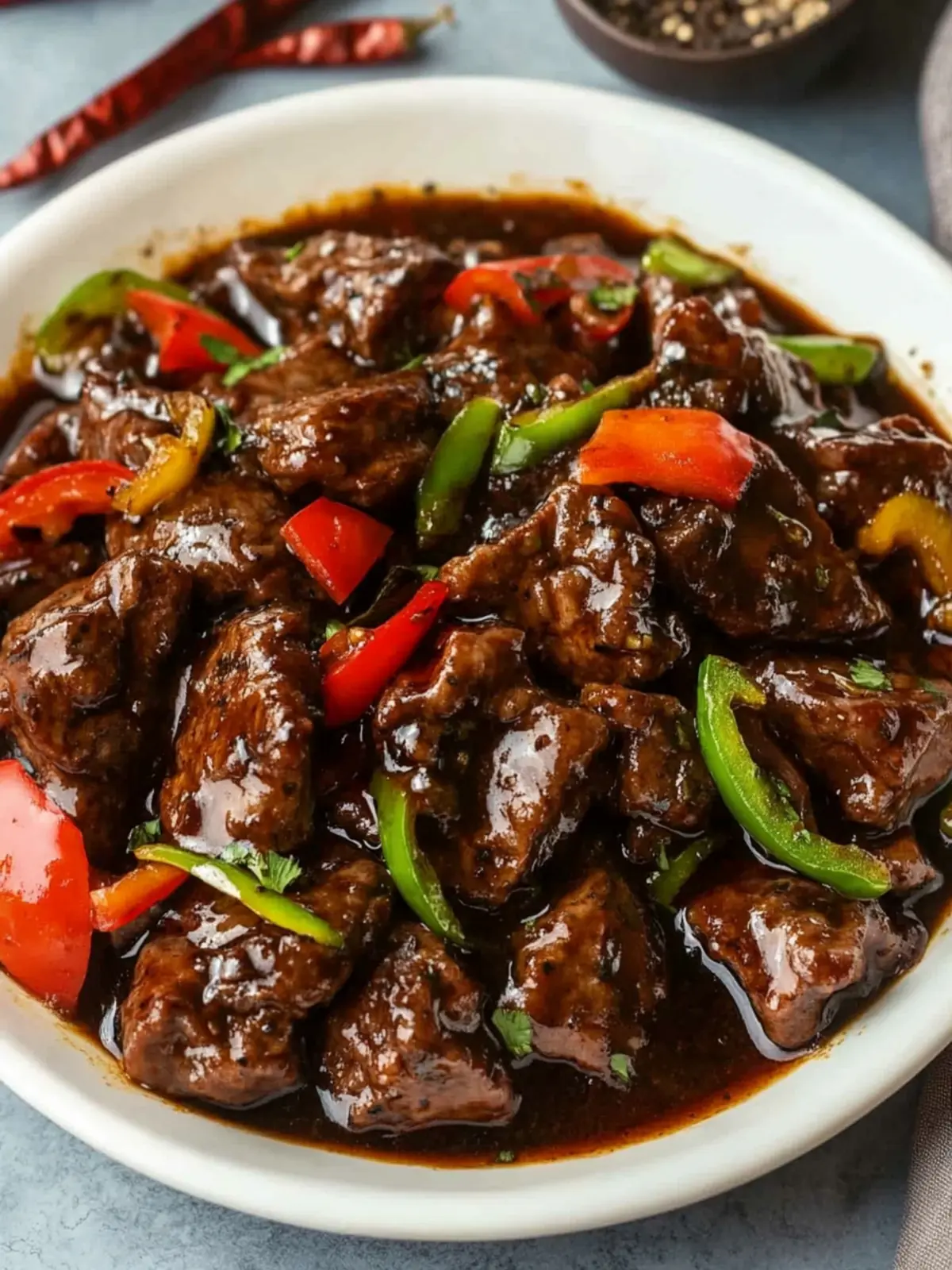
Alright, let’s get cooking. This comes together fast, so I recommend prepping everything before you turn on the heat. Trust me—you don’t want to be chopping garlic while your beef is burning.
- Marinate the beef. In a medium bowl, combine the sliced beef with 1 tablespoon soy sauce, 1 tablespoon cornstarch, 1 teaspoon baking soda (if using), and 1 tablespoon neutral oil. Mix well with your hands until every piece is coated. Let it sit for 10-15 minutes while you prep the veggies. This step is what makes the beef restaurant-level tender.
- Make the sauce. In a small bowl, whisk together 3 tablespoons soy sauce, 2 tablespoons oyster sauce, 1 tablespoon dark soy sauce, 1 tablespoon brown sugar, 1 teaspoon freshly ground black pepper, and 1/2 cup beef broth. Set aside. Give it a taste—it should be savory with a little sweetness and a definite peppery kick.
- Prep your aromatics. Mince the garlic, grate the ginger, slice the onion and bell pepper, and cut the scallions. Keep them in separate piles because they’ll go into the wok at different times.
- Heat your wok. Place your wok or skillet over high heat and add 1 tablespoon of oil. Wait until it’s shimmering—almost smoking. That’s your cue that it’s hot enough.
- Sear the beef. Add half the beef in a single layer. Don’t overcrowd the pan! Let it cook undisturbed for about 1 minute, then toss it around for another 30 seconds until it’s browned but not fully cooked through. Transfer to a plate. Repeat with the remaining beef and another tablespoon of oil. The beef will finish cooking later in the sauce, so don’t overdo it now.
- Cook the aromatics. Reduce the heat to medium-high and add the remaining 1 tablespoon oil. Toss in the garlic, ginger, and crushed whole peppercorns. Stir for about 20 seconds until fragrant—don’t let the garlic burn.
- Add the vegetables. Throw in the onion and bell pepper. Stir-fry for 2 minutes until they start to soften but still have a little crunch. Then add the scallions and cook for another 30 seconds.
- Combine everything. Return the beef to the wok, along with any juices that accumulated on the plate. Pour the sauce over everything and toss to coat. Let it bubble and thicken for about 1-2 minutes. The sauce should cling to the beef and vegetables like a glossy coat.
- Finish and serve. Drizzle with sesame oil, give it one final toss, and remove from heat. Serve immediately over steamed rice or noodles. Garnish with extra scallions or a sprinkle of black pepper if you’re feeling fancy.
Pro tip: The sauce will thicken as it cools, so don’t worry if it looks a little loose in the wok. By the time you plate it, it’ll be perfect.
Cooking Tips & Techniques
I’ve made this dish enough times to know where things can go wrong. Here are the lessons I learned the hard way so you don’t have to.
Slice the beef properly. This is probably the most important step. Always slice against the grain—that means cutting perpendicular to the muscle fibers. If you slice with the grain, your beef will be chewy no matter how tenderizing you do. Look for the lines running through the meat and cut across them.
Don’t skip the velveting step. That little bit of cornstarch and baking soda might seem unnecessary, but it’s the secret to that silky texture you get from Chinese restaurants. The baking soda raises the pH of the meat, which helps it retain moisture. I was skeptical at first, but after one batch of tough, dry beef, I became a believer.
High heat is your friend. Stir-frying is all about speed and heat. If your pan isn’t hot enough, the beef will release its juices and start steaming instead of searing. You want that deep brown color and smoky flavor that only comes from intense heat. Open a window if you need to—the smoke is worth it.
Work in batches. I know it’s tempting to dump all the beef in at once, but that’s a recipe for disaster. When you overcrowd the pan, the temperature drops, and everything turns gray and sad. Cook in two batches. It takes an extra two minutes, and the payoff is huge.
Taste and adjust. Different brands of soy sauce have different salt levels. After you make the sauce, dip a clean spoon in and taste it. If it’s too salty, add a splash of water. If it’s not peppery enough, grind in some more. Your palate knows best.
Variations & Adaptations
One of the best things about this savory black pepper beef is how adaptable it is. Here are a few ways I’ve tweaked it depending on my mood or what’s in the fridge.
Spicy Black Pepper Beef: If you like heat, add 1-2 sliced bird’s eye chilies or a teaspoon of chili flakes when you cook the garlic. The combination of black pepper and chili is absolutely addictive. I did this once when I had a cold, and it cleared my sinuses in seconds.
Vegetable-Packed Version: This is a great way to use up leftover veggies. Throw in some broccoli florets, snap peas, or sliced carrots along with the bell pepper. Just make sure to cut them into similar-sized pieces so they cook evenly. I’ve even added leftover mushrooms from a previous creamy lemon ricotta pasta night—they soaked up the sauce beautifully.
Low-Carb/Keto Adaptation: Skip the brown sugar and use a sugar substitute like monk fruit or erythritol. Serve the beef over cauliflower rice or zucchini noodles instead of regular rice. The sauce is still rich and satisfying without the carbs.
Chicken or Pork Variation: This recipe works just as well with thinly sliced chicken breast or pork loin. Adjust the cooking time slightly—chicken cooks faster than beef, so keep an eye on it. I’ve even made it with leftover crispy savory sesame chicken that I shredded and tossed in the sauce. Waste not, want not.
Mushroom Lover’s Twist: Add a cup of sliced shiitake or cremini mushrooms when you cook the onions. They soak up that peppery sauce like little sponges and add an earthy depth that’s hard to beat.
Serving & Storage Suggestions
This dish is best served immediately, while the beef is still tender and the sauce is glossy. But let’s be real—sometimes you make extra, and that’s okay too.
Serving: Pile the black pepper beef over a bed of steamed jasmine rice or fluffy white rice. The rice soaks up all that peppery sauce, and every bite is just perfect. For a low-carb option, try it over cauliflower rice or even a bed of fresh greens. I’ve also served it in lettuce wraps for a fun, hands-on dinner that feels like a treat.
Pairings: This dish pairs beautifully with a simple side of steamed broccoli or a fresh cucumber salad. If you’re feeling ambitious, whip up a batch of zesty spicy Asian cucumber salad—the cool, crunchy cucumbers are the perfect contrast to the warm, peppery beef. For drinks, a cold beer or a crisp sparkling water with lime cuts through the richness nicely.
Storage: Leftovers can be stored in an airtight container in the refrigerator for up to 3 days. The flavors actually meld together overnight, so it might taste even better the next day. Just keep in mind that the vegetables will lose some of their crunch.
Reheating: The best way to reheat is in a hot wok or skillet over medium-high heat with a splash of water or beef broth. This helps revive the sauce and prevents the beef from drying out. Microwave works in a pinch, but the texture won’t be as good. I usually add a little extra black pepper after reheating to wake up the flavors.
Freezing: You can freeze the cooked beef and sauce for up to 2 months. Thaw overnight in the fridge and reheat as directed. The texture will be slightly softer, but it’s still delicious. I’ve frozen individual portions for busy weeknights, and they’ve saved me more times than I can count.
Nutritional Information & Benefits
This recipe isn’t just about flavor—it’s also got some solid nutritional perks. Here’s a rough breakdown per serving (based on 4 servings, without rice):
- Calories: ~380
- Protein: 32g
- Fat: 18g
- Carbohydrates: 14g
- Fiber: 2g
- Sugar: 7g
- Sodium: ~1100mg (can be reduced with low-sodium soy sauce)
Health Benefits: Beef is an excellent source of high-quality protein, iron, and B vitamins, which support energy levels and muscle health. Black pepper contains piperine, a compound that may improve nutrient absorption and has anti-inflammatory properties. The garlic and ginger in this recipe are also known for their immune-boosting benefits. It’s not a health food, but it’s a balanced meal that fits into a sensible diet—especially when served with plenty of vegetables.
Dietary Considerations: This recipe is naturally gluten-free if you use tamari and gluten-free oyster sauce. It’s also dairy-free and nut-free. For a lower-sodium version, use low-sodium soy sauce and reduce the amount of added salt.
I personally love that I can enjoy a rich, satisfying meal that feels indulgent but doesn’t leave me feeling sluggish. It’s comfort food that actually fuels you.
Conclusion
This savory black pepper beef recipe has become a staple in my kitchen for one simple reason: it delivers everything I want from takeout without the wait, the cost, or the mystery ingredients. It’s bold, it’s fast, and it’s incredibly forgiving once you know the basic steps. Whether you’re cooking for yourself on a busy weeknight or impressing friends who think you ordered in, this dish never disappoints.
I’d love to hear how it turns out for you. Did you add extra vegetables? Swap in chicken? Accidentally double the black pepper and love it? Drop a comment below and let me know your twist on this recipe. And if you’re looking for another quick weeknight win, check out this creamy Cajun chicken stuffed shells recipe—it’s another one that tastes like you spent hours in the kitchen when you really didn’t.
Until next time, keep your wok hot and your pepper fresh. You’ve got this.
Frequently Asked Questions
Can I use a different cut of beef for this recipe?
Absolutely. Flank steak is my go-to, but sirloin, ribeye, or even skirt steak work great. Just make sure to slice it thin against the grain for maximum tenderness. If you’re on a budget, top round works too—just marinate it a little longer.
Why is my beef tough instead of tender?
Two main culprits: you either sliced with the grain, or you overcooked it. Slicing against the grain shortens the muscle fibers, making each bite easier to chew. Also, don’t cook the beef all the way through during the searing step—it will finish cooking in the sauce. Overcooking is the fastest way to ruin a good steak.
Can I make this recipe without oyster sauce?
Yes, you can substitute with hoisin sauce or even a mix of soy sauce and a little extra sugar. The flavor will be slightly different—less savory and a bit sweeter—but it’ll still be delicious. I’ve done it when I ran out of oyster sauce, and nobody complained.
How do I make the sauce thicker?
If you prefer a thicker sauce, mix 1 teaspoon of cornstarch with 2 tablespoons of cold water to make a slurry. Stir it into the sauce during the last minute of cooking. It’ll thicken up almost immediately. Just don’t add the cornstarch directly to the hot pan—it will clump.
Is this recipe spicy?
The black pepper gives it a warm, fragrant heat that’s noticeable but not overpowering. It’s more of a tingle than a burn. If you’re sensitive to spice, use slightly less black pepper. If you love heat, add some fresh chilies or a pinch of cayenne. It’s totally adjustable to your tolerance.
Pin This Recipe!
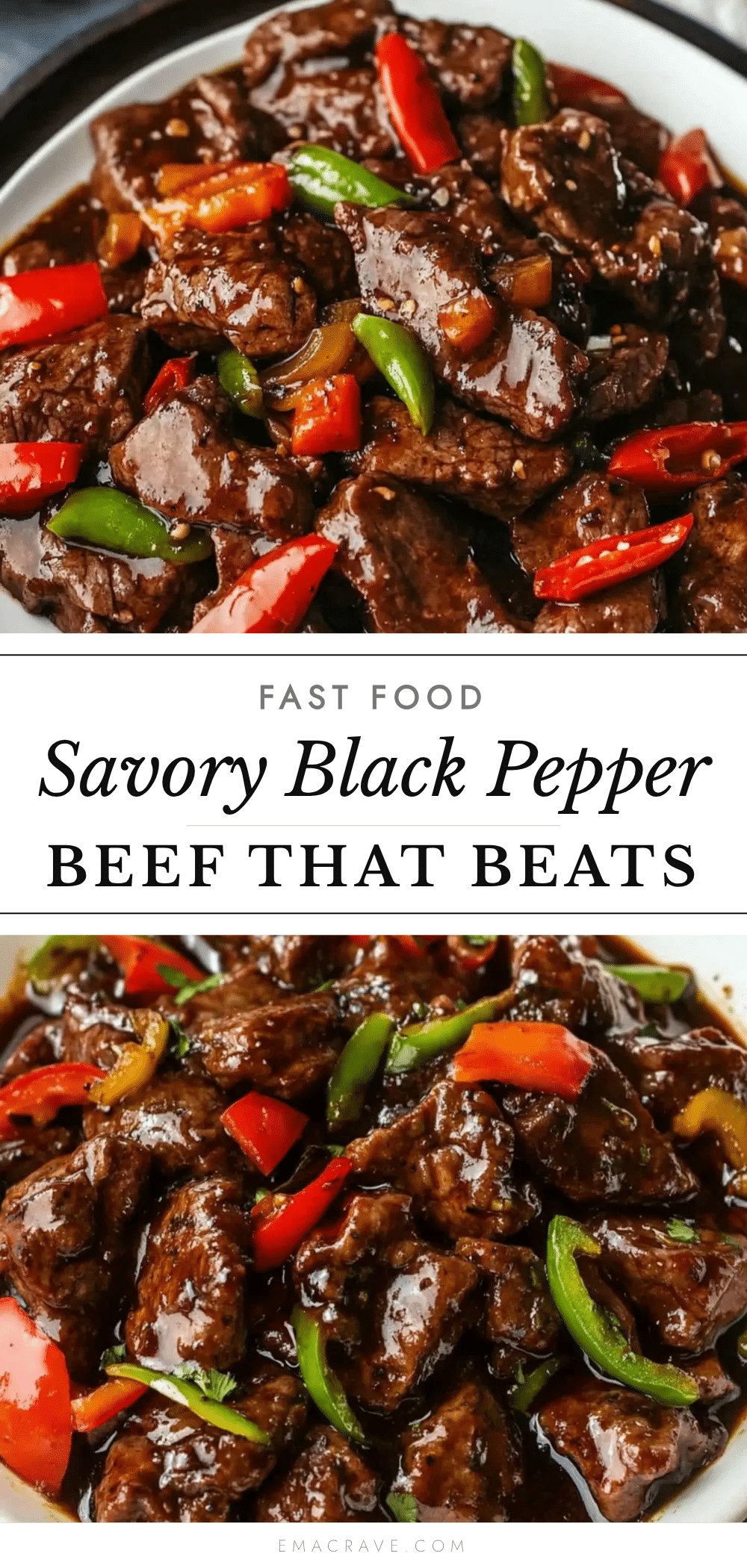
Best Savory Black Pepper Beef Recipe (Better Than Takeout)
This savory black pepper beef recipe is quick, easy, and delivers bold, takeout-quality flavor in under 25 minutes. Tender beef, a glossy peppery sauce, and simple pantry ingredients make it the perfect weeknight dinner.
- Prep Time: 15 minutes
- Cook Time: 10 minutes
- Total Time: 25 minutes
- Yield: 4 servings 1x
- Category: Main Course
- Cuisine: Chinese
Ingredients
- 1 lb flank steak or sirloin, thinly sliced against the grain
- 1 tablespoon soy sauce (low-sodium preferred)
- 1 tablespoon cornstarch
- 1 teaspoon baking soda (optional)
- 1 tablespoon neutral oil (canola or vegetable), for the marinade
- 3 tablespoons soy sauce (regular or low-sodium)
- 2 tablespoons oyster sauce
- 1 tablespoon dark soy sauce (or regular soy sauce)
- 1 tablespoon brown sugar
- 1 teaspoon freshly ground black pepper
- 1/2 cup beef broth
- 1 teaspoon sesame oil
- 3 tablespoons neutral oil, divided (for cooking)
- 4 cloves garlic, minced
- 1 tablespoon fresh ginger, grated (optional)
- 1 medium onion, sliced into thin wedges
- 1 red bell pepper, sliced
- 4–5 scallions, cut into 2-inch pieces
- 1 teaspoon whole black peppercorns, lightly crushed
Instructions
- Marinate the beef: In a medium bowl, combine sliced beef with 1 tablespoon soy sauce, 1 tablespoon cornstarch, 1 teaspoon baking soda (if using), and 1 tablespoon neutral oil. Mix well and let sit for 10-15 minutes.
- Make the sauce: In a small bowl, whisk together 3 tablespoons soy sauce, 2 tablespoons oyster sauce, 1 tablespoon dark soy sauce, 1 tablespoon brown sugar, 1 teaspoon freshly ground black pepper, and 1/2 cup beef broth. Set aside.
- Prep aromatics: Mince garlic, grate ginger, slice onion and bell pepper, cut scallions. Keep separate.
- Heat wok: Place wok or skillet over high heat and add 1 tablespoon oil until shimmering.
- Sear beef: Add half the beef in a single layer. Cook undisturbed for 1 minute, then toss for 30 seconds until browned but not fully cooked. Transfer to a plate. Repeat with remaining beef and another tablespoon of oil.
- Cook aromatics: Reduce heat to medium-high, add remaining 1 tablespoon oil. Add garlic, ginger, and crushed peppercorns. Stir for 20 seconds until fragrant.
- Add vegetables: Add onion and bell pepper. Stir-fry for 2 minutes until softened. Add scallions and cook 30 seconds.
- Combine: Return beef and any juices to wok. Pour sauce over everything and toss to coat. Let bubble and thicken for 1-2 minutes.
- Finish: Drizzle with sesame oil, toss, and remove from heat. Serve immediately over steamed rice or noodles. Garnish with extra scallions or black pepper if desired.
Notes
Slice beef against the grain for tenderness. Don’t skip the velveting step (cornstarch and baking soda) for silky texture. Use high heat and work in batches to avoid steaming. The sauce will thicken as it cools. For a thicker sauce, mix 1 teaspoon cornstarch with 2 tablespoons cold water and stir in during the last minute of cooking.
Nutrition
- Serving Size: 1 serving (without r
- Calories: 380
- Sugar: 7
- Sodium: 1100
- Fat: 18
- Saturated Fat: 4
- Carbohydrates: 14
- Fiber: 2
- Protein: 32
Keywords: black pepper beef, stir-fry, beef recipe, quick dinner, takeout fakeout, weeknight dinner, Asian recipe