Love this? Save it for later!
Share the inspiration with your friends
The wok was screaming hot, and I was pretty sure I’d just burned my last nerve along with the garlic. It was one of those nights where the fridge was a sad landscape of wilting scallions and half a block of tofu. I had a bag of spaghetti staring at me, and honestly, I was about five minutes away from ordering greasy takeout. But then I remembered a jar of whole black peppercorns my mom had pressed into my hands months ago. “For the pantry,” she’d said. I grabbed the pepper mill, a bottle of soy sauce, and decided to just wing it. No recipe, no plan, just pure, stubborn hunger.
The first crack of the peppercorns released this sharp, floral scent that cut through the kitchen air. It wasn’t just spicy; it was almost woodsy. I tossed in the garlic, the ginger, and let the sizzle do the talking. By the time I tossed the cooked spaghetti into that dark, glossy sauce, something clicked. The black pepper wasn’t just a background player—it was the main event. It clung to every strand of pasta, warm and biting. My husband walked in, sniffed the air, and asked if I’d secretly ordered from our favorite Asian fusion spot. Nope. It was just me, a wok, and a whole lot of pepper.
That accidental dinner became a regular in our house. I’ve tweaked it a dozen times since then, trying to get that perfect balance of savory, spicy, and just a whisper of sweet. This Flavorful Vegan Singapore Black Pepper Sauce Spaghetti is the result. It’s bold, it’s fast, and it proves you don’t need a pantry full of exotic ingredients to make something that tastes like it came from a restaurant kitchen. It’s the kind of meal that makes you wonder why you ever doubted yourself.
Why You’ll Love This Recipe
- Ready in Under 30 Minutes : This is a weeknight warrior. From the moment you start boiling water to the second you’re twirling noodles on your fork, we’re talking 25 minutes, max. Perfect for those nights when you need dinner on the table, fast.
- Made with Simple, Pantry-Friendly Ingredients : No hunting down obscure pastes or fermented sauces. Soy sauce, maple syrup, garlic, ginger, and a good amount of black pepper. You probably have most of this stuff right now.
- Bold, Restaurant-Quality Flavor : The secret is in the technique. Toasting the whole peppercorns before grinding them unlocks a depth of flavor you just can’t get from the pre-ground stuff. It’s warm, aromatic, and seriously addictive.
- Completely Vegan and Satisfying : This dish is proof that vegan food can be incredibly hearty and filling. The sauce is so rich and savory, you won’t miss the meat or dairy for a second. It’s comfort food that just happens to be plant-based.
- A Crowd-Pleaser for All Diets : I’ve served this to skeptical meat-eaters and hardcore vegans alike, and the bowl always comes back clean. It’s got that universal appeal—spicy, savory, and slurpable.
What makes this version different from every other black pepper noodle recipe out there? It’s the double-dose of pepper. I use whole black peppercorns that I crush myself, and I add them at two different stages. The first hit goes in with the aromatics to infuse the oil, and the second goes in at the end for a final punch of heat. It creates a layered spiciness that builds beautifully without being overwhelming. It’s not just spicy for the sake of being spicy; it’s complex and rounded.
This recipe is the one I turn to when I need a little culinary therapy. The rhythm of chopping, the sizzle of the wok, and that first bite that makes your nose run just a little—it’s pure satisfaction. It’s the kind of meal that makes you feel like you’ve really cooked something, even on a Tuesday night.
What Ingredients You Will Need
This recipe relies on a handful of core ingredients to build that signature Singapore-style black pepper sauce. The magic is in the simplicity, so using good quality items makes a real difference.
- Whole Black Peppercorns (2 tablespoons) : This is non-negotiable. Do not use pre-ground black pepper. Whole peppercorns have volatile oils that deliver a much more fragrant and complex heat. I like to use Tellicherry peppercorns for their bold, fruity flavor. Toast them in a dry pan for 30 seconds before crushing to wake them up even more.
- Spaghetti or Thick Noodles (8 ounces or 225g) : I use regular dried spaghetti because it’s always in my pantry, but any long noodle works. Thick udon noodles would be amazing, or even fresh egg noodles if you’re not strictly vegan. Cook it one minute less than al dente, because it will finish cooking in the sauce.
- Low-Sodium Soy Sauce or Tamari (3 tablespoons) : This is your salty, umami backbone. Low-sodium is key so you can control the salt level. For a gluten-free version, use tamari or coconut aminos.
- Dark Soy Sauce (1 tablespoon) : This isn’t just for color, though it does give the sauce that gorgeous dark, glossy look. It’s slightly thicker and sweeter than regular soy sauce, adding a touch of richness. If you don’t have it, just use an extra tablespoon of regular soy sauce.
- Pure Maple Syrup or Brown Sugar (2 tablespoons) : You need a little sweetness to balance the intense pepper and salt. Maple syrup adds a subtle floral note, but brown sugar is perfectly traditional and gives a deeper molasses flavor.
- Fresh Garlic (4-5 large cloves, minced) : Fresh garlic is a must. It provides that sharp, pungent base that gets mellowed by the heat. Don’t use the jarred stuff; it won’t have the same punch.
- Fresh Ginger (1 tablespoon, grated) : Ginger and black pepper are a classic pairing. The warmth and slight citrusy zing of fresh ginger cuts through the richness of the sauce. Use a microplane for the best texture.
- Sesame Oil (1 tablespoon) : Toasted sesame oil is for finishing. It adds a nutty, aromatic depth that makes the whole dish sing. Drizzle it in right at the end, off the heat, so the flavor stays vibrant.
- Neutral Oil (2 tablespoons) : For cooking. Avocado, grapeseed, or refined coconut oil work well. You need a high smoke point oil to get that wok hei (the breath of the wok) flavor.
- Yellow Onion (1 medium, thinly sliced) : The onion provides a sweet, savory base as it caramelizes in the hot oil. Slice it thinly so it cooks quickly and integrates into the sauce.
- Firm Tofu or Vegan Protein (8 ounces or 225g) : I use extra-firm tofu, pressed and cubed. You can also use tempeh, seitan, or even a can of chickpeas. The key is to pan-fry it until golden and crispy before adding it to the sauce.
- Scallions (4-5, sliced) : For garnish. The fresh, oniony bite of scallions is the perfect contrast to the rich, peppery sauce.
Equipment Needed
You don’t need a professional kitchen to make this, but a few specific tools make the process much smoother.
- Large Wok or Heavy-Bottomed Skillet : A wok is ideal for getting that high heat and tossing the noodles, but a large, deep skillet works perfectly. The key is a large surface area so the ingredients sear, not steam. I use a carbon steel wok, and it’s worth the investment if you cook Asian food regularly.
- Mortar and Pestle or Pepper Mill : You need a way to crush the whole peppercorns. A mortar and pestle gives you the most control over the texture—you can leave some pieces coarse for bursts of flavor. A pepper mill set to a coarse grind works in a pinch.
- Large Pot : For boiling the spaghetti. Make sure it’s big enough so the pasta has room to move.
- Microplane or Fine Grater : For grating the ginger. A microplane creates a paste that dissolves into the sauce beautifully, unlike chopped ginger which can be stringy.
- Tongs : For tossing the spaghetti in the sauce. Tongs give you the leverage to coat every strand evenly.
Preparation Method
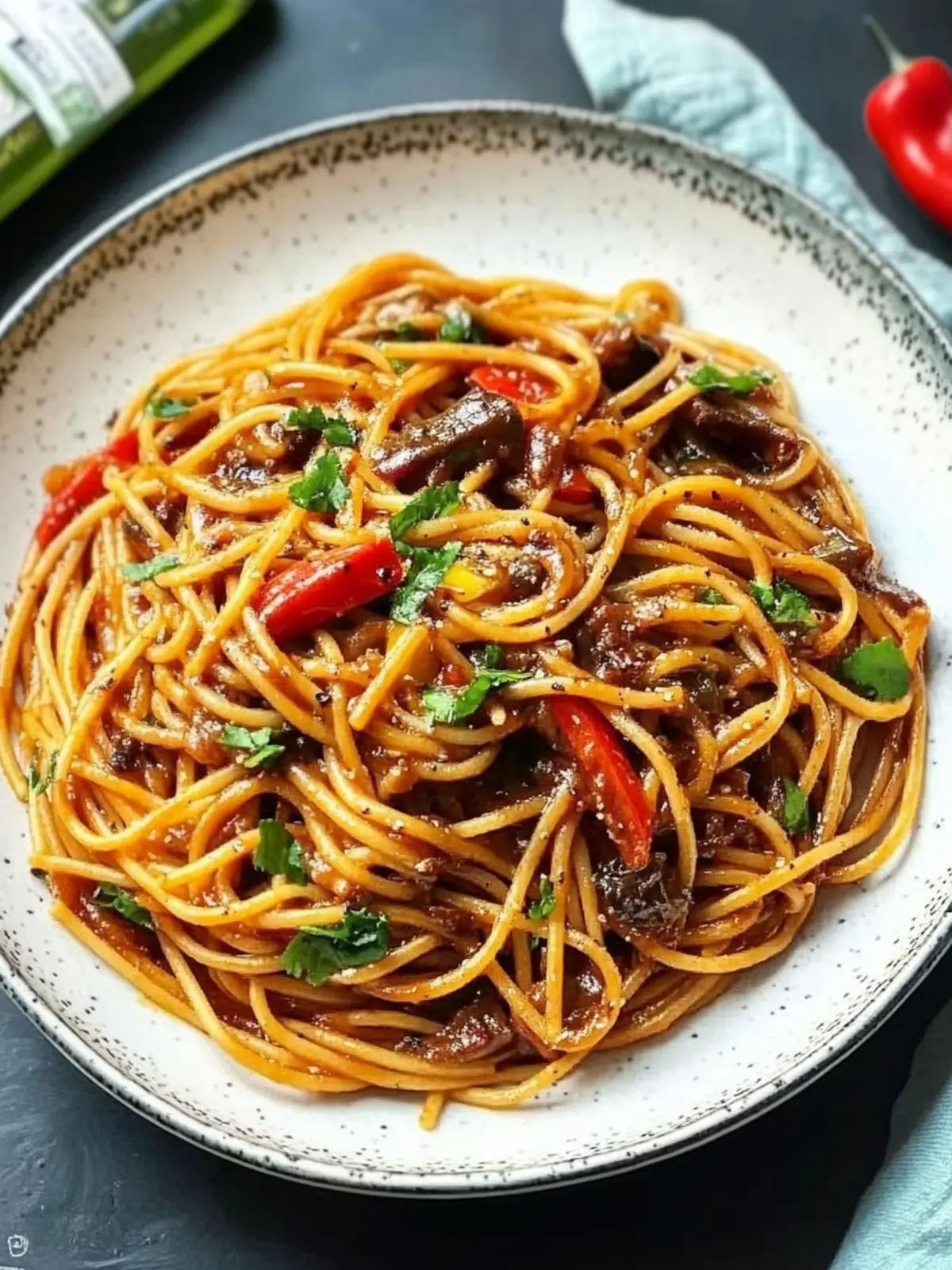
- Prepare the Tofu (5 minutes) : If using tofu, press it for at least 15 minutes to remove excess water. Wrap the block in a clean kitchen towel and place a heavy pan on top. Then, cut it into 1/2-inch cubes. Toss the cubes with 1 tablespoon of soy sauce and a pinch of black pepper. This quick marinade adds flavor right into the protein.
- Crush the Peppercorns (2 minutes) : Place the whole black peppercorns in a dry wok or small skillet over medium heat. Toast them for 30-45 seconds, shaking the pan frequently, until they smell fragrant and start to pop. Immediately transfer them to a mortar and pestle. Crush them until you have a mix of fine powder and small, chunky pieces. Don’t pulverize it into a dust; you want some texture.
- Cook the Spaghetti (8-10 minutes) : Bring a large pot of generously salted water to a rolling boil. Add the spaghetti and cook according to package directions, but subtract 1 minute from the recommended time. The pasta should be very al dente. Before draining, reserve 1 cup of the starchy pasta water. Drain the spaghetti, but don’t rinse it. The starch on the pasta helps the sauce cling.
- Pan-Fry the Tofu (5 minutes) : While the pasta cooks, heat 1 tablespoon of neutral oil in your wok or large skillet over high heat. Once the oil is shimmering, add the marinated tofu cubes in a single layer. Don’t overcrowd the pan; work in batches if needed. Let them sear undisturbed for 2-3 minutes per side, until golden brown and crispy on all sides. Remove the tofu from the wok and set aside on a plate.
- Build the Aromatics (3 minutes) : Reduce the heat to medium-high and add the remaining 1 tablespoon of neutral oil. Add the sliced onion and cook for 2 minutes, stirring occasionally, until it becomes translucent and starts to brown at the edges. Add the minced garlic and grated ginger. Stir constantly for 30 seconds until fragrant—be careful not to burn the garlic.
- Create the Sauce (2 minutes) : Pour in the low-sodium soy sauce, dark soy sauce, and maple syrup. Stir to combine, scraping up any browned bits from the bottom of the wok. Add half of your crushed black pepper (about 1 tablespoon) and stir. The sauce will start to bubble and thicken immediately.
- Combine Everything (2 minutes) : Add the cooked spaghetti and the crispy tofu back into the wok. Toss everything vigorously with tongs for 1-2 minutes, ensuring the sauce evenly coats the noodles and tofu. The sauce will look a bit thin at first, but it will thicken as it coats the pasta.
- Finish the Dish (1 minute) : If the pasta looks dry, add the reserved pasta water a splash at a time until you reach your desired consistency. You want a glossy sauce that clings to the noodles, not a soupy mess. Drizzle the sesame oil over the top and toss once more. Taste and adjust seasoning. You might want a pinch more salt or another crack of pepper.
- Serve Immediately : Divide the spaghetti among bowls. Sprinkle the remaining crushed black pepper over the top for a final hit of heat. Garnish generously with sliced scallions. Serve hot.
Cooking Tips & Techniques
I’ve burned more garlic than I care to admit, and I’ve definitely made sauce that was so peppery it made my eyes water for an hour. Here’s what I’ve learned so you don’t have to make the same mistakes.
Don’t Skip the Toasting Step. Toasting the whole peppercorns before crushing them is the single most important thing you can do. It releases the essential oils, transforming the pepper from simply “hot” to “fragrant and complex.” It takes 30 seconds, but the flavor difference is night and day. Trust me on this one.
Work Fast and Hot. This is a stir-fry at heart. Have all your ingredients prepped and within arm’s reach before you turn on the heat. Once that oil is shimmering, you don’t have time to chop garlic. High heat is your friend—it creates a light char on the tofu and onion that adds a smoky depth you just can’t get any other way.
Master the “Wok Hei” at Home. You don’t need a jet-engine burner to get that smoky restaurant flavor. The trick is to not overcrowd the pan. If you add too many noodles at once, the temperature drops, and everything starts to steam instead of sear. Work in batches if your wok or skillet isn’t huge. Also, letting the noodles sit in the hot pan for a few seconds without stirring allows them to get a tiny bit charred.
Reserve That Pasta Water. I know it seems like a small detail, but starchy pasta water is liquid gold. It helps emulsify the sauce, making it silky and cohesive. Don’t use plain water; the starch is what gives the sauce body and helps it stick to every strand of spaghetti.
Variations & Adaptations
This recipe is a fantastic base to play with. Here are a few ways I’ve changed it up depending on my mood or what’s in the fridge.
- Vegetable-Packed Version : When I want to sneak in more greens, I add a handful of baby spinach or chopped bok choy right at the end. Toss it in with the noodles and let it wilt in the residual heat. Thinly sliced bell peppers or snap peas also work beautifully.
- Spicy Heat Level Adjustment : If you’re a spice fiend, add a chopped red chili (like a bird’s eye chili or serrano) along with the garlic and ginger. For a milder version, reduce the black pepper to 1 1/2 tablespoons and add a teaspoon of sugar to balance the heat.
- Nutty Crunch Topping : For a textural contrast, I sometimes top the finished dish with crushed roasted peanuts or sesame seeds. It adds a wonderful crunch that plays against the soft noodles and tofu. If you have some leftover from making this sweet maple dijon roasted carrots and apples, the maple flavor would actually be a lovely counterpoint here.
- Gluten-Free Adaptation : Simply swap the regular spaghetti for your favorite gluten-free pasta. Brown rice spaghetti or chickpea pasta work well. Make sure to check your soy sauce is tamari or certified gluten-free.
- Mushroom Medley : For an even heartier, umami-packed version, sauté 8 ounces of sliced cremini or shiitake mushrooms along with the onion. They release a ton of flavor and add a meaty texture that’s incredibly satisfying.
Serving & Storage Suggestions
This dish is best enjoyed immediately, straight from the wok, while the noodles are still hot and the sauce is glossy. I like to serve it in deep bowls, letting the steam carry the peppery aroma right to your face.
What to Serve With It : This spaghetti is a full meal on its own, but it pairs wonderfully with a simple side. A quick cucumber salad with rice vinegar and sesame seeds cuts through the richness. Or, you could start your meal with something light, like this easy weeknight peperonata for a burst of sweet, tangy peppers. For a drink, a cold lager or a crisp, dry Riesling would be fantastic.
Storage : If you have leftovers (unlikely, but possible!), store them in an airtight container in the fridge for up to 3 days. The flavors actually meld together overnight, making it even more delicious the next day.
Reheating : The best way to reheat this is in a hot wok or skillet with a splash of water or vegetable broth. Toss it over medium-high heat for 2-3 minutes until heated through. The microwave works in a pinch, but it can make the tofu soggy. The stovetop method revives that slight char and keeps the sauce from becoming watery. I don’t recommend freezing this dish, as the texture of the noodles and tofu will suffer.
Nutritional Information & Benefits
This recipe is not just delicious; it’s also packed with surprisingly good-for-you ingredients. Here’s a rough estimate per serving (based on 4 servings using tofu).
| Nutrient | Approximate Value Per Serving |
|---|---|
| Calories | 420-480 kcal |
| Protein | 18-22g |
| Fat | 14-18g |
| Carbohydrates | 55-65g |
| Fiber | 5-7g |
| Sugar | 8-12g |
Pin This Recipe!
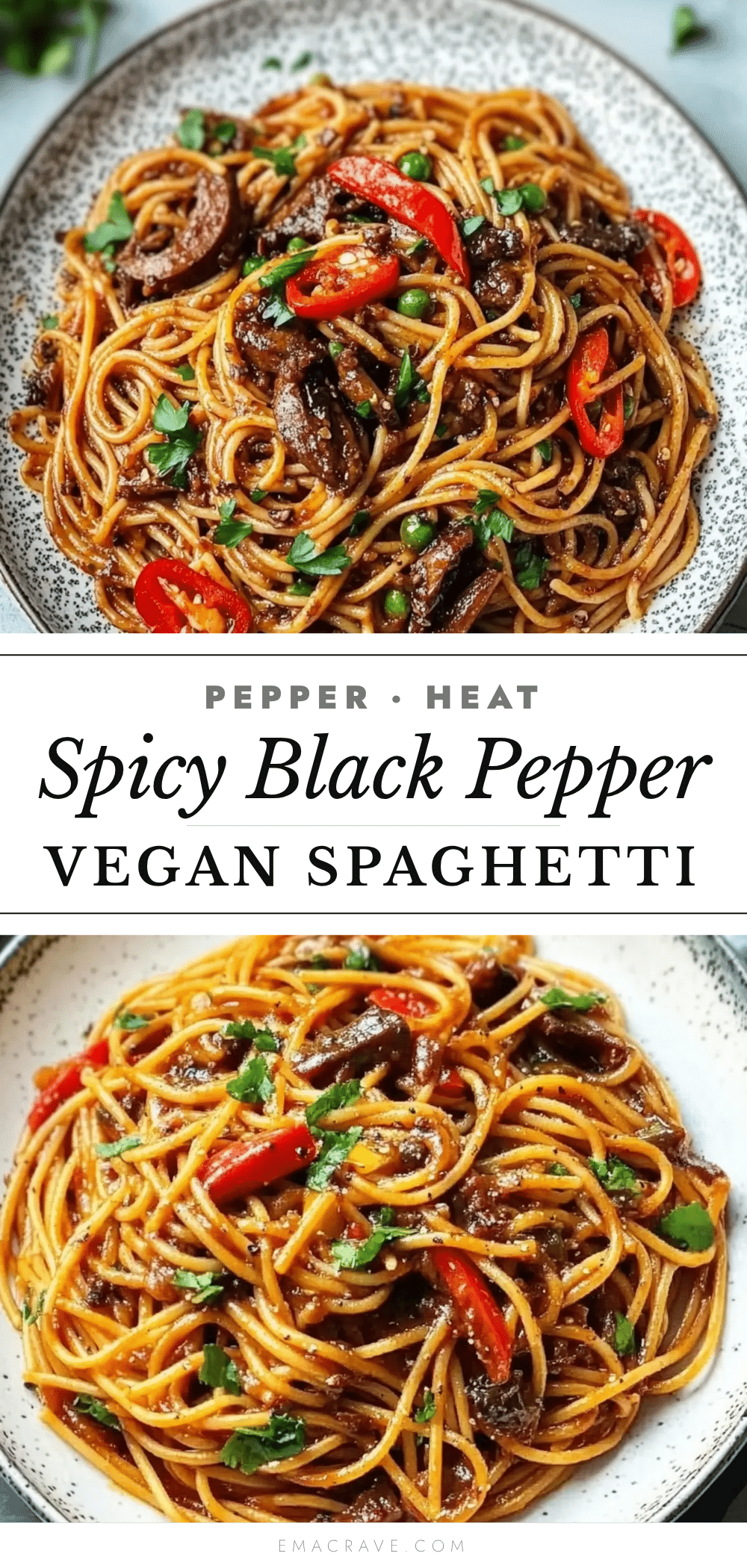
Easy Vegan Singapore Black Pepper Sauce Spaghetti Recipe
A bold, fast, and satisfying vegan spaghetti dish featuring a rich, aromatic black pepper sauce. Ready in under 30 minutes with simple pantry ingredients, this restaurant-quality meal is perfect for busy weeknights.
- Prep Time: 10 minutes
- Cook Time: 15 minutes
- Total Time: 25 minutes
- Yield: 4 servings 1x
- Category: Main Course
- Cuisine: Singaporean
Ingredients
- 2 tablespoons whole black peppercorns
- 8 ounces (225g) spaghetti or thick noodles
- 3 tablespoons low-sodium soy sauce or tamari
- 1 tablespoon dark soy sauce
- 2 tablespoons pure maple syrup or brown sugar
- 4–5 large cloves garlic, minced
- 1 tablespoon fresh ginger, grated
- 1 tablespoon sesame oil
- 2 tablespoons neutral oil (avocado, grapeseed, or refined coconut)
- 1 medium yellow onion, thinly sliced
- 8 ounces (225g) firm tofu, pressed and cubed
- 4–5 scallions, sliced
Instructions
- Prepare the Tofu: Press tofu for at least 15 minutes to remove excess water. Cut into 1/2-inch cubes. Toss with 1 tablespoon soy sauce and a pinch of black pepper.
- Crush the Peppercorns: Toast whole black peppercorns in a dry wok or skillet over medium heat for 30-45 seconds until fragrant. Transfer to a mortar and pestle and crush into a mix of fine powder and small chunks.
- Cook the Spaghetti: Bring a large pot of salted water to a boil. Cook spaghetti 1 minute less than al dente. Reserve 1 cup of pasta water before draining. Do not rinse.
- Pan-Fry the Tofu: Heat 1 tablespoon neutral oil in a wok or large skillet over high heat. Add tofu in a single layer and sear 2-3 minutes per side until golden and crispy. Remove and set aside.
- Build the Aromatics: Reduce heat to medium-high and add remaining 1 tablespoon neutral oil. Cook sliced onion for 2 minutes until translucent. Add minced garlic and grated ginger; stir for 30 seconds until fragrant.
- Create the Sauce: Add low-sodium soy sauce, dark soy sauce, and maple syrup. Stir to combine, scraping up browned bits. Add half the crushed black pepper and stir until sauce bubbles and thickens.
- Combine Everything: Add cooked spaghetti and crispy tofu to the wok. Toss vigorously with tongs for 1-2 minutes until evenly coated. Add reserved pasta water a splash at a time if needed for desired consistency.
- Finish the Dish: Drizzle sesame oil over the top and toss once more. Taste and adjust seasoning. Serve immediately.
- Serve: Divide among bowls. Sprinkle remaining crushed black pepper on top. Garnish generously with sliced scallions.
Notes
Toasting whole peppercorns before crushing is essential for maximum flavor. Work quickly with high heat to achieve wok hei. Reserve pasta water to adjust sauce consistency. For gluten-free, use tamari and gluten-free pasta.
Nutrition
- Serving Size: 1 serving (about 1/4
- Calories: 450
- Sugar: 10
- Sodium: 800
- Fat: 16
- Saturated Fat: 2
- Carbohydrates: 60
- Fiber: 6
- Protein: 20
Keywords: vegan spaghetti, black pepper sauce, Singapore noodles, quick vegan dinner, plant-based pasta, tofu spaghetti, Asian fusion pasta