Love this? Save it for later!
Share the inspiration with your friends
The first time I made this stew, I was genuinely surprised by how much flavor came out of such a simple pot. It was a chilly Tuesday night, the kind where you just want something warm without spending an hour in the kitchen. I had a block of fermented soybean paste sitting in my fridge, bought on a whim after a trip to the Asian market, and honestly, I wasn’t sure what to do with it. I figured I’d just throw some vegetables in a pot with water and see what happened.
That first bowl changed my whole perspective on weeknight cooking. The broth was rich and savory, deeply comforting in a way that felt like a hug in a bowl. It wasn’t complicated or fancy, just good, honest food that made the kitchen smell incredible. My husband walked in and asked what was for dinner, and when I told him it was basically “bean paste soup,” he raised an eyebrow. Then he had a spoonful, and the eyebrow went down. Now he asks for this cozy soybean paste stew at least once a week.
This recipe has become my go-to for those nights when I need something nourishing without a lot of fuss. It is the kind of meal that feels both grounding and satisfying, perfect for unwinding after a long day. You don’t need any special skills to make it, just a pot and a willingness to let simple ingredients do their thing. And honestly, that is the beauty of it.
Why You’ll Love This Recipe
This isn’t just another soup recipe. This cozy soybean paste stew has earned a permanent spot in my meal rotation, and here is why I think you will feel the same way after trying it.
- Quick & Easy: From cutting board to table in about 30 minutes. No complicated steps, no fancy techniques. Just simple cooking that works.
- Simple Ingredients: You can find everything at a regular grocery store or your local Asian market. The star ingredient, doenjang (fermented soybean paste), keeps for months in the fridge.
- Perfect for Cold Days: This is the ultimate comfort food when you are feeling under the weather or just need something warm and soothing.
- Crowd-Pleaser: Even people who think they don’t like “healthy” soups end up going back for seconds. The umami flavor is just that good.
- Unbelievably Satisfying: The broth is rich and complex without being heavy. It is the kind of meal that fills you up without weighing you down.
What makes this version different from others you might have tried? It is all about the balance. I have tested this recipe multiple times to get the ratio of soybean paste to broth just right. Not too salty, not too mild. The addition of a little gochugaru (Korean chili flakes) gives it a gentle warmth without making it spicy. It is comfort food reimagined—faster, simpler, but with the same soul-soothing satisfaction that makes you close your eyes after the first bite.
What Ingredients You Will Need
This recipe uses simple, wholesome ingredients to deliver bold flavor and satisfying texture without the fuss. Most of these are pantry staples in a Korean kitchen, but you can find them easily at any well-stocked grocery store.
- Doenjang (Korean Fermented Soybean Paste) – 3 tablespoons: This is the heart of the stew. It is salty, funky, and deeply savory. I recommend the brand Sempio or Chung Jung One for consistent quality. Do not substitute with miso paste—it is not the same.
- Gochugaru (Korean Red Chili Flakes) – 1 tablespoon: Adds a mild heat and beautiful red color. You can skip it if you prefer a milder stew, but it really adds depth.
- Garlic – 4 cloves, minced: Fresh garlic is non-negotiable here. It adds a pungent kick that balances the fermented paste.
- Onion – 1 medium, sliced: Yellow or white onion works best. It adds sweetness and body to the broth as it simmers.
- Zucchini – 1 medium, sliced into half-moons: Adds a tender texture and soaks up the broth beautifully.
- Potato – 1 medium, peeled and cubed: Makes the stew heartier. Russet or Yukon Gold potatoes work well.
- Tofu – 1 block (14 oz), firm or extra-firm, cubed: Adds protein and a silky texture. I prefer firm tofu so it holds its shape in the stew.
- Green Onions – 4 stalks, chopped: For freshness and a mild onion flavor. Reserve some for garnish.
- Water or Anchovy Stock – 4 cups: Water works fine, but anchovy stock takes this to another level. You can also use dashi or vegetable broth.
- Optional Protein – ½ cup sliced mushrooms or ½ cup cooked beef: Mushrooms add earthiness, while beef adds richness. Both are optional but recommended.
Equipment Needed
You don’t need a lot of fancy tools to make this stew. Here is what you will need:
- Large Pot or Dutch Oven (4-5 quart): A heavy-bottomed pot distributes heat evenly. I use my trusty enameled cast iron pot for this.
- Cutting Board and Sharp Knife: For prepping all the vegetables. A good chef’s knife makes quick work of everything.
- Wooden Spoon or Spatula: For stirring the paste into the broth without scratching your pot.
- Measuring Spoons: For accurate measurements of the paste and chili flakes.
- Small Bowl: To dissolve the soybean paste before adding it to the pot. This prevents lumps.
If you don’t have a Dutch oven, any large soup pot will work. A non-stick pot is also fine, just be gentle when stirring to avoid scratching the surface. I have used a stainless steel pot for years and it works perfectly.
Preparation Method
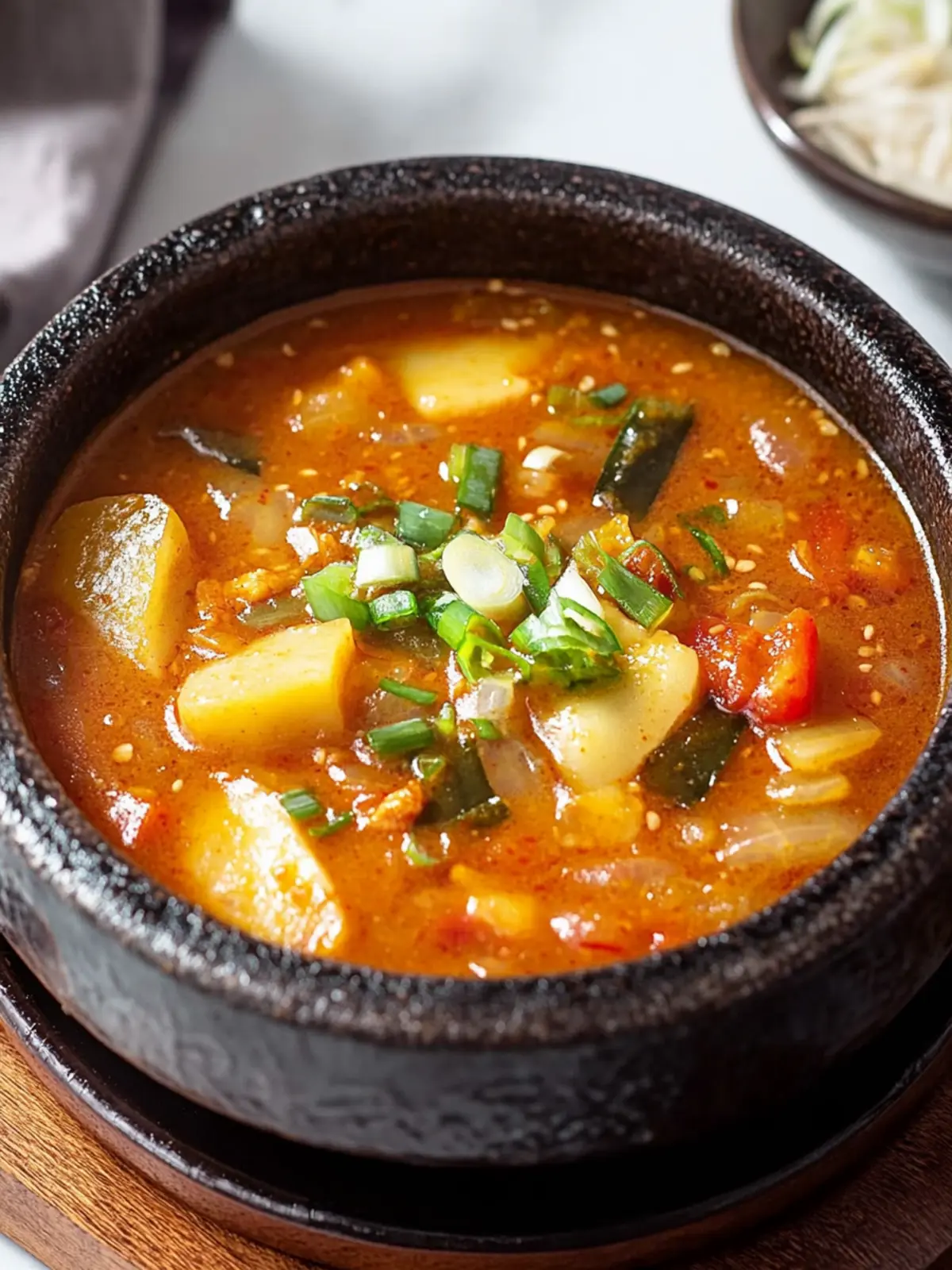
Let me walk you through this step by step. It is easier than you think.
- Prepare the stock (5 minutes): If you are using water, bring 4 cups to a simmer in your pot. If you are making anchovy stock, add 5 dried anchovies (heads and guts removed) to the water and simmer for 10 minutes, then strain them out. I usually just use water with a pinch of salt, and it is still delicious.
- Dissolve the soybean paste: In a small bowl, combine 3 tablespoons of doenjang with about ½ cup of the hot stock. Whisk until the paste is fully dissolved and smooth. This step is crucial—if you dump the paste directly into the pot, you will end up with clumps. Trust me, I learned this the hard way.
- Sauté the aromatics (3 minutes): In your pot over medium heat, add a splash of sesame oil (about 1 teaspoon). Add the sliced onion and minced garlic. Cook for about 2-3 minutes until the onion softens and becomes translucent. Your kitchen will smell amazing at this point.
- Add the broth and vegetables (10 minutes): Pour the dissolved soybean paste mixture and the remaining stock into the pot. Add the cubed potato and bring to a boil. Reduce the heat to medium-low and let it simmer for about 8 minutes, until the potato is just starting to become tender.
- Add the zucchini and tofu (5 minutes): Gently add the sliced zucchini and cubed tofu to the pot. Stir in 1 tablespoon of gochugaru. Simmer for another 5 minutes. The zucchini should be tender but not mushy, and the tofu should be heated through.
- Finish and serve (2 minutes): Turn off the heat. Stir in most of the chopped green onions, reserving a handful for garnish. Taste the broth and adjust seasoning. You might want a little more soybean paste if you prefer a saltier stew, or a splash of water if it is too strong.
- Garnish and serve: Ladle the stew into bowls and top with the reserved green onions and a sprinkle of sesame seeds if you have them. Serve immediately with a bowl of steamed rice.
Cooking Tips & Techniques
Over the years, I have made this stew probably fifty times, and I have picked up a few tricks along the way.
Don’t boil the paste too long. Fermented soybean paste can become bitter if you boil it for too long. That is why we add it early but keep the heat at a gentle simmer. A rolling boil will ruin the flavor.
Cut your vegetables uniformly. This ensures even cooking. I cut my potatoes into ½-inch cubes and my zucchini into similar-sized half-moons. That way, everything finishes cooking at the same time.
Taste as you go. Different brands of doenjang have different salt levels. Some are milder, some are punchier. Always taste your broth before serving and adjust accordingly. I have had batches where I needed an extra tablespoon of paste, and others where I needed to add water to dilute it.
Let it rest before serving. I know you are hungry, but letting the stew sit for 5 minutes off the heat allows the flavors to meld together. The tofu absorbs the broth, and the vegetables settle into their perfect texture.
One mistake I made early on was adding all the vegetables at once. The potatoes need more time than the zucchini, so staggering them makes a huge difference. Mushy zucchini is sad zucchini.
Variations & Adaptations
This stew is incredibly forgiving, so feel free to play around with it.
- Seafood Version: Add ½ cup of cleaned clams or mussels in the last 5 minutes of cooking. They add a briny depth that is absolutely divine. You can also add a few shrimp for extra sweetness.
- Meat Lover’s Twist: Brown ½ pound of thinly sliced beef (ribeye or sirloin) with the onions and garlic. The beef adds a rich, savory layer that makes the stew even more satisfying. This version is my husband’s favorite.
- Vegetarian Upgrade: Use vegetable broth and add a handful of enoki mushrooms or shiitake mushrooms. The mushrooms provide that umami punch you would otherwise get from meat or anchovies.
- Spicier Version: Double the gochugaru or add a chopped fresh chili pepper (like Thai bird’s eye chili) with the aromatics. It will wake you right up.
- Low-Carb Adaptation: Skip the potato and add more zucchini, mushrooms, or even some cabbage. The stew is naturally low in carbs without the potato, and it is just as satisfying.
I have personally tried the seafood version on a rainy Sunday, and it was incredible. The clams opened perfectly, and the broth took on a whole new personality. It is now my go-to when I want to impress guests without much effort.
Serving & Storage Suggestions
This cozy soybean paste stew is best served piping hot, straight from the pot. Ladle it into deep bowls and serve with a generous scoop of steamed short-grain rice. The rice soaks up the broth beautifully. I also love adding a side of kimchi for a little tangy crunch.
For presentation, I like to arrange the tofu and vegetables nicely in the bowl before pouring the broth. A sprinkle of sesame seeds and a drizzle of sesame oil on top makes it look restaurant-worthy.
Storage: Leftovers keep well in an airtight container in the refrigerator for up to 3 days. The flavors actually deepen overnight, making it even more delicious the next day. Just be aware that the tofu will absorb more liquid and soften, and the zucchini may lose some of its firmness.
Reheating: Reheat gently on the stovetop over medium-low heat. Add a splash of water or broth if it has thickened too much. You can also microwave it in a bowl for 2-3 minutes, but the stovetop gives better results. Avoid boiling it again, as that can make the paste bitter.
I do not recommend freezing this stew because the tofu becomes spongy and the zucchini turns mushy upon thawing. It is best enjoyed fresh or within a few days.
Nutritional Information & Benefits
This stew is not just comforting; it is also packed with nutritional benefits. Here is an approximate breakdown per serving (based on 4 servings):
- Calories: 180-220 kcal
- Protein: 12-15g
- Carbohydrates: 18-22g
- Fat: 6-8g
- Fiber: 4-5g
Health Benefits: Doenjang is a fermented food, which means it is rich in probiotics that support gut health. It also contains antioxidants and has been linked to improved digestion. Tofu is a great plant-based protein source, while zucchini and potatoes provide fiber, vitamins, and minerals. This is a balanced meal that is naturally gluten-free and dairy-free.
For those watching their sodium, you can use low-sodium soybean paste or reduce the amount slightly. The gochugaru adds metabolism-boosting capsaicin, which is a nice bonus.
Conclusion
This cozy soybean paste stew is the kind of recipe that becomes a staple, the one you turn to when you need something warm, nourishing, and completely unfussy. It is proof that simple ingredients, treated with a little care, can create something truly special. I love how forgiving it is—you can swap vegetables based on what is in your fridge, adjust the spice level to your mood, and it always turns out delicious.
I really hope you give this a try. Make it on a chilly evening, serve it with a big bowl of rice, and let it do its magic. And when you do, I would love to hear about it. Leave a comment below and let me know how it turned out, or share your own twist on the recipe. Happy cooking, friend!
Frequently Asked Questions
Can I use miso paste instead of doenjang?
I do not recommend it. While both are fermented soybean pastes, miso is much milder and sweeter. Doenjang has a distinct funky, savory flavor that is essential to this stew. The result will be different and not as authentic.
Is this stew spicy?
It has a gentle warmth from the gochugaru, but it is not spicy in the way a chili-based dish is. If you are sensitive to heat, you can reduce or omit the gochugaru. The stew will still be delicious.
Can I make this in a slow cooker?
Yes, but with adjustments. Sauté the aromatics first, then transfer everything except the zucchini and tofu to the slow cooker. Cook on low for 4-6 hours. Add the zucchini and tofu in the last 30 minutes to prevent them from becoming mushy.
What if I cannot find gochugaru?
You can substitute with a pinch of red pepper flakes or paprika. It won’t have the same smoky depth, but it will still add color and a mild heat. Alternatively, you can skip it entirely for a milder stew.
How do I store leftover stew?
Store it in an airtight container in the refrigerator for up to 3 days. Reheat gently on the stovetop with a splash of water. The flavors will deepen, making it even better the next day.
Pin This Recipe!
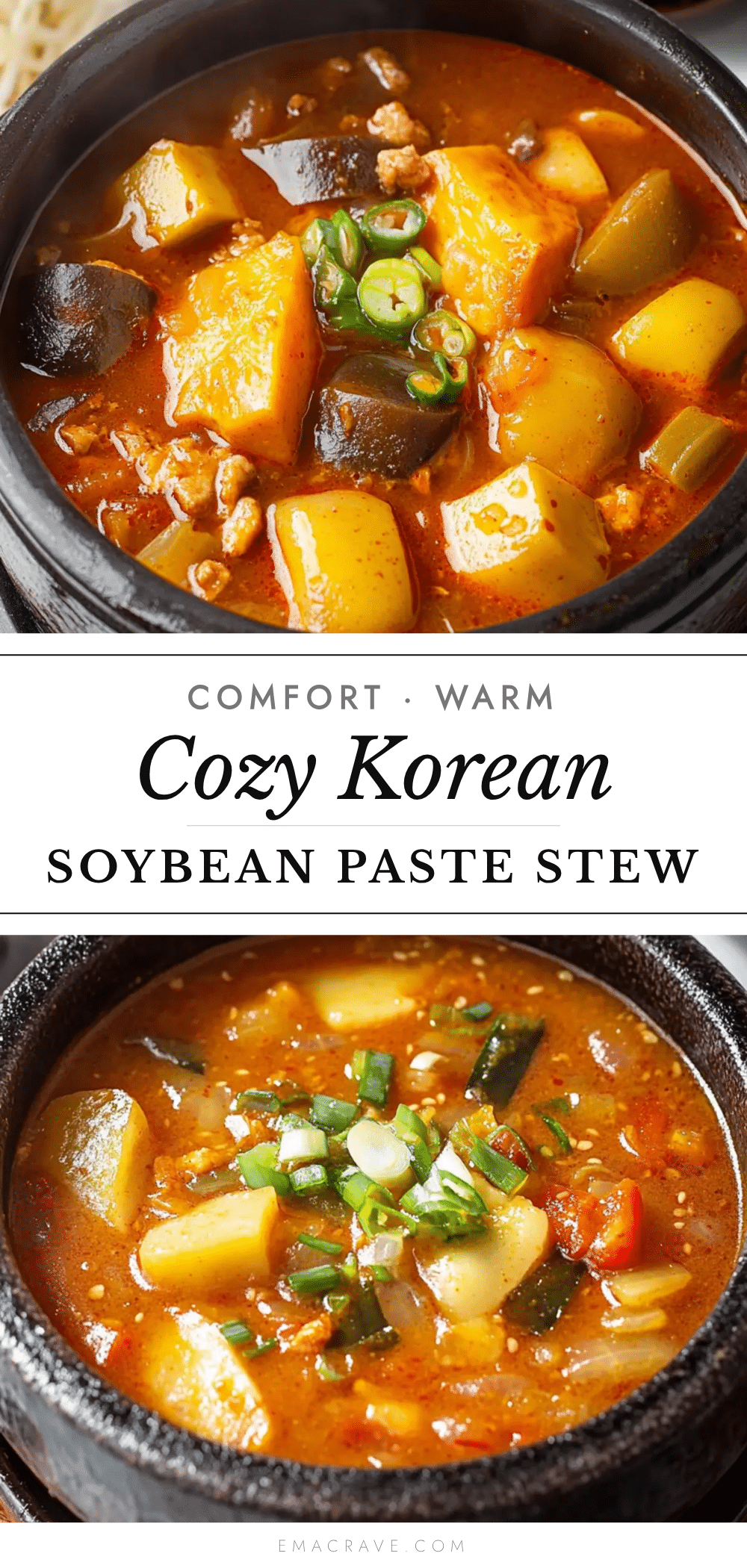
Best Easy Cozy Soybean Paste Stew Recipe for Comfort
This cozy soybean paste stew is a quick and easy weeknight meal that delivers rich, savory flavor with simple ingredients. Perfect for cold days, it’s a comforting and satisfying dish that comes together in about 30 minutes.
- Prep Time: 10 minutes
- Cook Time: 20 minutes
- Total Time: 30 minutes
- Yield: 4 servings 1x
- Category: Main Course
- Cuisine: Korean
Ingredients
- 3 tablespoons doenjang (Korean fermented soybean paste)
- 1 tablespoon gochugaru (Korean red chili flakes)
- 4 cloves garlic, minced
- 1 medium onion, sliced
- 1 medium zucchini, sliced into half-moons
- 1 medium potato, peeled and cubed
- 1 block (14 oz) firm or extra-firm tofu, cubed
- 4 stalks green onions, chopped
- 4 cups water or anchovy stock
- ½ cup sliced mushrooms or ½ cup cooked beef (optional)
- 1 teaspoon sesame oil (for sautéing)
- Sesame seeds (for garnish, optional)
Instructions
- Prepare the stock: If using water, bring 4 cups to a simmer in a large pot. If making anchovy stock, add 5 dried anchovies (heads and guts removed) to the water and simmer for 10 minutes, then strain them out.
- Dissolve the soybean paste: In a small bowl, combine 3 tablespoons of doenjang with about ½ cup of the hot stock. Whisk until fully dissolved and smooth.
- Sauté the aromatics: In the pot over medium heat, add 1 teaspoon of sesame oil. Add the sliced onion and minced garlic. Cook for 2-3 minutes until the onion softens and becomes translucent.
- Add the broth and vegetables: Pour the dissolved soybean paste mixture and the remaining stock into the pot. Add the cubed potato and bring to a boil. Reduce heat to medium-low and simmer for about 8 minutes, until the potato is just starting to become tender.
- Add the zucchini and tofu: Gently add the sliced zucchini and cubed tofu to the pot. Stir in 1 tablespoon of gochugaru. Simmer for another 5 minutes.
- Finish and serve: Turn off the heat. Stir in most of the chopped green onions, reserving a handful for garnish. Taste the broth and adjust seasoning if needed.
- Garnish and serve: Ladle the stew into bowls and top with reserved green onions and a sprinkle of sesame seeds if desired. Serve immediately with steamed rice.
Notes
Do not boil the paste for too long as it can become bitter. Cut vegetables uniformly for even cooking. Taste as you go and adjust seasoning. Let the stew rest for 5 minutes before serving to allow flavors to meld. Leftovers keep in the refrigerator for up to 3 days; reheat gently on the stovetop.
Nutrition
- Serving Size: 1 bowl (about 2 cups
- Calories: 200
- Sugar: 5
- Sodium: 800
- Fat: 7
- Saturated Fat: 1
- Carbohydrates: 20
- Fiber: 4.5
- Protein: 13
Keywords: soybean paste stew, doenjang jjigae, Korean stew, comfort food, easy dinner, healthy soup, vegetarian stew