Love this? Save it for later!
Share the inspiration with your friends
“Hey, are you making that rice soup again?” my coworker asked one afternoon during a particularly long virtual meeting. Honestly, I was half-listening, spoon halfway to my mouth, savoring the warmth from my bowl. This Cozy Japanese Rice Soup had become my secret weapon on those days when everything felt like a blur, and grabbing takeout wasn’t an option.
It wasn’t always this way. The first time I tried this recipe, I had zero expectations. I was juggling deadlines and craving something easy—a meal that didn’t need much fuss but felt like a warm hug in a bowl. I pulled together some leftover rice, a few pantry staples, and a bit of broth, hoping for something edible. What came out surprised me: a gentle, soothing soup with tender grains of rice swimming in a savory, umami-rich broth. Since then, I’ve made it more times than I can count, tweaking it here and there but always coming back to its simple, comforting roots.
Late-night kitchen quiet, the faint sound of rice simmering, and the aroma of ginger and soy—it’s become my go-to comfort food. This Japanese rice soup is that kind of recipe that quietly claims a spot in your routine because it’s easy, nourishing, and honestly, a little bit addictive. It’s not fancy, but it’s exactly what you want when you need calm on a hectic day.
It’s funny how such a humble bowl can carry so much comfort. And that’s why this Cozy Japanese Rice Soup recipe stuck with me—it’s quick to make, gentle on the soul, and perfect for those moments you just need to slow down.
Why You’ll Love This Cozy Japanese Rice Soup Recipe
After countless trials in my kitchen (and a few “learning moments” where I over-salted or overcooked the rice), this cozy Japanese rice soup recipe feels like a reliable friend. It’s tested and approved by my family, coworkers, and even that skeptical friend who usually prefers pizza. Here’s why this soup has earned its place on my menu:
- Quick & Easy: Ready in about 30 minutes, it fits perfectly into busy schedules or those evenings when you want something warm without a ton of prep.
- Simple Ingredients: You probably have most of these staples in your pantry—no special shopping trips needed.
- Perfect for Comfort: Whether you’re nursing a cold or just craving something soothing, this soup comforts with every spoonful.
- Crowd-Pleaser: Kids and adults alike find this soup gentle yet flavorful, making it great for family dinners or casual gatherings.
- Unbelievably Delicious: The balance of savory dashi broth, tender rice, and subtle ginger makes it a soul-soothing treat that feels special without being complicated.
What sets this version apart? It’s the little touches: using leftover short-grain rice for that perfect texture, a splash of soy sauce to deepen flavor, and a hint of fresh ginger for brightness. I’ve tried recipes that call for long simmering or complex steps, but this one nails comfort with minimal effort. Plus, it’s versatile—you can add mushrooms, tofu, or greens to keep it interesting.
Honestly, this isn’t just soup; it’s that quiet, calming meal you’ll want to turn to again and again—reminding you that simple ingredients can deliver serious satisfaction.
What Ingredients You Will Need
This Cozy Japanese Rice Soup uses approachable, wholesome ingredients that come together to create a rich yet gentle flavor profile. Most are pantry staples, so you can whip this up anytime without fuss. Here’s a breakdown:
- Cooked short-grain rice (about 2 cups / 400g) – leftover or freshly cooked; short-grain rice gives the soup a creamy, soft texture.
- Dashi stock (4 cups / 1 liter) – the heart of the soup; I recommend using kombu and bonito flakes for authentic flavor, but instant dashi granules work well too.
- Fresh ginger (1-inch piece, peeled and thinly sliced) – adds warmth and a subtle zing.
- Soy sauce (2 tablespoons) – for savory depth; low-sodium if preferred.
- Mirin (1 tablespoon) – sweet rice wine for a hint of sweetness and balance.
- Green onions (2 stalks, thinly sliced) – for freshness and garnish.
- Sesame oil (1 teaspoon) – optional, for a subtle nutty aroma.
- Shiitake mushrooms (4-5 dried or fresh, sliced) – optional, adds earthiness and texture.
- Soft tofu (half a block, cubed) – optional, for protein and creaminess.
For substitutions:
- Dashi stock: Vegetable broth works if you want a vegetarian version, though the flavor won’t be quite the same.
- Rice: Use jasmine or other medium-grain rice if short-grain isn’t available, but expect a slightly different texture.
- Mirin: A teaspoon of honey mixed with a splash of rice vinegar can substitute in a pinch.
Pro tip: I usually keep a batch of homemade dashi frozen in ice cube trays for quick access. It’s a game changer for speedy meals like this. Also, brands like Marukome or Hikari make reliable dashi granules that I trust when short on time.
Equipment Needed
- Medium-sized pot (3-4 quarts / liters): For simmering the soup; a non-reactive pot like stainless steel is ideal to keep flavors pure.
- Rice cooker or saucepan: To prepare or warm leftover rice.
- Fine mesh strainer: Useful if making dashi from kombu and bonito flakes to strain solids.
- Wooden spoon or ladle: For stirring and serving.
- Sharp knife and cutting board: For slicing ginger, mushrooms, and green onions.
If you don’t have a fine mesh strainer, a clean cheesecloth or even a coffee filter can work to strain homemade dashi. I’ve learned that a good knife makes prepping ginger much easier and less slippery—don’t skimp on this!
Budget-wise, if you don’t have a rice cooker, simply warming the rice in a covered saucepan with a splash of water works fine. The key is fluffy, not mushy rice.
Preparation Method
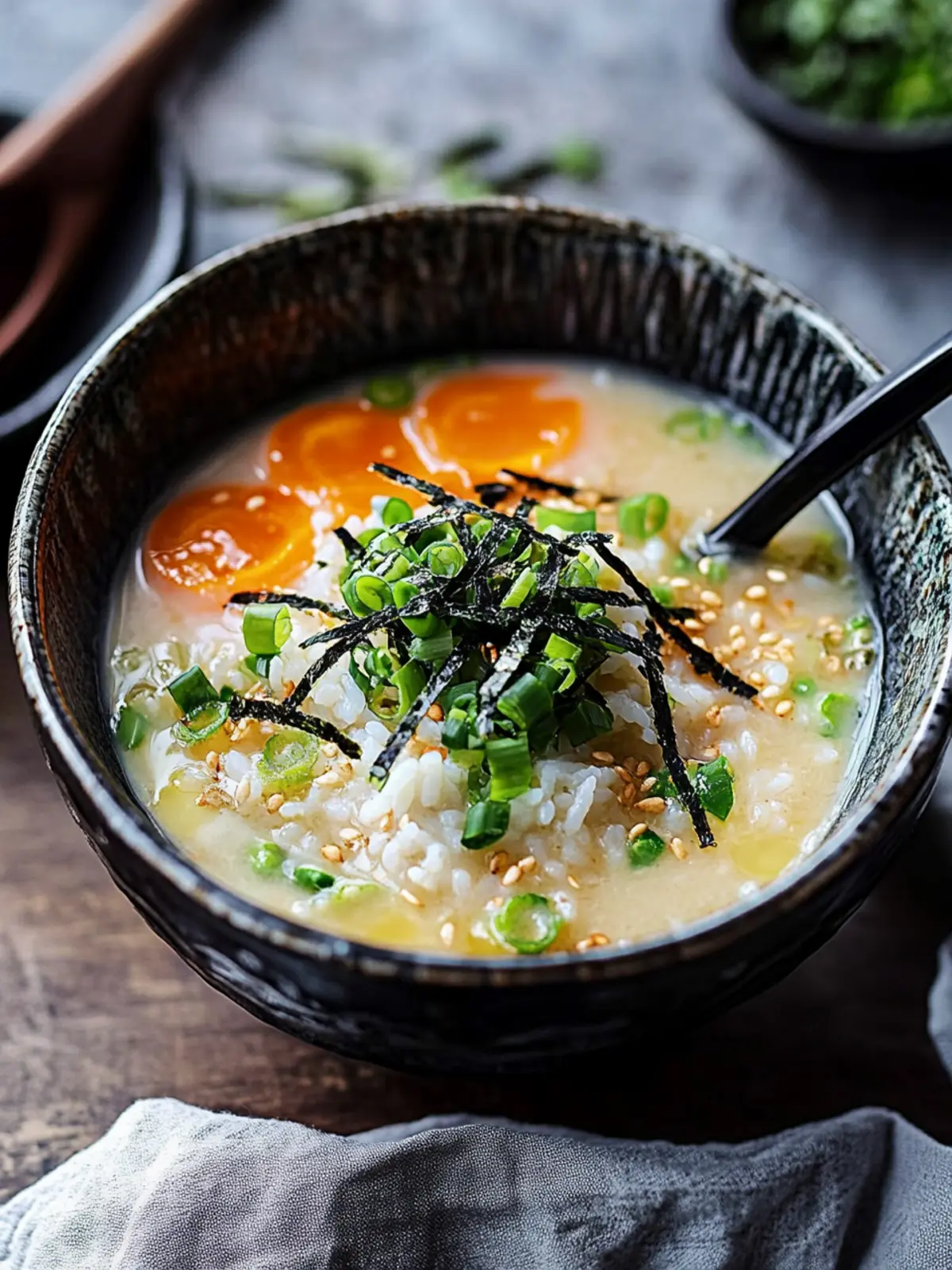
- Prepare the dashi stock: If you’re making homemade dashi, soak a 4-inch piece of kombu in 4 cups (1 liter) of cold water for 30 minutes. Then, slowly heat until just before boiling and remove the kombu. Add a handful of bonito flakes, simmer for 2 minutes, then strain. (If using granules, dissolve as per package instructions.) This step takes about 40 minutes including soaking but can be skipped with pre-made stock.
- Slice the ginger: Peel and cut a 1-inch piece into thin slices to release flavor quickly. Add these to the dashi and bring to a gentle simmer for 5 minutes to infuse.
- Add mushrooms (optional): If using dried shiitake, soak them in warm water for 20 minutes, then slice and add to the pot. Fresh mushrooms can go straight in. Simmer for 5 more minutes so they soften and flavor melds.
- Incorporate soy sauce and mirin: Stir in 2 tablespoons soy sauce and 1 tablespoon mirin, tasting the broth. Adjust seasoning with a pinch of salt if needed. This should smell savory, balanced, with a hint of sweetness.
- Add cooked rice: Gently fold in 2 cups (400g) cooked short-grain rice. Let it simmer for 3-5 minutes so the rice warms through and thickens the soup slightly. If the soup feels too thick, add a splash of water or more dashi.
- Optional tofu addition: If using tofu, carefully add cubed soft tofu now and warm through for 2 minutes. Avoid stirring too vigorously to keep tofu intact.
- Finish with sesame oil and green onions: Remove from heat, drizzle 1 teaspoon sesame oil, and sprinkle sliced green onions on top for freshness and aroma.
- Serve immediately: Ladle into bowls, letting the warmth and subtle aromas invite you to slow down and savor.
Common pitfalls? Overcooking the rice can make it too mushy, so keep an eye on texture. Also, don’t let the broth boil vigorously once the rice and tofu are added; a gentle simmer is key. The ginger slices should be thin enough to infuse flavor without overwhelming the soup.
It took me a few tries to find this balance between broth depth and rice texture, but now it feels second nature. This method brings out the best in simple ingredients and makes for a quick, comforting meal.
Cooking Tips & Techniques
One trick I’ve learned is to always prep your ingredients before heating the broth—once you start simmering, everything moves fast. Thinly slicing ginger lets its flavor meld quickly without bitterness. Also, if you don’t have homemade dashi, instant dashi granules are a lifesaver and still deliver that umami punch.
Don’t skip the mirin—it adds a subtle sweetness that keeps the broth from tasting flat. If you accidentally add too much soy sauce, a splash of mirin or a pinch of sugar can balance it.
When adding cooked rice, gently fold it in rather than stirring vigorously to keep the grains intact. This soup isn’t about mush but about tender, distinct rice pieces floating in broth. If you want a creamier texture, use freshly cooked rice rather than leftovers.
I’ve also found that warming the rice separately before adding helps prevent clumping. If your rice is cold and dry, sprinkle a bit of water and microwave it briefly to soften.
Timing-wise, you can multitask by soaking shiitake mushrooms or preparing dashi while slicing your ginger and green onions. This keeps the whole process under 30 minutes, even with some homemade touches.
Variations & Adaptations
This Cozy Japanese Rice Soup is a flexible base that welcomes a few personal twists depending on your taste or dietary needs.
- Vegetarian/Vegan: Use vegetable broth or kombu-only dashi, skip the bonito flakes, and add extra mushrooms or tofu for heartiness.
- Protein Boost: Stir in shredded cooked chicken or poached egg for a more filling meal.
- Spicy Kick: Add a dash of chili oil or sprinkle with shichimi togarashi for subtle heat.
- Seasonal Veggies: Toss in baby spinach, bok choy, or thinly sliced carrots during the last few minutes of simmering to add freshness and color.
- Low-Sodium: Opt for low-sodium soy sauce and homemade dashi without added salt; flavor with a touch of toasted sesame seeds instead.
I once tried swapping out the rice for cooked quinoa for a gluten-free twist—while it changed the texture, the soup still had that cozy vibe. Another time, adding a splash of coconut milk gave it a creamy, slightly tropical feel, which was surprisingly delightful.
Serving & Storage Suggestions
This soup is best enjoyed hot from the stove, ideally in a deep bowl that keeps it warm while you savor each spoonful. Garnishing with extra green onions or a sprinkle of toasted sesame seeds adds a nice touch. It pairs wonderfully with light sides like steamed edamame or a simple cucumber salad.
For a heartier meal, serve alongside dishes like ginger beef and onion stir fry or even a batch of fluffy pistachio cinnamon rolls if you want to keep the cozy vibes going for brunch.
Leftovers keep well in the refrigerator for up to 2 days, but expect the rice to soak up more broth and thicken the soup. When reheating, add a splash of water or broth and gently warm on the stove to loosen it back up.
You can also freeze the soup in airtight containers for up to a month; just thaw overnight in the fridge and reheat carefully to avoid breaking down the tofu or rice too much.
Flavors tend to deepen after resting, so if you make it ahead, the ginger and dashi meld even more beautifully overnight.
Nutritional Information & Benefits
This Cozy Japanese Rice Soup is a light but nourishing meal, providing approximately 250-300 calories per serving, depending on optional add-ins like tofu or mushrooms.
Key benefits include:
- Low in fat and calories, making it a gentle option when you want something easy on digestion.
- Rice offers a comforting source of carbohydrates for energy.
- Ginger is known for its anti-inflammatory and digestive properties, which can soothe upset stomachs.
- Dashi provides umami flavor without heavy fats or sodium overload, especially when homemade.
- Tofu and mushrooms add protein and fiber, supporting balanced nutrition.
This soup is naturally gluten-free (check soy sauce labels), dairy-free, and can be adapted for vegetarian or vegan diets easily.
Conclusion
If you’re searching for a meal that’s fast, comforting, and honestly just feels like a warm embrace, this Cozy Japanese Rice Soup fits the bill perfectly. It’s one of those recipes that you can tweak based on what’s in your fridge or what your mood calls for, yet it always delivers that satisfying, soul-soothing experience.
For me, it’s become more than just soup—it’s a quiet reset button on chaotic days. I hope it finds a spot in your routine too, whether as a quick lunch, a light dinner, or a healing bowl when you need it most.
Feel free to share your twists or questions below—there’s always room to make this cozy recipe your own. Just remember, sometimes the simplest meals are the ones that stick longest in our hearts.
FAQs About Cozy Japanese Rice Soup
How long does this soup take to make from start to finish?
About 30 minutes if you use pre-made dashi and leftover rice. Homemade dashi will add additional time but can be prepared ahead.
Can I use leftover rice for this recipe?
Absolutely! Leftover short-grain rice works best because it’s softer and helps thicken the soup gently.
What can I substitute for dashi if I don’t have it?
Vegetable broth is a good vegetarian alternative. You can also use instant dashi granules for convenience.
Is this soup suitable for vegetarians or vegans?
Yes, just omit bonito flakes from dashi or use kombu-based broth and skip any animal products like fish sauce.
Can I add other vegetables to this soup?
Definitely! Baby spinach, bok choy, or sliced carrots added during the last few minutes of simmering work great.
Pin This Recipe!
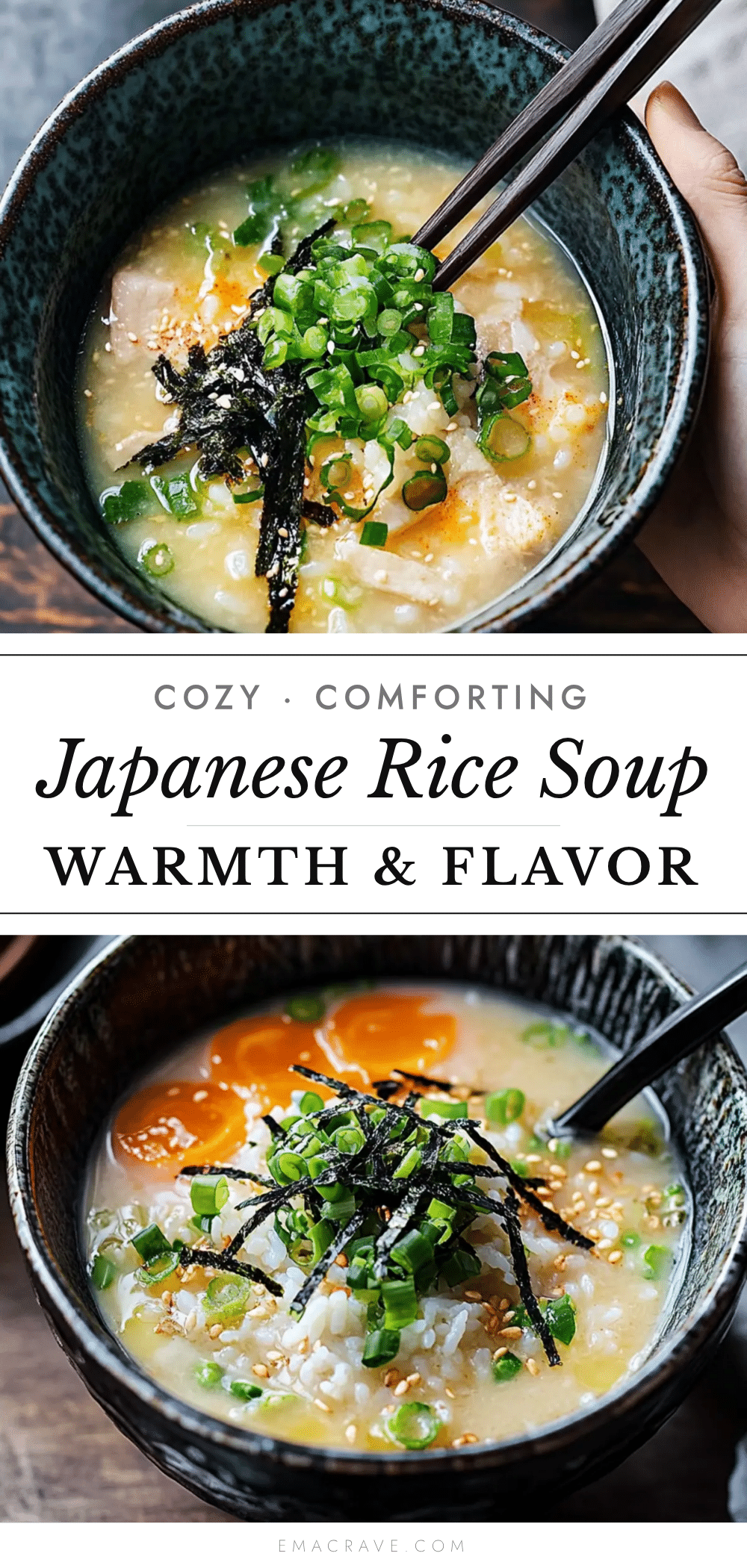
Cozy Japanese Rice Soup

A quick and comforting Japanese rice soup made with savory dashi broth, tender short-grain rice, and subtle ginger, perfect for busy days or when you need a warm, soothing meal.
- Prep Time: 10 minutes
- Cook Time: 20 minutes
- Total Time: 30 minutes
- Yield: 4 servings 1x
- Category: Main Course
- Cuisine: Japanese
Ingredients
- 2 cups cooked short-grain rice (leftover or freshly cooked)
- 4 cups dashi stock (kombu and bonito flakes recommended or instant dashi granules)
- 1-inch piece fresh ginger, peeled and thinly sliced
- 2 tablespoons soy sauce (low-sodium preferred)
- 1 tablespoon mirin
- 2 stalks green onions, thinly sliced
- 1 teaspoon sesame oil (optional)
- 4–5 shiitake mushrooms, dried or fresh, sliced (optional)
- Half a block soft tofu, cubed (optional)
Instructions
- Prepare the dashi stock: soak a 4-inch piece of kombu in 4 cups (1 liter) of cold water for 30 minutes. Slowly heat until just before boiling and remove the kombu. Add a handful of bonito flakes, simmer for 2 minutes, then strain. (If using granules, dissolve as per package instructions.)
- Peel and thinly slice a 1-inch piece of ginger. Add to the dashi and bring to a gentle simmer for 5 minutes to infuse flavor.
- If using dried shiitake mushrooms, soak them in warm water for 20 minutes, then slice and add to the pot. Fresh mushrooms can be added directly. Simmer for 5 more minutes.
- Stir in 2 tablespoons soy sauce and 1 tablespoon mirin. Taste and adjust seasoning with a pinch of salt if needed.
- Gently fold in 2 cups cooked short-grain rice. Let simmer for 3-5 minutes to warm through and slightly thicken the soup. Add water or more dashi if too thick.
- If using tofu, carefully add cubed soft tofu and warm through for 2 minutes without stirring vigorously.
- Remove from heat, drizzle 1 teaspoon sesame oil, and sprinkle sliced green onions on top.
- Serve immediately.
Notes
Use leftover short-grain rice for best texture. Avoid boiling vigorously after adding rice and tofu to prevent mushiness. Thinly slice ginger to avoid overpowering flavor. Instant dashi granules can be used for convenience. For vegetarian/vegan version, use kombu-only dashi or vegetable broth and omit bonito flakes. Warm rice separately if cold to prevent clumping. Add optional ingredients like mushrooms, tofu, or greens to vary the recipe.
Nutrition
- Serving Size: 1 bowl (approximatel
- Calories: 275
- Sugar: 3
- Sodium: 600
- Fat: 5
- Saturated Fat: 1
- Carbohydrates: 45
- Fiber: 2
- Protein: 8
Keywords: Japanese rice soup, dashi soup, comfort food, quick soup, easy Japanese recipe, ginger soup, tofu soup, shiitake mushroom soup