Love this? Save it for later!
Share the inspiration with your friends
“You’ve gotta try this radish soup,” my coworker said one chilly afternoon, sliding a steaming bowl across the breakroom table. Honestly, I was skeptical — Korean radish soup? How cozy could it be? But that first spoonful, with its subtle sweetness and gentle warmth, caught me completely off guard. It wasn’t fancy or flashy, just pure comfort in a bowl. That day, I realized that sometimes the simplest recipes become your kitchen’s quiet heroes.
I can’t tell you how many times since then I’ve come home after a long day and found myself chopping up Korean radish for this soup. It’s funny how a humble root vegetable can transform into something that feels like a hug from the inside out. The broth’s delicate balance, with hints of garlic and just a touch of umami from anchovies, always makes me pause and savor the moment. It’s not just about filling up; it’s about resetting — a small comfort ritual that never fails to settle the chaos of a busy day.
This cozy Korean radish soup stuck with me not because it’s flashy, but because it’s reliable — the kind of recipe that feels like home no matter where you are. So if you’re craving a homemade comfort that’s simple, soothing, and genuinely wholesome, you’re in the right place.
Why You’ll Love This Cozy Korean Radish Soup Recipe
After making this Korean radish soup more times than I can count, I’ve learned what makes it a go-to for comfort food lovers everywhere. It’s one of those dishes that’s both humble and satisfying — the kind that feels effortless but delivers on flavor. Here’s why this recipe stands out:
- Quick & Easy: You can have this comforting soup ready in about 30 minutes, perfect for those busy evenings when you want something warm without fuss.
- Simple Ingredients: No need for specialty stores — Korean radish, garlic, and pantry staples like dried anchovies and soy sauce create a rich broth with minimal effort.
- Perfect for Cozy Nights: Whether you’re winding down after work or nursing a cold, this soup hits the spot with its gentle warmth and light texture.
- Crowd-Pleaser: It’s a subtle crowd-pleaser — kids and adults tend to enjoy it, especially when served alongside rice or kimchi.
- Unbelievably Delicious: The radish becomes meltingly tender while keeping a slight bite, soaking up the savory broth that’s both bright and soothing.
- What Sets It Apart: This recipe balances the savory depth of dried anchovies with a clean, clear broth, avoiding heaviness. The step of blanching the radish first helps mellow its natural sharpness, creating a smooth, cozy flavor that feels like a hug.
This isn’t just any radish soup — it’s the kind that makes you close your eyes and breathe a little easier after the first spoonful. It’s a recipe I trust for those evenings when comfort is non-negotiable.
What Ingredients You Will Need
This Korean radish soup uses straightforward ingredients, most of which you can find in your pantry or local grocery. The combination creates a clean, flavorful broth and tender radish that’s soothing and light. Here’s what you’ll need:
- Korean radish (mu), peeled and cut into 1-inch chunks (the star of the soup, providing sweetness and texture)
- Dried anchovies (about 10, heads and guts removed) — these create a rich umami broth base, but you can substitute with vegetable broth for a milder soup
- Kombu (dried kelp) strip, about 4 inches (optional but adds depth)
- Garlic cloves, smashed (3-4 cloves for aromatic flavor)
- Green onions, sliced (2 stalks, to add freshness and garnish)
- Soy sauce (1 tablespoon, for seasoning)
- Salt, to taste
- Water (about 6 cups or 1.5 liters, for the broth)
- Optional: A pinch of black pepper or a few chili flakes for subtle heat
When choosing radish, look for firm, smooth-skinned Korean radish if you can find it, but daikon will work in a pinch. The dried anchovies are best fresh from an Asian market, but good-quality ones from the grocery will do; just be sure to remove heads to avoid bitterness. I usually keep kombu in my pantry for soups like this, but if you don’t have it, the soup’s still delicious without it.
Equipment Needed
- Medium to large pot: A 4-6 quart (4-6 liter) pot works well for simmering the broth and radish.
- Cutting board and sharp knife: For prepping the radish and green onions.
- Strainer or slotted spoon: To remove anchovies and kombu after simmering.
- Ladle: For serving the soup hot, straight into bowls.
If you don’t have a strainer, a slotted spoon works just fine to fish out the anchovies and kelp. I find a medium-sized pot gives the best control over simmering — you want gentle heat to coax flavor, not a boil that mashes the radish too fast. For a budget-friendly option, any sturdy saucepan will do. Just avoid nonstick pans here to prevent scratching from metal utensils.
Preparation Method
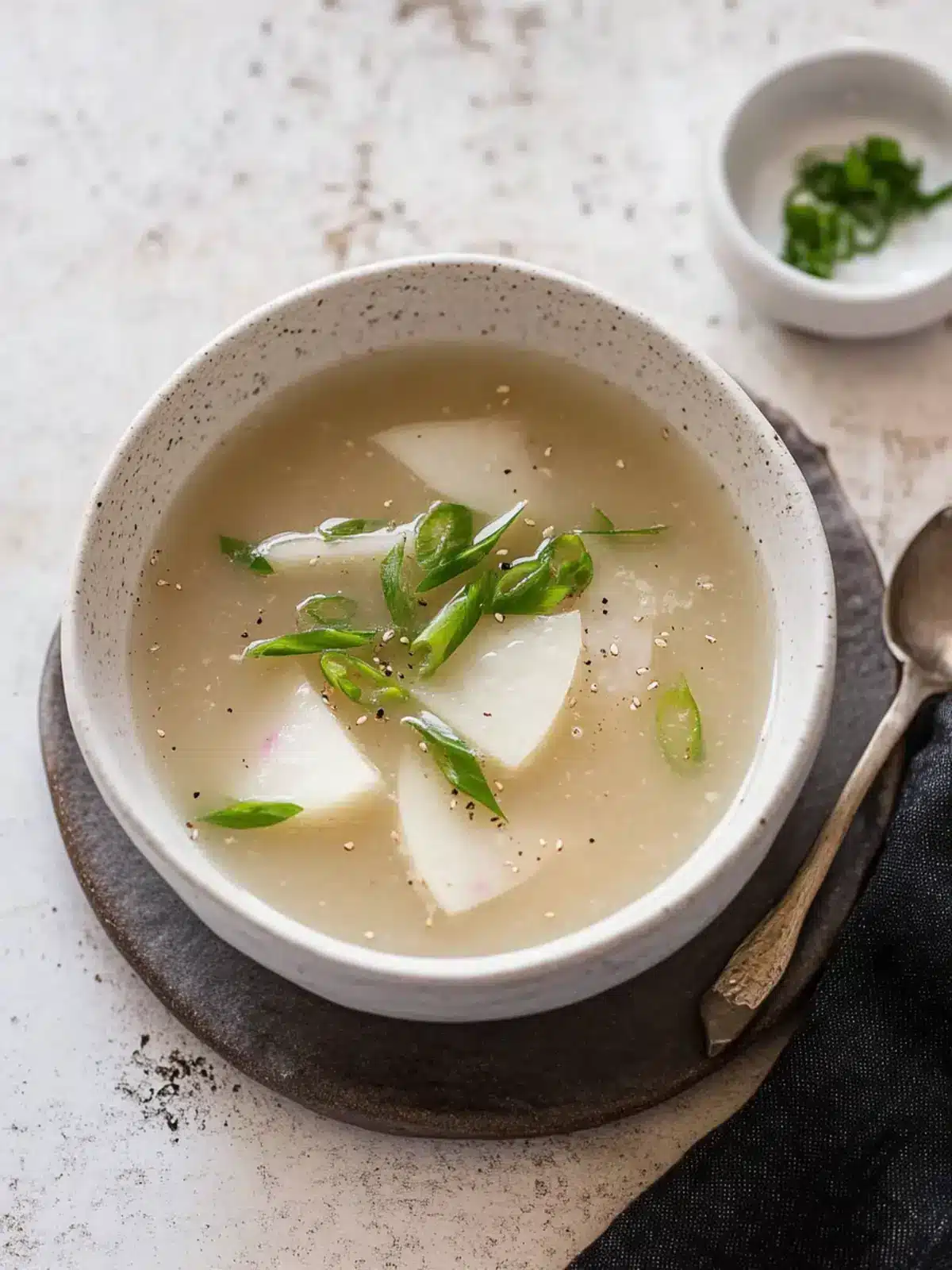
- Prep the radish: Peel your Korean radish and cut it into 1-inch thick chunks or half-moons, depending on size. The pieces should be bite-friendly but still hold shape when simmered.
- Make the broth base: In your pot, combine 6 cups (1.5 liters) of water with the dried anchovies (about 10, heads and guts removed) and the kombu strip. Bring to a gentle boil over medium heat. Once boiling, reduce to a simmer and cook for 10 minutes. This step extracts the anchovies’ savory essence without bitterness.
- Remove solids: After 10 minutes, remove and discard the anchovies and kombu using a slotted spoon or strainer. This leaves a clear broth that’s packed with umami.
- Add radish and garlic: Add the cut radish chunks and 3-4 smashed garlic cloves to the broth. Increase heat slightly to bring back to a boil, then reduce to low and simmer gently for 20-25 minutes. The radish should turn translucent and tender but not mushy — test by piercing with a fork.
- Season the soup: Stir in 1 tablespoon soy sauce and salt to taste. Add sliced green onions (reserve some for garnish) and simmer for another 2 minutes. Taste and adjust seasoning if needed — it should be balanced, lightly savory with a hint of sweetness from the radish.
- Serve: Ladle the soup hot into bowls and garnish with remaining green onions. Optionally, add a pinch of black pepper or chili flakes for a subtle kick.
One thing I learned the hard way: don’t rush the simmering. The gentle cooking brings out a mellow sweetness that’s totally worth the wait. If your radish feels too sharp or bitter at first, a quick blanch in boiling water before adding to the broth can help soften that edge.
Cooking Tips & Techniques
For this cozy Korean radish soup, a few tips can make all the difference between a decent bowl and a memorable one. First, always remove heads and guts from dried anchovies — they can turn the broth bitter fast. I once forgot, and the soup had a weird aftertaste that no amount of seasoning could fix.
Simmering gently instead of boiling vigorously helps keep the broth clear and the radish tender but intact. Stir occasionally but avoid over-handling the radish chunks to prevent them from falling apart.
When seasoning, add soy sauce gradually. It’s easy to add salt but hard to fix an overly salty broth. Taste often — the goal is a subtle umami and a natural sweetness, not overwhelming saltiness.
Multitasking tip: While your broth simmers, prep simple side dishes like steamed rice or quick kimchi for an authentic meal pairing. If you like, check out this savory crispy onion soup bread — its crunch complements soups nicely and adds a nice texture contrast.
Variations & Adaptations
This soup is wonderfully versatile. Here are a few ways you can adapt it:
- Vegetarian version: Skip anchovies and kombu. Use vegetable broth and add a splash of soy sauce or mushroom powder for umami.
- Spicy kick: Add sliced fresh chili or a teaspoon of Korean chili flakes (gochugaru) at the end for warmth.
- Protein boost: Toss in some soft tofu cubes or shredded cooked chicken during the last 5 minutes of simmering.
- Seasonal twist: In spring, add thinly sliced green radish or young zucchini for a fresh note.
- Personal favorite: I sometimes finish the soup with a drizzle of toasted sesame oil for a nutty aroma that makes it feel extra special.
It’s a forgiving recipe, so feel free to tailor it to what you have on hand or your flavor preferences. If you’re interested in another comforting Korean dish, you might enjoy the crispy vegetable pancakes that pair perfectly alongside this soup for a full meal.
Serving & Storage Suggestions
This radish soup is best served hot, fresh from the stove. I like to ladle it over steamed white rice or serve alongside a bowl of fluffy jasmine rice to soak up the broth. For a little extra crunch, kimchi or pickled vegetables make excellent companions.
Leftovers keep well in the fridge for 2-3 days in an airtight container. The flavors meld even more overnight, but the radish may soften further. Reheat gently on the stovetop to avoid breaking down the radish too much.
If you want to freeze it, omit the green onions and add fresh ones when reheating. Freeze in portions for up to 2 months. Thaw overnight in the fridge and warm slowly to preserve texture.
The subtle flavors develop beautifully over time, almost like a broth that has slowly been nurtured. Serving with a splash of fresh green onion or a sprinkle of toasted sesame seeds right before eating brings it back to life.
Nutritional Information & Benefits
This Korean radish soup is light but nourishing. One serving (about 1.5 cups/360 ml) contains approximately:
| Calories | 70 |
|---|---|
| Protein | 4 grams |
| Carbohydrates | 12 grams |
| Fat | 0.5 grams |
| Fiber | 2 grams |
Korean radish is rich in vitamin C and digestive enzymes, making it gentle on the stomach and helpful for digestion. The broth provides minerals and a mild dose of protein from the anchovies. This soup is naturally gluten-free and low-calorie, perfect for anyone seeking a light, wholesome meal.
As a health-conscious but realistic eater, I appreciate how this soup balances comfort with clean ingredients. It’s a great way to enjoy a warm dish without heaviness or complex prep.
Conclusion
This cozy Korean radish soup has become one of those quiet staples in my kitchen — simple, soothing, and utterly dependable. It’s easy enough to whip up on a hectic night but satisfying enough to make you feel like you’ve indulged in something special. Whether you’re new to Korean flavors or a seasoned fan, this recipe offers a gentle introduction to the comforting side of Korean cooking.
Feel free to tweak it with your favorite add-ins or seasoning levels — that’s part of the joy. For a fuller meal, pairing it with dishes like creamy cabbage carbonara or a crisp side like crispy air fryer broccoli can really round things out.
Cooking this soup has been a small comfort ritual for me, and I hope it becomes one for you too — a little bowl of calm in the daily rush.
FAQs About Cozy Korean Radish Soup
Can I use regular daikon radish instead of Korean radish?
Yes! Daikon radish works well as a substitute. It’s milder but will still give you that tender texture and subtle sweetness.
Is it necessary to use dried anchovies and kombu?
Not strictly. They add depth and umami, but you can use vegetable broth or skip them for a vegetarian version. The soup will be lighter but still tasty.
How long can I store leftover soup?
Store in an airtight container in the fridge for up to 3 days. Reheat gently on the stove to keep the radish tender but intact.
Can I add other vegetables to the soup?
Absolutely! Thinly sliced zucchini, mushrooms, or green onions can be added during the simmering stage for extra flavor and nutrients.
What should I serve with Korean radish soup?
This soup pairs wonderfully with steamed rice and side dishes like kimchi or crispy onion soup bread. For a heartier meal, consider adding a protein like tofu or chicken.
Pin This Recipe!
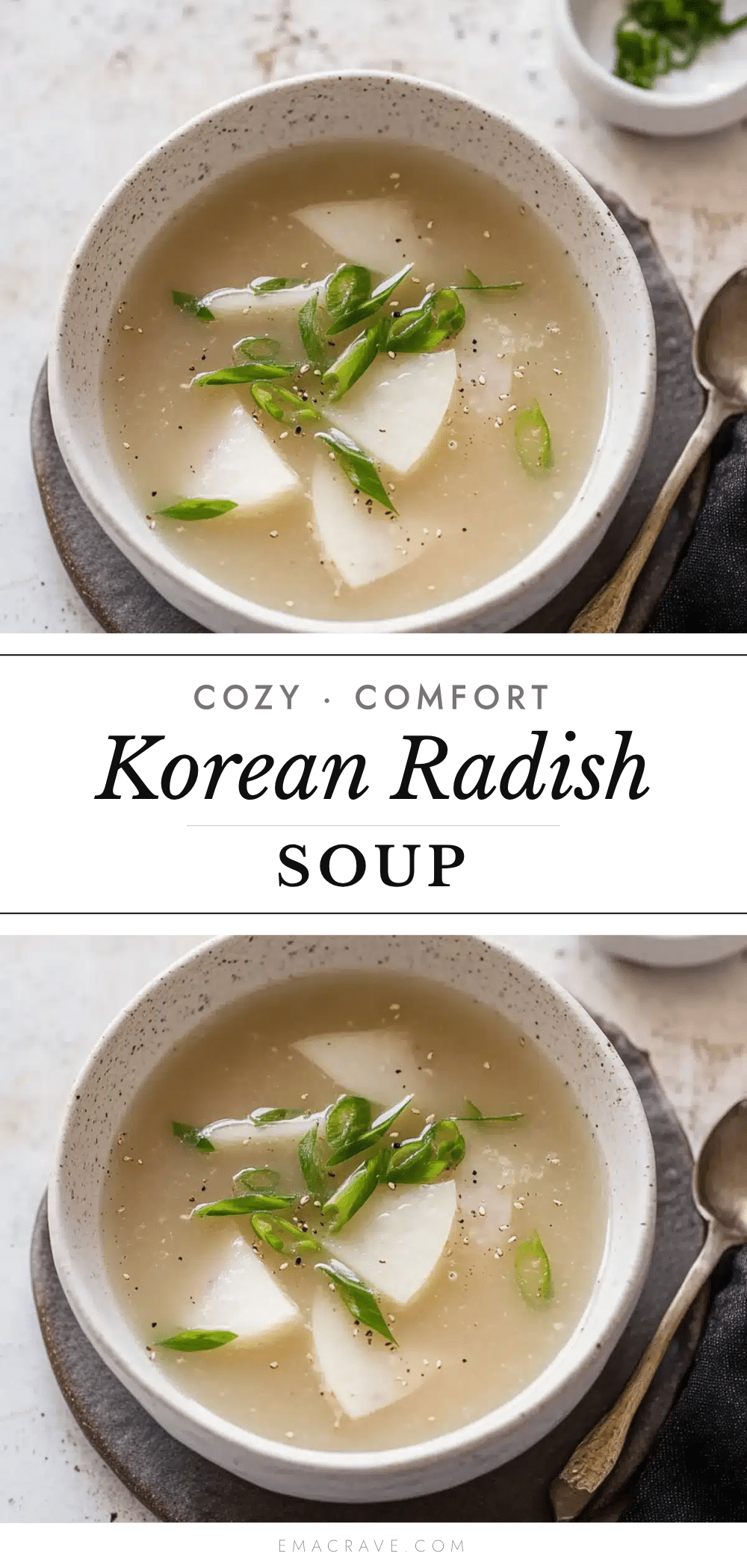
Cozy Korean Radish Soup

A simple, soothing Korean radish soup with a clear umami broth, tender radish, and subtle warmth, perfect for cozy nights and comfort food lovers.
- Prep Time: 10 minutes
- Cook Time: 25 minutes
- Total Time: 35 minutes
- Yield: 4 servings
- Category: Soup
- Cuisine: Korean
Ingredients
- Korean radish (mu), peeled and cut into 1-inch chunks
- Dried anchovies (about 10, heads and guts removed)
- Kombu (dried kelp) strip, about 4 inches (optional)
- Garlic cloves, smashed (3-4 cloves)
- Green onions, sliced (2 stalks, plus extra for garnish)
- Soy sauce (1 tablespoon)
- Salt, to taste
- Water (about 6 cups or 1.5 liters)
- Optional: pinch of black pepper or a few chili flakes
Instructions
- Peel the Korean radish and cut into 1-inch thick chunks or half-moons.
- In a medium to large pot, combine 6 cups (1.5 liters) of water with dried anchovies and kombu strip. Bring to a gentle boil over medium heat.
- Reduce heat to a simmer and cook for 10 minutes to extract flavor.
- Remove and discard anchovies and kombu using a slotted spoon or strainer.
- Add radish chunks and smashed garlic cloves to the broth. Bring back to a boil, then reduce heat to low and simmer gently for 20-25 minutes until radish is translucent and tender.
- Stir in soy sauce and salt to taste. Add sliced green onions (reserve some for garnish) and simmer for another 2 minutes.
- Ladle soup into bowls and garnish with remaining green onions. Optionally add black pepper or chili flakes.
Notes
Remove heads and guts from dried anchovies to avoid bitterness. Simmer gently to keep broth clear and radish tender. Taste and adjust soy sauce gradually to avoid oversalting. Optional blanching of radish can mellow sharpness. Vegetarian version possible by omitting anchovies and kombu and using vegetable broth.
Nutrition
- Serving Size: About 1.5 cups (360
- Calories: 70
- Fat: 0.5
- Carbohydrates: 12
- Fiber: 2
- Protein: 4
Keywords: Korean radish soup, mu guk, comfort food, easy soup recipe, Korean soup, radish soup, umami broth, cozy soup