Love this? Save it for later!
Share the inspiration with your friends
The wok screamed. That high-pitched sizzle when cold beef hits screaming hot oil—honestly, it’s one of my favorite sounds in the kitchen. It was a Tuesday, around 7:15 PM, and I was staring into my fridge wondering how three random ingredients could possibly become dinner. Leftover flank steak from Sunday, half a package of udon noodles I’d impulse-bought, and a bunch of scallions that were starting to look a little sad. I’d had a long day, the kind where you just want something chewy, peppery, and deeply savory in under twenty minutes. I grabbed the black pepper grinder—my not-so-secret weapon—and just started cooking. No plan. No recipe. Just a craving and a hot pan.
That first bite stopped me mid-chew. The beef was tender, the noodles were slick and bouncy, and that sharp, floral kick of black pepper cut through everything like a perfect exclamation point. I actually said “oh” out loud to an empty kitchen. I’ve made this Quick Savory Black Pepper Beef Udon Noodles at least a dozen times since that night, tweaking the sauce ratio, testing different cuts of beef, and figuring out the exact moment to toss the noodles in. It’s become my go-to for those nights when I need something that feels like a real meal but takes less time than ordering takeout. This isn’t a fussy recipe. It’s the one you turn to when you’re tired, hungry, and just want something that actually delivers.
Why You’ll Love This Recipe
Let me tell you why this one sticks. I’ve tested this recipe through a lot of weeknight chaos, and it’s earned a permanent spot in my rotation. Here’s what makes it special:
- Blazing Fast: From fridge to bowl in under 20 minutes. No marinating required. The sauce comes together while the pan heats up.
- Pantry-Friendly Ingredients: Soy sauce, black pepper, garlic, and butter—you probably have most of this right now. No trips to a specialty store.
- Perfect for Solo Dinners or Crowds: Scales up effortlessly. I’ve made it for just myself on a quiet Tuesday and doubled it for friends who showed up hungry.
- Chef-Tested Simplicity: I’ve worked in professional kitchens where black pepper beef was a staple. This version skips the complicated velvetting techniques but keeps all the flavor.
- That Texture Combo: The thick, chewy udon noodles catch every bit of that glossy, peppery sauce. It’s satisfying in a way that thin noodles just can’t match.
What really sets this apart is the butter. Most black pepper beef recipes use oil alone, but a pat of butter at the end creates this silky, rich sauce that clings to every noodle. It’s a small tweak that makes a massive difference. And honestly? This is the kind of meal that makes you close your eyes after the first forkful. It’s weeknight comfort food that doesn’t feel like a compromise.
What Ingredients You Will Need
This recipe keeps things simple, but every ingredient pulls its weight. Here’s what you’ll need to grab:
- Beef flank steak or sirloin (8 oz / 225 g) – sliced thin against the grain. Flank steak is my go-to for its beefy flavor, but sirloin works beautifully too. Look for even slices about ¼-inch thick so they cook in seconds, not minutes.
- Udon noodles (2 packs, about 14 oz / 400 g total) – the refrigerated or frozen kind, not the instant cup noodles. They’re thick, chewy, and soak up sauce like little sponges. I prefer the vacuum-packed ones from the refrigerated section.
- Unsalted butter (2 tablespoons / 28 g) – divided. This is the secret to that glossy, restaurant-style sauce. It adds richness without making things greasy.
- Soy sauce (3 tablespoons / 45 ml) – use regular or low-sodium. This provides the salty backbone. If you’re gluten-free, tamari works perfectly.
- Dark soy sauce (1 tablespoon / 15 ml) – optional but recommended. It adds color and a hint of sweetness. You can skip it and add an extra tablespoon of regular soy sauce if needed.
- Freshly cracked black pepper (1½ teaspoons / 3 g) – this is non-negotiable. Pre-ground pepper won’t give you the same punch. Crack it fresh right before cooking for that floral, spicy kick.
- Garlic (4 cloves, minced) – fresh only. The jarred stuff turns bitter when cooked at high heat.
- Brown sugar (1 teaspoon / 4 g) – just enough to balance the pepper and soy. It rounds out the savory edge beautifully.
- Scallions (4, sliced) – separate the white parts from the green. The whites go in with the garlic, the greens are for garnish.
- Sesame oil (1 teaspoon / 5 ml) – for drizzling at the end. It adds that nutty, toasty finish that makes the dish smell incredible.
- Optional garnish: toasted sesame seeds and extra cracked pepper.
I personally recommend using Kikkoman soy sauce and House Foods udon noodles—they consistently deliver the best texture and flavor. For the beef, ask your butcher to slice it for stir-fry if you’re short on time. It saves a step and guarantees even cooking.
Equipment Needed
- Large wok or heavy-bottomed skillet (12-inch / 30 cm) – a carbon steel wok is ideal for high-heat cooking, but a cast iron or stainless steel skillet works great. Avoid nonstick if possible—you want that high heat without worrying about the coating.
- Sharp chef’s knife – for slicing beef paper-thin. A dull knife makes thin slices almost impossible.
- Cutting board – preferably a large wooden or plastic board.
- Mixing bowl (small) – for the sauce.
- Tongs or a wooden spatula – for tossing noodles without breaking them.
- Measuring spoons – precision matters here, especially with the pepper.
- Pot (medium) – for boiling the noodles if they’re not pre-cooked.
If you don’t own a wok, don’t sweat it. I’ve made this in a regular stainless steel skillet more times than I can count. Just make sure it’s preheated properly. A budget-friendly Lodge cast iron skillet is a fantastic alternative and costs under $30.
Preparation Method
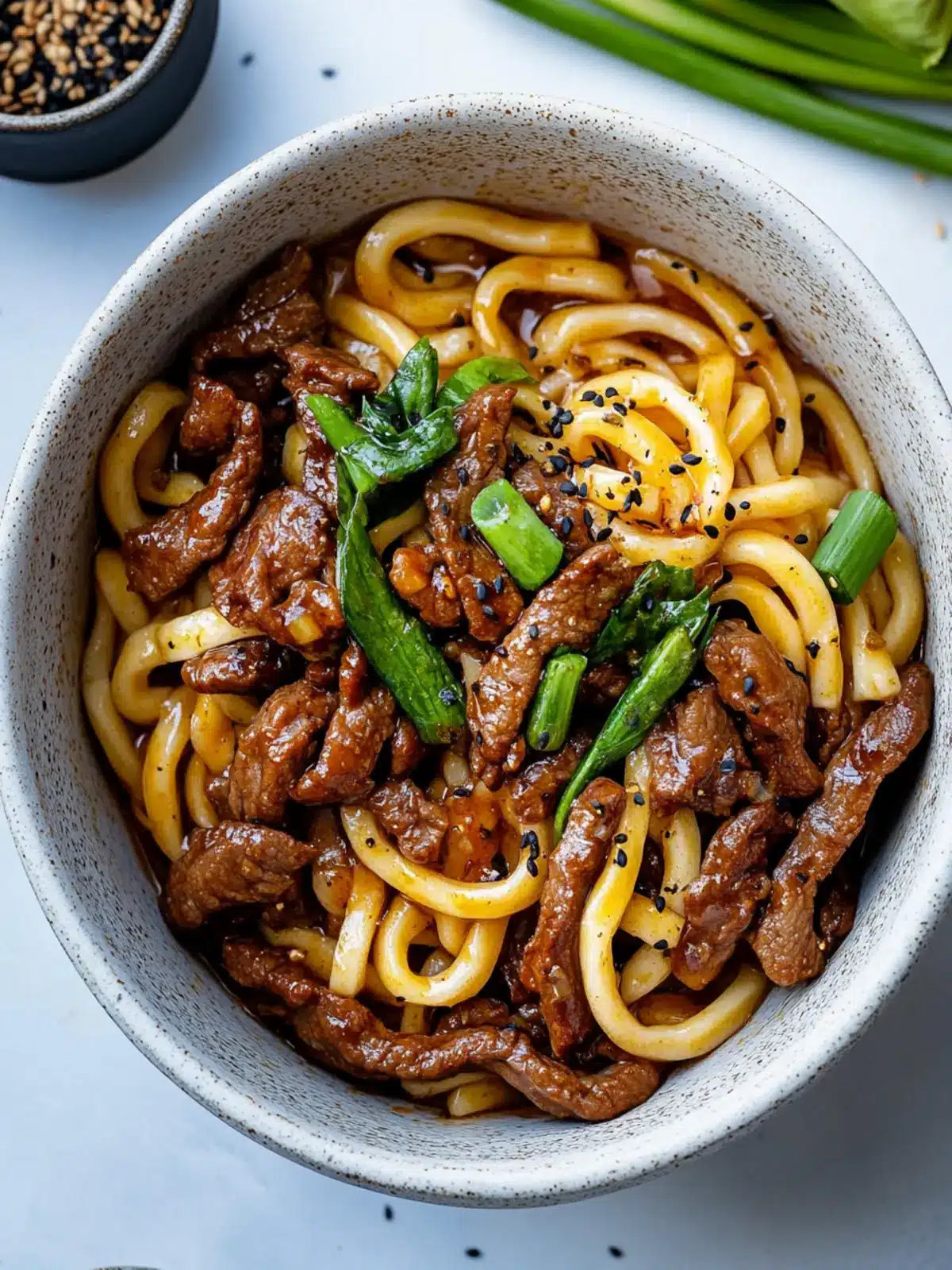
Let’s get cooking. This moves fast, so have everything prepped and measured before you turn on the heat.
- Prep the beef: Place your flank steak in the freezer for 15 minutes before slicing—this firms it up and makes thin slicing so much easier. Slice across the grain into ¼-inch thick strips. Season lightly with a pinch of salt and a few cracks of pepper. Set aside.
- Make the sauce: In a small bowl, whisk together 3 tablespoons soy sauce, 1 tablespoon dark soy sauce (if using), 1 teaspoon brown sugar, and ½ teaspoon of the freshly cracked black pepper. Stir until the sugar dissolves. Set this near your stove.
- Cook the noodles: Bring a pot of water to a boil. Cook the udon noodles according to package directions—usually 2-3 minutes for refrigerated noodles. Drain well and rinse briefly under cold water to stop the cooking. Toss with a drizzle of sesame oil to prevent sticking. Set aside.
- Heat the wok: Place your wok or skillet over high heat. Add 1 tablespoon of the butter. Wait until it’s melted and just starting to brown—about 30 seconds.
- Sear the beef: Add the sliced beef in a single layer. Don’t touch it for 45 seconds. You want a nice sear, not steamed meat. Flip and cook another 30 seconds. The beef should be browned on the outside but still pink in the center. Transfer to a plate. Don’t wipe the pan clean—those browned bits are flavor gold.
- Aromatics: Reduce heat to medium-high. Add the remaining 1 tablespoon butter. Toss in the minced garlic and the white parts of the scallions. Stir for 20 seconds until fragrant. Don’t let the garlic burn—it turns bitter fast.
- Add the noodles: Tip the cooked udon noodles into the wok. Toss them with the garlic butter for about 1 minute. You want them to start picking up those browned bits from the beef.
- Pour the sauce: Give your sauce a quick stir (the sugar settles at the bottom), then pour it over the noodles. Toss everything together for 30 seconds. The sauce should coat the noodles evenly and start reducing slightly.
- Return the beef: Add the seared beef back into the wok, along with any juices that collected on the plate. Toss for another 30 seconds just to warm the beef through. Don’t overcook it—you want it tender.
- Final crack: Sprinkle the remaining 1 teaspoon of freshly cracked black pepper over everything. Toss once more. Taste and adjust—more pepper if you like it punchy, a splash more soy if you want it saltier.
- Finish and serve: Drizzle with sesame oil, toss in the green scallion slices, and give it one last toss. Serve immediately in warm bowls. Garnish with sesame seeds and a few extra cracks of pepper if you’re feeling fancy.
Sensory cue: At step 8, the sauce should look glossy and thick, not watery. If it seems thin, let it bubble for another 30 seconds. The noodles should be slick and shiny, with the sauce clinging to every strand.
Cooking Tips & Techniques
I’ve made this recipe enough times to know where things can go sideways. Here are the lessons I learned the hard way so you don’t have to.
High heat is your friend. Don’t be scared of it. A screaming hot wok gives you that smoky, charred flavor that makes stir-fry taste like it came from a restaurant. If your pan isn’t hot enough, the beef will steam instead of sear, and you’ll lose that texture. Test the heat by flicking a drop of water into the pan—it should sizzle and evaporate instantly.
Don’t overcrowd the pan. If you’re doubling the recipe, cook the beef in two batches. Crowding drops the pan temperature and turns your sear into a sad, gray steam bath. I learned this the first time I tried to cook a pound of beef at once. It was edible, but it wasn’t great.
Fresh pepper matters more than you think. I once ran out of whole peppercorns and used pre-ground black pepper. The difference was shocking. Fresh-cracked pepper has a floral, almost citrusy note that pre-ground stuff just doesn’t have. It’s not the same dish without it. Invest in a decent pepper grinder—it’s worth it.
Timing is everything. Have your noodles drained, your sauce mixed, and your beef sliced before you turn on the heat. This dish comes together in about 4 minutes of active cooking. If you’re scrambling to find ingredients mid-cook, you’ll miss the window for that perfect sear.
The butter trick. Adding butter in two stages—first for the beef, then for the aromatics—gives you a richer, more layered flavor. If you add it all at once, it burns before you’re done cooking. Trust me, I’ve had to start over because of burnt butter. It’s not fun.
Variations & Adaptations
This recipe is a great base for experimentation. Here are some ways I’ve tweaked it depending on what I have on hand or who I’m cooking for.
- Spicy Kick: Add 1 teaspoon of gochugaru (Korean chili flakes) or a drizzle of chili oil along with the garlic. The heat pairs beautifully with the black pepper. I’ve also used sriracha in a pinch—add it with the sauce.
- Vegetarian Version: Swap the beef for 8 oz of king oyster mushrooms, sliced into thick strips. Sear them the same way you would the beef. They get beautifully browned and chewy. Use vegetable broth instead of beef stock if you’re adding any liquid.
- Gluten-Free Adaptation: Use gluten-free udon noodles (made from rice or a blend) and swap the soy sauce for tamari or coconut aminos. The texture will be slightly different, but the flavor is still fantastic.
- Veggie-Loaded: Toss in a handful of snap peas, bell pepper strips, or shredded carrots after the aromatics. Cook for 1 minute before adding the noodles. It adds color, crunch, and a little extra nutrition.
- Protein Swap: Chicken thighs or pork loin work beautifully. Slice them thin and cook exactly like the beef. Shrimp is also great—just cook for 1-2 minutes per side until pink and curled.
- Peanut Butter Twist: For a richer, nuttier sauce, stir in 1 tablespoon of creamy peanut butter with the sauce ingredients. It’s not traditional, but it’s delicious. I tried this on a whim one night and it’s become a guilty pleasure version.
Serving & Storage Suggestions
This dish is best served immediately, while the noodles are still bouncy and the sauce is glossy. But here’s how to handle leftovers if you have them.
Serving: Divide the noodles into warm bowls. The heat from the bowl helps keep everything from congealing. Top with extra sliced scallions, a sprinkle of toasted sesame seeds, and an extra crack of black pepper. Pair it with a simple side of steamed bok choy or a quick cucumber salad dressed with rice vinegar and sesame oil. For drinks, a cold lager or a crisp sake cuts through the richness beautifully. If you’re feeling indulgent, serve it alongside some crispy pretzel crusted chicken with cheddar sauce for a truly satisfying meal.
Storage: Let any leftovers cool completely before transferring to an airtight container. Store in the refrigerator for up to 3 days. The noodles will absorb some of the sauce overnight, so they’ll be slightly softer the next day—still delicious, just different.
Reheating: The best way to reheat is in a hot wok or skillet with a splash of water or soy sauce. Toss over medium-high heat for 2-3 minutes until warmed through. The microwave works in a pinch, but it makes the noodles mushy. If you must use it, cover the bowl with a damp paper towel and heat in 30-second bursts.
Flavor development: Honestly, this dish tastes even better the next day. The pepper mellows slightly, and the flavors meld together into something deeper. I’ve been known to make a double batch just for leftover lunches.
Nutritional Information & Benefits
Here’s an approximate nutritional breakdown per serving (based on 2 servings):
| Nutrient | Amount |
|---|---|
| Calories | 485 kcal |
| Protein | 32 g |
| Fat | 18 g |
| Carbohydrates | 52 g |
| Fiber | 3 g |
| Sugar | 4 g |
| Sodium | 980 mg |
This dish offers a solid balance of protein from the beef, carbohydrates for energy from the udon noodles, and healthy fats from the butter and sesame oil. Black pepper isn’t just for flavor—it contains piperine, a compound that may improve nutrient absorption and has anti-inflammatory properties. Beef is rich in iron, zinc, and B vitamins, which support energy metabolism and immune function. If you’re watching your sodium, use low-sodium soy sauce and reduce the added salt. For a lower-carb option, swap the udon for zucchini noodles or shirataki noodles—just be prepared for a different texture experience.
Conclusion
This Quick Savory Black Pepper Beef Udon Noodles has become my emergency dinner, my comfort meal, and my “I want to impress someone without trying too hard” dish all rolled into one. It’s proof that you don’t need a dozen ingredients or hours of marinating to create something that tastes like it came from a busy noodle shop. The key is trusting the heat, using fresh pepper, and not overthinking it. I’ve made this for friends who asked for the recipe before they finished eating, and I’ve made it for myself on nights when I needed something warm and satisfying after a long day. It delivers every single time.
I’d love to hear how this turns out for you. Did you add your own twist? Swap in a different protein? Let me know in the comments below—I read every single one, and I’m always looking for new variations to try. If you loved this, you might also enjoy this quick honey garlic shrimp for another fast, high-protein dinner option. Share this recipe with someone who needs a good weeknight win, and don’t forget to tag me when you make it. Happy cooking, friends.
Frequently Asked Questions
Can I use frozen udon noodles for this recipe?
Absolutely. Frozen udon noodles work great—just cook them directly from frozen according to the package directions. They tend to have a slightly chewier texture, which I actually prefer. Just make sure to drain and rinse them well to remove excess starch.
What’s the best cut of beef for stir-fry?
Flank steak is my top choice for its beefy flavor and tenderness when sliced thin. Sirloin, ribeye, or even skirt steak work well too. The key is slicing against the grain into thin strips—this breaks up the muscle fibers and keeps the meat tender even with quick cooking.
Can I make this dish ahead of time?
You can prep all the ingredients ahead—slice the beef, mix the sauce, and chop the scallions—but I recommend cooking it fresh. The noodles absorb sauce quickly and can become mushy if stored for too long. If you must make it ahead, undercook the noodles slightly and store the sauce separately.
Is this recipe spicy?
The black pepper gives it a warm, peppery kick, but it’s not spicy in the chili sense. It’s more of a gentle, aromatic heat that builds as you eat. If you want actual heat, add chili flakes or fresh sliced chili along with the garlic.
Can I use a different type of noodle?
Yes, but the texture will change. Thick wheat noodles like lo mein or even spaghetti work in a pinch. Rice noodles are also an option, but they’re more delicate and can break apart with vigorous tossing. Stick with udon if you want that signature chewy, satisfying bite.
Pin This Recipe!
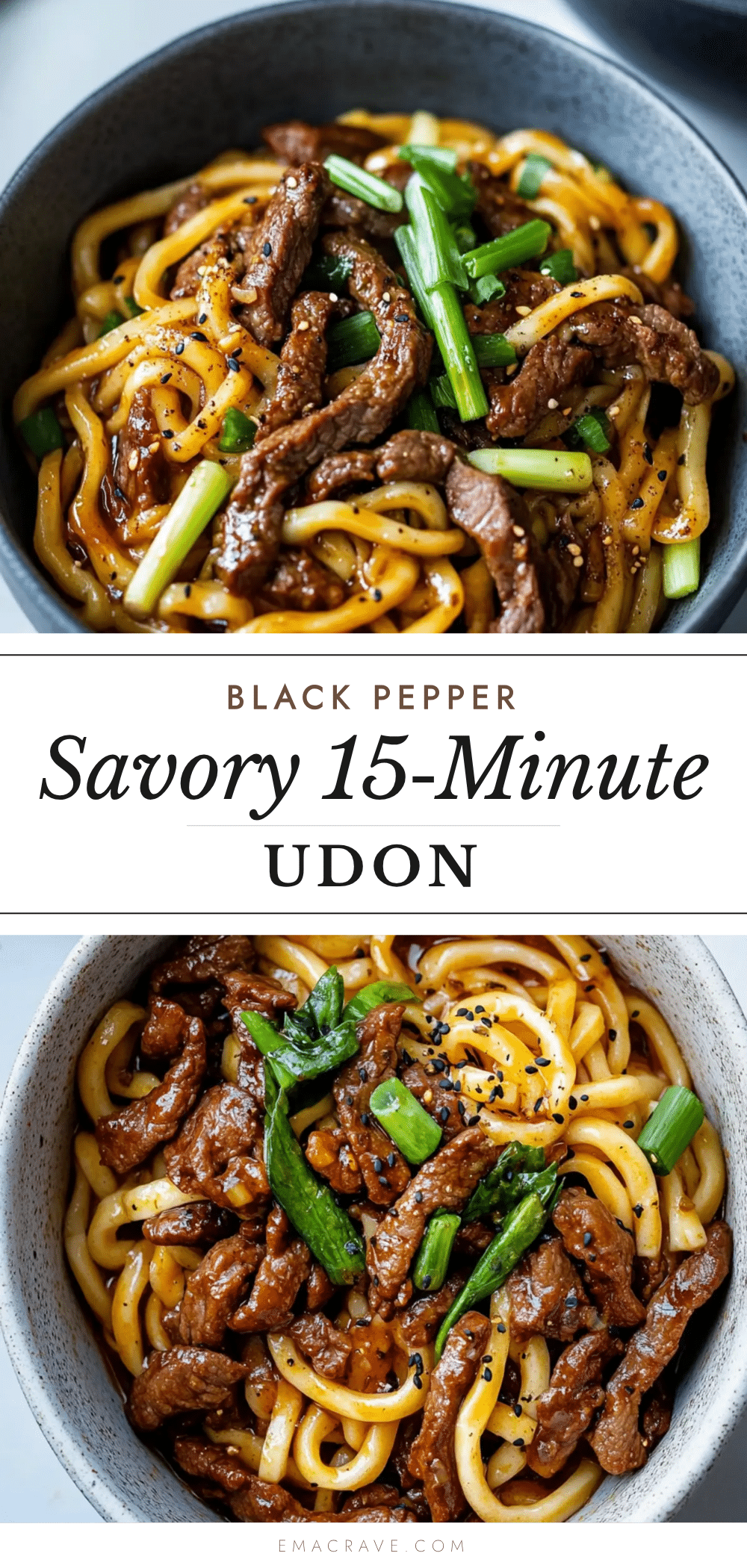
Quick Savory Black Pepper Beef Udon Noodles
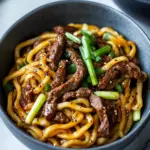
Tender beef, chewy udon noodles, and a glossy, peppery sauce come together in under 20 minutes for a weeknight dinner that feels like takeout but is made at home.
- Prep Time: 10 minutes
- Cook Time: 10 minutes
- Total Time: 20 minutes
- Yield: 2 servings 1x
- Category: Main Course
- Cuisine: Asian
Ingredients
- 8 oz (225 g) beef flank steak or sirloin, sliced thin against the grain
- 2 packs (about 14 oz / 400 g total) udon noodles, refrigerated or frozen
- 2 tablespoons (28 g) unsalted butter, divided
- 3 tablespoons (45 ml) soy sauce (regular or low-sodium)
- 1 tablespoon (15 ml) dark soy sauce (optional)
- 1½ teaspoons (3 g) freshly cracked black pepper, divided
- 4 cloves garlic, minced
- 1 teaspoon (4 g) brown sugar
- 4 scallions, sliced (white and green parts separated)
- 1 teaspoon (5 ml) sesame oil
- Optional: toasted sesame seeds and extra cracked pepper for garnish
Instructions
- Prep the beef: Place flank steak in the freezer for 15 minutes to firm up, then slice across the grain into ¼-inch thick strips. Season lightly with salt and a few cracks of pepper. Set aside.
- Make the sauce: In a small bowl, whisk together 3 tablespoons soy sauce, 1 tablespoon dark soy sauce (if using), 1 teaspoon brown sugar, and ½ teaspoon of the freshly cracked black pepper. Stir until sugar dissolves. Set near the stove.
- Cook the noodles: Bring a pot of water to a boil. Cook udon noodles according to package directions (usually 2-3 minutes for refrigerated). Drain well, rinse briefly under cold water, and toss with a drizzle of sesame oil to prevent sticking. Set aside.
- Heat the wok: Place a large wok or heavy-bottomed skillet over high heat. Add 1 tablespoon of the butter. Wait until melted and just starting to brown (about 30 seconds).
- Sear the beef: Add sliced beef in a single layer. Do not touch for 45 seconds. Flip and cook another 30 seconds until browned outside but still pink inside. Transfer to a plate. Do not wipe the pan clean.
- Aromatics: Reduce heat to medium-high. Add remaining 1 tablespoon butter. Add minced garlic and white parts of scallions. Stir for 20 seconds until fragrant.
- Add the noodles: Add cooked udon noodles to the wok. Toss with garlic butter for about 1 minute, picking up browned bits from the beef.
- Pour the sauce: Stir the sauce (sugar settles at bottom), then pour over noodles. Toss for 30 seconds until sauce coats noodles evenly and starts reducing.
- Return the beef: Add seared beef and any juices back to the wok. Toss for 30 seconds to warm through.
- Final crack: Sprinkle remaining 1 teaspoon freshly cracked black pepper over everything. Toss once more. Taste and adjust seasoning if needed.
- Finish and serve: Drizzle with sesame oil, toss in green scallion slices, and give one last toss. Serve immediately in warm bowls. Garnish with sesame seeds and extra pepper if desired.
Notes
High heat is essential for a good sear. Do not overcrowd the pan; cook beef in batches if doubling. Freshly cracked black pepper is non-negotiable for the best flavor. Have all ingredients prepped before starting to cook. The dish is best served immediately but leftovers can be stored in an airtight container in the refrigerator for up to 3 days. Reheat in a hot wok or skillet with a splash of water or soy sauce.
Nutrition
- Serving Size: 1 serving
- Calories: 485
- Sugar: 4
- Sodium: 980
- Fat: 18
- Saturated Fat: 8
- Carbohydrates: 52
- Fiber: 3
- Protein: 32
Keywords: black pepper beef udon noodles, quick stir fry, weeknight dinner, beef udon, easy noodle recipe